
Determining how much money to save is one of the most critical yet subjective questions in personal finance. While there is no universal figure that applies to every individual, the answer lies at the intersection of your current lifestyle, future aspirations, and tolerance for risk. Saving is not merely the act of hoarding cash; it is the strategic allocation of capital to ensure that your future self is as well-provided for as your current self. To navigate this journey, one must understand the various tiers of saving, from the immediate protection of an emergency fund to the long-term compounding power of retirement accounts.
Establishing the Foundation: The Emergency Fund and Liquidity
The first and most non-negotiable step in any financial plan is the creation of an emergency fund. This is the bedrock upon which all other investments are built. Without a dedicated reserve for the unexpected, even the most sophisticated investment portfolio can be derailed by a single car repair, medical bill, or sudden job loss.
The 3-to-6 Month Rule
The standard recommendation from financial experts is to save between three and six months of essential living expenses. It is important to distinguish between “income” and “expenses” here. You do not necessarily need to replace six months of your salary, but rather the amount required to cover your mortgage or rent, utilities, groceries, insurance, and minimum debt payments.
For those in stable, high-demand industries with low overhead, a three-month cushion may suffice. However, if you are self-employed, work in a volatile sector, or have several dependents, aiming for six to twelve months of expenses provides a necessary psychological and financial safety net.
Where to Keep Your Liquid Cash
The goal of an emergency fund is accessibility, not high returns. However, leaving this capital in a standard checking account is a mistake, as inflation will slowly erode its purchasing power. The ideal vehicle for these funds is a High-Yield Savings Account (HYSA) or a Money Market Account (MMA). These tools offer liquidity—allowing you to withdraw funds immediately—while providing an interest rate significantly higher than traditional brick-and-mortar savings accounts. This ensures your safety net grows, or at least maintains its value, while staying out of reach of your daily spending temptations.
Strategic Budgeting Frameworks for Consistent Saving
Once the emergency fund is established, the focus shifts to a sustainable, long-term savings rate. This is often where people struggle, as “saving what is left over at the end of the month” rarely results in significant accumulation. To be successful, saving must be proactive rather than reactive.
The 50/30/20 Rule
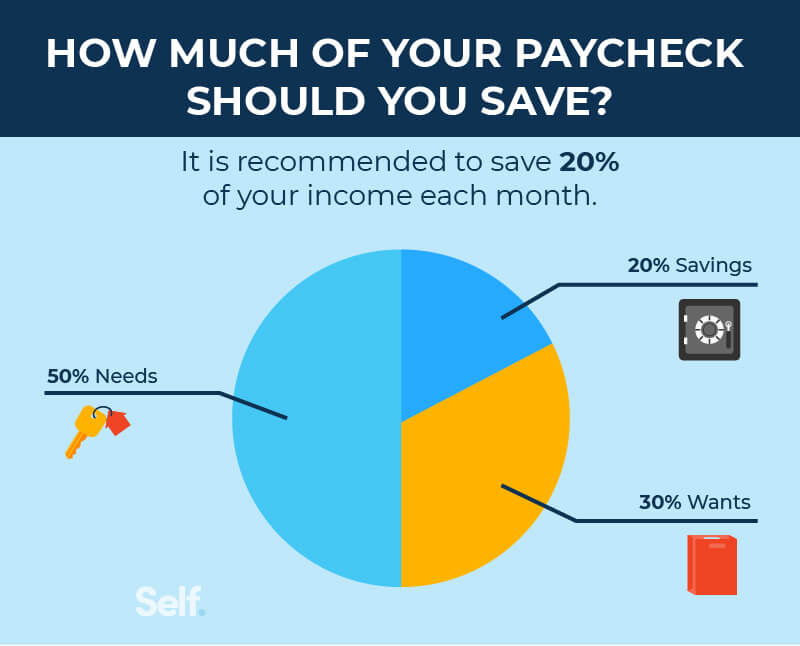
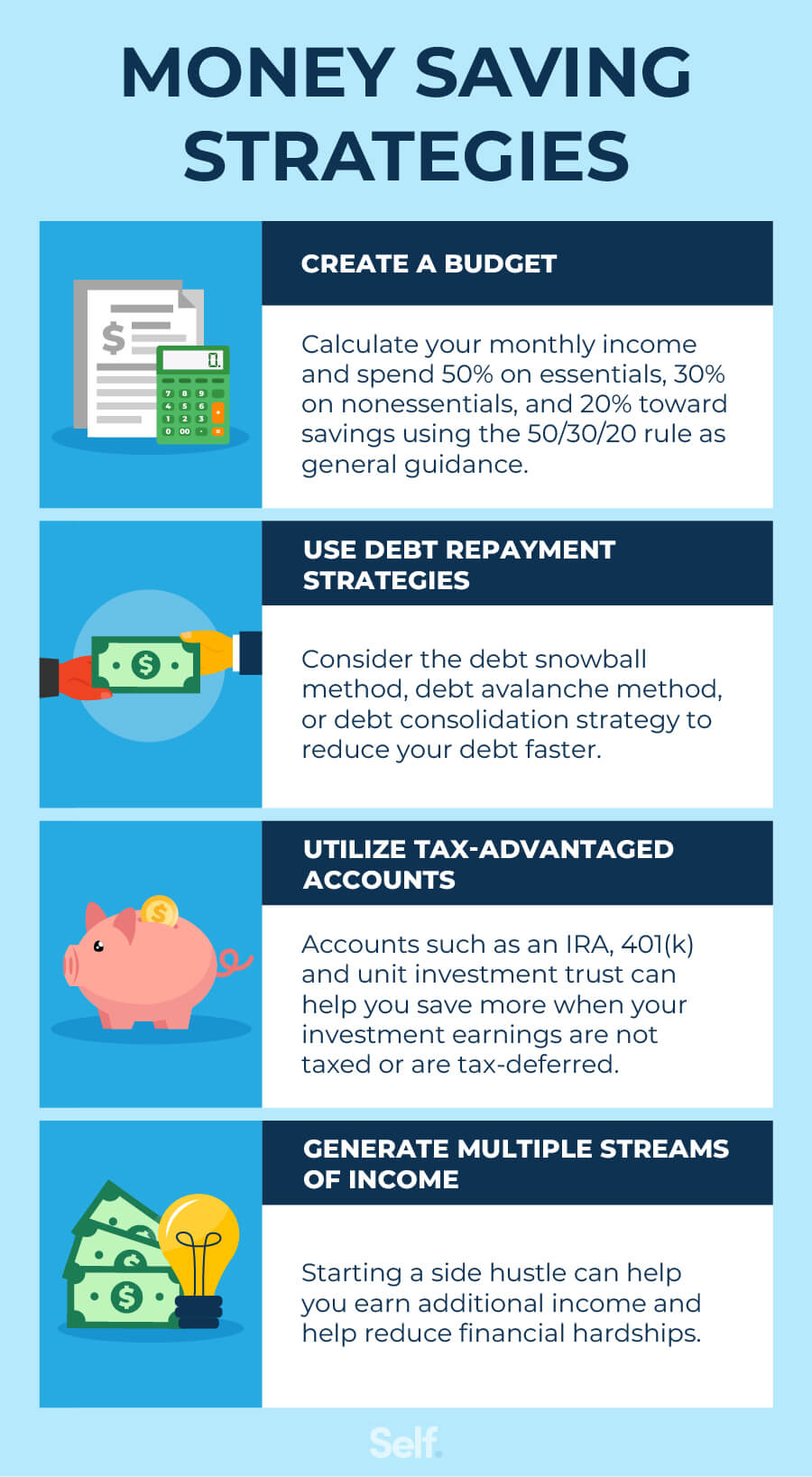
One of the most effective frameworks for determining how much to save is the 50/30/20 rule. This model suggests allocating your after-tax income into three distinct categories:
-
50% for Needs: Housing, groceries, utilities, and transportation.
-
30% for Wants: Dining out, travel, hobbies, and entertainment.
-
20% for Savings and Debt Repayment: This includes retirement contributions, extra payments on high-interest debt, and building wealth.
By committing 20% of your take-home pay to your future, you create a powerful engine for wealth creation. If 20% feels unattainable initially, the key is to start at a lower percentage—perhaps 5% or 10%—and “auto-increase” your savings rate every time you receive a raise or a bonus.
The Concept of “Paying Yourself First”
The most successful savers utilize a strategy known as “paying yourself first.” Instead of treating savings as the final item on the budget, it becomes the first. This is best achieved through automation. By setting up an automatic transfer from your paycheck to a separate savings or brokerage account, you remove the emotional friction of making a choice. When the money never hits your checking account, you learn to live on the remaining balance, effectively “tricking” yourself into a disciplined savings habit.
Saving for Long-Term Goals and Retirement
Saving for the sake of saving can lead to burnout. To maintain motivation, it is essential to categorize your savings into “buckets” based on time horizons. Long-term saving is primarily focused on retirement and the achievement of “Financial Independence,” a state where your assets generate enough income to cover your living expenses.
Retirement Contribution Benchmarks
A common benchmark for retirement saving is 15% of your gross annual income. This figure is based on the assumption that if you start in your mid-20s, a 15% contribution rate invested in a diversified portfolio will allow you to maintain your lifestyle after a 30-to-40-year career.
If you are starting later in life, this percentage needs to increase significantly to make up for lost time. For those in their 40s who are just beginning to save, a rate of 25% to 35% may be required. The primary tools for this type of saving include employer-sponsored 401(k) plans—especially those that offer a company match—and Individual Retirement Accounts (IRAs).
The Power of Compound Interest
The reason “how much” you save is so closely tied to “when” you save is the phenomenon of compound interest. In the context of long-term savings, your money earns a return, and then that return earns its own return. Over decades, this creates an exponential growth curve. For example, a 25-year-old who saves $500 a month until age 65 will likely have a significantly larger nest egg than a 45-year-old who saves $1,500 a month for the same end date, despite the older individual contributing more total principal. This highlights that while the amount saved is important, the duration of that saving is the ultimate multiplier.
Tailoring Savings to Life Stages and Major Milestones
As you move through different stages of life, your savings goals will naturally evolve. What is appropriate for a recent college graduate is rarely appropriate for a mid-career professional or someone nearing retirement.
Savings in Your 20s and 30s: Growth and Acquisition
In your 20s and 30s, the focus is often on building the foundation. Beyond retirement, this is the time many people save for major milestones like a down payment on a home, a wedding, or starting a family. These are “sinking funds”—specific accounts for specific upcoming expenses. Because these goals are typically 3 to 7 years away, a balanced approach between a high-yield savings account and a conservative brokerage account is often the best strategy to ensure the money is there when needed while still benefiting from some market growth.
Mid-Life: Peak Earning Years and “Catch-Up”
The 40s and 50s are often an individual’s peak earning years. However, this period is also fraught with “lifestyle creep”—the tendency to increase spending as income rises. To maximize savings during this stage, it is vital to keep your cost of living stable while funneling raises directly into investments. For those who feel behind on their retirement goals, the IRS allows “catch-up contributions” for individuals over age 50, permitting higher annual limits for 401(k)s and IRAs.
Optimizing Your Savings Rate Through Investing
It is a common misconception that “saving” and “investing” are the same. In reality, saving is about preservation and liquidity, while investing is about growth and wealth building. To truly answer “how much money to save,” you must eventually transition your focus from cash accumulation to asset acquisition.
Moving Beyond High-Yield Savings
Once your emergency fund is full and your short-term goals (1–3 years) are funded, any additional “savings” should generally be directed toward the stock market, real estate, or other productive assets. Holding too much cash is a risk in itself; over long periods, the purchasing power of cash is guaranteed to decline due to inflation. By investing your savings in low-cost index funds or ETFs, you allow your capital to work for you, significantly reducing the amount of “active” work you must do to reach your financial targets.

Tax-Advantaged Accounts as a Savings Tool
When deciding where to put your savings, the order of operations matters. To optimize your savings, you should follow a hierarchy that minimizes your tax liability:
-
Employer Match: Contribute enough to your 401(k) to get the full company match (this is a 100% return on your investment).
-
HSA (Health Savings Account): If eligible, this is the most tax-efficient account available, offering a triple tax advantage.
-
Roth IRA/401(k): Contribute to accounts that allow for tax-free growth and tax-free withdrawals in retirement.
-
Taxable Brokerage Account: Once tax-advantaged buckets are full, use a standard brokerage account for additional wealth building.
In conclusion, the amount of money you should save is defined by your goals and your timeline. Start with a solid emergency fund of 3-6 months of expenses, aim for a consistent 20% savings rate of your take-home pay, and ensure that at least 15% of your gross income is being funneled into long-term investments. By treating savings as a non-negotiable expense and leveraging the power of automation and compound interest, you transition from a position of financial vulnerability to one of enduring wealth and freedom.
aViewFromTheCave is a participant in the Amazon Services LLC Associates Program, an affiliate advertising program designed to provide a means for sites to earn advertising fees by advertising and linking to Amazon.com. Amazon, the Amazon logo, AmazonSupply, and the AmazonSupply logo are trademarks of Amazon.com, Inc. or its affiliates. As an Amazon Associate we earn affiliate commissions from qualifying purchases.