
In the landscape of global finance, few names command as much respect and scrutiny as Apple Inc. When people ask, “How much money is the Apple company worth?” they are often looking for a single number. However, the answer is a multi-layered financial narrative that encompasses market capitalization, enterprise value, liquid assets, and the intangible value of one of the world’s most dominant brands. As of recent fiscal quarters, Apple has consistently hovered around or exceeded a market capitalization of $3 trillion, making it a cornerstone of modern investment portfolios and a bellwether for the global economy.
To understand Apple’s worth, one must look beyond the sticker price of its stock and delve into the machinery of its balance sheet, its revenue diversification, and its unique position in the capital markets.
Understanding Market Capitalization: The $3 Trillion Benchmark
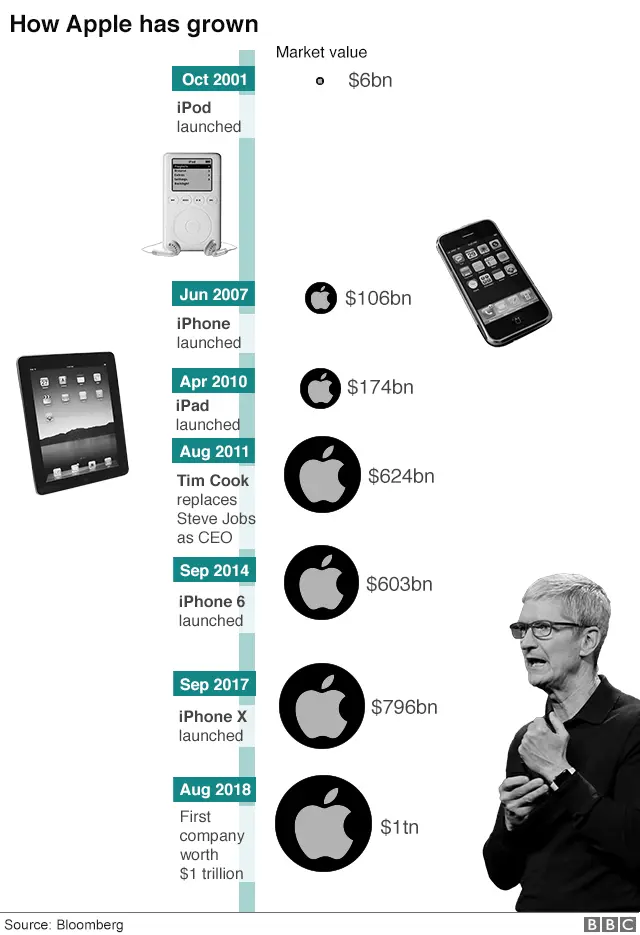
The most common way to measure a company’s worth is through market capitalization, or “market cap.” This figure is calculated by multiplying the total number of outstanding shares by the current share price. For Apple, this number has become a historic marker. In August 2018, Apple became the first U.S. company to hit a $1 trillion market cap. It doubled that to $2 trillion just two years later, and by early 2022, it briefly touched the $3 trillion mark, a feat it has flirted with and reclaimed multiple times since.
How Market Cap Reflects Investor Sentiment
Market capitalization is more than just a math equation; it is a real-time reflection of investor confidence. When Apple’s market cap rises, it indicates that the market believes in the company’s future earnings potential. Investors are not just paying for what Apple earned last year; they are paying for the “terminal value”—the expectation that Apple will continue to generate massive cash flows for decades to come. This valuation places Apple in a league where its “worth” exceeds the GDP of many developed nations, including the United Kingdom, France, and Italy.
The Journey to the Top: Historical Milestones
Apple’s valuation hasn’t always been this astronomical. In the late 1990s, the company was near bankruptcy. Its worth was a fraction of its current state. The trajectory changed with the introduction of the iPod, followed by the revolutionary iPhone in 2007. Each product cycle has contributed to a “step-up” in valuation. The transition from a hardware-centric company to a services-oriented ecosystem has been the primary driver behind the most recent trillion-dollar leaps, as services revenue typically commands higher valuation multiples from Wall Street.
Key Financial Metrics Beyond the Market Cap
While market cap tells us what the public is willing to pay for the company, other financial metrics provide a clearer picture of Apple’s actual internal wealth and operational efficiency. To truly grasp how much money Apple “has,” we must look at its revenue streams, its profit margins, and its legendary cash pile.
Revenue Streams and Diversification
Apple’s worth is underpinned by a massive and consistent revenue engine. While the iPhone remains the primary contributor, accounting for roughly half of total net sales, the company has successfully diversified. The “Services” segment—which includes the App Store, iCloud, Apple Music, Apple Pay, and Apple TV+—has become a powerhouse.
From a financial perspective, Services are highly attractive because they provide recurring revenue with significantly higher gross margins than hardware. While hardware margins might hover around 35-37%, services margins often exceed 70%. This shift in the revenue mix has structurally increased the “worth” of the company by making its earnings more predictable and more profitable.
Cash on Hand and Liquidity
One of the most staggering aspects of Apple’s financial health is its liquidity. Apple is famous for maintaining one of the largest cash piles in corporate history. At various points, the company has held over $200 billion in cash and marketable securities. Even after accounting for its debt, Apple’s net cash position is formidable. This liquidity allows the company to weather economic downturns, fund massive research and development projects, and execute strategic acquisitions without needing to seek external financing.

Net Income and Profit Margins
A company is only as valuable as its ability to generate profit. Apple’s net income is consistently in the tens of billions per quarter. What sets Apple apart from other tech giants is its “premium” pricing strategy. By maintaining high margins on its hardware, Apple ensures that a significant portion of its multi-billion dollar revenue translates directly into bottom-line profit. This efficiency is a core component of why the company is valued so highly compared to competitors who may have high volume but lower profitability.
Factors Influencing Apple’s Valuation
The valuation of a company like Apple is not static. It is influenced by a complex interplay of internal strategies and external market forces. Analysts look at several “moats”—competitive advantages—that protect and enhance Apple’s worth.
The Ecosystem Effect and Consumer Loyalty
The “Apple Ecosystem” is perhaps the company’s most valuable intangible asset. When a consumer buys an iPhone, they are likely to buy an iPad, an Apple Watch, or a Mac. They become locked into the iOS environment through iMessage, iCloud, and the App Store. This ecosystem creates high “switching costs.” From an investment standpoint, this reduces the risk of customer churn, justifying a higher valuation multiple because the future revenue from that customer is seen as highly secure.
Services Growth as a Valuation Multiple Driver
Wall Street values different types of revenue differently. Hardware sales are often seen as cyclical—people buy phones every two or three years. Services revenue, however, is seen as “annuity-like.” Because Apple has over 2 billion active devices globally, the potential to monetize that install base through subscriptions is immense. As the percentage of total revenue coming from services increases, the price-to-earnings (P/E) ratio that investors are willing to pay for the stock typically expands, driving the company’s total worth higher even if hardware sales remain flat.
R&D and Future Innovation Pipelines
The market also prices in what Apple might do next. Whether it is the foray into spatial computing with the Vision Pro, the integration of generative AI through “Apple Intelligence,” or rumors of automotive ambitions, the “innovation premium” is a significant part of Apple’s market cap. Investors are betting that Apple’s Research and Development (R&D) spending—which now totals billions per year—will yield the next “must-have” category that will drive the next decade of growth.
Apple as an Investment: Valuation Ratios and Shareholder Returns
For the individual or institutional investor, Apple’s worth is often viewed through the lens of investment returns. Apple has transitioned from a high-growth “tech” stock to a “quality” stock that offers both growth and significant capital returns to its owners.
P/E Ratio and Comparison with Peers
To determine if Apple is “expensive” or “cheap” at its current valuation, analysts use the Price-to-Earnings (P/E) ratio. Historically, Apple traded at a discount to other tech firms because it was viewed as a hardware company. However, in the last five years, its P/E ratio has expanded to align more closely with software companies. When comparing Apple’s worth to peers like Microsoft, Alphabet, or Amazon, investors look at how much they are paying for every dollar of profit the company generates.
Dividends and Share Buybacks
Apple is a “cannibal” in the best sense of the word for investors—it constantly buys back its own shares. Since 2012, Apple has spent hundreds of billions of dollars on share repurchases. By reducing the total number of shares outstanding, the company increases the “worth” of each remaining share, effectively boosting earnings per share (EPS). Combined with a steady dividend, Apple’s capital return program makes it one of the most shareholder-friendly companies in existence, which in turn supports its high valuation.

Future Outlook: Sustaining the Trillion-Dollar Status
The question of what Apple is worth is also a question of its future sustainability. To maintain a $3 trillion+ valuation, Apple must navigate several challenges. These include regulatory scrutiny over the App Store’s “walled garden,” geopolitical tensions affecting its supply chain in China, and the need to find the next major platform beyond the smartphone.
However, Apple’s financial fortress is built on a foundation of immense brand equity and operational excellence. As long as the company maintains its high margins and continues to successfully monetize its massive user base, its worth will likely continue to reach new heights. For the modern financier, Apple represents the pinnacle of corporate finance—a machine that turns design and software into one of the largest concentrations of wealth in human history. Whether measured by its multi-trillion dollar market cap or its massive cash reserves, Apple remains the gold standard for what a business can be worth in the 21st century.
aViewFromTheCave is a participant in the Amazon Services LLC Associates Program, an affiliate advertising program designed to provide a means for sites to earn advertising fees by advertising and linking to Amazon.com. Amazon, the Amazon logo, AmazonSupply, and the AmazonSupply logo are trademarks of Amazon.com, Inc. or its affiliates. As an Amazon Associate we earn affiliate commissions from qualifying purchases.