
Vanguard, a name synonymous with low-cost investing and passive strategies, stands as one of the largest investment management companies in the world. Its influence permeates nearly every corner of the financial markets, from individual retirement accounts to institutional portfolios. The sheer scale of its operations is often encapsulated in a single, staggering figure: its Assets Under Management (AUM). Understanding how much money Vanguard manages isn’t just about a number; it’s about comprehending the vast trust investors place in its philosophy, its operational might, and its profound impact on global finance. As of early 2024, Vanguard’s assets under management hover impressively around $8.7 trillion. This colossal sum isn’t merely a testament to its size but a reflection of a revolution in how people save, invest, and plan for their financial futures.

Vanguard’s Asset Under Management: A Colossal Scale
The figure of $8.7 trillion is difficult to grasp in isolation. To put it into perspective, it’s roughly equivalent to the entire Gross Domestic Product (GDP) of Japan, the world’s third-largest economy, or more than four times the annual federal budget of the United States. This monumental sum underscores Vanguard’s role as a financial titan, a steward of an immense pool of global capital entrusted by millions of investors worldwide.
The Sheer Volume: Billions and Trillions
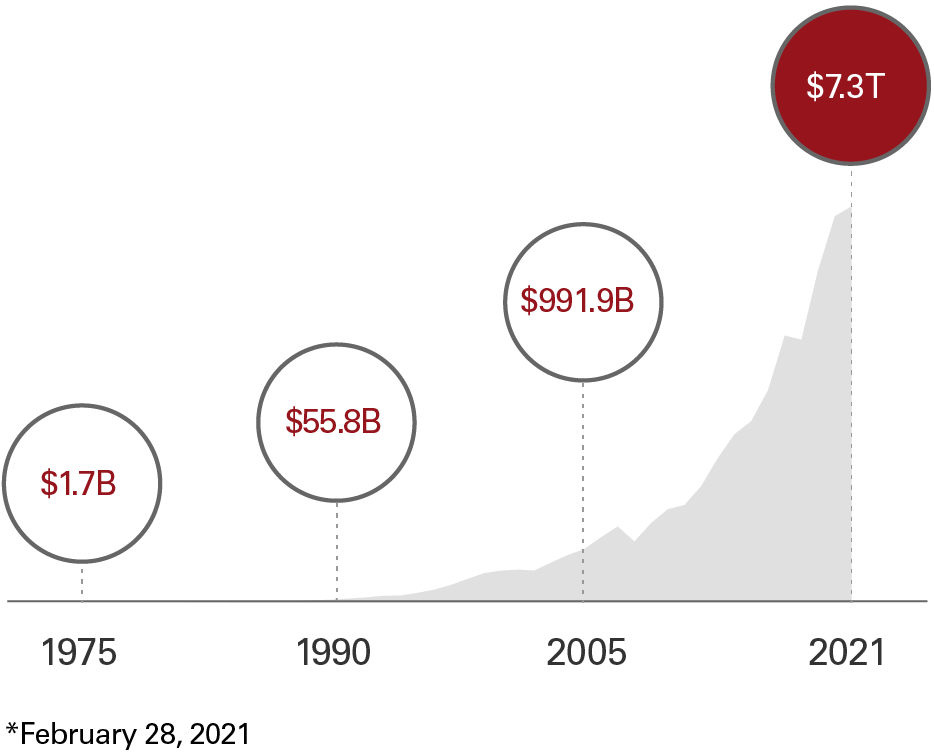
When we talk about Vanguard’s AUM, we are operating in a realm of financial magnitude that few other institutions can claim. The consistent growth from billions to multi-trillions is a story of compounding returns, continuous investor inflows, and the widespread adoption of its investment principles. While the exact figure fluctuates daily with market performance and investor activity, the long-term trend has been one of relentless expansion. This scale allows Vanguard to achieve unparalleled economies of scale, directly benefiting its investors through ever-lower expense ratios – a core tenet of its mission.
What Constitutes Vanguard’s AUM?
Vanguard’s $8.7 trillion AUM isn’t concentrated in a single product or strategy. Instead, it’s diversified across a vast array of investment vehicles and client types.
At its core, Vanguard manages a massive collection of:
-
Mutual Funds: Primarily index mutual funds, which form the bedrock of its offerings, tracking various market benchmarks like the S&P 500, total stock market, or international indices. Actively managed funds also constitute a portion, albeit a smaller one relative to the index offerings.
-
Exchange-Traded Funds (ETFs): Vanguard is a dominant player in the ETF market, offering a comprehensive suite of low-cost ETFs that mirror its mutual fund lineup, providing investors with flexibility and liquidity.
-
Retirement Accounts: A significant portion of its AUM comes from individual and institutional retirement plans, including 401(k)s, IRAs, and other defined contribution plans, where millions of Americans save for their golden years.
-
Institutional Accounts: Beyond individual investors, Vanguard serves a wide range of institutional clients, including corporations, endowments, foundations, and public pension funds, managing substantial portfolios on their behalf.
-
Advisory Services: Through its Personal Advisor Services, Vanguard offers robo-advisory and human-hybrid advisory solutions, managing assets for clients seeking personalized financial planning and portfolio management.
This diverse portfolio of products and services illustrates not only the breadth of Vanguard’s offerings but also its ability to cater to a vast spectrum of investor needs, from do-it-yourself enthusiasts to those seeking professional guidance.
The Philosophy Behind the Billions: Low Costs and Indexing
The unparalleled growth of Vanguard’s AUM is inextricably linked to its revolutionary investment philosophy, pioneered by its visionary founder, John C. Bogle. Bogle’s belief in the power of simplicity, diversification, and minimizing costs transformed the investment industry, setting Vanguard apart from its competitors.
The Vanguard Effect: Driving Down Fees
At the heart of Vanguard’s strategy is its unique corporate structure. Unlike publicly traded asset managers or privately owned firms, Vanguard is structured as a client-owned company. This means that its funds are owned by their investors, and the company itself is owned by the funds. This structure eliminates external shareholders, allowing Vanguard to operate at cost and continually pass savings directly back to its investors in the form of ultra-low expense ratios.
This “Vanguard Effect” has not only made investing more accessible and affordable for millions but has also pressured competitors across the industry to lower their own fees to remain competitive. What began as a disruptive idea has become an industry standard, largely due to Vanguard’s relentless pursuit of efficiency and its fiduciary commitment to its clients. The difference of even a fraction of a percent in annual fees can translate into hundreds of thousands of dollars in additional wealth over a long investing horizon, making Vanguard’s low-cost ethos a powerful driver of long-term returns for its clients.
The Power of Passive Investing
Another cornerstone of Vanguard’s success, and a primary reason for its massive AUM, is its unwavering commitment to passive investing, particularly through index funds. Bogle famously argued that trying to beat the market consistently is a “loser’s game,” with the vast majority of actively managed funds failing to outperform their benchmarks over the long run, especially after accounting for higher fees and taxes.
Passive investing, by contrast, seeks to match the market’s performance by holding a diversified portfolio of securities that mirror a specific market index. This strategy offers several compelling advantages:
-
Diversification: Index funds inherently provide broad diversification, reducing idiosyncratic risk associated with individual stocks.
-
Market-Matching Returns: Investors can expect to capture the full return of the market, which historically has been robust over the long term.
-
Simplicity: No need for complex stock picking or market timing; simply buy and hold a broad market index.
-
Tax Efficiency: Lower turnover in index funds typically leads to fewer capital gains distributions, enhancing after-tax returns.
This straightforward, disciplined approach has resonated deeply with individual investors and financial advisors alike, providing a reliable and cost-effective pathway to wealth accumulation. The collective adoption of this strategy by millions has been a major engine behind Vanguard’s astronomical AUM.
The Growth Trajectory: A Story of Investor Trust and Market Dynamics

Vanguard’s journey to managing trillions of dollars is a fascinating case study in financial innovation, sustained growth, and enduring investor confidence. Its AUM isn’t merely a static figure but a dynamic reflection of various intertwined factors.
Consistent Inflows and Market Appreciation
The growth of Vanguard’s AUM can be attributed to two primary drivers:
-
Net Inflows: This refers to new money invested by clients, exceeding withdrawals. Vanguard has consistently attracted substantial net inflows year after year, often leading the industry. Investors are drawn by its reputation for low costs, transparency, and its focus on long-term wealth building. As more individuals and institutions embrace passive investing, Vanguard continues to be a top destination for their capital.
-
Market Appreciation: A significant portion of AUM growth also comes from the increase in value of the underlying assets held within Vanguard’s funds. As global stock and bond markets perform well, the value of Vanguard’s vast portfolio naturally rises, contributing billions, if not trillions, to its total managed assets during bull markets. Conversely, during market downturns, AUM can temporarily decrease, but the long-term trend has been overwhelmingly positive due to both inflows and general market growth.
This virtuous cycle—low costs attracting more inflows, leading to greater scale, which further reduces costs—has been a powerful engine for Vanguard’s expansion.
Economic Cycles and Global Reach
While Vanguard’s growth has been remarkably consistent, it is not entirely immune to broader economic cycles. During periods of economic prosperity and rising markets, investor confidence typically translates into greater investment activity and higher asset values. Conversely, market downturns can lead to temporary dips in AUM as asset values decline, though Vanguard often sees continued inflows even during tougher times as investors ‘buy the dip’ or continue their regular contributions.
Furthermore, Vanguard’s expansion beyond its U.S. origins has played a crucial role in its AUM growth. With offices and operations in Canada, Europe, Australia, Asia, and other key global markets, Vanguard offers its low-cost products to an international audience. This global footprint not only diversifies its client base but also taps into diverse economic growth engines, contributing to its overall AUM. As emerging markets develop and global wealth expands, Vanguard is strategically positioned to capture a share of this new capital.
The Implications of Managing Trillions
Managing an amount of capital approaching $9 trillion carries immense responsibilities and confers significant influence. Vanguard’s colossal AUM means it is not just an investment manager; it is a major player in corporate governance, a driver of technological innovation, and a standard-setter for the financial industry.
Market Influence and Corporate Governance
As one of the largest institutional investors in the world, Vanguard is a top shareholder in virtually every major publicly traded company globally. This position gives it unparalleled influence in corporate boardrooms. While Vanguard’s primary objective is to maximize long-term returns for its fund shareholders, it actively engages with companies on issues related to corporate governance, executive compensation, board diversity, and environmental, social, and governance (ESG) factors.
Vanguard’s sheer size means that its votes in shareholder meetings carry significant weight. Its approach to stewardship is typically long-term and focused on sustainable value creation, often advocating for sound management practices rather than short-term activism. This quiet but powerful influence shapes corporate behavior and capital allocation decisions across industries worldwide, underscoring its role as a responsible steward of vast capital.
Operational Scale and Technological Demands
The infrastructure required to manage $8.7 trillion across millions of accounts, processing countless transactions daily, is staggering. Vanguard operates on an immense operational scale, demanding continuous investment in cutting-edge technology, robust cybersecurity measures, and highly efficient administrative systems.
This includes:
-
Advanced Trading Systems: To execute trades efficiently and at the best possible prices for its funds.
-
Customer Service Platforms: To support millions of individual and institutional clients with diverse needs.
-
Data Analytics: To manage vast amounts of market and client data, ensuring compliance and optimizing operations.
-
Cybersecurity: To protect sensitive client information and assets from ever-evolving threats.
-
Compliance and Regulatory Systems: To navigate the complex and ever-changing global regulatory landscape.
The technological prowess and operational excellence required to handle such a colossal AUM are critical for maintaining trust, ensuring smooth operations, and delivering on its low-cost promise. It’s a perpetual arms race against complexity, where Vanguard’s scale often provides an advantage in allocating resources towards these vital functions.
Conclusion
Vanguard’s management of approximately $8.7 trillion in assets is more than just an impressive financial statistic; it is a profound indicator of a paradigm shift in the investment world. It represents millions of investors who have embraced the simple yet powerful philosophy of low-cost, diversified, and long-term investing championed by John Bogle. This colossal AUM empowers Vanguard with immense market influence, enabling it to advocate for shareholder interests and drive down costs across the industry.
The journey from a revolutionary idea to a global financial behemoth underscores the enduring appeal of its client-owned structure and its unwavering commitment to putting investors first. As Vanguard continues to grow, its management of trillions of dollars will remain a key measure of its unparalleled reach, its enduring legacy, and its ongoing role in shaping the financial futures of individuals and institutions worldwide. For anyone looking to understand the dynamics of modern investing, the answer to “How much money does Vanguard manage?” offers a crucial insight into the power of passive investing and the impact of a truly investor-centric approach.
aViewFromTheCave is a participant in the Amazon Services LLC Associates Program, an affiliate advertising program designed to provide a means for sites to earn advertising fees by advertising and linking to Amazon.com. Amazon, the Amazon logo, AmazonSupply, and the AmazonSupply logo are trademarks of Amazon.com, Inc. or its affiliates. As an Amazon Associate we earn affiliate commissions from qualifying purchases.