
Navigating the intricacies of personal finance often involves understanding the practical limits imposed by financial institutions, especially when it comes to accessing your own money. One of the most common questions individuals have concerns ATM withdrawal limits. For Bank of America account holders, knowing the specific daily thresholds for ATM withdrawals is crucial for effective money management, preventing unexpected inconveniences, and ensuring financial security. This article delves deep into Bank of America’s ATM withdrawal policies, exploring the factors that influence these limits, strategies for managing them, and best practices for accessing your funds efficiently and securely.
Understanding Bank of America ATM Withdrawal Limits
ATM withdrawal limits are a standard practice across the banking industry, serving multiple purposes from fraud prevention to managing the physical cash supply within the ATM network. Bank of America, like other major banks, implements these limits to protect both the bank and its customers. The exact amount you can withdraw can vary, but there are general guidelines and specific factors that determine your individual daily limit.
Standard Daily Limits for Debit Cards
For most Bank of America checking and savings account holders utilizing a standard debit card, the typical daily ATM withdrawal limit ranges from $700 to $1,000. It’s important to understand that this is a daily limit, meaning it resets every 24 hours, usually at midnight Pacific Time, regardless of when the last transaction was made. This limit applies to cash withdrawals from any ATM, whether it’s a Bank of America machine or an out-of-network ATM. While the general range is common, your specific limit might be at the higher or lower end based on several factors, including your account history, the type of account you hold, and your overall relationship with the bank. For instance, a long-standing customer with a consistent history of good financial standing might be granted a higher standard limit compared to a brand-new account holder.
Impact of Account Type on Limits
The type of account you hold with Bank of America plays a significant role in determining your ATM withdrawal limit.
-
Standard Checking Accounts: These typically fall within the $700-$1,000 range.
-
Preferred Rewards Accounts: Customers enrolled in Bank of America’s Preferred Rewards program often benefit from higher limits. Depending on your tier (Gold, Platinum, Platinum Honors), your daily ATM withdrawal limit could be increased to $1,500 or even $2,000. This is one of the many perks designed to reward loyal customers who maintain substantial balances with Bank of America and Merrill.
-
Business Accounts: Business debit cards linked to Bank of America business checking accounts usually have higher daily withdrawal limits, often ranging from $1,000 to $2,500 or more, to accommodate the operational needs of businesses that may require larger cash disbursements.
-
Savings Accounts: While you can withdraw from a savings account via an ATM, be mindful of Regulation D, which historically limited certain types of withdrawals and transfers from savings accounts to six per month. Though this regulation was suspended, banks may still have internal limits or fees for excessive savings withdrawals. The ATM limit for savings is typically the same as for a linked checking account.
Credit Card Cash Advance Limits
It’s crucial to distinguish between debit card withdrawals and credit card cash advances. While both provide cash, they operate under entirely different terms and are subject to separate limits and fees. A credit card cash advance allows you to borrow cash against your credit limit. Bank of America credit cards will have a specific cash advance limit, which is often a percentage of your overall credit limit and is usually lower than your purchase limit. More importantly, cash advances typically incur:
-
Immediate Interest: Interest often starts accruing from the moment of the transaction, without a grace period.
-
Cash Advance Fees: A flat fee or a percentage of the withdrawn amount (e.g., 3-5%) is usually charged.
-
Higher APR: The interest rate for cash advances is frequently higher than for standard purchases.
Due to these significant costs, using a credit card for a cash advance at an ATM should generally be considered a last resort.
Factors Influencing Your ATM Withdrawal Capacity
Beyond the standard limits, several other elements can influence how much cash you can actually access from a Bank of America ATM at any given time. Understanding these can help you better plan your cash needs.
Your Account Balance and Available Funds
This is perhaps the most fundamental and self-evident limit: you cannot withdraw more money than you have available in your account. Even if your daily ATM limit is $1,000, but you only have $500 in your checking account, you can only withdraw up to $500. It’s essential to monitor your account balance regularly through online banking, the mobile app, or at an ATM to avoid overdrafts or failed transactions. Overdrawing your account at an ATM can lead to overdraft fees, which can quickly add up.
ATM Network and Ownership
While Bank of America aims to provide consistent service, there can be subtle differences depending on the ATM’s ownership.
-
Bank of America ATMs: These are generally the best option as they typically support the full range of your individual withdrawal limit and do not charge an out-of-network fee. They are also generally stocked with sufficient cash.
-
Out-of-Network ATMs: When using an ATM that is not owned by Bank of America (e.g., another bank’s ATM, or an independent ATM in a convenience store), two things can happen:
-
Bank of America Fee: Bank of America may charge you a fee for using an out-of-network ATM (typically $2.50-$5.00 for domestic transactions).
-
ATM Surcharge: The owner of the out-of-network ATM will almost certainly charge you a separate surcharge fee, which is displayed before you complete the transaction.
-
Lower Limits: Independent ATMs, or even ATMs of smaller banks, might have their own lower per-transaction or daily withdrawal limits, regardless of your Bank of America limit. For example, some third-party ATMs might cap withdrawals at $200 or $300 per transaction. This means you might need to perform multiple transactions to reach your Bank of America daily limit, incurring a separate surcharge for each.
-
Your Relationship with Bank of America
As mentioned earlier with Preferred Rewards, the length and nature of your relationship with Bank of America can influence your financial flexibility. Customers who have multiple accounts (checking, savings, investments, loans) with the bank, maintain higher average balances, or have a long history of responsible banking behavior may find that the bank is more amenable to temporary limit increases or offers higher standard limits as part of their loyalty programs. This ‘relationship banking’ approach allows financial institutions to tailor services to their most valued customers.
Bank’s Internal Risk Management
ATM withdrawal limits are a crucial component of a bank’s internal risk management strategy. These limits help to:
-
Prevent Fraud: By limiting the amount of cash that can be withdrawn daily, banks mitigate the potential financial damage if a debit card is stolen or compromised. A thief can only access a finite amount before the card can be reported and deactivated.
-
Manage Cash Flow: Limits help banks manage the physical cash inventory in their ATMs, ensuring they don’t run out too quickly and can serve a broader range of customers.
-
Comply with Regulations: Limits can also align with anti-money laundering (AML) regulations, although larger suspicious transactions are usually flagged by more sophisticated monitoring systems.
Strategies for Managing and Adjusting Withdrawal Limits
While daily ATM limits are in place for good reasons, there are situations where you might need to access more cash than your standard limit allows. Fortunately, Bank of America offers pathways to address these needs.
How to Check Your Current Limit
Before you plan a large cash withdrawal, it’s wise to confirm your exact daily limit. You can typically do this through a few methods:
-
Online Banking/Mobile App: Log in to your Bank of America online banking portal or mobile app. Navigate to your debit card details or account services section, where you can often find information regarding daily transaction limits.
-
Customer Service: The most reliable way is to call Bank of America’s customer service number (usually found on the back of your debit card or on their official website). A representative can confirm your specific limit and discuss options for increasing it if needed.
-
ATM Receipt (sometimes): While not always detailed, some ATM receipts might indicate your remaining daily withdrawal capacity after a transaction.
Requesting a Temporary Limit Increase

For specific situations requiring more cash than your standard daily limit allows (e.g., purchasing a used car, paying a contractor, or traveling internationally), you can often request a temporary increase.
-
Contact Customer Service: This is the primary method. Be prepared to explain your reason for the request, the amount you need, and the duration for which you need the increased limit.
-
Security Verification: The bank will likely ask several security questions to verify your identity.
-
Approval Factors: Approval depends on your account history, available funds, the requested amount, and the bank’s internal policies. Temporary increases are typically granted for a short period (e.g., 24-72 hours). It’s advisable to make such requests a day or two in advance.
-
Preferred Rewards Advantage: Preferred Rewards customers often have an easier time obtaining temporary limit increases due to their established relationship and higher asset levels with the bank.
Planning for Large Cash Needs
If you anticipate needing a significant amount of cash, relying solely on an ATM might not be the most efficient or cost-effective approach.
-
Visit a Bank of America Branch: For large withdrawals (especially those exceeding temporary ATM limits), visiting a physical branch during business hours is the best option. You can typically withdraw any amount up to your available balance, although for very large sums (e.g., $5,000 or more), it’s courteous and sometimes necessary to call the branch ahead of time to ensure they have sufficient cash on hand and can verify your identity for such a transaction.
-
Write a Check: For payments to individuals or businesses, a personal check or a cashier’s check (obtained at a branch) can be a safer and more convenient alternative to large cash withdrawals.
-
Digital Payment Methods: For many transactions that traditionally required cash, modern digital payment apps (like Zelle, Venmo, PayPal) or direct bank transfers can facilitate immediate and secure payments without physical cash.
Understanding Fees Associated with Withdrawals
While withdrawals from Bank of America ATMs are free for Bank of America customers, other fees can impact the effective cost of accessing your cash:
-
Out-of-Network ATM Fees: As discussed, expect a fee from Bank of America and a surcharge from the ATM owner when using non-Bank of America ATMs.
-
International ATM Fees: When withdrawing cash abroad, you’ll likely face two types of fees: Bank of America’s international ATM fee (often $5 per transaction) and a foreign currency conversion fee (typically 3% of the transaction amount). The local ATM operator might also charge its own fee.
-
Overdraft Fees: If you attempt to withdraw more than your available balance and have overdraft protection enabled, you might incur an overdraft fee (e.g., $35 per item) from Bank of America. If you don’t have protection or opt out, the transaction might simply be declined.
Best Practices for ATM Use and Financial Security
Accessing your money conveniently is paramount, but doing so securely is equally important. Adhering to best practices when using ATMs can safeguard your funds and personal information.
Prioritizing Security Measures
-
Protect Your PIN: Never share your Personal Identification Number (PIN). Memorize it and avoid writing it down. When entering your PIN at an ATM, always cover the keypad with your other hand to prevent “shoulder surfing.”
-
Be Aware of Your Surroundings: Before approaching an ATM, observe the area. If anything feels suspicious or unsafe, leave and find another ATM.
-
Inspect the ATM: Briefly check the card reader and keypad for any signs of tampering (e.g., loose parts, unusual attachments, “skimmers”). If something looks suspicious, do not use the ATM and report it to the bank.
-
Choose Well-Lit, Secure Locations: Opt for ATMs in busy, well-lit areas, preferably inside a bank branch or reputable business, especially after dark.
-
Keep Your Receipt: Review your ATM receipt against your bank statements to ensure accuracy and detect any unauthorized transactions.
Balancing Cash Needs with Digital Solutions
In an increasingly cashless society, it’s wise to re-evaluate your actual need for physical cash. While cash is essential for certain transactions (e.g., small businesses that are cash-only, tips, emergencies), many purchases can be made securely and conveniently with debit cards, credit cards, or digital payment apps. Minimizing cash withdrawals can reduce exposure to theft and the need to track physical money. Consider using digital wallets (like Apple Pay or Google Pay) for contactless payments, which add an extra layer of security as your card number isn’t directly exposed.
Monitoring Your Account Activity
Regularly checking your account statements and transaction history through Bank of America’s online banking or mobile app is a critical security measure. This proactive approach allows you to quickly spot any unauthorized or fraudulent activity. If you notice a suspicious transaction, report it to Bank of America immediately. They have robust fraud protection services, but timely reporting significantly improves the chances of recovering lost funds.
Emergency Cash Access Abroad
Traveling internationally introduces additional considerations for ATM withdrawals.
-
Inform Your Bank of Travel: Always notify Bank of America of your travel dates and destinations to prevent your card from being flagged for suspicious activity and blocked.
-
Understand International Limits: Your daily ATM limit might be subject to local bank limits or international network limits, which could be different from your domestic limit.
-
Foreign Transaction Fees: As mentioned, expect foreign transaction fees and currency conversion charges.
-
Local Currency: ATMs abroad will dispense local currency. Be aware of the exchange rate applied.
-
Emergency Contact: Keep Bank of America’s international customer service number handy in case of emergencies (lost card, fraud).
Beyond the ATM: Alternative Ways to Access Your Funds
While ATMs offer unparalleled convenience, they are not the only, or always the best, way to access your funds, especially for larger amounts or specific transaction types.
In-Branch Withdrawals
As previously noted, visiting a Bank of America branch offers the highest flexibility for accessing your cash. You can typically withdraw any amount up to your available balance, though it’s prudent to call ahead for very large sums to ensure cash availability and to streamline the process. Branch personnel can also assist with specific financial needs, such as obtaining a cashier’s check or making complex transactions. This is the ideal method for amounts that significantly exceed ATM limits.
Cash Back at Point of Sale
Many grocery stores, pharmacies, and retailers offer “cash back” when you make a purchase with your debit card. This is often a convenient way to get a small amount of cash without an ATM fee. The limits for cash back are typically lower (e.g., $20, $50, or $100) and are set by the retailer, not your bank. However, it’s a great option for situations where you need a few dollars quickly.
Writing Checks and Wire Transfers
For substantial payments to other individuals or businesses, particularly when cash is impractical or unsafe, checks and wire transfers are superior options.
-
Personal Checks: A simple and traceable method for making payments directly from your checking account.
-
Cashier’s Checks: Provided by the bank, a cashier’s check guarantees funds and is often required for large transactions like real estate purchases or car down payments.
-
Wire Transfers: For urgent, large-sum payments, especially international ones, wire transfers are an option, albeit with associated fees. They move money directly between bank accounts, offering a secure and documented transaction.
Digital Wallets and P2P Payments
The rise of digital technology has provided numerous alternatives that reduce the reliance on physical cash.
-
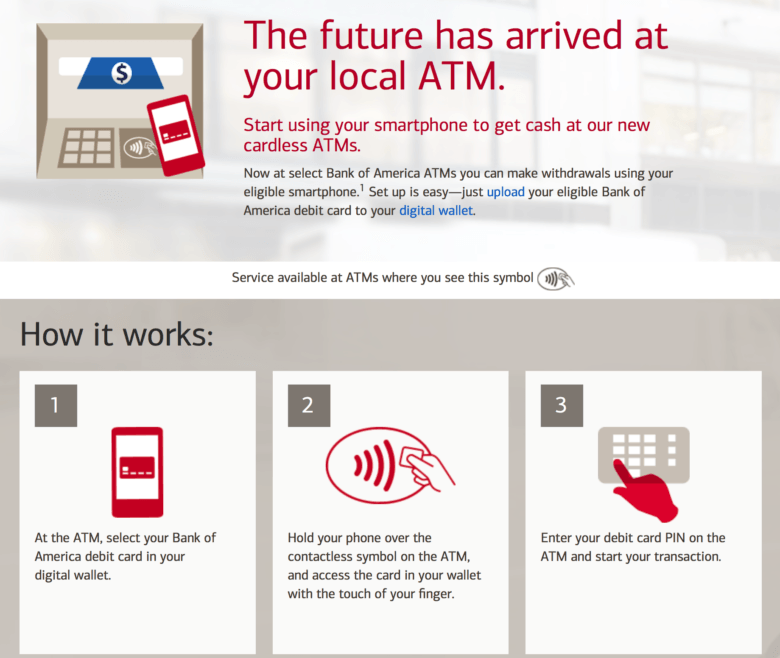
Digital Wallets (e.g., Apple Pay, Google Pay, Samsung Pay): Allow you to make secure, contactless payments directly from your smartphone or smartwatch, linking to your debit or credit cards.
-
Peer-to-Peer (P2P) Payment Apps (e.g., Zelle, Venmo, Cash App): Enable instant or near-instant money transfers to friends, family, or even some small businesses, often with no fees for standard transactions. Bank of America integrates Zelle directly into its mobile banking app, making it incredibly convenient for sending and receiving money without needing cash.
In conclusion, while Bank of America ATMs provide a reliable and convenient way to access your funds, understanding the associated limits, fees, and alternative options is key to effective personal finance management. By combining knowledge of your specific account limits with smart planning and security awareness, you can ensure your money is always accessible when and how you need it.
aViewFromTheCave is a participant in the Amazon Services LLC Associates Program, an affiliate advertising program designed to provide a means for sites to earn advertising fees by advertising and linking to Amazon.com. Amazon, the Amazon logo, AmazonSupply, and the AmazonSupply logo are trademarks of Amazon.com, Inc. or its affiliates. As an Amazon Associate we earn affiliate commissions from qualifying purchases.