
Securing capital is often the most significant hurdle for entrepreneurs looking to launch a startup or scale an existing enterprise. Whether you are eyeing a small storefront or a massive manufacturing facility, the question of “how much” is dictated by a complex interplay of your financial health, the nature of your business, and the specific requirements of the lender. There is no universal figure; instead, loan amounts typically range from $5,000 microloans to $5 million SBA-backed loans, and even higher for corporate commercial debt.
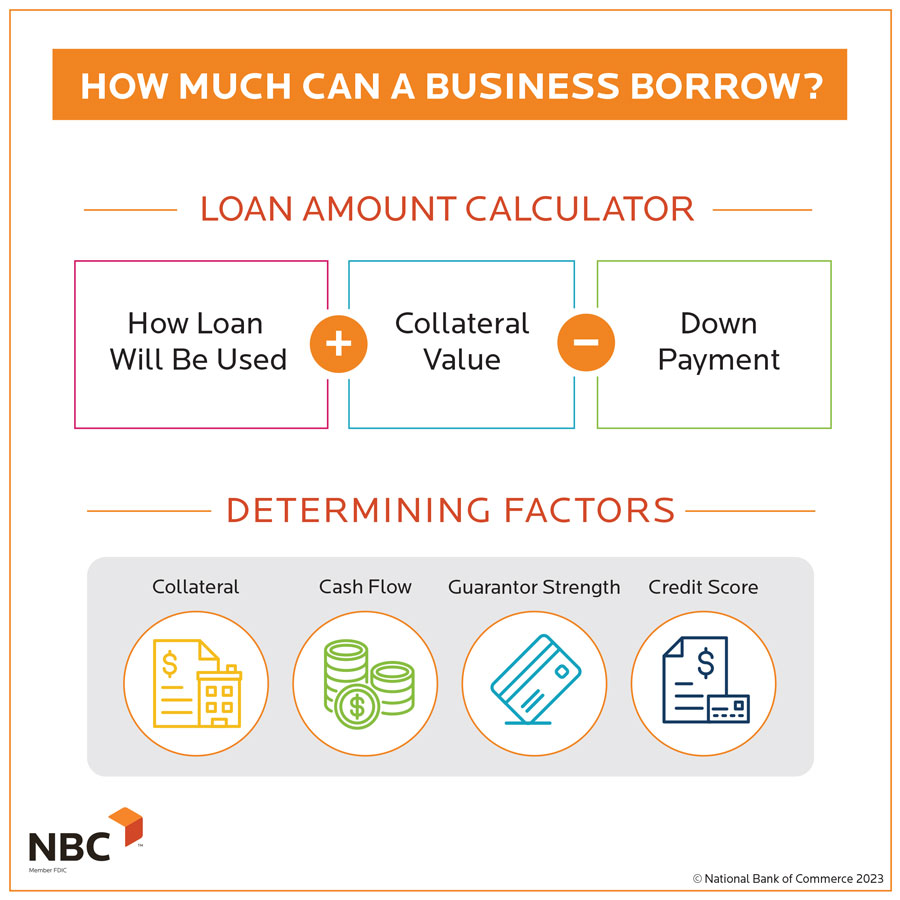
Understanding how much loan you can get requires looking beyond your desired budget and examining the metrics lenders use to measure risk. This guide breaks down the variables that dictate your borrowing capacity and how you can position your business to qualify for the maximum amount possible.
Key Factors That Determine Your Loan Amount
Lenders do not pull numbers from thin air. Every dollar they lend is backed by a calculation of risk versus reward. To determine your maximum loan amount, financial institutions generally look at four primary pillars of your financial profile.
Credit Score and Financial History
Your creditworthiness is the first gatekeeper. For most small business loans, especially for newer companies, lenders look at both your personal credit score and your business credit score (such as your FICO SBSS or Dun & Bradstreet score). A personal credit score above 700 typically opens the door to larger loan amounts and lower interest rates. If your score is in the 500s or 600s, you may be restricted to smaller, high-interest “bridge loans” or merchant cash advances.
Business Revenue and Cash Flow
Cash flow is the lifeblood of loan repayment. Lenders want to see that your business generates enough consistent monthly revenue to cover the new loan payment while still maintaining operational expenses. Most traditional banks and online lenders look for a minimum annual revenue—often starting at $100,000 to $250,000—to qualify for significant capital. For revenue-based financing, the loan amount is often capped at 10% to 30% of your annual gross sales.
Time in Business
Stability is a proxy for risk. Startups (businesses under two years old) are considered high-risk and often face stricter caps on how much they can borrow, typically limited to SBA microloans or personal loans used for business. Once a business passes the two-year mark, lenders are more willing to provide larger sums, such as five-to-seven-year term loans or substantial lines of credit, because the business has proven its ability to survive market fluctuations.
Collateral and Personal Guarantees
The “secured” versus “unsecured” nature of the loan heavily influences the limit. An unsecured loan relies solely on your creditworthiness and usually has a lower ceiling. However, if you offer collateral—such as real estate, equipment, or inventory—the lender may be willing to lend up to 70% to 90% of the value of those assets. Additionally, most small business loans require a personal guarantee, meaning you are personally liable for the debt if the business fails.
Understanding Debt Service Coverage Ratio (DSCR)
If you want to know exactly how a bank calculates your limit, you must understand the Debt Service Coverage Ratio (DSCR). This is the primary mathematical formula used by commercial lenders to determine if your business can afford a specific loan amount.
How Lenders Use DSCR
The DSCR is calculated by dividing your Net Operating Income (NOI) by your total annual debt service (the total amount of principal and interest payments for the year).
DSCR = Net Operating Income / Total Debt Service
Most lenders look for a DSCR of at least 1.25x. This means that for every $1.00 you owe in debt payments, your business generates $1.25 in profit. If your business has an NOI of $125,000 and the lender requires a 1.25x ratio, the maximum annual debt service they will allow you to take on is $100,000. If the loan you are requesting would result in payments higher than that, the lender will lower the total loan amount until the ratio is satisfied.
The Impact of Interest Rates on Borrowing Power
Because the DSCR formula relies on “Total Debt Service,” interest rates directly impact how much you can borrow. In a high-interest-rate environment, your monthly payments are higher, which eats into your DSCR. Consequently, when rates rise, the total amount of principal you can qualify for tends to shrink, even if your revenue remains the same.

Funding Limits by Loan Type
The “how much” also depends heavily on the specific financial product you choose. Different loan programs have inherent floors and ceilings.
SBA Loans (7(a) and 504)
The U.S. Small Business Administration (SBA) offers some of the most popular and high-limit loans available to small businesses.
-
SBA 7(a) Loans: This is the flagship program, offering up to $5 million. These funds can be used for working capital, expansion, or debt refinancing.
-
SBA 504 Loans: These are designed for major fixed assets like real estate or heavy machinery. These loans can also go up to $5 million or $5.5 million for certain manufacturing projects, and they often require a 10% to 20% down payment.
-
SBA Microloans: If you are a startup, you might be limited to this program, which caps out at $50,000.
Traditional Bank Loans and Lines of Credit
Traditional commercial banks offer term loans that can range from $50,000 into the millions, depending on the size of the business. However, their underwriting is the most stringent. A business line of credit is another common option, usually ranging from $10,000 to $500,000. These are “revolving” funds, meaning you only pay interest on what you use, and as you pay it back, the funds become available again.
Equipment Financing
If you are borrowing specifically to buy equipment, the “how much” is dictated by the equipment’s price tag. Lenders often provide 80% to 100% of the equipment’s value because the machinery itself serves as the collateral. This is often an easier way to get a larger loan amount than a standard term loan because the lender has a tangible asset they can seize and sell if you default.
Alternative and Online Lenders
Fintech platforms and online lenders offer faster funding but often at lower limits and higher costs. You might be able to get $5,000 to $250,000 within 24 to 48 hours. These lenders focus more on daily or weekly cash flow than on long-term credit history, making them a viable option for businesses that need capital quickly but may not qualify for a million-dollar bank loan.
Strategies to Increase Your Maximum Loan Amount
If the initial quotes you receive are lower than what you need to achieve your goals, there are proactive steps you can take to increase your borrowing capacity.
Improve Your Debt-to-Equity Ratio
Lenders look at how much skin you have in the game. If your business is funded entirely by debt, you are a high-risk borrower. By injecting more of your own capital (equity) into the business, you lower your debt-to-equity ratio. This makes lenders more comfortable giving you a larger loan because it shows that you are sharing the financial risk.
Provide Comprehensive Financial Projections
For many lenders, your historical performance is only half the story. If you can provide professional, realistic, and data-backed financial projections that show how the loan will generate more revenue, you may be able to justify a higher loan amount. For example, if you are borrowing $200,000 to buy a machine that will triple your production capacity, showing the signed contracts or market demand for that increased production can move the needle.
Clean Up Your Balance Sheet
Before applying, reduce as much existing debt as possible. If you have outstanding credit card balances or high-interest short-term loans, pay them off. This improves your DSCR and your debt-to-income ratio, signaling to the lender that you have the “room” in your budget to take on a larger primary loan.
Offer Specific Collateral
If you are seeking an unsecured loan and are being quoted a low amount, consider switching to a secured loan structure. Offering a lien on a piece of commercial property or a significant equipment fleet can drastically increase the lender’s confidence and, by extension, the amount they are willing to lend.
Final Considerations on Borrowing Capacity
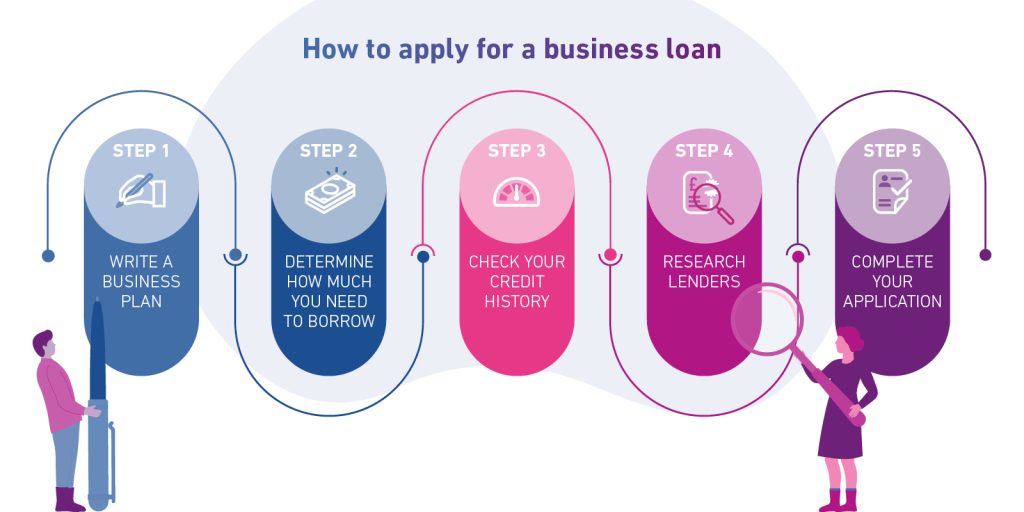
While the primary question is “how much loan can I get,” the more important question for the health of your business is “how much can I afford to repay?” Over-leveraging a business—taking the maximum amount a lender offers without considering the impact on monthly operations—is a common pitfall.
A successful funding strategy involves balancing the capital you need to grow with a repayment schedule that doesn’t stifle your cash flow. By understanding your DSCR, maintaining a strong credit profile, and choosing the right loan product for your specific industry, you can secure the capital necessary to reach your next milestone. Always remember that the maximum loan amount is a ceiling, not a requirement; the most sustainable path is often the one that aligns your debt levels with your actual revenue growth.
aViewFromTheCave is a participant in the Amazon Services LLC Associates Program, an affiliate advertising program designed to provide a means for sites to earn advertising fees by advertising and linking to Amazon.com. Amazon, the Amazon logo, AmazonSupply, and the AmazonSupply logo are trademarks of Amazon.com, Inc. or its affiliates. As an Amazon Associate we earn affiliate commissions from qualifying purchases.