
In the current landscape of digital entertainment, the transition from traditional linear cable to Internet Protocol Television (IPTV) represents one of the most significant shifts in consumer technology over the last decade. At the forefront of this revolution is YouTube TV, a service that has transitioned from a niche experimental offering into a powerhouse of the streaming world. For many tech enthusiasts and “cord-cutters,” the primary question—”how much is YouTube TV per month”—is merely the entry point into a broader discussion about the value of software-integrated broadcasting and the hardware infrastructure required to support it.
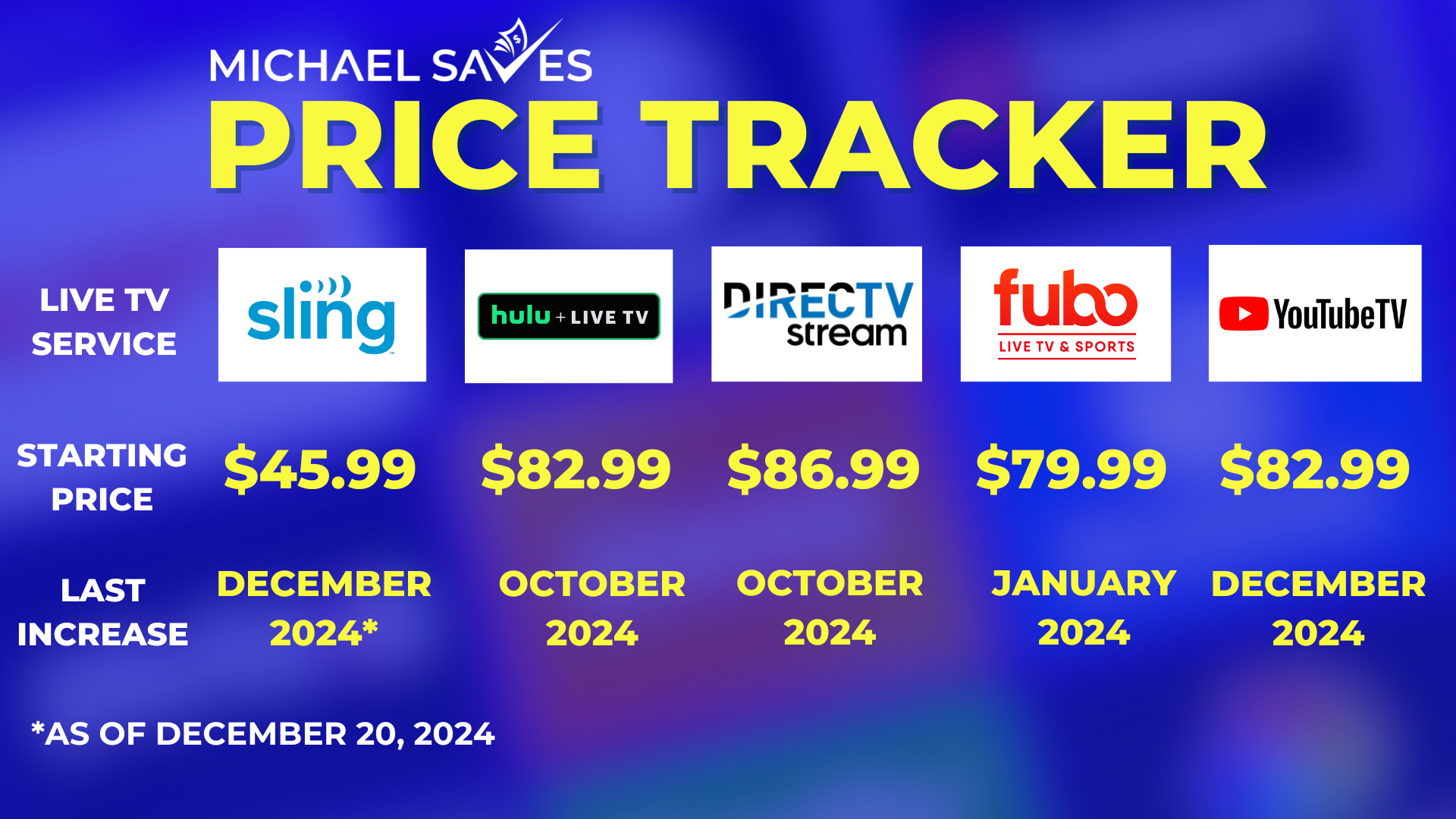
As of late 2023 and moving into 2024, the standard price for YouTube TV is $72.99 per month. While this price point has seen several iterations since the platform’s inception in 2017, the technological capabilities included in that monthly fee have expanded exponentially. To understand the cost, one must understand the tech stack, the interface, and the digital infrastructure that differentiates YouTube TV from its legacy competitors.
The Infrastructure of Live Television: What Your Subscription Covers
When analyzing the $72.99 price tag, it is essential to view YouTube TV not just as a collection of channels, but as a sophisticated software platform. Unlike traditional cable, which relies on physical coaxial infrastructure and proprietary hardware (set-top boxes), YouTube TV operates entirely via the cloud.
The Power of Unlimited Cloud DVR
One of the most significant technical advantages included in the base monthly price is the unlimited Cloud DVR. From a software engineering perspective, providing millions of users with the ability to record an unlimited number of simultaneous programs without storage caps is a massive undertaking. YouTube TV utilizes Google’s global data center infrastructure to manage these recordings. Programs are stored for up to nine months, and because the “recording” happens on the server side rather than on a local hard drive, users never encounter hardware failures or storage limits.
Low-Latency Streaming and 1080p Quality
A major hurdle for IPTV has always been latency—the delay between a live event occurring and it appearing on the screen. For tech-savvy sports fans, this is a critical metric. YouTube TV has invested heavily in reducing “broadcast delay” to ensure that the stream remains as close to real-time as possible. The base subscription supports high-definition streaming, typically at 1080p and 60 frames per second (fps), providing the fluid motion necessary for sports and action-intensive content.
Multi-Platform Ecosystem Integration
The $72.99 per month also grants access to an ecosystem that is hardware-agnostic. YouTube TV is compatible with virtually every modern smart device, including:
- Streaming Sticks: Roku, Amazon Fire TV, Chromecast, and Apple TV.
- Game Consoles: PlayStation 5 and Xbox Series X/S.
- Mobile OS: Optimized apps for both iOS and Android.
- Smart TVs: Native applications for Samsung, LG, Vizio, and Android TV.
Breaking Down the Base Plan: Technical Core Features
The monthly cost covers more than just a single stream; it covers a multi-user environment designed for the modern connected home.
Six Accounts and Three Concurrent Streams
From a digital management perspective, YouTube TV offers robust account sharing within a single household. The subscription allows for up to six individual accounts, each with its own personalized recommendations and private DVR library. This is managed through Google’s “Family Sharing” tech, which uses location-based verification to ensure the service is being used within the primary residence area. Furthermore, the base plan allows for three simultaneous streams across different devices, requiring significant bandwidth management and DRM (Digital Rights Management) coordination on the backend.
The Evolution of the User Interface (UI)
YouTube TV’s UI is frequently cited as its strongest technical asset. Leveraging Google’s expertise in search and AI, the platform offers a “Live Guide” that is significantly more responsive than traditional cable guides. The integration of “Key Plays” and real-time stats—features that use machine learning to identify significant moments in a sports broadcast—adds a layer of interactivity that justify the premium monthly cost over cheaper, less technical alternatives.
Local Channel Integration and Geo-Fencing
A complex technical aspect of YouTube TV is its ability to provide local network affiliates (ABC, CBS, NBC, FOX) based on the user’s GPS or IP data. This requires sophisticated geo-fencing software to ensure that the correct local advertisements and news broadcasts are served to the correct regional users, complying with complex licensing agreements through automated digital handshakes.
The Add-On Ecosystem: Expanding the Software Experience

For users who want to push their home theater tech to the limit, the $72.99 base price is just the beginning. YouTube TV offers several technical upgrades that cater to “power users.”
The 4K Plus Add-On
Perhaps the most notable upgrade is the 4K Plus package. While the price for this add-on fluctuates (often starting with a discounted period before settling around $9.99/month), it unlocks several high-end features:
- Ultra-High Definition (UHD): Access to select live events and on-demand content in 4K resolution.
- Offline Viewing: The ability to download DVR recordings to mobile devices for viewing without an internet connection—a significant technical feat given the encryption required.
- Unlimited In-Home Streams: Removing the three-stream cap for devices connected to the home Wi-Fi network.
Sports Plus and Premium Networks
For those looking to integrate more niche software into their dashboard, YouTube TV offers a “Sports Plus” bundle. This includes technical stalwarts like NFL RedZone. Additionally, premium networks like HBO Max, Showtime, and STARZ can be integrated directly into the YouTube TV interface, allowing for a single-app solution for all video consumption. This technical consolidation reduces “app fatigue” and simplifies the user’s digital footprint.
Comparing the Tech Stack: YouTube TV vs. Competitors
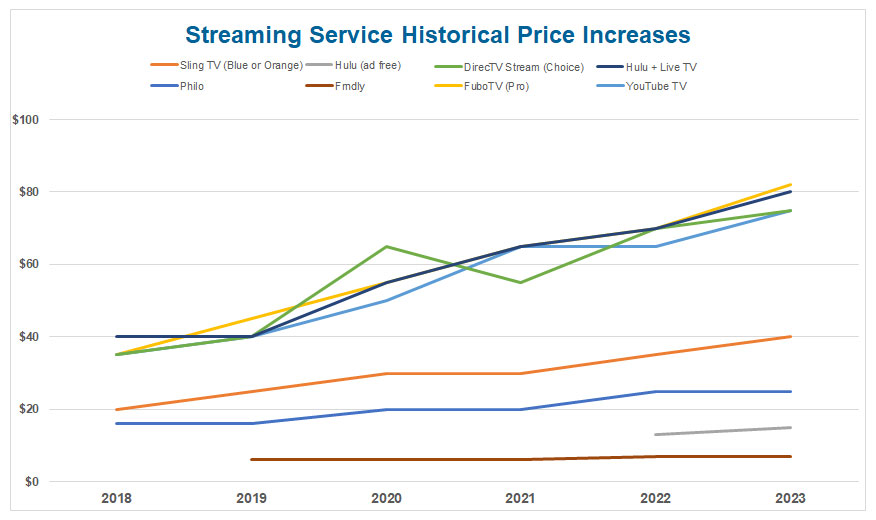
To understand if $72.99 is a competitive price, we must look at how the technology compares to other major players in the IPTV space, such as Hulu + Live TV and Fubo.
YouTube TV vs. Hulu + Live TV
Hulu + Live TV is priced similarly, but the two take different approaches to software. While Hulu integrates its massive VOD (Video On Demand) library and Disney+ bundle, YouTube TV focuses on the “lean-back” experience of live TV. Technically, YouTube TV’s interface is often considered more stable and faster to navigate, with fewer “buffering” instances during high-traffic events like the Super Bowl.
YouTube TV vs. Fubo
Fubo is often the choice for hardcore sports techies due to its inclusion of more regional sports networks. However, YouTube TV’s integration with the “NFL Sunday Ticket” has recently given it a technological edge in the sports market. The ability to watch four games at once through the “Multiview” feature is a software innovation that Fubo and Hulu have struggled to replicate with the same level of seamlessness.
The Future of Digital Broadcasting: Integration and AI
As we look at the monthly cost of YouTube TV, we are also paying for the future development of the platform. Google is increasingly integrating AI and advanced data analytics into the streaming experience.
AI-Driven Discovery and Recommendations
The “Home” tab on YouTube TV uses the same recommendation algorithms that power the standard YouTube platform. By analyzing viewing habits, the software predicts what you want to watch before you even click. This reduces the “search time” and increases the value of the subscription by surfacing content that matches the user’s technical preferences.
Multiview Technology
One of the most impressive technical rollouts in recent years is “Multiview.” This feature allows users to watch up to four predetermined live feeds on a single screen. Unlike traditional “Picture-in-Picture” tech, which often requires significant processing power from the hardware device, YouTube TV handles the “stitching” of these four streams on their own servers. This means even a low-powered streaming stick can display four HD streams simultaneously without overheating or lagging.
Integration with the Smart Home
As the Matter and Thread protocols become more common in smart home technology, YouTube TV is positioned to be the central hub of the “connected living room.” Integration with Google Assistant allows for voice-controlled channel switching and “routines” where the TV can turn on to a specific news channel as part of a morning automation.
Conclusion: Is the Tech Worth the Price?
When asking “how much is YouTube TV per month,” the answer is a straightforward $72.99. However, the value of that $72.99 is found in the robust cloud infrastructure, the industry-leading DVR software, and the constant technical iterations provided by Google’s engineering teams.
For the modern consumer, YouTube TV isn’t just a way to watch television; it is a sophisticated piece of streaming software that has effectively replaced the need for clunky hardware, long-term contracts, and professional installations. In the world of tech, you often get what you pay for—and with YouTube TV, you are paying for one of the most stable, feature-rich, and future-proof IPTV platforms currently available on the market.
aViewFromTheCave is a participant in the Amazon Services LLC Associates Program, an affiliate advertising program designed to provide a means for sites to earn advertising fees by advertising and linking to Amazon.com. Amazon, the Amazon logo, AmazonSupply, and the AmazonSupply logo are trademarks of Amazon.com, Inc. or its affiliates. As an Amazon Associate we earn affiliate commissions from qualifying purchases.