
The US dollar’s influence extends far beyond the borders of the United States. As the world’s primary reserve currency, its value fluctuates daily, impacting everything from international trade and investment to the cost of goods and services for individuals and businesses worldwide. Understanding “how much is the US dollar worth” is not merely an academic exercise; it’s a crucial element for informed financial decision-making. This article delves into the multifaceted nature of the dollar’s worth, exploring the key drivers of its value and its implications in the current economic climate.

The Dollar’s Foundation: Economic Strength and Monetary Policy
The perceived worth of any currency is inextricably linked to the underlying economic health and stability of the issuing nation. For the US dollar, this foundation is built upon a combination of robust economic indicators and the strategic decisions made by its central bank, the Federal Reserve.
Economic Pillars Supporting the Dollar’s Value
The United States boasts the largest economy in the world, characterized by a diverse and dynamic industrial base, a highly skilled workforce, and a strong consumer market. Several key economic metrics consistently inform the dollar’s strength:
- Gross Domestic Product (GDP): A growing and healthy GDP signifies an expanding economy, which generally leads to increased demand for its currency. When the US economy performs well, investors are more inclined to hold dollars to participate in its growth, driving up its value.
- Inflation Rates: Moderate and controlled inflation is often seen as a sign of a healthy economy. However, persistently high inflation erodes the purchasing power of a currency, diminishing its value. Conversely, deflation, while seemingly positive, can signal a weakening economy and lead to currency depreciation. The Federal Reserve’s dual mandate includes maintaining price stability, meaning controlling inflation to preserve the dollar’s purchasing power.
- Employment Data: Strong employment figures, indicated by low unemployment rates and consistent job growth, reflect a robust labor market. This translates to higher consumer spending, a significant driver of the US economy, and consequently, increased demand for dollars.
- Interest Rates: The Federal Reserve’s control over interest rates is a primary tool for influencing the dollar’s value. Higher interest rates make dollar-denominated assets, such as U.S. Treasury bonds, more attractive to foreign investors seeking higher yields. This increased demand for dollars to invest in these assets can strengthen the currency. Conversely, lower interest rates can make the dollar less appealing to international investors, potentially leading to depreciation.
The Federal Reserve’s Role in Monetary Policy
The Federal Reserve (the Fed) plays a pivotal role in shaping the dollar’s worth through its monetary policy decisions. Its actions are closely watched by global markets, as they have a profound impact on liquidity, borrowing costs, and investor sentiment.
- Interest Rate Adjustments: As mentioned, the Fed’s decisions on the federal funds rate are a primary driver of currency valuation. Raising rates aims to curb inflation and attract foreign capital, while lowering rates seeks to stimulate economic growth but can weaken the dollar.
- Quantitative Easing (QE) and Tightening (QT): QE involves the Fed purchasing assets, injecting liquidity into the financial system, which can devalue the dollar. QT, the opposite, involves the Fed selling assets or allowing them to mature without replacement, withdrawing liquidity and potentially strengthening the dollar.
- Forward Guidance: The Fed’s communication about its future policy intentions, known as forward guidance, also influences market expectations and can affect the dollar’s value even before policy changes are implemented.
External Forces Shaping the Dollar’s Worth
While domestic economic factors are paramount, the US dollar’s value is also significantly influenced by global events, geopolitical shifts, and the performance of other major economies. The dollar’s status as the world’s reserve currency means it’s constantly in demand for international transactions, making it sensitive to global dynamics.
The Dollar as a Global Safe Haven
In times of global economic uncertainty or geopolitical turmoil, investors often flock to assets they perceive as safe and stable. The US dollar, backed by the world’s largest economy and a stable political system, has historically served as a primary safe-haven currency. During crises, increased demand for dollars to park in perceived safe assets can cause its value to appreciate, even if domestic economic conditions are not overwhelmingly positive. This phenomenon highlights the dollar’s unique role in the international financial system.
Exchange Rates and Currency Pairs
The worth of the US dollar is most directly observed through its exchange rates against other major currencies. An exchange rate represents the value of one currency in terms of another. For example, if the EUR/USD exchange rate is 1.10, it means that one euro can buy 1.10 US dollars, or conversely, one US dollar can buy approximately 0.91 euros.
- Factors Influencing Currency Pairs: The movement of any currency pair is influenced by the relative economic strength, interest rate differentials, inflation expectations, and political stability of the two countries involved. When the US economy is performing better than, say, the Eurozone, the USD is likely to strengthen against the EUR.
- Impact on International Trade and Investment: A stronger dollar makes U.S. exports more expensive for foreign buyers, potentially hurting export-oriented industries. Conversely, it makes imports cheaper for U.S. consumers and businesses, which can be beneficial for certain sectors. For investors, a stronger dollar can enhance the returns on foreign investments when converted back into dollars, while a weaker dollar can erode those gains.
Global Economic Trends and Geopolitical Events
The interconnectedness of the global economy means that events far beyond U.S. shores can impact the dollar’s value.
- Commodity Prices: Many global commodities, such as oil, are priced in US dollars. Fluctuations in commodity prices can therefore influence the demand for dollars. For instance, rising oil prices can increase demand for dollars as countries need them to purchase this essential resource.
- Geopolitical Instability: Conflicts, trade wars, and significant political events in other major economies can create uncertainty. This uncertainty often drives investors towards the perceived safety of the US dollar, leading to its appreciation.
- Performance of Other Major Economies: The relative economic performance of other major economies, such as China, Japan, and the Eurozone, also plays a significant role. If these economies experience robust growth and attractive investment opportunities, capital may flow out of the US, weakening the dollar. Conversely, if they face economic headwinds, the dollar may strengthen.
Measuring the Dollar’s Worth: Key Indices and Tools
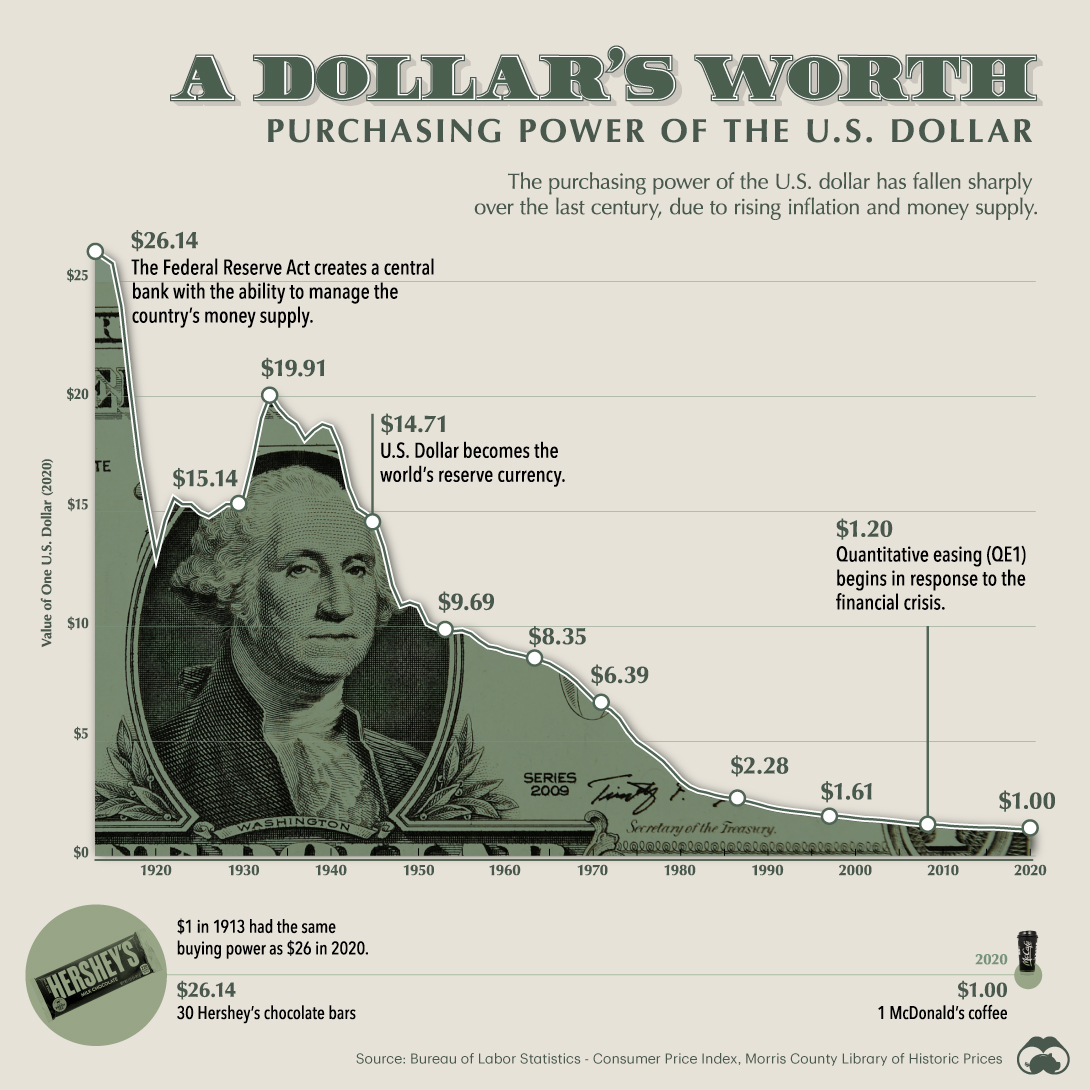
Quantifying the exact “worth” of the US dollar can be complex, as it’s not a static figure. Instead, its value is relative and measured against a basket of other currencies or through specific indices that track its performance.
The U.S. Dollar Index (DXY)
Perhaps the most widely cited measure of the dollar’s strength is the U.S. Dollar Index (DXY). The DXY is a proprietary index that measures the value of the US dollar relative to a basket of six major world currencies:
- Euro (EUR)
- Japanese Yen (JPY)
- British Pound Sterling (GBP)
- Canadian Dollar (CAD)
- Swedish Krona (SEK)
- Swiss Franc (CHF)
The DXY is weighted, with the Euro having the largest weighting (57.6%). A rising DXY indicates that the US dollar is strengthening against these currencies, while a falling DXY signifies a weakening dollar. For traders, investors, and policymakers, the DXY serves as a crucial benchmark for understanding the dollar’s overall performance in the international foreign exchange markets.
Purchasing Power Parity (PPP)
Purchasing Power Parity (PPP) is an economic theory that attempts to determine the long-term exchange rate between two currencies. It suggests that, in the long run, exchange rates should adjust so that an identical basket of goods and services costs the same amount in each country.
- How PPP Works: If a basket of goods costs $100 in the United States and the equivalent basket costs €90 in the Eurozone, the implied PPP exchange rate would be $100/€90 = approximately €1.11 per dollar. If the actual market exchange rate is, say, €1.05 per dollar, this suggests the dollar is undervalued relative to the euro according to PPP.
- Limitations of PPP: While PPP provides a theoretical benchmark, it’s important to note that it’s a long-term concept and doesn’t account for short-term market fluctuations, trade barriers, transportation costs, or differences in consumer preferences. Nevertheless, it offers a valuable perspective on the dollar’s relative worth in terms of what it can actually buy.
Individual Currency Exchange Rates
Beyond broad indices, the specific exchange rate of the US dollar against individual currencies is critical for businesses and individuals engaged in international transactions. For example, a U.S. exporter selling goods to Japan will be keenly interested in the USD/JPY exchange rate, as it directly impacts their revenue in dollar terms. Similarly, a U.S. tourist planning a trip to the United Kingdom will monitor the USD/GBP exchange rate to understand how much their dollars will be worth when exchanged for pounds. These individual rates reflect the interplay of economic and political factors between the two specific countries.
The Dollar’s Enduring Significance and Future Outlook
The US dollar’s position as the world’s preeminent reserve currency has been entrenched for decades, facilitating global trade, investment, and financial stability. However, the financial landscape is constantly evolving, and discussions about the dollar’s future dominance are ongoing.
The Dollar’s Role as a Reserve Currency
The dollar’s reserve currency status means that central banks and financial institutions around the world hold significant amounts of dollars as part of their foreign exchange reserves. This demand is driven by several factors:
- Liquidity and Depth of U.S. Financial Markets: The sheer size and liquidity of U.S. financial markets make it easy for large quantities of dollars to be bought and sold without significantly impacting prices.
- Stability and Trust: Despite economic cycles, the US political and economic system has historically been perceived as stable, fostering trust in the dollar.
- Inertia and Network Effects: Once a currency becomes dominant, it benefits from network effects. Businesses and financial institutions are accustomed to using dollars for international transactions, creating a self-reinforcing cycle.
Challenges and Potential Shifts in Global Currency Dynamics
While the dollar’s position is strong, several factors could influence its future prominence:
- Rise of Other Economic Powers: The growing economic influence of countries like China, and the potential for the Chinese Yuan to gain greater international acceptance, could present a long-term challenge to dollar dominance.
- Geopolitical Realignment: Shifts in global alliances and trade patterns could lead to a de-dollarization trend, where countries seek to reduce their reliance on the US dollar for international transactions.
- Technological Advancements (e.g., Digital Currencies): The development of central bank digital currencies (CBDCs) and stablecoins could alter the way international payments are made, potentially impacting the role of traditional fiat currencies like the dollar.
- U.S. Fiscal and Monetary Policy Decisions: Sustained periods of high inflation, large national debt, or unpredictable monetary policy could erode confidence in the dollar over the long term.
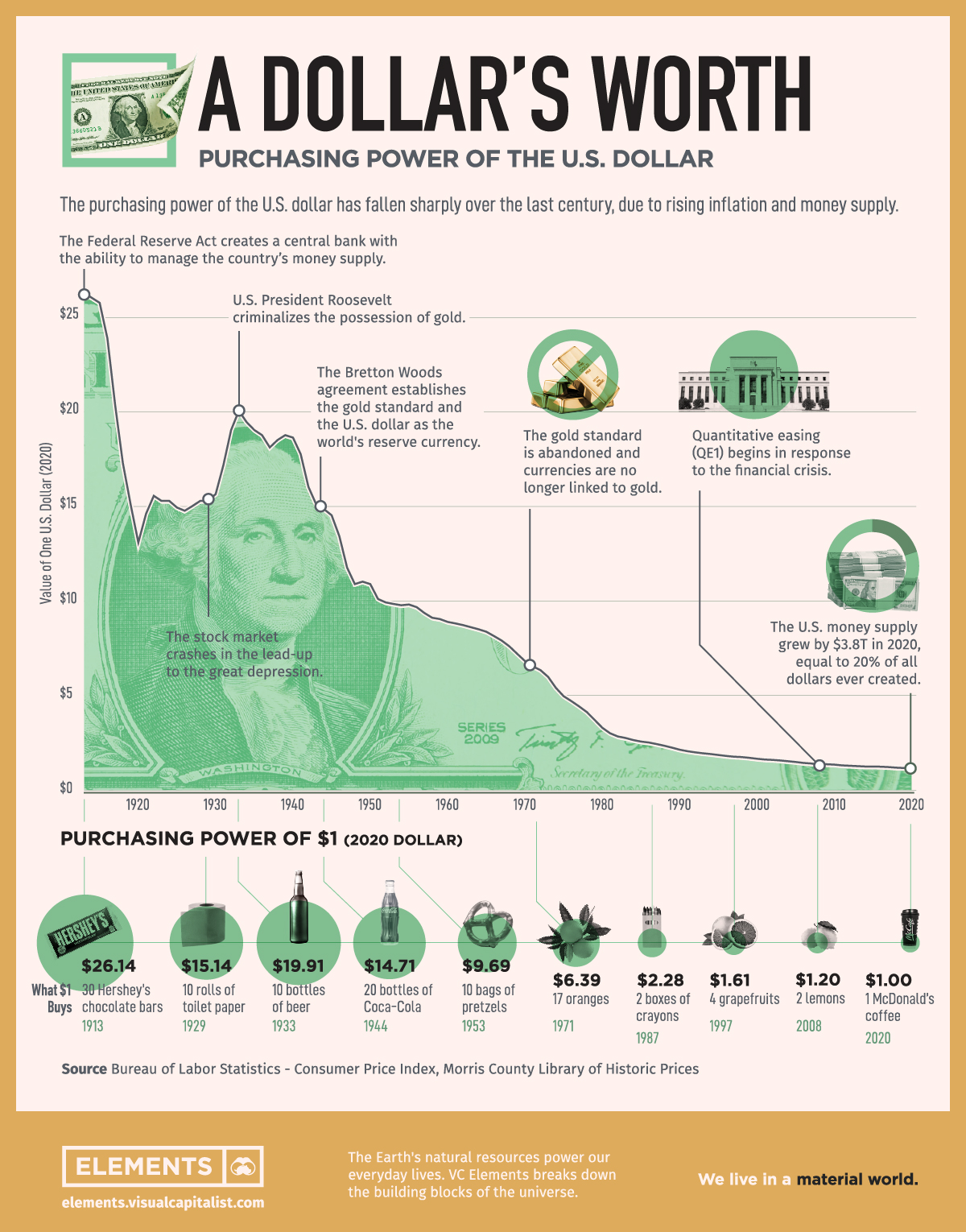
Investing and Managing Financial Exposure in a Dynamic Dollar Environment
For individuals and businesses, understanding the dollar’s fluctuating worth is essential for effective financial management.
- Diversification: Holding assets denominated in different currencies can help mitigate risks associated with dollar depreciation. This could involve investing in international stocks, bonds, or real estate.
- Hedging Strategies: Businesses engaged in international trade may employ currency hedging strategies, such as forward contracts or options, to lock in exchange rates and protect against adverse currency movements.
- Informed Investment Decisions: Investors must consider the impact of exchange rates on their portfolio returns. A strong dollar can boost returns on foreign investments when converted back, while a weak dollar can diminish them. Conversely, a strong dollar can make U.S. assets less attractive to foreign investors.
In conclusion, the “worth” of the US dollar is a dynamic entity shaped by a complex interplay of domestic economic strength, Federal Reserve policy, global economic trends, and geopolitical events. While its position as the world’s leading reserve currency provides it with a significant advantage, the global financial landscape is constantly evolving. Staying informed about the factors influencing the dollar’s value is paramount for navigating the complexities of international finance and making sound financial decisions in an increasingly interconnected world.
aViewFromTheCave is a participant in the Amazon Services LLC Associates Program, an affiliate advertising program designed to provide a means for sites to earn advertising fees by advertising and linking to Amazon.com. Amazon, the Amazon logo, AmazonSupply, and the AmazonSupply logo are trademarks of Amazon.com, Inc. or its affiliates. As an Amazon Associate we earn affiliate commissions from qualifying purchases.