
Determining the cost of a Tesla is no longer a straightforward question of looking at a sticker price. In the current economic climate, the financial reality of owning a Tesla involves a complex calculation of base MSRP, fluctuating market adjustments, federal incentives, and long-term operational savings. For the modern consumer, understanding “how much” a Tesla costs requires a deep dive into the total cost of ownership (TCO) and the shifting landscape of automotive finance.
Tesla has famously disrupted the traditional dealership model, opting for a direct-to-consumer approach that features dynamic pricing. This means that the price you see today might be different from the price next month, influenced by supply chain costs, battery material availability, and competitive positioning within the electric vehicle (EV) sector. To truly grasp the financial commitment, one must look beyond the initial transaction and analyze the vehicle as a multi-year financial asset.
The Current Price Landscape: Entry-Level to High-Performance Models
The Tesla lineup is strategically segmented to cover various price points, from the “mass-market” entry levels to the high-end luxury performance tiers. Because Tesla frequently updates its pricing to reflect market demand and production efficiencies, these figures represent the current baseline for the most popular configurations.
The Model 3 and Model Y: Accessibility and Market Positioning
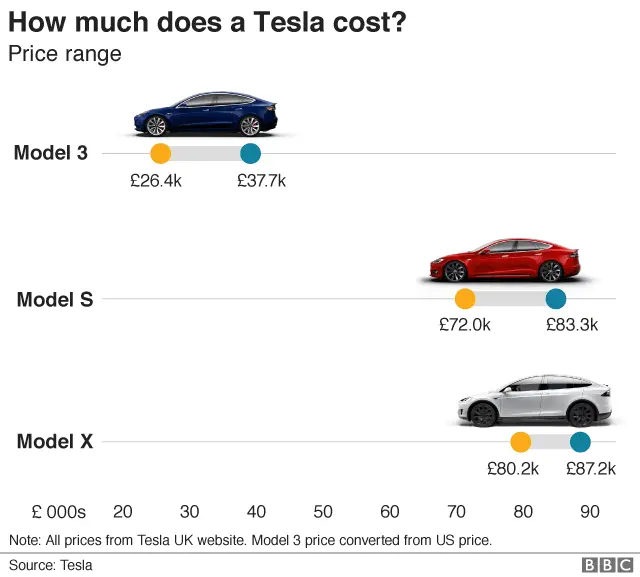
The Model 3 remains the entry point into the Tesla ecosystem. Strategically priced to compete with entry-level luxury internal combustion engine (ICE) vehicles, the Model 3 Rear-Wheel Drive typically starts in the low $40,000 range. However, for many buyers, the Model 3 Long Range is the more practical financial choice, offering better utility and resale value for a mid-$40,000 to low-$50,000 investment.
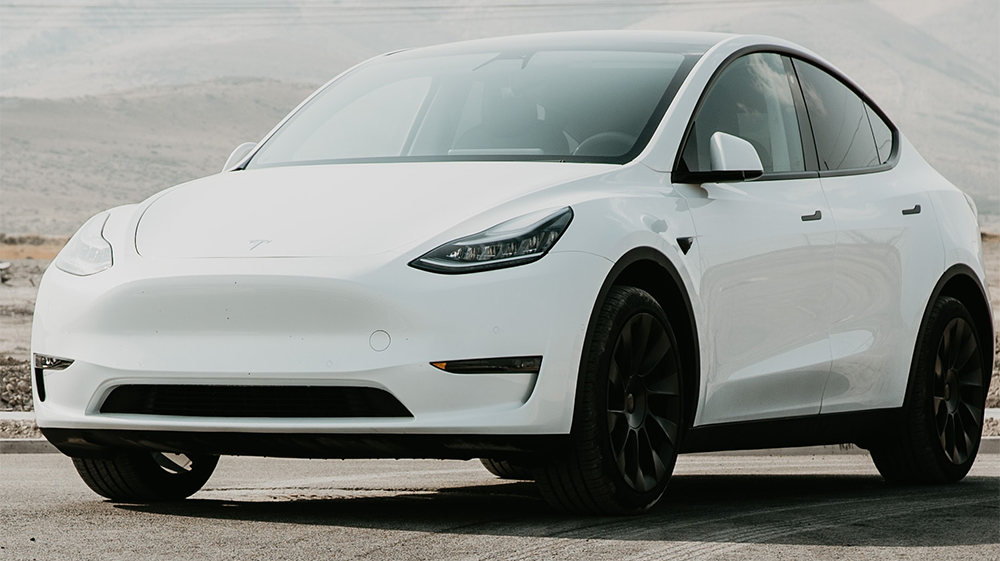
The Model Y, now the world’s best-selling vehicle, commands a premium over the Model 3 due to its SUV form factor. Starting in the high $40,000s and moving into the mid-$50,000s for the Performance variant, the Model Y represents the “sweet spot” for families. From a financial perspective, the Model Y often sees the highest demand in the used market, which can translate to better equity retention compared to other EVs.
The Model S and Model X: The Luxury Investment
For those looking at the flagship models, the financial commitment increases significantly. The Model S, Tesla’s flagship sedan, generally starts in the mid-$70,000 range, while the tri-motor “Plaid” variant can push the price well over $85,000. The Model X, featuring its iconic falcon-wing doors and greater cargo capacity, starts in the low $80,000s, with the Plaid version reaching toward the $95,000 mark. These vehicles are positioned as luxury assets, competing with high-end offerings from brands like Porsche and Mercedes-Benz, and their pricing reflects their status as technological showcases.
Regional Pricing Variations and Delivery Fees
It is a common mistake to overlook the “hidden” costs that appear at the final checkout. Regardless of the model, Tesla charges a mandatory destination and documentation fee, usually around $1,390. Furthermore, depending on your state of residence, sales tax can add several thousand dollars to the final bill. In states like California or New York, the tax burden on a $50,000 vehicle can exceed $4,000, a significant factor when calculating the total cash outlay required for delivery.
Calculating the Total Cost of Ownership (TCO)
The true cost of a Tesla is best understood through the lens of Total Cost of Ownership. While the upfront price may be higher than a comparable gasoline vehicle, the operational expenses are significantly lower. For many owners, the “monthly nut” of a Tesla—when factoring in fuel and maintenance—often rivals that of a much cheaper gasoline car.
Energy vs. Fuel: The Monthly Savings Equation
The most immediate financial benefit of Tesla ownership is the elimination of gasoline expenses. On average, charging a Tesla at home costs about one-third to one-fourth the price of fueling a gasoline car for the same distance. For a driver covering 12,000 miles per year, this can result in annual savings of $1,000 to $2,000, depending on local utility rates.
Over a typical five-year ownership period, these energy savings can total $5,000 to $10,000, effectively “rebating” a portion of the purchase price back to the owner. However, it is important to note that frequent use of the Tesla Supercharger network is more expensive than home charging, though still generally cheaper than premium gasoline.
Maintenance and Insurance: Hidden Financial Variables
Tesla vehicles have fewer moving parts than internal combustion engines—no oil changes, spark plugs, or timing belts. This reduces scheduled maintenance costs by roughly 40-50% over the life of the vehicle. However, potential owners must account for tires; because of the heavy battery pack and high torque, Teslas can wear through tires faster than traditional vehicles, representing a recurring cost of $800 to $1,500 every few years.
Insurance is another critical financial variable. Teslas are often more expensive to insure due to higher repair costs for their specialized aluminum frames and advanced sensor suites. It is not uncommon for insurance premiums to be 20-30% higher than for a comparable BMW or Audi. Savvy buyers should obtain insurance quotes before purchasing to ensure the monthly premium fits within their budget.
Depreciation and Resale Value Trends
Historically, Teslas held their value remarkably well. However, as the EV market matures and Tesla increases production capacity, depreciation rates have begun to normalize. The “how much” question must include the projected residual value after three or five years. While the Model 3 and Model Y still tend to perform better than many luxury competitors in terms of resale, the volatile price cuts initiated by Tesla in recent years have made it harder to predict equity. For the buyer, this means a Tesla should be viewed as a long-term utility asset rather than a short-term speculative purchase.

Tax Credits and Financial Incentives
The effective cost of a Tesla is frequently lower than the MSRP due to a complex web of government incentives. In the United States, the Inflation Reduction Act has radically changed the math for many buyers.
Federal EV Tax Credits Explained
Under current regulations, many versions of the Model 3 and Model Y qualify for a federal tax credit of up to $7,500. A crucial development is the “point-of-sale” credit, which allows eligible buyers to apply the credit directly to the purchase price at the time of delivery, rather than waiting until they file their taxes the following year.
However, this incentive is subject to strict income caps—$150,000 for single filers and $300,000 for joint filers—and MSRP limits ($55,000 for sedans and $80,000 for SUVs). If you qualify, a $45,000 Model Y effectively becomes a $37,500 vehicle, a price point that makes it highly competitive with non-electric crossovers.
State-Level Rebates and Local Perks
Beyond federal help, various states offer additional financial “carrots.” States like Colorado, Massachusetts, and California have historically offered rebates ranging from $2,000 to $5,000. Furthermore, some local utility companies provide rebates for the installation of home charging stations, which can cost between $500 and $1,500. These incentives can collectively shave over $10,000 off the total cost of the vehicle, significantly altering the ROI (Return on Investment) calculation.
Business Use and Section 179 Deductions
For business owners, the Model X offers a unique financial loophole. Because its Gross Vehicle Weight Rating (GVWR) exceeds 6,000 pounds, it may qualify for the Section 179 tax deduction. This allows businesses to deduct a significant portion of the vehicle’s cost in the first year of ownership, provided it is used primarily for business purposes. For a high-income business owner, this can result in tax savings worth tens of thousands of dollars, making the luxury SUV a surprisingly prudent business expense.
Financing and Leasing Strategies
How you pay for a Tesla is just as important as the price you pay. With fluctuating interest rates, the financing structure can add thousands to the total cost over the life of the loan.
Tesla Financing vs. Third-Party Credit Unions
Tesla offers in-house financing, often partnered with major banks like Wells Fargo or JPMorgan Chase. While the convenience of “one-click” financing in the Tesla app is tempting, buyers can often find lower interest rates at local credit unions or through specialized “green car” loans. Even a 1% difference in interest rate on a $50,000 loan can save an owner over $1,500 over a 72-month term.
The Lease-to-Own Dilemma
Tesla’s leasing program is distinct because, for certain models (like the Model 3 and Model Y), the company historically did not allow lessees to buy out the car at the end of the term. This makes leasing a “pure” expense—you are paying for the depreciation without any hope of building equity. For some, the lower monthly payment of a lease is attractive, but from a wealth-building perspective, purchasing often yields better long-term results, especially given the car’s longevity.
Full Self-Driving (FSD) Subscriptions vs. Upfront Costs
One of the most significant “add-ons” is the Full Self-Driving (FSD) suite. Currently priced at several thousand dollars as an upfront option, it adds a hefty chunk to the purchase price. However, Tesla also offers a monthly subscription model. From a financial planning standpoint, the subscription is often the smarter move; it allows you to test the technology without committing thousands of dollars that may not be fully recovered when you sell the car.
Is a Tesla a Sound Financial Decision?
Ultimately, “how much is the Tesla” is a question of value proposition. When we look at the combination of purchase price, federal incentives, and dramatically lower fuel and maintenance costs, the financial case for a Tesla is stronger than ever.
The ROI of Sustainable Transport
For the average commuter, the break-even point—where the savings on gas and maintenance offset the higher initial purchase price compared to a budget gasoline car—usually occurs between years three and five. If you plan to keep the vehicle for seven to ten years, the Tesla often becomes one of the most cost-effective vehicles in its class.
Market Volatility and Price Fluctuations
The primary financial risk of Tesla ownership remains the brand’s aggressive pricing strategy. If Tesla drops prices by $5,000 overnight, the resale value of existing cars drops accordingly. Potential buyers should look at their purchase as a tool for transportation and a way to lower monthly operational costs, rather than a speculative investment.
By focusing on the net price after incentives and the monthly savings on energy, a Tesla reveals itself to be not just a technology gadget, but a strategic financial choice for the modern household or business. Whether it is a $35,000 Model 3 after tax credits or a $90,000 Model X for business use, the cost of a Tesla is a dynamic figure that rewards those who do the math.
aViewFromTheCave is a participant in the Amazon Services LLC Associates Program, an affiliate advertising program designed to provide a means for sites to earn advertising fees by advertising and linking to Amazon.com. Amazon, the Amazon logo, AmazonSupply, and the AmazonSupply logo are trademarks of Amazon.com, Inc. or its affiliates. As an Amazon Associate we earn affiliate commissions from qualifying purchases.