
Navigating the landscape of home ownership is one of the most significant financial journeys an individual will ever undertake. At the heart of this journey lies a single, pivotal question: “How much is the interest rate on a house loan?” While the answer might seem like a simple percentage, it is actually a complex variable influenced by global economic shifts, personal financial health, and the specific architecture of the loan product itself. Understanding the nuances of mortgage interest rates is essential for any prospective homeowner or investor looking to optimize their long-term wealth.

Understanding the Fundamentals of Mortgage Interest Rates
To understand what you will pay for a house loan, you must first distinguish between the nominal interest rate and the Annual Percentage Rate (APR). The interest rate is the cost you pay each year to borrow the money, expressed as a percentage. It does not include other costs associated with the loan. The APR, however, is a broader measure of the cost of borrowing. It includes the interest rate plus other costs such as broker fees, discount points, and some closing costs. When comparing lenders, the APR provides a more accurate picture of the total cost of the loan.
Interest rates are primarily categorized into two types: fixed-rate and adjustable-rate. A fixed-rate mortgage maintains the same interest rate for the entire life of the loan, whether that is 15, 20, or 30 years. This provides the borrower with predictability and protection against rising market rates. Conversely, an Adjustable-Rate Mortgage (ARM) usually starts with a lower “teaser” rate for a set period (such as five or seven years) and then adjusts periodically based on market indices. While ARMs can offer initial savings, they carry the risk of significantly higher payments in the future.
Furthermore, the duration of the loan significantly impacts the rate offered. Generally, a 15-year fixed-rate mortgage will have a lower interest rate than a 30-year fixed-rate mortgage. Lenders offer lower rates for shorter terms because they are taking on risk for a shorter period and are getting their principal back faster. However, because the loan is compressed into fewer years, the monthly payment for a 15-year loan will be substantially higher, even with the lower interest rate.
The Role of Amortization
Amortization is the process of paying off debt over time in regular installments. In the early years of a house loan, a vast majority of your monthly payment goes toward the interest. As the principal balance decreases, the amount of interest charged each month also decreases, allowing more of the payment to be applied to the principal. Understanding this cycle is vital for those considering early repayment strategies or those wondering why their equity builds so slowly in the first decade of a 30-year mortgage.
Factors That Influence Your Personal Interest Rate
While daily market news might report a “national average” mortgage rate, the rate you are actually quoted by a lender is highly personalized. Lenders use a risk-based pricing model to determine your specific rate. The more risk you represent, the higher the interest rate you will be charged.
Credit Score and Financial History
Your credit score is perhaps the single most influential factor in determining your interest rate. Lenders primarily use FICO scores to gauge the likelihood that a borrower will repay the loan. A borrower with a “Very Good” to “Exceptional” score (740 to 850) will typically qualify for the lowest available rates. Conversely, a borrower with a score in the low 600s might face rates that are 1% to 2% higher, which can translate into hundreds of thousands of dollars in extra interest over the life of a 30-year loan.
Loan-to-Value (LTV) Ratio and Down Payment
The amount of money you put down on a home directly affects your interest rate. The Loan-to-Value (LTV) ratio is the amount of the loan compared to the appraised value of the property. A 20% down payment results in an 80% LTV, which is often the “sweet spot” for securing competitive rates without the added cost of Private Mortgage Insurance (PMI). Lenders view borrowers with significant “skin in the game” as lower risk, often rewarding them with lower interest rates.
Debt-to-Income (DTI) Ratio
Lenders also examine your Debt-to-Income ratio, which is the percentage of your gross monthly income that goes toward paying debts. A high DTI suggests that a borrower may have trouble managing additional monthly payments, leading lenders to increase the interest rate to compensate for the perceived risk of default. Generally, a DTI of 36% or lower is preferred, though some programs allow for higher ratios if other financial factors are strong.
Macroeconomic Drivers of Mortgage Rates
Beyond your personal financial profile, mortgage rates are heavily influenced by the broader economic environment. They do not exist in a vacuum; rather, they react to the tides of the global and domestic economy.

The Federal Reserve and Monetary Policy
A common misconception is that the Federal Reserve sets mortgage rates. In reality, the Fed sets the “federal funds rate,” which is the rate banks charge each other for overnight loans. However, the Fed’s actions have a powerful “trickle-down” effect. When the Fed raises rates to combat inflation, the cost of borrowing increases across the board, including for mortgages. When the Fed lowers rates to stimulate the economy, mortgage rates typically follow suit.
Inflation Trends
Inflation is the enemy of long-term fixed-income investments like mortgages. If inflation is high, the purchasing power of the dollars a lender receives back in the future will be lower. To protect against this loss of value, lenders demand higher interest rates. Therefore, when the Consumer Price Index (CPI) shows rising inflation, mortgage rates almost always trend upward.
The 10-Year Treasury Yield
Mortgage rates are most closely tied to the yield on the 10-year Treasury note. Investors often view mortgage-backed securities (MBS) as an alternative to government bonds. To attract investors, mortgage-backed securities must offer a higher yield than the “risk-free” Treasury note. Usually, there is a “spread” of about 1.5% to 2% between the 10-year Treasury yield and the average 30-year mortgage rate. By watching the daily fluctuations of the 10-year Treasury, one can often predict which way mortgage rates will move in the short term.
Different Loan Types and Their Specific Rates
The type of loan program you choose will also dictate how much interest you pay. Various government-backed and conventional programs are designed for different types of borrowers.
Conventional Loans
Conventional loans are not insured by the federal government and typically follow the guidelines set by Fannie Mae and Freddie Mac. These loans often require higher credit scores and down payments but offer some of the most competitive rates for well-qualified borrowers. They are available in both conforming and jumbo sizes (for high-cost areas).
FHA, VA, and USDA Loans
The government offers several programs to help specific groups achieve homeownership. FHA loans (Federal Housing Administration) are popular with first-time buyers because they allow for lower credit scores and down payments as low as 3.5%. While the nominal interest rates on FHA loans are often quite low, the requirement for lifetime mortgage insurance premiums can make the APR higher than a conventional loan. VA loans, available to veterans and active-duty service members, often provide the lowest interest rates on the market and require no down payment. USDA loans cater to rural homebuyers and also offer competitive rates with zero down payment requirements.
Jumbo Loans
When a loan amount exceeds the “conforming” limits set by the Federal Housing Finance Agency (FHFA), it is classified as a jumbo loan. Because these loans cannot be sold to Fannie Mae or Freddie Mac, they carry different risks for lenders. Historically, jumbo rates were higher than conforming rates, but in recent years, they have often been comparable or even lower, depending on the liquidity in the private banking sector.
Strategies to Secure the Lowest Possible Rate
Knowing the factors that determine interest rates allows you to take proactive steps to minimize your borrowing costs. Even a fraction of a percentage point can save a homeowner tens of thousands of dollars over time.
Improving Your Financial Profile Before Applying
The most effective way to lower your rate is to boost your credit score. This can be achieved by paying down credit card balances, ensuring all bills are paid on time, and avoiding opening new lines of credit in the six months leading up to a mortgage application. Additionally, saving for a larger down payment not only lowers your LTV but can also move you into a different pricing tier with your lender.
Buying Discount Points
Borrowers often have the option to “buy down” their interest rate by paying discount points at closing. One “point” typically costs 1% of the total loan amount and reduces the interest rate by a predetermined amount (often 0.25%). This is essentially prepaying interest. To determine if this is a wise financial move, you must calculate the “break-even point”—the amount of time it will take for the monthly savings to equal the upfront cost of the points. If you plan to stay in the home for a long period, buying points can be an excellent investment.
Comparison Shopping and Negotiation
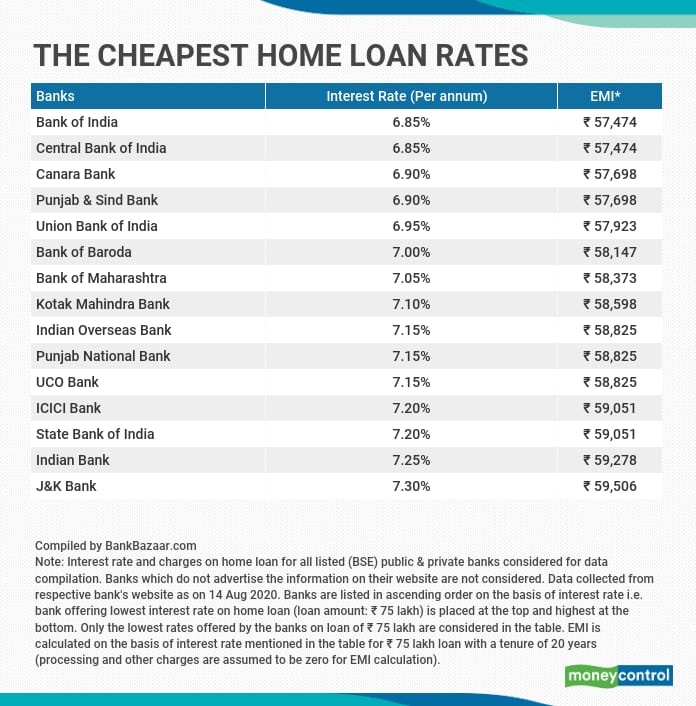
Mortgage rates can vary significantly from one lender to another. It is highly recommended to obtain “Loan Estimates” from at least three different sources, including large commercial banks, credit unions, and online mortgage lenders. Lenders are often willing to match a competitor’s rate or waive certain fees to win your business. In the world of finance, transparency and competition are the borrower’s greatest allies.
By understanding the interplay between personal financial health and global economic indicators, borrowers can demystify the question of “how much is the interest rate.” While you cannot control the Federal Reserve or inflation, you can control your credit score, your down payment, and your choice of lender—factors that ultimately define the cost of your home loan.
aViewFromTheCave is a participant in the Amazon Services LLC Associates Program, an affiliate advertising program designed to provide a means for sites to earn advertising fees by advertising and linking to Amazon.com. Amazon, the Amazon logo, AmazonSupply, and the AmazonSupply logo are trademarks of Amazon.com, Inc. or its affiliates. As an Amazon Associate we earn affiliate commissions from qualifying purchases.