
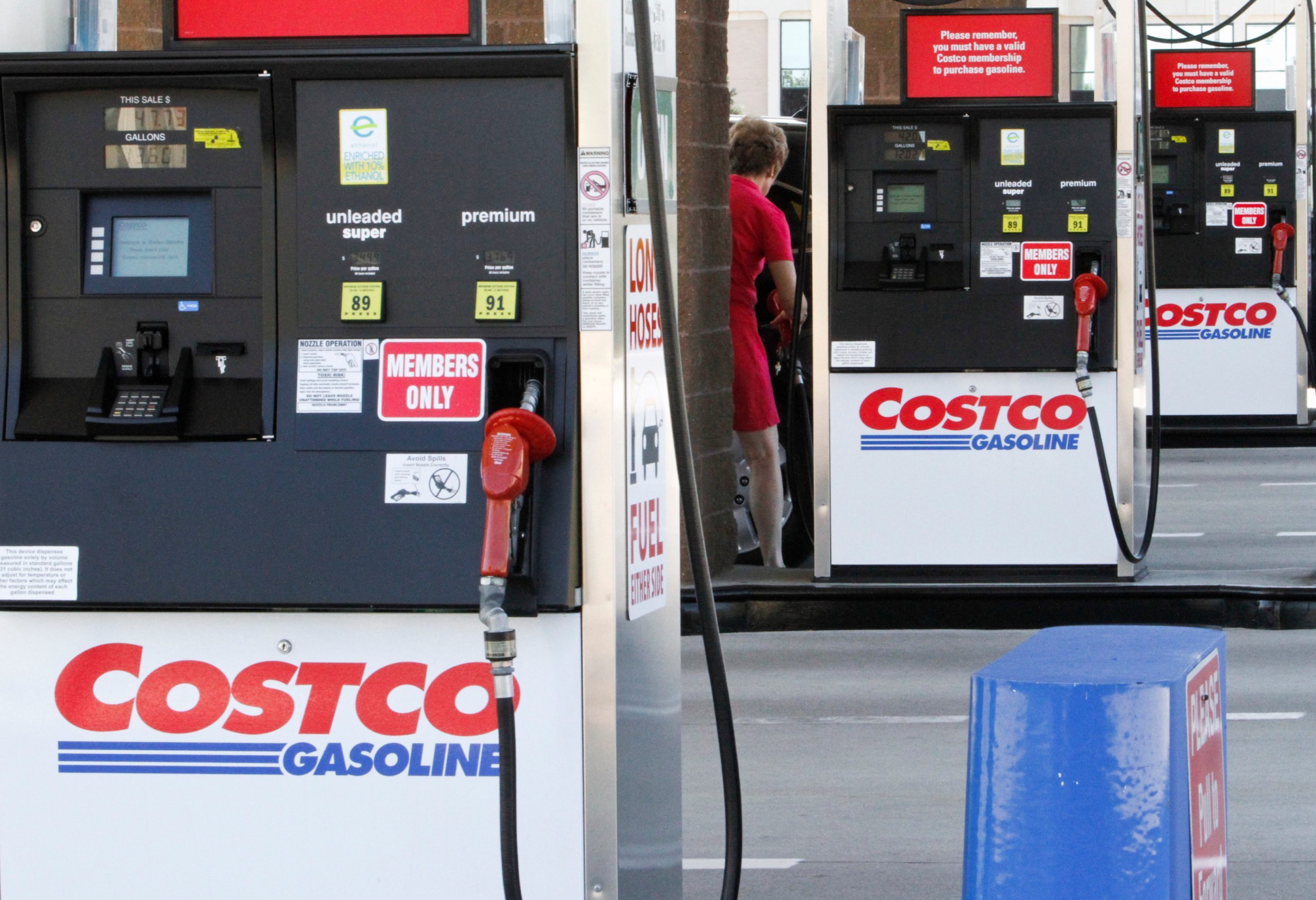
For many budget-conscious consumers and savvy financial planners, the question of “how much is the gas at Costco?” isn’t just about a single transaction; it’s a cornerstone of a broader personal finance strategy. Costco has cultivated a reputation for offering some of the most competitive fuel prices in the market, making it a frequent stop for members looking to stretch their dollars further. Understanding the economics behind these prices, and how to leverage them, is crucial for maximizing your household budget. This isn’t merely about finding cheap gas; it’s about integrating a smart spending habit into your overall financial wellness plan.
Understanding Costco’s Fuel Pricing Strategy
Costco’s ability to consistently offer fuel at prices often significantly lower than conventional gas stations is not a random occurrence but a deliberate and well-executed business model rooted in financial efficiency and member value. Their approach to fuel sales is a microcosm of their broader retail strategy, designed to attract and retain members through unparalleled savings.
Membership Model and Exclusive Savings
At the heart of Costco’s fuel pricing advantage lies its membership-based operating model. Unlike traditional gas stations that rely on per-gallon profit margins from every customer, Costco’s primary revenue stream comes from annual membership fees. This structure allows the company to operate its gas stations with razor-thin margins, sometimes even at a loss, knowing that the attractive fuel prices act as a powerful incentive for members to renew their subscriptions and visit the warehouse for other purchases. For the member, the annual fee is an investment that often pays for itself through savings on gas alone, let alone the myriad of other products and services available. This financial dynamic shifts the focus from individual transaction profitability to long-term member value, a key tenet of their financial planning.
High Volume, Low Margin Philosophy
Costco’s fuel stations are typically high-volume operations. They strategically locate pumps at their warehouse locations, ensuring a steady stream of traffic from members already visiting for groceries, electronics, or other bulk goods. This high turnover allows them to purchase fuel in massive quantities, securing preferential rates from suppliers. The “high volume, low margin” philosophy means that while the profit per gallon might be minimal, the sheer volume of sales compensates, contributing to overall profitability while delivering substantial savings to members. This operational efficiency is a direct financial benefit to the consumer, translating into lower prices at the pump.
Quality Fuel at Competitive Prices
Beyond just price, Costco is committed to offering high-quality fuel. All Costco gasoline is Top Tier certified, meaning it meets stringent standards for engine cleanliness and performance, exceeding EPA requirements. This commitment to quality, combined with aggressive pricing, provides a compelling value proposition for members. From a financial perspective, investing in Top Tier fuel can lead to better engine health and potentially lower maintenance costs over time, adding another layer of savings beyond the immediate discount at the pump. This holistic approach to value—combining low price with high quality—is a critical component of their member loyalty and, by extension, their financial success.
The Economics of Saving on Fuel at Costco
The allure of Costco gas goes beyond just seeing a lower price on the sign; it’s about the tangible financial impact these savings can have on a household budget over time. Understanding these economics helps members fully appreciate the value proposition.
Calculating Your Potential Savings
To truly grasp the financial benefit, consider the average price difference. While specific numbers fluctuate daily and by location, Costco often prices its gas 10 to 30 cents per gallon below competitors. For a vehicle with a 15-gallon tank, saving 20 cents per gallon translates to $3 per fill-up. If you fill up once a week, that’s $156 saved annually. For two cars or more frequent fills, these savings can quickly escalate to hundreds of dollars per year. These aren’t trivial sums; they are funds that can be reallocated to other financial goals, such as debt reduction, emergency savings, or investment contributions.
Beyond the Pump: The True Value of a Costco Membership for Fuel Savings
The financial argument for a Costco membership extends beyond just the per-gallon discount. For Executive members, the 2% annual reward on qualified Costco purchases (up to $1,000) can further offset the cost of the membership itself. If a significant portion of your spending is on fuel, those purchases contribute to your annual reward, effectively reducing your net cost of gas even further. Furthermore, the Costco Anywhere Visa Card by Citi offers 4% cash back on eligible gas purchases worldwide (on the first $7,000 per year, then 1% thereafter), including at Costco. Combining the already low prices with 4% cash back represents a powerful financial arbitrage for fuel expenses, making a Costco fill-up an economically superior choice for many.
Factors Influencing Local Costco Gas Prices
While Costco aims for consistently low prices, local market conditions play a significant role. Factors include:
- Local Competition: The proximity and pricing strategies of nearby gas stations influence how much Costco can undercut them while still maintaining its low-margin model.
- Taxes: State and local fuel taxes vary widely, directly impacting the base price of gas.
- Supplier Costs: Regional supply lines, transportation costs, and refinery output all affect the wholesale price Costco pays for fuel.
- Demand: Peak travel seasons or local events can temporarily increase demand, which may slightly reduce the price gap, though Costco typically strives to maintain its competitive edge.

Monitoring these local dynamics through apps or online tools can further refine your personal finance strategy for fuel purchases.
Maximizing Your Fuel Savings: Beyond Costco
While Costco offers a compelling proposition for fuel savings, a comprehensive personal finance strategy involves leveraging all available tools and habits to minimize transportation costs. Combining Costco’s advantages with other smart practices can yield even greater financial benefits.
Leveraging Costco’s Executive Membership and Credit Card Rewards
For those serious about optimizing their fuel expenditures, upgrading to an Executive Membership offers the 2% annual reward on most purchases, including gas. While the Executive membership costs more annually, the potential for greater cash back often justifies the expense, especially for households with higher spending. The real game-changer for many is the Costco Anywhere Visa Card by Citi. This card provides a robust 4% cash back on eligible gas purchases, up to $7,000 annually, including at Costco and other gas stations. This means you’re not just getting Costco’s already low price, but an additional 4% back, effectively driving down your net fuel cost significantly. This strategic use of membership and credit card rewards transforms a routine expense into an opportunity for substantial savings, directly impacting your personal financial bottom line.
Strategic Driving and Maintenance for Fuel Efficiency
Even the cheapest gas won’t fully optimize your budget if your vehicle isn’t running efficiently or if your driving habits are wasteful. A crucial part of fuel savings in personal finance involves:
- Maintaining Proper Tire Pressure: Under-inflated tires can reduce fuel efficiency by up to 3%. Regularly checking and adjusting tire pressure is a free and easy way to save money.
- Regular Vehicle Maintenance: Keeping your engine tuned, replacing air filters, and ensuring spark plugs are in good condition can improve mileage by 4-40%, depending on the repair. Proactive maintenance prevents costly repairs and enhances fuel economy.
- Smooth Driving Habits: Rapid acceleration and hard braking significantly increase fuel consumption. Adopting a smoother, more gradual driving style can improve mileage by 15-30% on highways and 10-40% in stop-and-go traffic.
- Reducing Idling: Idling consumes a surprising amount of fuel. If you’re going to be stopped for more than a minute, it’s often more fuel-efficient to turn off your engine.
- Lightening Your Load: Removing unnecessary weight from your vehicle reduces the work your engine has to do, thus saving fuel.
These practices, combined with Costco’s low prices, form a robust financial strategy for managing transportation costs.
Price Tracking Tools and Apps
In today’s digital age, numerous apps and websites are dedicated to tracking real-time gas prices. Tools like GasBuddy, Waze, and Google Maps can help you compare prices at various stations, including Costco, in your local area. By checking these resources before you fill up, you can ensure you’re always getting the best available price, even on days when Costco’s price advantage might be narrower due to local market fluctuations. Integrating these tools into your routine ensures that every fuel purchase is an informed financial decision.
Is a Costco Membership Worth It Solely for Gas?
The question of whether to join Costco just for the gas is a common one for individuals and families focused on optimizing their personal finances. The answer often depends on individual circumstances and a thorough financial analysis.
Weighing Annual Fees Against Fuel Savings
A standard Gold Star membership costs $60 annually, while an Executive membership is $120. To justify the $60 fee solely on gas savings, assuming an average saving of $0.20 per gallon, you would need to purchase 300 gallons of gas per year ($60 / $0.20 per gallon = 300 gallons). For a vehicle that gets 25 miles per gallon, this equates to driving 7,500 miles annually (300 gallons * 25 MPG = 7,500 miles). Many households easily exceed this mileage, especially those with multiple drivers or longer commutes. If you typically drive more than 7,500 miles or have more than one car, the gas savings alone can quickly offset the membership fee. For those with a Costco Anywhere Visa Card, the 4% cash back further enhances the return on investment, often making the membership a clear financial win.
Considering Other Membership Perks and Their Financial Impact
While gas savings might be the primary motivator, it’s prudent to consider the broader financial benefits of a Costco membership. The warehouse offers substantial savings on groceries, household goods, electronics, and even services like travel, car rentals, and insurance. Many members find that the savings on bulk groceries, particularly for families, quickly overshadow the annual fee. Discounts on prescription medications, optical services, and even tires can add up, creating a comprehensive financial advantage. A holistic view of your spending across various categories is essential to determine the true value of the membership.

A Holistic Financial Perspective
Ultimately, the decision to join Costco for gas—or for anything else—should align with your overall financial strategy. If your budget is tight, and you’re meticulous about every expenditure, a detailed calculation of potential savings across all Costco offerings is warranted. For many, the combination of consistent, high-quality low-priced fuel, coupled with savings on other essential goods and services, positions a Costco membership as a sound financial decision. It’s not merely about individual savings at the pump but about the cumulative effect of strategic purchasing decisions that contribute to greater financial efficiency and stability for the household. By viewing the membership through a lens of total value, individuals can determine if this investment contributes positively to their long-term financial goals.
aViewFromTheCave is a participant in the Amazon Services LLC Associates Program, an affiliate advertising program designed to provide a means for sites to earn advertising fees by advertising and linking to Amazon.com. Amazon, the Amazon logo, AmazonSupply, and the AmazonSupply logo are trademarks of Amazon.com, Inc. or its affiliates. As an Amazon Associate we earn affiliate commissions from qualifying purchases.