
To the casual observer, a twenty-dollar bill is always worth exactly twenty dollars. However, in the complex world of personal finance and global economics, the “worth” of a dollar is a fluid concept, shifting daily based on inflation, interest rates, and international trade dynamics. Understanding how much the dollar is truly worth requires a dual perspective: its domestic purchasing power—what it can actually buy at the grocery store—and its international exchange value—how it stacks up against other global currencies.
For investors, business owners, and savers, tracking the value of the dollar is not merely an academic exercise. It is a fundamental component of wealth preservation. When the dollar fluctuates, it influences everything from the cost of your morning coffee to the performance of your retirement portfolio. To grasp the current standing of the U.S. dollar, we must dissect the internal and external forces that define its strength in a modern economy.

The Internal Perspective: Purchasing Power and the Impact of Inflation
The most immediate way to measure what a dollar is worth is through its purchasing power. This is the amount of goods or services that one unit of currency can buy. Historically, the dollar’s purchasing power has been on a long-term downward trajectory, a phenomenon primarily driven by inflation.
The Consumer Price Index (CPI) as a Yardstick
The primary tool used to measure the dollar’s domestic value is the Consumer Price Index (CPI). Published monthly by the Bureau of Labor Statistics, the CPI tracks the change in prices paid by consumers for a representative basket of goods and services. When the CPI rises, the purchasing power of the dollar falls. For example, a dollar in 1970 had significantly more “worth” than a dollar today; what $100 could purchase in the mid-20th century now requires several hundred dollars to acquire.
This erosion of value is often a deliberate result of monetary policy. The Federal Reserve generally targets a 2% annual inflation rate, believing that a small, predictable decrease in the dollar’s value encourages spending and investment rather than hoarding cash. However, when inflation spikes—as seen in the post-pandemic era—the “worth” of the dollar in your pocket diminishes at an accelerated rate, effectively acting as a hidden tax on savings.
Real vs. Nominal Value
In personal finance, it is crucial to distinguish between nominal value and real value. Nominal value is the face value of the currency. Real value is the nominal value adjusted for inflation. If your savings account earns 3% interest, but inflation is running at 5%, the “worth” of your money is actually decreasing by 2% annually in terms of what it can actually purchase. Understanding this distinction is the first step in effective wealth management, as it shifts the focus from accumulating paper currency to maintaining and growing actual purchasing power.
The Global Perspective: The U.S. Dollar Index and Exchange Rates
Beyond the borders of the United States, the dollar’s worth is measured against a basket of other major currencies. This international valuation is most commonly tracked via the U.S. Dollar Index (DXY).
Understanding the DXY
The DXY measures the value of the U.S. dollar against a weighted average of six major world currencies: the Euro, Japanese Yen, British Pound, Canadian Dollar, Swedish Krona, and Swiss Franc. When the DXY is high, the dollar is “strong,” meaning it can buy more of these foreign currencies. When it is low, the dollar is “weak.”
A strong dollar is a double-edged sword. For the American consumer, a strong dollar is a boon; it makes imported goods cheaper and international travel more affordable. For example, if the dollar is strong against the Euro, a vacation in Paris or a German-made car becomes less expensive for those holding USD. However, for American companies that sell products abroad, a strong dollar makes their goods more expensive and less competitive in foreign markets, potentially hurting corporate earnings and, by extension, domestic stock prices.
The World’s Reserve Currency
The dollar holds a unique position as the world’s primary reserve currency. This means that central banks around the globe hold vast quantities of U.S. dollars to back their own currencies and facilitate international trade. Furthermore, most essential global commodities, including oil and gold, are priced in U.S. dollars.
This “exorbitant privilege” creates a consistent global demand for the dollar, which helps support its value even when the U.S. faces economic headwinds. Because other nations need dollars to buy oil and settle debts, the dollar often retains a baseline level of worth that other currencies do not enjoy. This status also allows the U.S. to borrow money at lower interest rates than it otherwise could, as there is always a market for dollar-denominated debt.
Determinants of Value: What Moves the Needle?
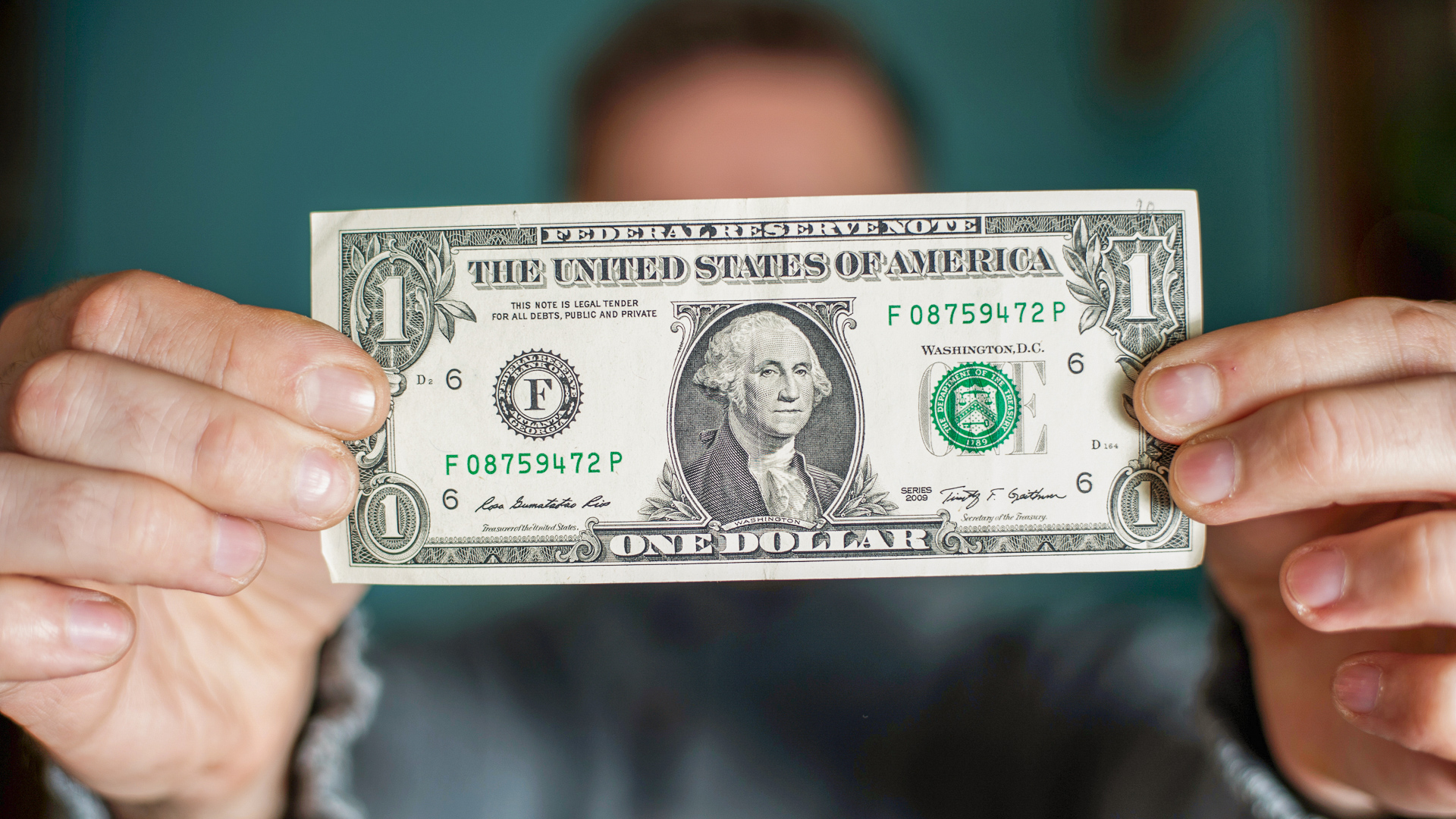
The worth of a dollar is not static; it reacts to a complex interplay of geopolitical and economic signals. Investors who understand these triggers are better positioned to protect their capital from sudden shifts in currency valuation.
Federal Reserve Policy and Interest Rates
The single most influential factor in the dollar’s current worth is the monetary policy of the Federal Reserve. Specifically, interest rates play a pivotal role. When the Fed raises interest rates, it provides a higher return for investors who hold dollar-denominated assets, such as U.S. Treasuries. This attracts foreign capital, increasing demand for the dollar and driving up its exchange value. Conversely, when the Fed cuts rates to stimulate the economy, the dollar often weakens as investors seek higher returns elsewhere.
The “Safe Haven” Effect
In times of global uncertainty—whether due to war, pandemic, or financial crisis—the dollar often sees a spike in value regardless of the health of the U.S. economy. This is known as the “Safe Haven” effect. Because the U.S. has the world’s largest economy and a stable legal system, investors view the dollar as the safest place to park their wealth during a storm. This flight to quality can lead to a paradoxical situation where the dollar gains value even as the U.S. enters a recession, simply because it is perceived as less risky than the alternatives.
Trade Balances and Economic Growth
A nation’s trade balance also impacts its currency. If the U.S. exports more than it imports, foreign buyers must purchase dollars to pay for those goods, driving up demand. Additionally, strong GDP growth signals a robust economy, encouraging foreign direct investment and further bolstering the dollar’s worth. When the U.S. economy outperforms Europe or Asia, the dollar typically appreciates against the Euro and the Yen.
Strategic Implications for Personal Finance and Investing
Understanding how much the dollar is worth is not just for economists; it is vital for any individual looking to build a resilient financial plan. The fluctuating value of the dollar dictates how you should diversify your assets and manage your liabilities.
Hedging Against Dollar Devaluation
If the dollar is losing purchasing power due to inflation, holding large amounts of cash is a losing strategy. To preserve wealth, individuals often turn to “hard assets” or inflation-protected securities.
- Real Estate: Property values and rents tend to rise with inflation, making real estate a classic hedge.
- Commodities: Gold and silver have historically maintained their value over long periods, acting as a “store of value” when paper currency depreciates.
- TIPS: Treasury Inflation-Protected Securities are government bonds specifically designed to increase in value as inflation rises, ensuring that the investor’s purchasing power remains intact.
International Diversification
For the savvy investor, a strong dollar presents an opportunity to diversify internationally. When the dollar is high, your domestic currency buys more foreign stocks and assets. If the dollar eventually weakens, those foreign assets will be worth more when converted back into USD, providing a dual return from both the asset’s growth and the currency shift. Conversely, in a weak-dollar environment, domestic exporters and companies with significant international revenue often see their stock prices rise as their foreign earnings become more valuable in dollar terms.
The Role of Digital Assets
The rise of cryptocurrencies and digital assets has introduced a new variable into the equation of what a dollar is worth. Proponents of Bitcoin often refer to it as “digital gold,” arguing that its fixed supply makes it a superior store of value compared to the dollar, which can be printed in unlimited quantities by the central bank. While highly volatile, the growing adoption of digital assets suggests that a segment of the market is seeking alternatives to the traditional dollar-based financial system as a way to hedge against long-term currency debasement.
The Future of the Dollar: Challenges to Dominance
While the dollar remains the king of global finance, its future “worth” faces several long-term challenges. The conversation around “de-dollarization” has moved from the fringes of economic theory to the forefront of geopolitical strategy.
The Rise of Multi-Polarity
As economies like China and India continue to grow, there is an increasing push to settle international trade in currencies other than the dollar. Organizations like BRICS (Brazil, Russia, India, China, and South Africa) are actively exploring ways to bypass the dollar in their bilateral trade agreements. While the dollar is unlikely to be replaced overnight—due to the depth and liquidity of U.S. financial markets—a gradual shift away from USD could reduce global demand and eventually lower its relative value.
Fiscal Deficits and National Debt
The long-term worth of the dollar is also tied to the fiscal health of the United States. Persistent government deficits and a ballooning national debt can lead to concerns about the sustainability of the currency. If global investors lose confidence in the U.S. government’s ability to manage its finances, they may demand higher interest rates to hold dollar-denominated debt, or they may move their capital to other currencies entirely.

Central Bank Digital Currencies (CBDCs)
The potential introduction of a U.S. Central Bank Digital Currency (CBDC) could redefine the dollar’s utility. A digital dollar could streamline payments and reduce transaction costs, potentially reinforcing the dollar’s dominance in a digital-first global economy. However, it also raises questions about privacy and the role of commercial banks, all of which will influence the public’s perception of the dollar’s underlying value.
In conclusion, the question of “how much is the dollar worth” cannot be answered with a single number. Its value is a moving target, defined by the cost of living at home and the strength of the economy abroad. By monitoring inflation, interest rate trends, and geopolitical shifts, individuals can navigate the complexities of the financial world with greater confidence. Whether the dollar is rising or falling, the key to financial success lies in understanding these movements and positioning your portfolio to thrive in any currency environment. Wealth is not just about the number of dollars you have; it is about the power those dollars hold in an ever-changing world.
aViewFromTheCave is a participant in the Amazon Services LLC Associates Program, an affiliate advertising program designed to provide a means for sites to earn advertising fees by advertising and linking to Amazon.com. Amazon, the Amazon logo, AmazonSupply, and the AmazonSupply logo are trademarks of Amazon.com, Inc. or its affiliates. As an Amazon Associate we earn affiliate commissions from qualifying purchases.