
The question of how much Tesla, Inc. is worth is one of the most debated topics in the modern financial world. To a casual observer, the answer might seem simple: look at the stock ticker and check the market capitalization. However, for investors, financial analysts, and business enthusiasts, the “worth” of Tesla is a complex calculation that transcends mere share prices. It involves a sophisticated blend of current cash flow, speculative future earnings, and the company’s unique position at the intersection of the automotive, software, and energy sectors.
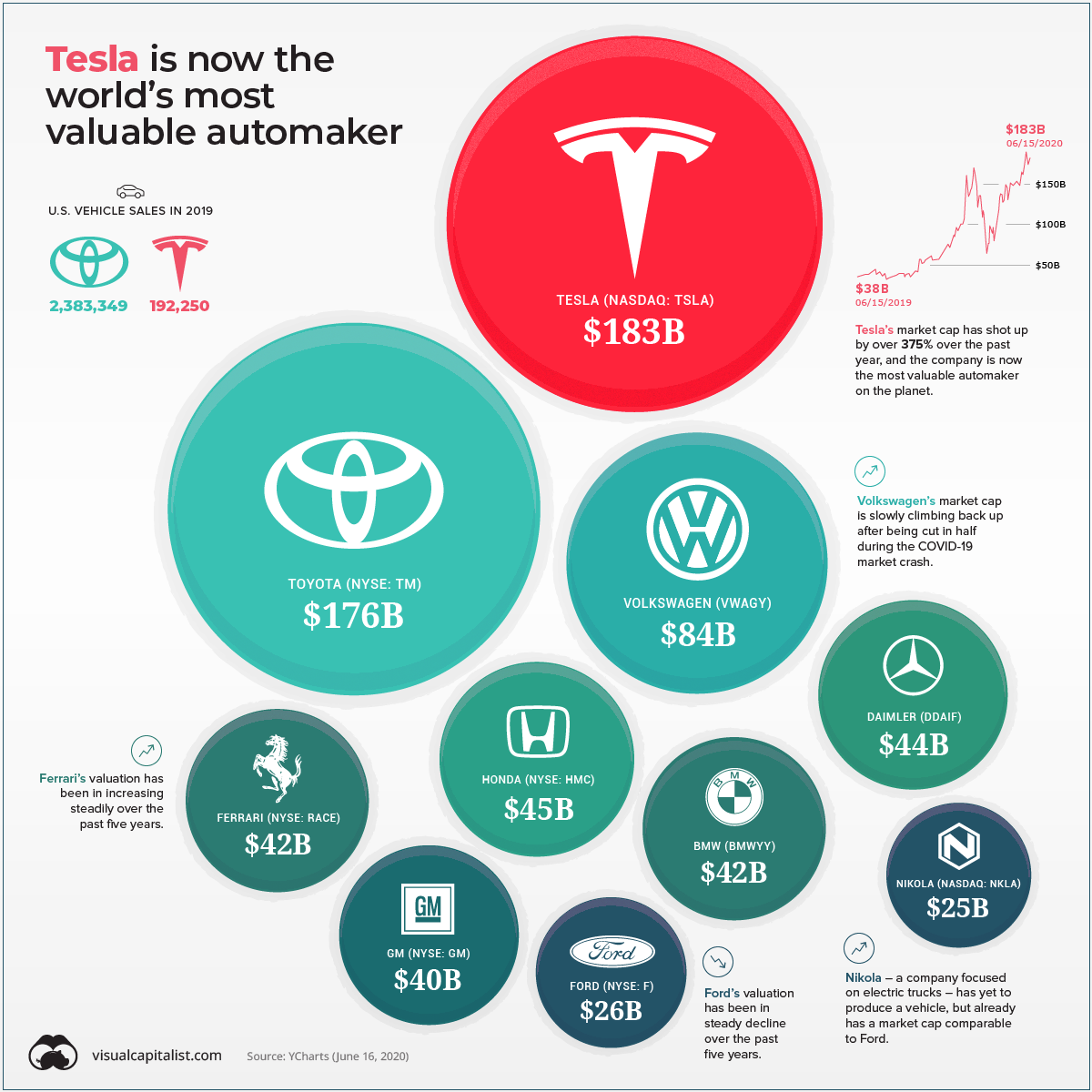
Valuing Tesla requires moving beyond traditional automotive metrics. While legacy manufacturers like Ford or Toyota are often valued based on their annual production volume and steady dividends, Tesla is frequently valued like a high-growth tech firm. In this article, we will analyze Tesla’s financial standing, its revenue drivers, and the economic variables that determine whether its multi-hundred-billion-dollar valuation is a speculative bubble or a calculated bet on the future of energy.
Understanding Market Capitalization vs. Intrinsic Value
At its most basic level, Tesla’s worth is defined by its market capitalization—the total dollar market value of a company’s outstanding shares of stock. This figure fluctuates daily based on investor sentiment, quarterly earnings reports, and macroeconomic trends. However, seasoned investors look deeper into the intrinsic value, which attempts to calculate what the company is actually worth based on its ability to generate cash in the future.
The Current Market Cap Snapshot
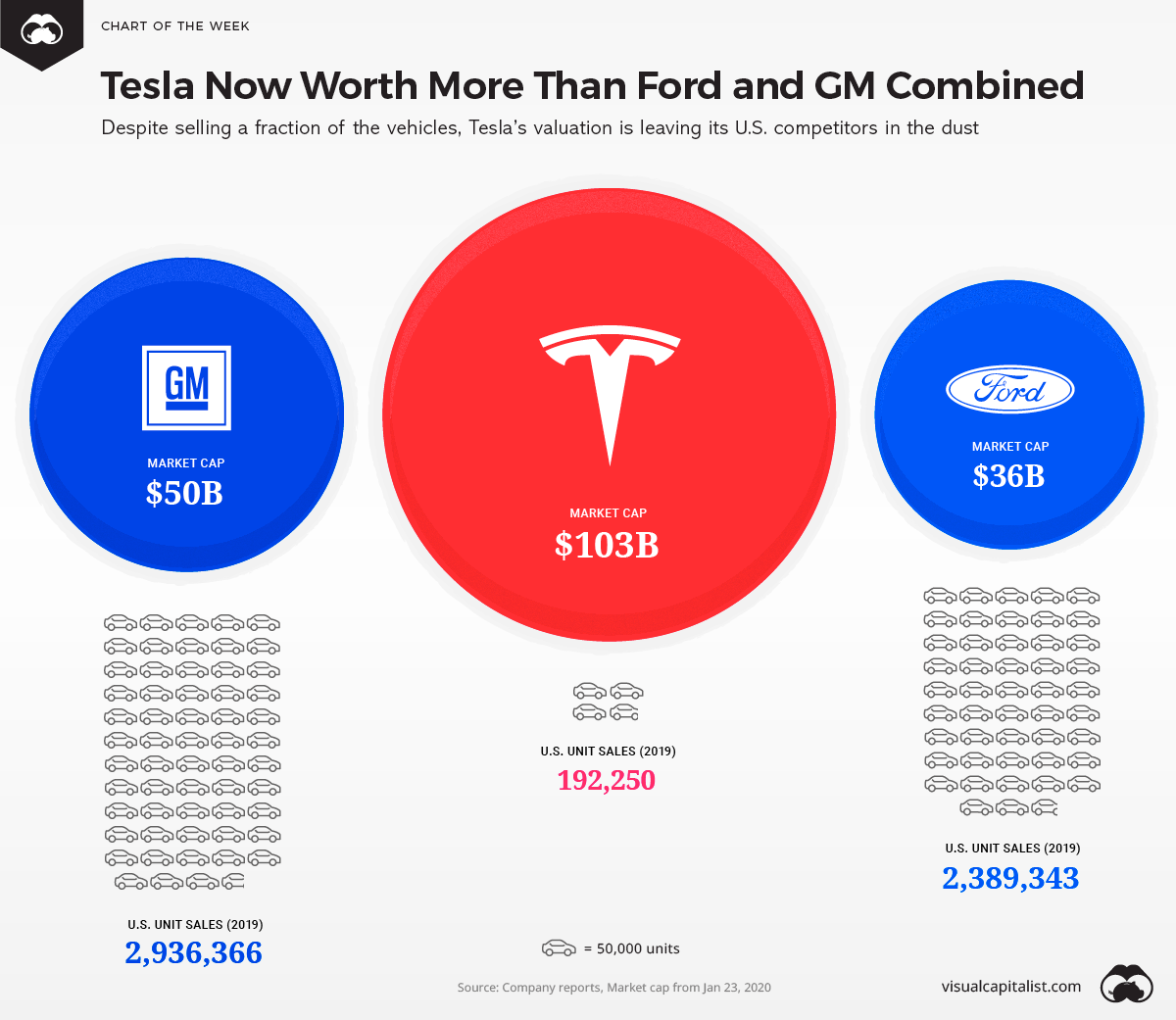
Tesla’s market capitalization has seen historic volatility. In late 2021, the company joined the exclusive “Trillion Dollar Club,” a milestone shared by tech titans like Apple and Microsoft. Since then, the valuation has ebbed and flowed, often settling between $500 billion and $800 billion depending on market conditions. To put this in perspective, Tesla’s valuation is often higher than the next five or ten largest automakers combined, despite producing a fraction of the total global vehicle volume. This discrepancy is the core of the Tesla valuation debate: are investors buying a car company, or are they buying a data and energy conglomerate?
Revenue Streams: Beyond Just Selling Cars
While automotive sales account for the vast majority of Tesla’s top-line revenue, the company’s worth is also tied to its diversified income streams.
- Automotive Sales and Leasing: The primary driver, fueled by the Model 3 and Model Y.
- Regulatory Credits: Tesla earns billions by selling carbon credits to other automakers who cannot meet government emissions standards. This is essentially pure profit with zero overhead.
- Energy Generation and Storage: This includes Powerwalls for homes and Megapacks for utility-scale energy storage. Analysts believe this sector could eventually rival the automotive division in total value.
- Services and Other: This includes vehicle repairs, insurance, and the growing Supercharger network, which is becoming a global standard for EV charging.
Key Financial Metrics Driving Tesla’s Valuation
To understand why Tesla is worth what it is, one must look at the specific financial ratios and metrics that analysts use to justify its stock price. In the world of finance, Tesla is rarely judged by the same yardstick as a traditional manufacturing business.
Price-to-Earnings (P/E) Ratio: Growth vs. Reality
The Price-to-Earnings (P/E) ratio is a primary tool for valuing a company. It measures the current share price relative to its per-share earnings. Historically, Tesla has maintained an incredibly high P/E ratio, sometimes exceeding 100x or even 200x. In contrast, a traditional automaker might have a P/E ratio between 5x and 10x.
A high P/E ratio indicates that investors expect massive growth in the future. They are willing to pay a premium today because they believe Tesla’s earnings will explode in the coming decade. When Tesla’s P/E ratio contracts, it often suggests the market is becoming more skeptical about that growth or that the company is maturing into a more stable, slower-growing entity.
Profit Margins and Cost Efficiencies
One of the strongest arguments for Tesla’s high valuation is its industry-leading operating margins. For years, Tesla has utilized “Giga Press” casting and vertical integration to lower the cost of production. By manufacturing their own batteries and software, they capture more of the value chain than competitors who rely on third-party suppliers.
In a healthy fiscal year, Tesla’s gross margins have often hovered around 20% to 25%, significantly higher than the 10% to 15% seen at traditional OEMs (Original Equipment Manufacturers). However, price wars in the EV space—particularly in China—have forced Tesla to slash prices, putting pressure on these margins. Investors watch these percentage points closely, as even a 1% dip in margin can wipe billions off the company’s perceived worth.
The “Tesla Premium”: Why the Market Values It Differently
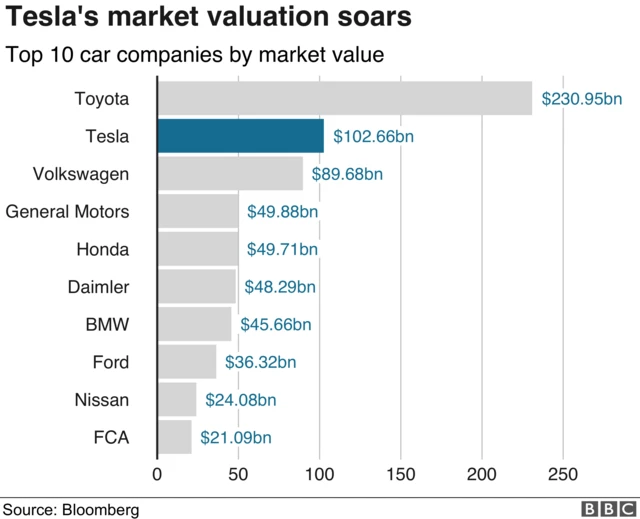
The “Tesla Premium” refers to the extra value investors assign to the company that cannot be explained by car sales alone. This premium is rooted in the belief that Tesla is a technology company specializing in artificial intelligence and energy.
Software-as-a-Service (SaaS) and Full Self-Driving Revenue
The most significant component of the Tesla Premium is Full Self-Driving (FSD) and Autopilot. Tesla sells FSD as a high-margin software package or a monthly subscription. Unlike a physical car, which costs thousands to build, software can be distributed with nearly zero marginal cost.
If Tesla successfully solves Level 5 autonomy, it could launch a “Robotaxi” fleet. Financial models suggest that a proprietary autonomous ride-sharing network could generate recurring revenue with software-like margins (70%–80%). This potential “platform play” is a major reason why the company’s valuation remains untethered from its current physical production capacity.
Energy Storage and the “Distributed Utility” Model
Tesla Energy is often the “sleeper” hit in the company’s valuation. As the world transitions to renewable energy, the demand for massive battery storage to stabilize power grids is skyrocketing. Tesla’s Megapack business is backlogged for years.
Furthermore, through its “Virtual Power Plant” (VPP) programs, Tesla can coordinate thousands of home Powerwalls to send electricity back to the grid during peak demand. This transforms Tesla from a hardware provider into a distributed utility company. Financial analysts who value the energy sector separately from the automotive sector often find that Tesla Energy alone could be worth over $100 billion in the next decade.
Future Growth Catalysts and Financial Risks
Every valuation is a story about the future. For Tesla to maintain or increase its worth, it must navigate several “make or break” financial milestones while fending off significant macroeconomic risks.
The Next-Gen Platform and Market Expansion
To reach its goal of producing 20 million vehicles per year by 2030, Tesla needs a more affordable vehicle—often referred to by the media as the “Model 2” or the $25,000 EV. The financial success of this next-generation platform is critical. It would allow Tesla to tap into the mass-market segments currently dominated by Toyota and Volkswagen. High-volume sales of a lower-cost vehicle would not only drive revenue but also increase the “installed base” of users who can subscribe to Tesla’s software services.
Macroeconomic Headwinds and Competition
Tesla’s valuation is not immune to the broader economy. High-interest rates make car loans more expensive, directly cooling demand for luxury and mid-tier EVs. Additionally, the rise of Chinese competitors like BYD, which has occasionally outpaced Tesla in total EV volume, presents a major threat.
In the financial world, competition leads to “commodity status.” If EVs become a commodity where the only way to compete is on price, Tesla’s high margins will vanish, and its P/E ratio will likely fall to match the rest of the automotive industry. This “multiple compression” is the greatest risk to Tesla shareholders.
Conclusion: Is Tesla Overvalued or a Generational Opportunity?
Determining how much Tesla is worth depends entirely on your lens of analysis. If you view Tesla strictly as a car company, its multi-hundred-billion-dollar market cap appears disconnected from the reality of its production numbers and the cyclical nature of the auto industry. From this perspective, the stock is perpetually overvalued.
However, if you view Tesla as a technology conglomerate that is vertically integrated across energy storage, AI-driven software, and robotics, the valuation looks different. In this scenario, Tesla is more akin to Amazon in the early 2010s—a company using its current cash flow to build the infrastructure for an entirely new global economy.
Ultimately, Tesla’s worth is a reflection of the market’s belief in Elon Musk’s ability to execute on “Master Plan 3.” While the numbers on the balance sheet show a profitable, high-margin manufacturer, the market cap shows a bet on a future where Tesla powers the homes we live in and the autonomous systems that move us. For the savvy investor, the true value lies in whether the company can maintain its technological lead while transforming from a niche disruptor into a diversified global titan.
aViewFromTheCave is a participant in the Amazon Services LLC Associates Program, an affiliate advertising program designed to provide a means for sites to earn advertising fees by advertising and linking to Amazon.com. Amazon, the Amazon logo, AmazonSupply, and the AmazonSupply logo are trademarks of Amazon.com, Inc. or its affiliates. As an Amazon Associate we earn affiliate commissions from qualifying purchases.