
Navigating the landscape of auto insurance can feel like deciphering a complex financial puzzle. Among the myriad of providers, State Farm stands out as one of the largest and most recognized insurers in the United States. For millions of drivers, the question “How much is State Farm auto insurance?” isn’t just about a number; it’s about understanding value, coverage, and how this essential cost fits into their personal financial strategy.
Auto insurance is a mandatory expenditure for most vehicle owners, designed to protect against the financial fallout of accidents, theft, and other damages. The premium you pay is a direct reflection of the risk you represent to the insurer. While no single answer applies to everyone, delving into the factors that determine State Farm’s rates, understanding average costs, and exploring ways to optimize your premium can provide a comprehensive picture, empowering you to make an informed financial decision. This article will unpack the intricacies of State Farm’s pricing model, offering insights into how to budget for and potentially reduce your auto insurance expenses, all within the crucial framework of personal finance.
Unpacking the Variables: What Drives Your State Farm Premium?
When State Farm calculates your auto insurance premium, they assess a multitude of individual and external factors to determine your risk profile. Understanding these variables is the first step in comprehending “how much” you might pay and identifying areas where you could potentially influence the cost. This isn’t just about random numbers; it’s a sophisticated actuarial science designed to predict the likelihood and potential cost of future claims.
Personal Demographics and Driving Record
Your personal profile is a significant determinant of your insurance rate. Young, inexperienced drivers often face higher premiums due to a statistical likelihood of being involved in accidents. Age plays a critical role, with rates typically decreasing as drivers gain experience and reach middle age, then potentially rising again in very senior years. Marital status can also influence rates, as married individuals are sometimes perceived as more financially stable and less risky.
However, the most impactful personal factor is undoubtedly your driving record. A clean record, free of accidents, moving violations, and traffic tickets, is your strongest asset in securing lower rates. Conversely, a history of speeding tickets, at-fault accidents, or DUI convictions will significantly elevate your premium, as these indicators suggest a higher probability of future claims. State Farm, like other insurers, uses a multi-year look-back period to assess your driving history, meaning past incidents can affect your current rates for several years.
Vehicle Type and Usage
The car you drive and how you use it directly impact your premium. High-performance sports cars, luxury vehicles, and cars with a high theft rate typically come with higher insurance costs. This is due to the increased expense of repairs, the greater potential for high-speed accidents, or the likelihood of needing to replace the vehicle entirely. On the other hand, safer, more common sedans or minivans generally incur lower insurance costs.
Beyond the type of vehicle, its intended use also matters. If you commute long distances daily, you’ll likely pay more than someone who only drives for pleasure or has a minimal daily commute. The more time and miles your car spends on the road, the higher the perceived risk of an incident. Additionally, where you park your car (e.g., in a secure garage versus on the street) can also play a role, influencing the risk of theft or vandalism.
Coverage Choices and Deductibles
Perhaps the most direct way you influence your State Farm premium is through your coverage selections. Auto insurance policies comprise various components, and the more comprehensive your coverage, the higher your premium will be.
- Liability Coverage: Mandatory in most states, this covers damages you cause to other people and their property. Higher liability limits mean greater protection but also higher costs.
- Collision Coverage: Pays for damage to your own car in an accident, regardless of fault.
- Comprehensive Coverage: Protects against non-collision incidents like theft, vandalism, fire, or natural disasters.
- Medical Payments/Personal Injury Protection (PIP): Covers medical expenses for you and your passengers after an accident.
- Uninsured/Underinsured Motorist Coverage: Protects you if you’re hit by a driver without sufficient insurance.
Each of these coverages adds to your premium. Furthermore, your chosen deductible – the amount you pay out-of-pocket before your insurance kicks in for collision and comprehensive claims – has a significant effect. A higher deductible typically results in a lower premium, as you’re taking on more initial financial responsibility. Conversely, a lower deductible means State Farm pays more sooner, leading to a higher premium. Carefully balancing your risk tolerance with your financial capacity to pay a deductible is a key personal finance decision.
Geographic Location and State Regulations
Where you live has a surprisingly strong influence on your auto insurance costs. Urban areas with higher population densities, increased traffic congestion, and greater crime rates (like theft and vandalism) often see higher premiums compared to rural areas. The frequency of accidents and claims in a particular zip code is a primary statistical driver for location-based pricing.
Beyond local dynamics, state-specific regulations play a crucial role. Each state has minimum coverage requirements, which vary significantly. States that mandate higher liability limits or require no-fault insurance (where your own insurer pays for your medical expenses regardless of fault) tend to have higher average premiums. Additionally, state-level legislation regarding insurance ratings, discounts, and consumer protection can impact how much insurers can charge and how they calculate rates, making it essential to understand the regulatory environment of your residence.
Average Costs: A Snapshot of State Farm Auto Insurance Premiums
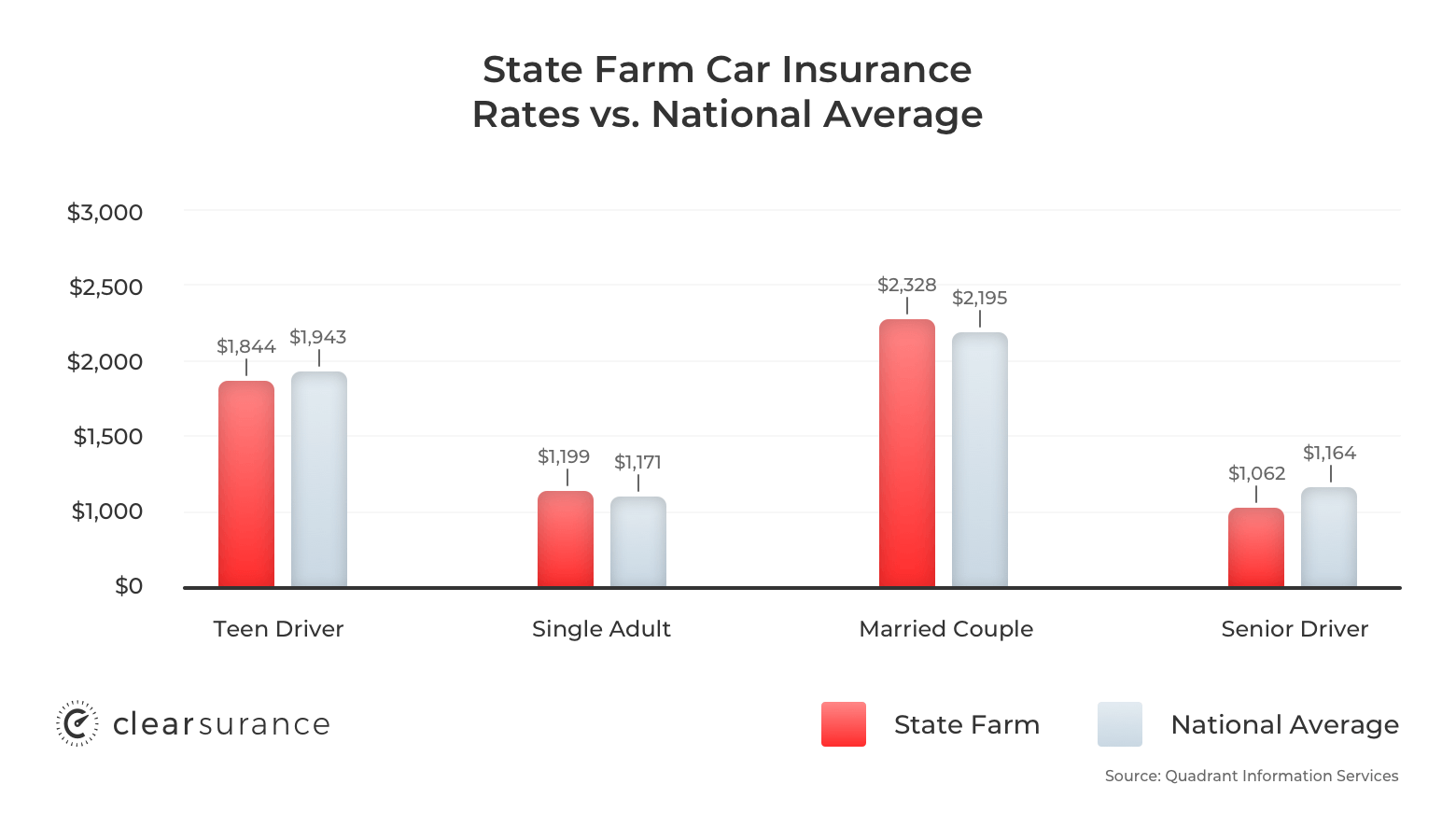
While individual quotes vary widely, examining national and state averages for State Farm auto insurance can provide a useful benchmark. These figures, however, are merely illustrative and highlight the dramatic impact of various factors on the “how much” question. It’s crucial to remember that your personalized quote will reflect your unique circumstances.
National Averages vs. State-Specific Variations
On a national level, State Farm typically offers competitive rates, often ranking among the top insurers for affordability for many driver profiles. However, a national average, if it were calculated, would mask immense variation. For instance, a driver in a densely populated, high-cost-of-living state like Michigan (known for its high insurance rates due to comprehensive no-fault laws) will likely pay significantly more than a similar driver in a state with lower accident rates and less stringent regulations, such as North Dakota.
These disparities stem from a combination of factors: differing state minimum coverage laws, local traffic density, prevalence of natural disasters (like hail storms in some regions or hurricanes in others), the cost of vehicle repairs in a particular area, and even the local legal environment for accident claims. Therefore, while State Farm might be affordable nationally, its position relative to competitors can shift dramatically from one state to another, making local comparison essential for sound financial planning.
Impact of Age and Marital Status
Age is one of the most consistent predictors of insurance costs across all providers, including State Farm. Teen drivers, due to their inexperience and higher accident rates, face the steepest premiums. A 16-year-old on their parents’ policy could easily add several thousand dollars annually. Rates gradually decrease through the 20s and 30s, often stabilizing for drivers in their 40s, 50s, and early 60s. After this, premiums may begin to tick up again as reaction times and other factors associated with advanced age can increase perceived risk.
Married individuals generally pay less than single drivers, a statistic-driven observation that suggests married people are less likely to file claims. This factor, while less impactful than age or driving record, can still contribute to a noticeable difference in annual premiums, demonstrating how personal life choices can subtly influence financial outflows.
The No-Fault vs. At-Fault System
The type of tort system your state employs significantly affects the structure and cost of your auto insurance. In at-fault states, the driver who caused the accident is financially responsible for the damages and injuries of all parties involved. This often leads to more litigation and can affect the structure of liability coverage, potentially making it more expensive to cover large legal claims.
In no-fault states, regardless of who caused the accident, each driver’s own insurance company pays for their respective medical expenses and lost wages, up to a certain limit. While designed to reduce litigation and streamline claims, no-fault systems often require drivers to carry Personal Injury Protection (PIP), which can increase the overall premium. However, it can also lead to more predictable medical expense coverage. State Farm operates within both systems, tailoring its policy offerings and pricing to comply with each state’s specific requirements, which inherently influences the average costs in those regions.
Illustrative Cost Ranges
Given the myriad variables, providing exact average costs is challenging without specific demographic and geographic data. However, for a hypothetical 30-year-old driver with a clean record, driving a common sedan, with moderate coverage, State Farm’s annual premium could range anywhere from $1,200 to $2,500 nationwide.
- Low-risk profile: (e.g., experienced, clean record, older car, rural area, minimal coverage) might see rates closer to $800 – $1,200 per year.
- High-risk profile: (e.g., young driver, recent accidents, high-performance car, urban area, comprehensive coverage) could face premiums well upwards of $3,000 – $5,000+ per year.
These are general estimates. To truly understand “how much is State Farm auto insurance” for your specific situation, obtaining a personalized quote is indispensable. It’s the only way to get a precise financial figure that factors in all your individual details, ensuring accurate budgeting for this critical expense.
Maximizing Your Savings: Strategies for Lowering Your State Farm Rate
Understanding the factors that influence your premium is valuable, but actively pursuing strategies to lower your costs is where smart personal finance comes into play. State Farm, like most major insurers, offers numerous ways to reduce your annual outlay without necessarily sacrificing essential coverage. The key is knowing what to ask for and how to maintain a profile that makes you an attractive, low-risk client.
Leveraging Discounts and Bundling Options
Discounts are often the easiest and most effective way to cut down your State Farm premium. Many drivers overlook the potential savings available, simply accepting their initial quote. State Farm offers a wide array of discounts, and proactively inquiring about them can yield significant reductions. Common discounts include:
- Multi-Policy Discount: Bundling your auto insurance with other State Farm policies, such as home, renters, life, or even health insurance, is one of the most substantial ways to save. This strategy benefits both the customer (through savings) and the insurer (through increased business), making it a win-win.
- Good Driver Discount: For maintaining a clean driving record over a specified period (e.g., three or five years).
- Defensive Driving Course Discount: Completing an approved defensive driving course can often result in a discount, especially for older drivers or those looking to offset a minor infraction.
- Student Discounts: Good student discounts (for maintaining a certain GPA), student away at school discounts (if a student driver lives away from home without a car), and even driver education discounts.
- Vehicle Safety Discounts: For cars equipped with features like anti-lock brakes, airbags, anti-theft devices, or daytime running lights.
- Loyalty Discounts: For long-term State Farm policyholders.
- Drive Safe & Save™ Program: State Farm’s telematics program uses an app or device to track your driving habits (mileage, braking, acceleration). Safe drivers can earn significant discounts.
- Steer Clear® Program: For young drivers under 25, completing an online course and maintaining a clean record.

Always ask your State Farm agent for a comprehensive review of all eligible discounts. You might be surprised at how many you qualify for.
Optimizing Coverage Levels
While comprehensive coverage is ideal for maximum protection, it’s worth regularly reviewing your policy to ensure you’re not over-insured for your current needs or vehicle value.
- Re-evaluate Collision and Comprehensive for Older Cars: If your car is several years old and its market value has significantly depreciated, the cost of collision and comprehensive coverage might outweigh the potential payout in an accident. If your car is only worth a few thousand dollars, paying hundreds annually for these coverages might not be the most financially prudent decision. Consider dropping these coverages if your car’s value is less than 10 times your annual premium for them.
- Adjust Deductibles: As discussed, increasing your deductibles for collision and comprehensive coverage will lower your monthly premium. If you have a robust emergency fund that can easily cover a higher deductible (e.g., $1,000 or $2,500), this is a straightforward way to reduce your recurring insurance expense. Just ensure you can comfortably afford the deductible should you need to file a claim.
- Review Liability Limits: While it’s generally advisable to carry more than the state minimum liability coverage for robust financial protection, regularly assess if your current limits are appropriate for your assets and financial situation. If your financial circumstances have changed, you might be able to adjust these.
Improving Your Driving Profile
This strategy requires a long-term commitment but yields the most fundamental savings. Maintaining a spotless driving record is paramount. Avoid speeding tickets, traffic violations, and at-fault accidents. Each infraction not only directly increases your premium but also makes you ineligible for good driver discounts. Driving defensively, avoiding distractions, and adhering to traffic laws are investments in both your safety and your financial well-being. Additionally, participating in State Farm’s telematics programs like “Drive Safe & Save” can demonstrably prove your safe driving habits, translating directly into lower rates.
Regular Policy Reviews and Quotes
Your financial and life circumstances are not static, and neither should your insurance policy be. Major life events like getting married, moving, buying a new car, or even a child going off to college can impact your rates and discount eligibility.
- Annual Review: Schedule an annual review with your State Farm agent to discuss any changes in your life, explore new discounts, and ensure your coverage still aligns with your needs.
- Shop Around Periodically: While you might be happy with State Farm, it’s financially savvy to get quotes from other reputable insurers every few years. The competitive landscape changes, and another insurer might offer a better rate for your specific profile at a given time. Use these comparison quotes not just to switch, but sometimes as leverage to negotiate a better rate with State Farm, ensuring you’re always getting the best value for your money.
By being proactive and informed, you can significantly influence “how much is State Farm auto insurance” for your personal finances, turning what could be a passive expense into an actively managed cost.
Beyond the Price Tag: The Value Proposition of State Farm
While the immediate concern of “how much” State Farm auto insurance costs is undoubtedly important, a wise financial decision extends beyond just the premium. The long-term value, customer experience, and reliability of an insurer are critical considerations that can save you significant stress and money in the event of a claim. State Farm’s robust infrastructure and customer-centric approach often translate into value that justifies its pricing.
Customer Service and Claims Experience
A primary reason drivers choose and stick with an insurer like State Farm is its reputation for reliable customer service and a streamlined claims process. When an accident or incident occurs, the last thing you want is a frustrating, drawn-out claims experience. State Farm emphasizes a personalized approach, often through local agents, which can be invaluable during stressful times.
- Accessibility: With a vast network of agents across the country, policyholders often have a local point of contact who can provide guidance, explain policy details, and assist with claims. This personal touch can be a significant differentiator from purely online insurers.
- Claims Handling: State Farm consistently ranks well in claims satisfaction surveys, indicating that when policyholders need them most, the company generally delivers. An efficient claims process means quicker resolution, less out-of-pocket spending, and a faster return to normalcy after an unfortunate event. This operational efficiency is a hidden financial benefit, as delays can lead to increased rental car costs, lost wages, and prolonged vehicle downtime.
Financial Strength and Reliability
For an insurance policy to truly offer peace of mind, the underlying company must be financially sound. State Farm boasts exceptionally high financial strength ratings from independent agencies like A.M. Best, Moody’s, and S&P. These ratings indicate an insurer’s ability to meet its financial obligations, especially when facing a high volume of claims, such as after a major natural disaster.
Choosing an insurer with robust financial health is a critical financial decision. It ensures that should you need to file a substantial claim – whether for vehicle damage, medical expenses, or liability – the company will have the capital to fulfill its promise. This stability protects your personal finances from unexpected burdens and provides a foundational level of security that a lower-priced, less stable insurer might not offer.
Local Agent Support
One of State Farm’s signature strengths is its extensive network of local agents. In an increasingly digital world, having a dedicated local agent can offer distinct advantages for many consumers, impacting their long-term financial journey.
- Personalized Advice: A local agent can serve as a trusted advisor, helping you understand complex policy language, identify appropriate coverage limits based on your local context, and navigate financial decisions related to your insurance portfolio. This personalized advice can prevent under-insuring (which leads to significant out-of-pocket costs after an accident) or over-insuring (which leads to unnecessary premium expenses).
- Community Connection: Local agents are often deeply embedded in their communities, understanding local risks, traffic patterns, and even reputable local repair shops. This community knowledge can translate into more relevant advice and support.
- Accessibility: For those who prefer face-to-face interaction or need help interpreting documents, a local agent offers easy accessibility that an online-only provider cannot match. This saves time and potential confusion, which indirectly contributes to financial efficiency.
Digital Tools and Accessibility
While emphasizing local agent support, State Farm has also invested heavily in digital tools to enhance customer experience and accessibility. These tools allow policyholders to manage their accounts, pay bills, access ID cards, and even file claims conveniently, often impacting the efficiency of financial management.
- Mobile App: The State Farm mobile app provides on-the-go access to policy information, claims tracking, and payment options, making it easier to manage your auto insurance expenses and interactions.
- Online Portal: The customer portal offers comprehensive access to policy documents, billing history, and options for making changes or requesting new quotes, streamlining the administrative tasks associated with your insurance policy.
- Telematics Programs: As mentioned, programs like Drive Safe & Save leverage technology to reward safe driving, directly translating digital interaction into financial savings.
In essence, while the “how much” question is central, State Farm aims to deliver a comprehensive value package. Its blend of competitive pricing (often achieved through discounts), strong financial backing, personalized agent support, and convenient digital tools positions it as a robust option for those seeking not just an insurance policy, but a reliable financial partner.
Making an Informed Decision: Is State Farm Your Financial Fit?
Ultimately, deciding whether State Farm auto insurance is the right choice for you hinges on a holistic financial assessment. It’s not just about the monthly premium; it’s about aligning the cost with the value offered, your individual needs, and your broader financial planning goals. An informed decision requires diligence and a clear understanding of your priorities.
Comparing Apples to Apples: Getting Multiple Quotes
The most crucial step in determining the financial fit of any auto insurer, including State Farm, is to gather multiple, comparable quotes. Do not rely solely on one quote or general averages.
- Standardize Your Request: When getting quotes from State Farm and its competitors, ensure you are requesting identical coverage limits, deductibles, and discounts for the same vehicle and drivers. This “apples-to-apples” comparison is essential to accurately gauge pricing differences.
- Consider All Reputable Insurers: While State Farm is a prominent choice, explore quotes from other highly-rated insurers like GEICO, Progressive, Allstate, USAA (if eligible), and local independent agencies that can provide quotes from multiple carriers.
- Leverage Online Tools and Agents: Use online comparison tools for initial estimates, but always follow up with direct quotes from agents or company websites for accuracy. An agent can often identify additional discounts or clarify coverage options that online tools might miss.
This comparative analysis is a fundamental principle of sound personal finance, ensuring you are not leaving money on the table or overpaying for an identical service.
Weighing Cost Against Coverage Needs
The cheapest insurance policy isn’t always the best financial decision. While saving money on premiums is desirable, it should not come at the expense of adequate coverage.
- Assess Your Assets: Consider your total financial worth (savings, investments, property). If you cause a severe accident and your liability coverage is insufficient, your personal assets could be at risk. It’s often financially prudent to carry higher liability limits than state minimums if you have significant assets to protect.
- Evaluate Your Risk Tolerance: Are you comfortable with a higher deductible to lower your premium, knowing you’ll pay more out-of-pocket if a claim arises? Or do you prefer a lower deductible and higher premium for greater peace of mind? Your emergency fund’s strength should inform this decision.
- Understand Your Vehicle: For newer, more expensive cars, comprehensive and collision coverage are almost always a wise financial investment. For older, lower-value cars, the cost-benefit analysis might lean towards dropping these coverages.
Balancing cost with comprehensive protection is an ongoing financial exercise. Your needs will evolve, so your coverage should too.

Long-Term Financial Planning and Insurance
Auto insurance, while a recurring expense, is an integral part of a broader long-term financial plan.
- Budgeting: Integrate your State Farm (or other insurer’s) premium into your monthly or annual budget. Being prepared for this expense prevents financial surprises and ensures you can consistently maintain coverage.
- Emergency Fund: A robust emergency fund can absorb higher deductibles or minor out-of-pocket repair costs, allowing you to choose lower premiums.
- Risk Management: Insurance is a primary tool for risk management. By adequately insuring your vehicle, you protect your assets and future earnings from the potentially catastrophic financial impact of an accident. State Farm’s financial strength and claims reputation become critical in this long-term risk mitigation strategy.
- Building Relationships: Developing a long-term relationship with an insurer like State Farm and a trusted agent can lead to better service, personalized advice, and potentially greater loyalty discounts over time.
In conclusion, “how much is State Farm auto insurance” is a multifaceted question with no single answer. It requires a detailed examination of personal factors, coverage choices, and the specific geographic and regulatory landscape. By actively managing your profile, leveraging available discounts, regularly reviewing your policy, and comparing quotes, you can strategically align your auto insurance costs with your overall financial objectives, ensuring both protection and fiscal responsibility.
aViewFromTheCave is a participant in the Amazon Services LLC Associates Program, an affiliate advertising program designed to provide a means for sites to earn advertising fees by advertising and linking to Amazon.com. Amazon, the Amazon logo, AmazonSupply, and the AmazonSupply logo are trademarks of Amazon.com, Inc. or its affiliates. As an Amazon Associate we earn affiliate commissions from qualifying purchases.