
For millions of Americans, Social Security represents a cornerstone of their financial security in retirement, providing a vital stream of income that complements savings and pensions. Yet, despite its widespread importance, the intricacies of how Social Security payments are calculated and what factors influence the final amount can often feel like a complex puzzle. Understanding “how much is Social Security payments” is not a simple, single answer; it’s a dynamic calculation influenced by a lifetime of earnings, your age at claiming, and broader economic factors. This article aims to demystify the process, providing a comprehensive guide to understanding your potential Social Security benefits, the factors that shape them, and strategies to maximize your payout.
The Fundamentals of Social Security Benefits
Social Security is more than just a retirement program; it’s a comprehensive social insurance system designed to provide financial protection to workers and their families in the event of retirement, disability, or death. Established in 1935, it has evolved into one of the most critical safety nets in the United States.
What is Social Security?
At its core, Social Security is a pay-as-you-go system funded primarily through payroll taxes (FICA taxes). Current workers contribute a portion of their earnings, which is then used to pay benefits to current retirees, survivors, and disabled individuals. Any surplus is invested in special Treasury bonds. The program aims to replace a portion of pre-retirement income, with lower-income workers receiving a higher percentage of their past earnings than higher-income workers, reflecting a progressive benefit formula.
Who is Eligible for Benefits?
Eligibility for Social Security benefits is determined by a system of “work credits.” You earn credits by working and paying Social Security taxes. In 2024, you earn one credit for every $1,730 in earnings, up to a maximum of four credits per year. Most people need 40 credits (equivalent to 10 years of work) to be eligible for retirement benefits. These credits do not have to be consecutive; they accumulate over your working life. While 40 credits is the standard for retirement, fewer credits may be required for disability or survivor benefits, depending on age and circumstances.
Types of Social Security Benefits
While retirement benefits are the most commonly discussed, Social Security provides several crucial types of benefits:
- Retirement Benefits: Payments made to eligible workers who have reached a certain age and accumulated the necessary work credits. This is the primary focus of this article.
- Disability Benefits: Payments to workers who have a severe medical condition that prevents them from working for a year or more, or is expected to result in death. Eligibility requires a certain number of work credits, depending on the age at which disability occurs.
- Survivor Benefits: Payments to eligible family members (e.g., widow(er)s, minor children, dependent parents) of a deceased worker who had earned enough work credits.
- Family Benefits: In some cases, a spouse or children of a retired or disabled worker may also be eligible for benefits based on the worker’s earnings record.
Each of these benefit types has specific eligibility criteria and calculation methods, but all draw from the same Social Security trust funds and are based on the worker’s earnings history.
Calculating Your Social Security Retirement Benefit
The calculation of your Social Security retirement benefit is a multi-step process that primarily considers your lifetime earnings. Understanding these steps is key to estimating your potential payout.
Average Indexed Monthly Earnings (AIME)
The first step in calculating your benefit involves determining your Average Indexed Monthly Earnings (AIME). The Social Security Administration (SSA) looks at your entire earnings history and identifies your 35 highest-earning years. For years prior to the one you turn 60, your earnings are “indexed” to account for the general increase in wages over time. This indexing process ensures that past earnings are brought up to current wage levels, preventing inflation from diminishing their value in the calculation. If you have fewer than 35 years of earnings, the missing years are counted as zero, which can significantly lower your AIME. Once the indexed earnings for your 35 highest years are summed, this total is divided by 420 (the number of months in 35 years) to arrive at your AIME.
Primary Insurance Amount (PIA) Formula
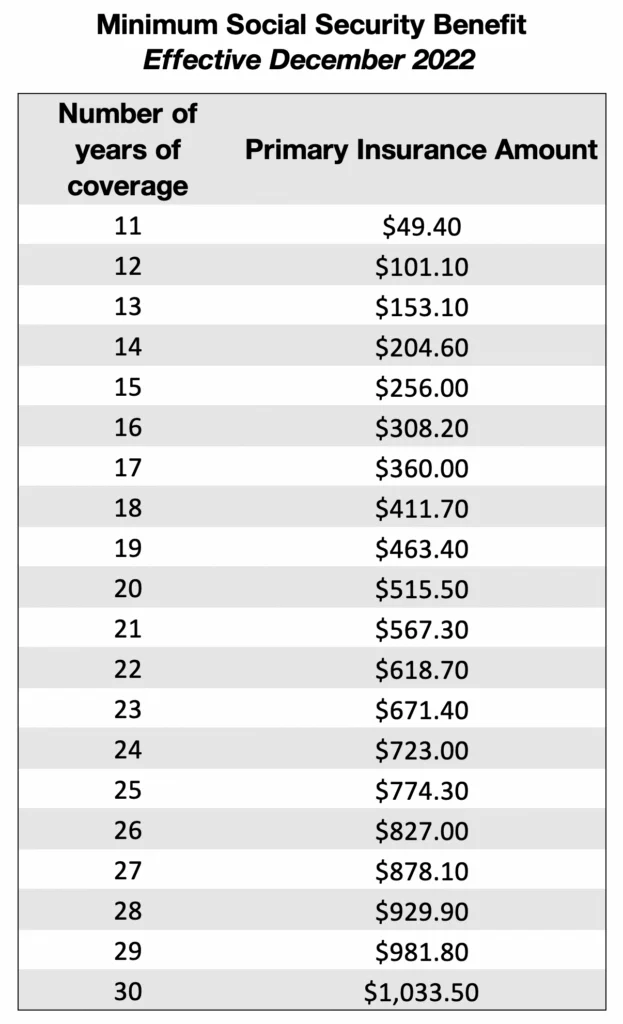
Your AIME is then used to calculate your Primary Insurance Amount (PIA). The PIA is the benefit you would receive if you claim Social Security exactly at your Full Retirement Age (FRA). The SSA uses a progressive, three-tier formula, applying different percentages to specific “bend points” in your AIME. For example, for those becoming eligible in 2024:
- 90% of the first $1,174 of AIME
- 32% of AIME between $1,174 and $7,078
- 15% of AIME above $7,078
These bend points are adjusted annually based on national average wage index changes. The progressive nature of this formula means that lower-income workers receive a higher percentage of their pre-retirement earnings back in benefits compared to higher-income workers. The sum of these calculated amounts gives you your PIA.
Impact of Earnings History on Benefits
It’s clear that your earnings history is the most significant determinant of your Social Security benefit. Consistently high earnings over a full 35-year career will result in a higher AIME and, consequently, a higher PIA. Conversely, periods of unemployment, low earnings, or working fewer than 35 years will reduce your AIME and, thus, your benefit. This underscores the importance of a steady work history and maximizing your earnings potential throughout your career.
The Full Retirement Age (FRA) Explained
Your Full Retirement Age (FRA) is the age at which you are entitled to receive 100% of your PIA. This age is not universal; it depends on your birth year. For those born in 1937 or earlier, FRA was 65. For those born between 1943 and 1954, FRA is 66. For those born in 1960 or later, FRA is 67. If you claim benefits before your FRA, your monthly payment will be permanently reduced. If you claim after your FRA, your monthly payment will be permanently increased.
Factors Influencing Your Payment Amount
While your PIA serves as the baseline, several critical factors can significantly alter the actual monthly Social Security payment you receive.
Claiming Age: Early vs. Delayed Retirement
The age at which you decide to start receiving benefits has the most profound impact on your monthly payment.
- Claiming Early: You can start receiving retirement benefits as early as age 62. However, claiming before your FRA results in a permanent reduction in benefits. The reduction can be substantial; for someone with an FRA of 67, claiming at 62 means a permanent 30% reduction in their monthly benefit. This reduction is calculated on a prorated basis for each month you claim before your FRA.
- Claiming at FRA: If you wait until your Full Retirement Age, you will receive 100% of your PIA.
- Claiming Late (Delayed Retirement Credits): For every year you delay claiming benefits past your FRA, up to age 70, you earn Delayed Retirement Credits (DRCs). These credits permanently increase your monthly benefit by approximately 8% per year. For someone with an FRA of 67, delaying until age 70 can result in a 24% increase (3 years x 8%) over their PIA, in addition to any Cost-of-Living Adjustments. This increase is a powerful incentive for those who can afford to wait.
Cost-of-Living Adjustments (COLAs)
Social Security benefits are designed to keep pace with inflation through annual Cost-of-Living Adjustments (COLAs). Each year, typically in October, the Social Security Administration announces whether a COLA will be applied to benefits for the following year. This adjustment is based on the Consumer Price Index for Urban Wage Earners and Clerical Workers (CPI-W). If the CPI-W increases, benefits are adjusted upward to maintain purchasing power. COLAs are a critical feature, ensuring that the value of your benefits does not erode over time due to inflation.
Spousal and Survivor Benefits
Social Security also provides benefits to eligible spouses and survivors, which can significantly impact household income.
- Spousal Benefits: A spouse can claim benefits based on their own work record or up to 50% of their living spouse’s PIA, whichever is higher. If a spouse claims spousal benefits before their own FRA, the benefit is reduced. It’s important to note that claiming spousal benefits does not reduce the primary worker’s benefit.
- Survivor Benefits: A widow or widower can receive up to 100% of their deceased spouse’s PIA if they wait until their own FRA. Benefits can be claimed as early as age 60 (or 50 if disabled), but with reductions. Children and dependent parents may also be eligible for survivor benefits.
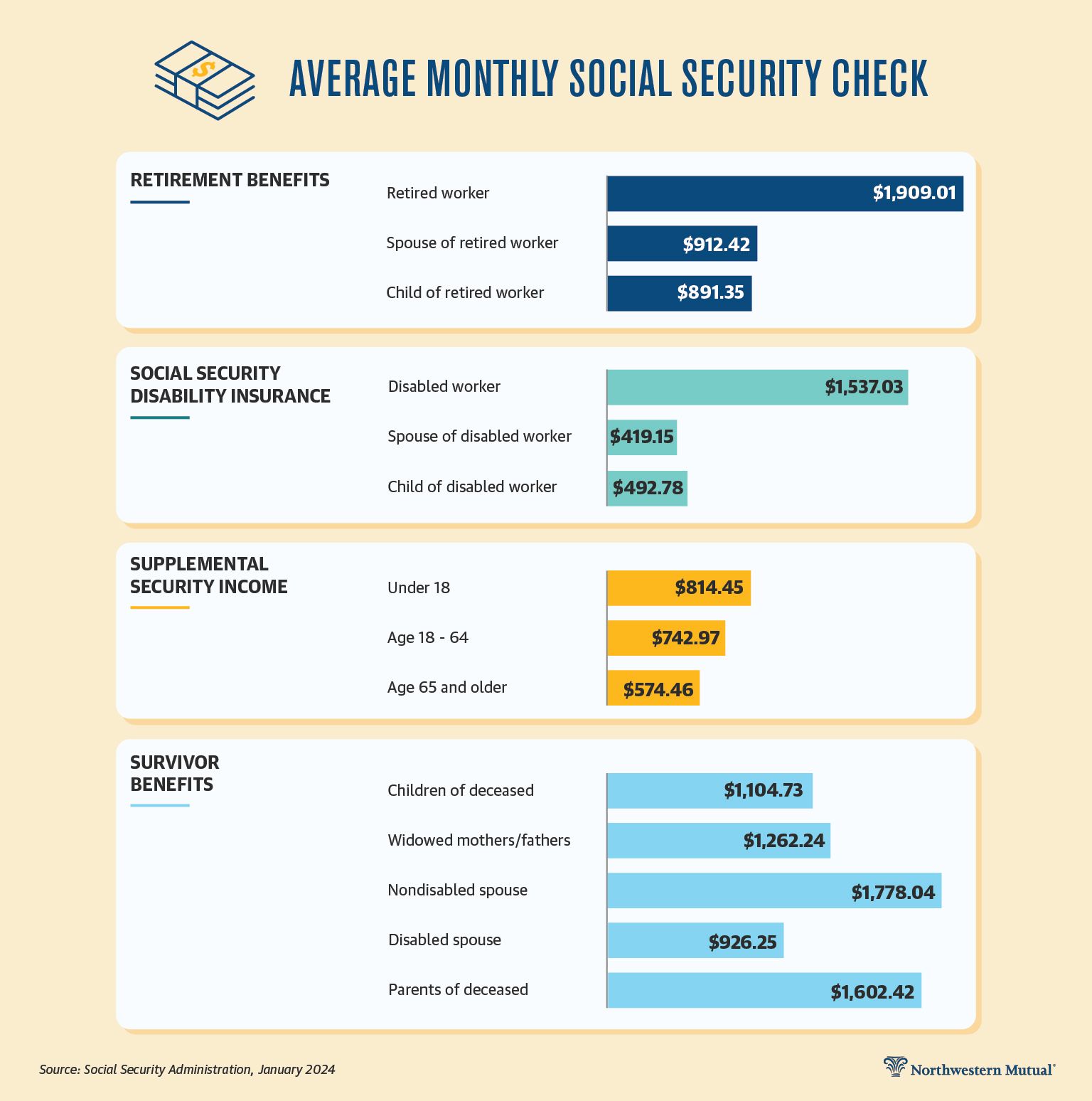
These provisions highlight the importance of coordinating claiming strategies within a household to maximize combined benefits.
Taxation of Social Security Benefits
While Social Security benefits are not always taxed, a portion of them may become taxable if your “provisional income” exceeds certain thresholds. Provisional income includes your adjusted gross income, tax-exempt interest, and 50% of your Social Security benefits.
- For single filers: Up to 50% of benefits may be taxable if provisional income is between $25,000 and $34,000. Up to 85% of benefits may be taxable if provisional income is above $34,000.
- For married couples filing jointly: Up to 50% of benefits may be taxable if provisional income is between $32,000 and $44,000. Up to 85% of benefits may be taxable if provisional income is above $44,000.
This means that while the headline payment amount is important, your net benefit can be affected by your other retirement income sources.
Working While Receiving Benefits
If you claim Social Security benefits before your Full Retirement Age and continue to work, your benefits may be temporarily reduced or withheld if your earnings exceed specific annual limits. This is known as the “earnings test.”
- Before FRA: For 2024, if you are under FRA, the SSA deducts $1 from your benefits for every $2 you earn above $22,320.
- In the year you reach FRA: In the months before you reach FRA, the SSA deducts $1 from your benefits for every $3 you earn above a higher limit ($59,520 in 2024). Once you reach your FRA, the earnings test no longer applies, and you can earn any amount without your Social Security benefits being reduced.
Any benefits withheld due to the earnings test are not lost permanently; your future benefits will be recalculated at your FRA to account for the additional earnings and the months benefits were withheld, potentially leading to a higher monthly payment.
Maximizing Your Social Security Benefits
Given the various factors at play, a proactive approach to understanding and planning for Social Security can significantly impact your financial well-being in retirement.
Understanding Your Social Security Statement
The single most valuable tool for estimating your benefits is your annual Social Security Statement. You can access it online by creating an account at my Social Security. This statement provides:
- An estimate of your retirement benefits at age 62, Full Retirement Age, and age 70.
- Estimates for disability and survivor benefits.
- A complete record of your earnings history.
Reviewing your earnings record regularly is crucial to ensure accuracy. Mistakes can occur, and correcting them promptly can prevent a lower benefit calculation later.
Strategies for Delaying Benefits
For many individuals, delaying benefits past their FRA is one of the most effective strategies to maximize their monthly payment. Each year of delay up to age 70 earns an additional 8% in Delayed Retirement Credits. This strategy is particularly powerful for those who expect to live a long life, as the higher monthly payment will continue throughout their retirement. Factors to consider when deciding to delay include:
- Other income sources: Do you have sufficient savings, pensions, or other income to cover your living expenses until you claim?
- Health and longevity: Your expected lifespan is a key consideration.
- Spousal benefits: How does delaying impact your spouse’s potential benefits?
Coordinating with Your Spouse’s Benefits
Married couples have more options to optimize their combined Social Security benefits. Strategic claiming can significantly increase the total lifetime benefits for the household. For example, a higher-earning spouse might delay claiming until age 70 to maximize their individual benefit (which will then also be the basis for potential survivor benefits for the lower-earning spouse). The lower-earning spouse might claim their own benefits earlier, or claim spousal benefits when the higher-earning spouse files. These decisions require careful planning and often benefit from professional financial advice.
The Role of Financial Planning
Social Security should be viewed as one component of a broader retirement income strategy, not the sole source. Integrating your expected Social Security benefits into your overall financial plan allows you to:
- Determine how much you need to save independently through 401(k)s, IRAs, and other investment vehicles.
- Plan for potential tax liabilities on your benefits.
- Make informed decisions about when to retire and when to claim Social Security, based on your complete financial picture.
A comprehensive financial plan can help you navigate the complexities of Social Security and ensure it aligns with your long-term financial goals.
The Future of Social Security and Financial Planning Implications
Social Security faces long-term financial challenges, primarily due to demographic shifts—an aging population and lower birth rates mean fewer workers supporting more retirees. While the program is not at risk of disappearing, projections suggest that without congressional action, the trust funds may only be able to pay a reduced percentage of promised benefits in the coming decades.
Current Challenges and Proposed Reforms
The Social Security Administration’s annual Trustees’ Report regularly highlights the program’s financial outlook. While the system can pay 100% of promised benefits for some years, current projections indicate that the trust funds for retirement and survivor benefits will be able to pay about 83% of scheduled benefits by the mid-2030s if no changes are made. Various reforms have been proposed, including:
- Raising the full retirement age.
- Increasing the payroll tax rate.
- Adjusting the COLA formula.
- Raising the cap on earnings subject to Social Security taxes.
- Changing the benefit formula.
The political will to enact these changes remains a significant variable.
Integrating Social Security into Your Overall Retirement Strategy
Given the potential for future adjustments, it’s prudent to plan for your retirement with a degree of flexibility. While Social Security is a guaranteed benefit, it’s wise not to rely on it as your sole source of retirement income or assume that current benefit levels will remain entirely unchanged indefinitely.
Diversifying Retirement Income Sources
The most robust retirement plans diversify income across multiple sources: personal savings (401(k)s, IRAs, taxable accounts), pensions (if available), and Social Security. This diversification provides a buffer against potential changes to any single income stream and offers greater financial resilience. Understanding “how much is Social Security payments” is the first step, but integrating that knowledge into a holistic plan that includes robust personal savings and investments is essential for a secure and comfortable retirement.
In conclusion, while the average Social Security payment provides a helpful benchmark, your individual benefit will be unique, shaped by your personal earnings history, claiming age, and a host of other factors. By understanding these components, utilizing available resources like your Social Security Statement, and engaging in proactive financial planning, you can make informed decisions to maximize this vital retirement income source and build a resilient financial future.
aViewFromTheCave is a participant in the Amazon Services LLC Associates Program, an affiliate advertising program designed to provide a means for sites to earn advertising fees by advertising and linking to Amazon.com. Amazon, the Amazon logo, AmazonSupply, and the AmazonSupply logo are trademarks of Amazon.com, Inc. or its affiliates. As an Amazon Associate we earn affiliate commissions from qualifying purchases.