
Deciding when to claim Social Security benefits is one of the most significant financial decisions many Americans will make as they approach retirement. While the earliest age you can start receiving retirement benefits is 62, doing so comes with specific implications that can profoundly impact your lifetime income. For many, the allure of receiving benefits sooner outweighs the reduction in monthly payments, but understanding the precise financial mechanics behind this choice is crucial. This comprehensive guide will demystify what Social Security benefits look like at age 62, exploring the calculations, factors that influence your payments, and the broader financial considerations involved in making this early claiming decision.

Understanding Early Retirement Benefits and Your Full Retirement Age (FRA)
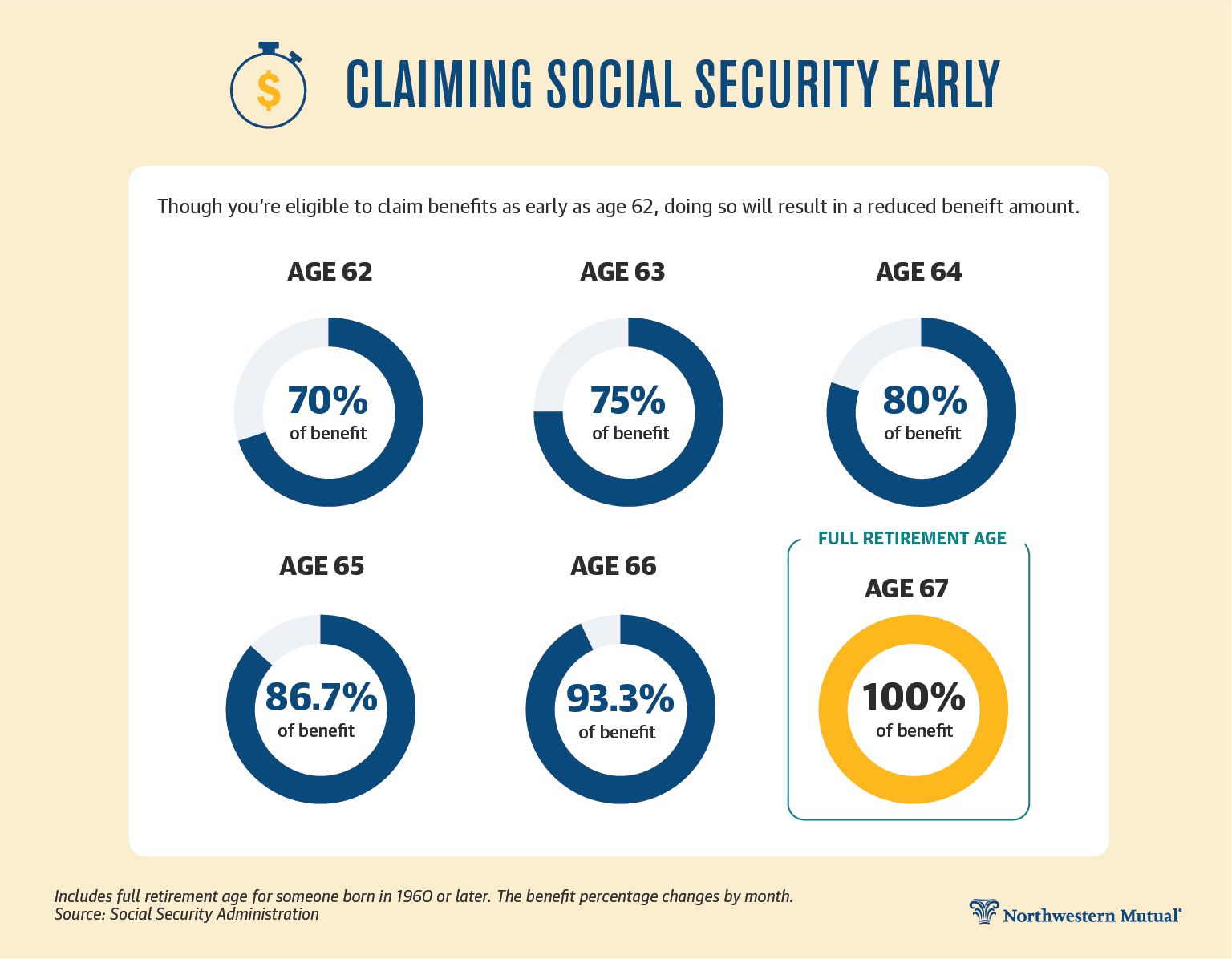
Social Security is designed to provide a foundational income floor for retirees, and the system is structured around a concept known as your Full Retirement Age (FRA). Your FRA is the age at which you are entitled to receive 100% of your primary insurance amount (PIA). Claiming benefits before your FRA results in a permanent reduction of your monthly payment.
The Full Retirement Age (FRA) Explained
Your Full Retirement Age (FRA) is not a universal age but rather depends on your birth year. For those born between 1943 and 1954, the FRA is 66. For subsequent birth years, it gradually increases by a few months per year until it reaches 67 for anyone born in 1960 or later. For example, if you were born in 1960 or later, your FRA is 67. If you were born in 1957, your FRA is 66 and 6 months. Knowing your specific FRA is the cornerstone of understanding how claiming at 62 impacts your benefits, as it dictates the baseline from which reductions are calculated.
How Claiming at 62 Reduces Your Monthly Benefit
Claiming Social Security benefits at 62 means you are initiating payments up to five years earlier than the FRA for some individuals. The Social Security Administration (SSA) applies a permanent reduction to your monthly benefit for each month you claim before your FRA. This reduction is calculated in two tiers:
- The first 36 months early: Your benefit is reduced by five-ninths of one percent (5/9 of 1%) for each month. This translates to an annual reduction of approximately 6.67%.
- Months beyond 36: If you claim more than 36 months early, your benefit is further reduced by five-twelfths of one percent (5/12 of 1%) for each additional month. This amounts to an annual reduction of approximately 5%.
For someone with an FRA of 67, claiming at 62 means taking benefits 60 months (5 years) early. This would result in a permanent reduction of about 30%. If your FRA is 66, claiming at 62 is 48 months (4 years) early, leading to a reduction of approximately 25%. This reduction is permanent and will apply to all future payments, including any Cost-of-Living Adjustments (COLAs).
Calculating Your Primary Insurance Amount (PIA)
Before you can determine the reduced benefit at 62, you need to understand your Primary Insurance Amount (PIA). Your PIA is the monthly benefit you would receive if you claim at your Full Retirement Age. It’s calculated based on your average indexed monthly earnings (AIME) during your 35 highest-earning years. The SSA applies a formula using bend points to determine your PIA, ensuring that lower earners receive a proportionately higher benefit relative to their contributions. You can get an estimate of your PIA and your reduced benefit at 62 by creating an account on the SSA’s official website and reviewing your Social Security Statement. This statement provides personalized estimates based on your actual earnings record.
Factors Influencing Your Actual Benefit Amount
While the reduction formula for early claiming is consistent, the exact dollar amount you receive at 62 will vary significantly from person to person. This variation stems from several key factors, primarily your earnings history and external economic adjustments.
Your Earning Record and Average Indexed Monthly Earnings (AIME)
The most critical factor determining your Social Security benefit is your earnings record. The SSA considers your 35 highest-earning years. If you have fewer than 35 years of earnings, the missing years are counted as zeros, which will significantly lower your overall average. Before calculating the average, your past earnings are “indexed” to account for changes in the average wage level in the economy over time. This process, called “wage indexing,” ensures that your past earnings are brought up to near current-day values, making them comparable across decades. A higher average indexed monthly earnings (AIME) directly translates to a higher Primary Insurance Amount (PIA) and, consequently, a higher reduced benefit if claimed at 62.
Cost-of-Living Adjustments (COLAs)
Once you begin receiving Social Security benefits, your payments are subject to annual Cost-of-Living Adjustments (COLAs). COLAs are designed to help Social Security benefits keep pace with inflation. They are typically announced in October and take effect in December, impacting checks received the following January. While COLAs increase your benefit amount, they are applied to your reduced benefit if you claimed early. For example, if your benefit was reduced by 30% for claiming at 62, any COLA will be applied to that 70% of your PIA, not the full 100%. This means the early claiming reduction persists and compounds over time, as the COLA percentage is applied to a smaller base amount.
Taxation of Social Security Benefits
It’s important to remember that your Social Security benefits, even if reduced, may be subject to federal income tax. Whether your benefits are taxed depends on your “combined income,” which is defined as your adjusted gross income (AGI) plus non-taxable interest plus one-half of your Social Security benefits.
- If your combined income is between $25,000 and $34,000 (single filers) or $32,000 and $44,000 (married filing jointly), up to 50% of your benefits may be taxable.
- If your combined income exceeds $34,000 (single) or $44,000 (married filing jointly), up to 85% of your benefits may be taxable.
This taxation applies regardless of when you claim your benefits, but it’s a critical component of understanding your net income from Social Security, especially if you have other sources of retirement income. Some states also tax Social Security benefits, so it’s wise to check your local tax laws.
The Impact of Working While Receiving Benefits at 62
Many individuals who claim Social Security at 62 choose to continue working, either part-time or full-time. While this can provide a valuable supplement to your income, it’s crucial to understand how working before your Full Retirement Age can affect your Social Security benefits.
Social Security’s Earnings Limit
The Social Security Administration imposes an earnings limit for beneficiaries who are receiving benefits before their Full Retirement Age. If your earnings exceed this limit, a portion of your Social Security benefits will be withheld.
- For years before your FRA: For every $2 you earn above the annual limit, $1 will be withheld from your benefits. The annual earnings limit is adjusted each year. For instance, in 2023, this limit was $21,240.
- In the year you reach your FRA: A different earnings limit applies. For every $3 you earn above a higher annual limit (e.g., $56,520 in 2023), $1 will be withheld, but only for earnings before the month you reach your FRA. Once you reach your FRA, the earnings limit no longer applies, and you can earn as much as you want without your benefits being reduced.
It’s vital to track your earnings if you are collecting benefits early and working, as exceeding the limit can lead to unexpected benefit reductions.
How Benefits Are Withheld (and Potentially Reinstated)
If your earnings exceed the annual limit, the SSA will withhold your benefits until the withheld amount equals the amount by which you exceeded the limit. For example, if you’re supposed to receive $1,000 per month and you’re over the earnings limit by $2,000 (meaning $1,000 would be withheld), the SSA would simply withhold one month’s benefit check. This withholding can be confusing, as it’s not a direct tax but a temporary reduction of benefits. The good news is that any benefits withheld due to the earnings test are not permanently lost.
The Future Recalculation of Your Benefit
When you reach your Full Retirement Age, the Social Security Administration will automatically recalculate your benefit amount. This recalculation takes into account any months where benefits were withheld due to the earnings limit. Essentially, for each month that a benefit check was completely withheld, the SSA treats that month as if you hadn’t claimed benefits yet. This effectively “gives back” some of the early claiming reduction. While it won’t erase the initial reduction completely, it can result in a slightly higher monthly benefit amount for the remainder of your retirement once you pass your FRA and are no longer subject to the earnings test. This potential future increase can sometimes soften the blow of the initial early claiming reduction.
Pros and Cons of Claiming at 62
The decision to claim Social Security benefits at age 62 is complex, fraught with trade-offs. There are compelling arguments for both early and delayed claiming, and the “right” choice is highly individual.
Advantages of Early Claiming
- Immediate Access to Funds: The most apparent benefit is immediate access to income. This can be crucial if you’ve lost your job, have unexpected medical expenses, or simply need to supplement your income to cover living expenses.
- Shorter Life Expectancy: If you have a family history of shorter lifespans or are dealing with health issues that suggest a reduced life expectancy, claiming early may allow you to collect more in total benefits over your lifetime, as you’d collect for more years, even if at a lower monthly rate.
- Freedom from Work: For some, claiming at 62 allows them to retire fully or transition to part-time work sooner, offering greater personal freedom and the ability to pursue hobbies or spend time with family.
- Invest Early Benefits: If you don’t immediately need the income, you could claim at 62 and invest the funds, potentially growing your overall retirement nest egg. This strategy carries market risk but could outperform the guaranteed increases from delaying.
Disadvantages and Long-Term Implications
- Permanent Reduction in Monthly Benefits: As discussed, this is the most significant drawback. The 25-30% reduction is permanent, meaning you will receive a lower monthly payment for the rest of your life. This can be a substantial difference, particularly if you live a long life.
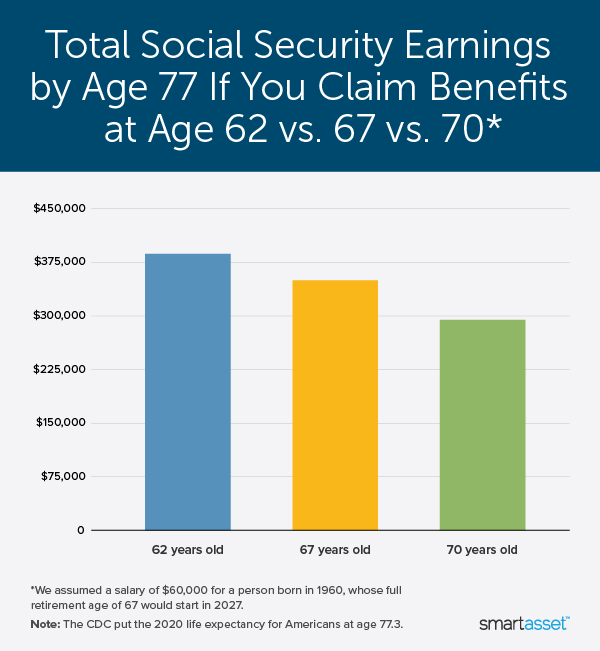
- Lower Lifetime Total Benefits (for longer lifespans): If you live a long life (into your 80s or 90s), delaying benefits past 62, especially to your FRA or even 70, will almost certainly result in a higher cumulative payout over your lifetime.
- Impact on Survivor Benefits: If you are married, your decision to claim early affects your spouse’s potential survivor benefits. If you die first, your spouse would receive your benefit amount (or their own, whichever is higher). A reduced benefit means a reduced survivor benefit for your spouse.
- Earnings Limit Penalty: If you claim early and continue to work, the earnings limit can cause a temporary reduction or even full withholding of your benefits, adding complexity and potentially reducing the immediate cash flow you expected.
Who Should Consider Claiming Early?
Claiming at 62 isn’t inherently “bad.” It can be the right choice for individuals facing specific circumstances:
- Poor Health/Reduced Life Expectancy: If health issues suggest you may not live long enough to reap the rewards of delayed claiming, taking benefits early can maximize your total lifetime payout.
- Financial Distress: If you are unemployed, facing significant debt, or have an immediate need for income and no other viable options, claiming at 62 can provide a crucial financial lifeline.
- Spousal Coordination: In some cases, a carefully planned spousal strategy might involve one spouse claiming early while the other delays, optimizing household benefits.
- Aggressive Investment Strategy: If you have a solid financial plan to invest your early benefits and are confident in your ability to generate returns that surpass the delayed claiming credits, this could be a viable (though risky) approach.
Strategies and Planning Considerations
Making an informed decision about claiming Social Security at 62 requires careful planning and consideration of your entire financial picture. It’s rarely a standalone choice.
Maximizing Your Lifetime Benefits
Maximizing lifetime benefits doesn’t always mean maximizing your monthly benefit. It means optimizing the total sum you receive over your entire lifespan. For many, delaying benefits can significantly increase total lifetime payouts, especially if they have an average or above-average life expectancy. Every year you delay claiming past your FRA, up to age 70, you earn “delayed retirement credits” that increase your benefit by 8% per year. This can result in a monthly payment 24-32% higher than your FRA benefit, which is substantially more than the 30% reduction for claiming at 62. Carefully weighing your health, financial needs, and family history can help you estimate your likely longevity and, thus, the optimal claiming age for you.
Coordinating with Spouse Benefits
For married couples, the decision becomes more intricate and offers opportunities for strategic planning. One common strategy is for the lower-earning spouse to claim benefits at 62, providing some immediate income, while the higher-earning spouse delays claiming until their FRA or even age 70 to maximize their benefit. This not only increases the higher earner’s monthly payment but also potentially increases the survivor benefit for the surviving spouse. Spousal benefits also come into play; a spouse can claim up to 50% of the other spouse’s PIA. If one spouse claims early, it impacts the other spouse’s ability to claim a higher spousal benefit based on the first spouse’s record. Divorced individuals may also be eligible for benefits based on a former spouse’s record, which further complicates the decision matrix.
Utilizing Other Retirement Savings
Social Security should be viewed as one component of a broader retirement income strategy. For those considering claiming at 62, it’s essential to assess how this decision integrates with other retirement savings vehicles, such as 401(k)s, IRAs, pensions, and personal savings. If you have substantial savings, you might consider drawing from these accounts in your early retirement years, allowing your Social Security benefits to grow by delaying. Conversely, if your other savings are limited, claiming Social Security at 62 might be a necessary step to bridge a financial gap. Analyzing your withdrawal strategy from all retirement assets in conjunction with your Social Security claiming age is key to ensuring financial security throughout your retirement.
Conclusion
The question of “how much is Social Security at 62?” is not merely a mathematical calculation of a reduced benefit; it’s a gateway to understanding a complex financial decision with long-lasting consequences. While claiming at 62 provides immediate income and can be a lifeline for those facing specific challenges, it comes at the cost of a permanently reduced monthly payment. This reduction can significantly impact your total lifetime benefits, your spouse’s potential survivor benefits, and your overall financial well-being in later retirement years.
A professional, insightful approach to this decision necessitates a thorough review of your personal circumstances: your health, your anticipated life expectancy, your current financial needs, your other sources of income and savings, and your family’s financial situation. Utilizing the SSA’s online tools, consulting with a qualified financial advisor, and carefully weighing the immediate benefits against the long-term implications are crucial steps. Ultimately, the optimal age to claim Social Security is a highly personal choice that should align with your unique retirement goals and financial plan.
aViewFromTheCave is a participant in the Amazon Services LLC Associates Program, an affiliate advertising program designed to provide a means for sites to earn advertising fees by advertising and linking to Amazon.com. Amazon, the Amazon logo, AmazonSupply, and the AmazonSupply logo are trademarks of Amazon.com, Inc. or its affiliates. As an Amazon Associate we earn affiliate commissions from qualifying purchases.