
In the modern digital economy, the “subscription tax” has become a significant line item in the average household budget. From streaming video services to cloud storage and fitness apps, the cumulative cost of monthly recurring payments can easily exceed hundreds of dollars per year. Among the veterans of this subscription-based model is SiriusXM. For many consumers, satellite radio is a staple of the daily commute, providing ad-free music, live sports, and exclusive talk content. However, understanding exactly how much a Sirius subscription costs—and more importantly, how to maximize the value of that expense—requires a deep dive into pricing tiers, hidden fees, and strategic negotiation tactics.
Navigating the SiriusXM pricing structure is not as straightforward as a flat-rate service like Netflix or Spotify. Because SiriusXM operates through both satellite hardware and internet-based streaming, the price you pay often depends on where you listen, what you listen to, and how aggressively you manage your account. For the financially conscious consumer, managing this expense is an exercise in auditing recurring costs to ensure that the utility gained matches the price paid.
The Tiered Pricing Model: What You Get for Your Money
SiriusXM typically categorizes its offerings into three primary tiers, each designed to capture a different segment of the market. Understanding these tiers is the first step in determining which plan fits your personal finance goals.
Music & Entertainment Plan
The Music & Entertainment plan is the entry-level offering for most vehicle owners. Priced generally between $13.00 and $18.99 per month (excluding fees), this plan offers over 400 channels. It includes ad-free music, news, and several talk stations. For those who primarily use SiriusXM for background music during a commute or to stay informed on current events without the repetition of terrestrial radio, this is often the most logical financial choice.
Platinum Plan
The Platinum Plan is the flagship offering, often priced between $23.00 and $24.99 per month. From a budgeting perspective, this is a premium expense. However, it provides access to the full spectrum of SiriusXM content, including live play-by-play sports (NFL, MLB, NBA, NHL), Howard Stern, and personalized “Xtra” channels. For a sports enthusiast, the Platinum plan can act as a replacement for other sports-centric subscriptions, potentially consolidating several costs into one.
Streaming-Only Plans
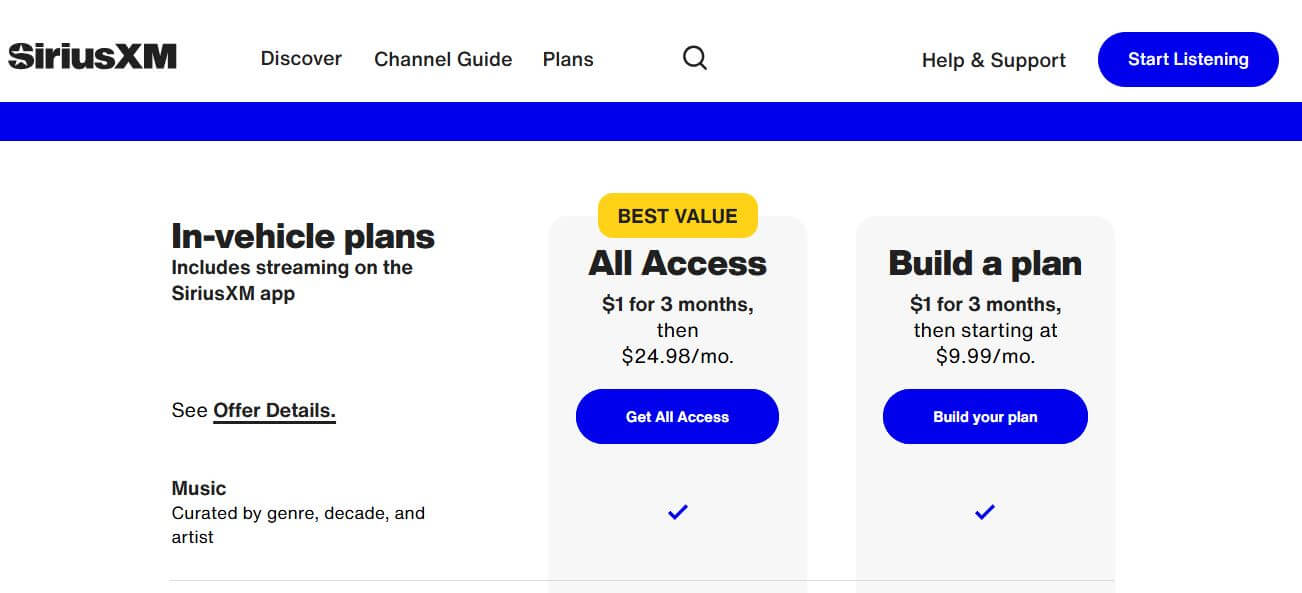
As consumer habits shift away from hardware-dependent listening, SiriusXM has introduced streaming-only plans. These are often the most cost-effective way to access the service, frequently marketed at $9.99 per month. Because these plans do not require a satellite signal or a built-in vehicle receiver, they are ideal for users who listen via smartphone, smart speakers, or desktop. If you are looking to cut costs, transitioning from an “In-Car” plan to a “Streaming” plan can save you nearly 50% annually while still providing the same content.
The Hidden Costs: Beyond the Advertised Price
One of the most critical aspects of personal finance is transparency in billing. When asking “how much is a Sirius subscription,” the sticker price is rarely the final number that appears on your credit card statement. There are two primary factors that inflate the cost: the Music Royalty and Administrative Fee, and state-level taxes.
The U.S. Music Royalty Fee
The most significant hidden cost is the Music Royalty and Administrative Fee (MRF). Currently, this fee often hovers around 21.4% of the base subscription price. For example, if your advertised plan is $20.00, the MRF adds an additional $4.28 to your bill. This fee is used to pay royalties to artists, labels, and publishers, but from a consumer’s financial perspective, it acts as a mandatory surcharge. When budgeting for SiriusXM, you must always add approximately 25% to the advertised price to get an accurate estimate of the total cash outflow.
Introductory Rates vs. Standard Rates
SiriusXM is famous for its introductory offers—often as low as $5.00 per month for 12 months or even $1.00 for three months. While these are excellent for short-term savings, they can be a financial trap. These plans almost always include an “auto-renew” clause that triggers a jump to the full standard rate once the promotional period ends. Without diligent tracking of your subscription dates, a $5.00 monthly expense can suddenly balloon to $24.00, catching the unobservant budgeter off guard.
Strategies for Lowering Your Subscription Costs

In the world of personal finance, one of the most effective ways to increase your disposable income is to reduce fixed monthly expenses. SiriusXM is one of the few subscription services where the price is often negotiable. Because the marginal cost of adding one more listener to a satellite broadcast is effectively zero, the company is highly motivated to keep existing subscribers, even at a lower price point.
The Power of Negotiation
If your promotional rate is about to expire, the best financial move is to contact the retention department. By expressing a desire to cancel due to the high cost, consumers are frequently offered “retention deals.” It is common for persistent customers to secure the Platinum Plan for as little as $8.99 to $10.99 per month for a year. Over a 12-month period, this negotiation can save you upwards of $150.00—money that could be redirected toward high-interest debt repayment or an emergency fund.
Annual vs. Monthly Billing
While many prefer the cash-flow flexibility of monthly payments, opting for an annual billing cycle can sometimes yield a discount. However, be cautious: paying annually locks your capital into the service. If you decide to sell your car or change your listening habits six months in, getting a pro-rated refund can be a bureaucratic challenge. From a liquidity standpoint, monthly billing combined with a negotiated low rate is often the superior financial strategy.
Utilizing Credit Card Benefits
Several premium credit cards and fintech apps offer “streaming credits” as a perk. Before paying for your subscription, check your credit card benefits portal. Amex, for instance, has historically offered monthly credits for various entertainment services including SiriusXM. By aligning your subscription with the right financial tool, you can effectively reduce your out-of-pocket cost to zero.
Evaluating the Financial ROI of Satellite Radio
Every expense in a healthy financial plan should be evaluated for its “Return on Investment” (ROI). While entertainment is a subjective value, we can quantify its worth by comparing it to the cost of alternatives and the time saved.
Competitive Analysis: SiriusXM vs. The Field
To determine if the cost of SiriusXM is justified, compare it to other digital audio services:
-
Spotify/Apple Music: Usually $10.99 – $16.99/month. These offer on-demand music but lack the live personality-driven talk and live sports coverage of SiriusXM.
-
Podcasts (Free): Thousands of hours of free talk content are available. If you only listen to SiriusXM for talk radio, you might find a free podcast alternative that fulfills the same need, saving you $200+ per year.
-
Terrestrial Radio (Free): While ad-heavy, traditional radio is free. For a short 10-minute commute, the “cost of annoyance” from ads might be less than the financial cost of a premium subscription.
The Value of Curation and Information
For professionals who spend significant time on the road, SiriusXM provides real-time financial news (CNBC, Bloomberg, Fox Business) and global headlines (BBC, CNN). In this context, the subscription isn’t just entertainment; it is an investment in information. If the insights gained from a financial news broadcast lead to better investment decisions or professional growth, the $20 monthly fee pays for itself many times over.
Managing Your Subscription Portfolio for Better Cash Flow
The “subscription economy” thrives on inertia. Companies count on consumers being too busy or too distracted to notice small monthly price increases. To maintain a lean and efficient financial life, you must treat your SiriusXM subscription as a variable cost that requires active management.
The Quarterly Subscription Audit
At least once every three months, review your bank statements for recurring charges. Ask yourself: “Have I used this service enough in the last 30 days to justify its cost?” If the answer is no, cancel or downgrade. SiriusXM offers a “Music Only” plan that is significantly cheaper than the Platinum tier; if you find you aren’t listening to Howard Stern or live NFL games, downgrading is an immediate win for your monthly budget.

Avoiding “Zombie” Subscriptions
A “zombie” subscription is one that continues to bill you long after you’ve stopped using the service—perhaps because you sold the vehicle equipped with the radio or shifted to listening to audiobooks. Ensure that your SiriusXM account is linked to an active email address where you will see renewal notices. Better yet, use a virtual credit card service that allows you to set spend limits or “pause” the card after a certain amount of time, preventing unexpected high-rate renewals.
In conclusion, the answer to “how much is a Sirius subscription” varies wildly based on your plan, your fees, and your willingness to negotiate. While the standard rates can reach nearly $300 per year when including taxes and royalty fees, a savvy consumer can often enjoy the same service for less than $100 per year through promotions and negotiation. By applying rigorous personal finance principles to your entertainment choices, you can enjoy the premium content of satellite radio without compromising your long-term financial health. The goal is not necessarily to eliminate the expense, but to ensure that the price you pay is the absolute minimum required for the value you receive.
aViewFromTheCave is a participant in the Amazon Services LLC Associates Program, an affiliate advertising program designed to provide a means for sites to earn advertising fees by advertising and linking to Amazon.com. Amazon, the Amazon logo, AmazonSupply, and the AmazonSupply logo are trademarks of Amazon.com, Inc. or its affiliates. As an Amazon Associate we earn affiliate commissions from qualifying purchases.