
In the intricate world of finance, precision in terminology and understanding of payment schedules are paramount. One term that frequently surfaces across various financial products and obligations is “semi-annually.” While seemingly straightforward, grasping its full implications and how it translates into actual figures is crucial for effective personal finance management, astute investing, and sound business operations. This article delves deep into what “semi-annually” truly means, how to calculate and interpret semi-annual figures, and its strategic significance across different financial landscapes.
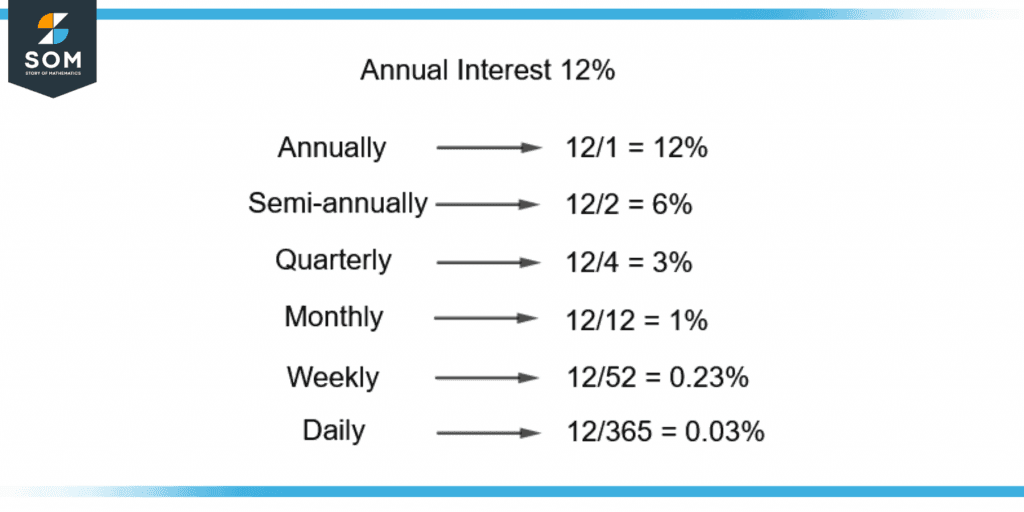
At its core, “semi-annually” means “twice a year” or “every six months.” It denotes a periodicity that contrasts with annual (once a year), quarterly (four times a year), monthly (twelve times a year), or weekly (fifty-two times a year) cycles. The ‘how much’ aspect then becomes a question of calculation, conversion, and understanding the financial impact of receiving or paying sums at this specific interval. Whether you’re tracking bond interest, planning for insurance premiums, or evaluating corporate dividend payouts, demystifying semi-annual financial calculations is a fundamental step towards greater financial literacy and control.
Understanding “Semi-Annually” in Financial Context
The term “semi-annually” is more than just a calendar marker; it’s a critical indicator of cash flow, income streams, and expenditure patterns within the financial realm. Its regular appearance across diverse financial instruments underscores its importance in financial planning and analysis.
Defining the Term: A Six-Month Cycle
“Semi-annually” literally breaks down to “semi” (half) and “annually” (yearly). Therefore, it directly translates to “half-yearly” or “twice per year.” This means that whatever financial event or transaction is described as semi-annual will occur at two distinct points within a 12-month calendar year, typically separated by approximately six months. For instance, if a payment is due semi-annually and the first payment is made in January, the second payment would generally be expected around July. This consistent, predictable cycle allows for methodical budgeting and forecasting.
Why Six Months? Historical and Practical Roots
The prevalence of the six-month cycle in finance is rooted in a blend of historical conventions and practical considerations. Historically, annual reporting and payment cycles were common, but as economies grew more complex and capital markets developed, there was a need for more frequent financial updates and distributions without the administrative burden of monthly or quarterly cycles for certain types of obligations. Semi-annual periods offer a good balance: they provide more frequent cash flow than annual cycles, which can be beneficial for investors relying on income or companies managing their liabilities, while still being less administratively intensive than quarterly or monthly arrangements. For large institutions or complex financial products like bonds, semi-annual payments often strike an optimal balance between liquidity and operational efficiency.
Common Applications Across Finance
The semi-annual frequency is a ubiquitous feature across numerous financial instruments and obligations. In personal finance, it’s often encountered with insurance premiums (e.g., auto, home), property tax payments, and certain types of loan interest calculations. In the investment world, bond interest payments (coupons) are most commonly paid semi-annually, providing a regular income stream to bondholders. Some stocks also pay dividends semi-annually, though quarterly is more common. For businesses, semi-annual periods can be relevant for tax compliance, budget reviews, and internal financial reporting, especially for smaller entities that might not do quarterly public reports. Understanding these applications is the first step towards accurately managing your money.
Practical Calculations: Converting & Projecting Semi-Annual Figures
The core question “how much is semi annually” often boils down to practical calculations: converting annual figures to semi-annual ones, or vice-versa, and understanding the impact of compounding. These calculations are fundamental for budgeting, investment analysis, and financial planning.
Simple Conversions: From Annual to Semi-Annual
The most straightforward calculation involves taking an annual amount and determining its semi-annual equivalent. If you know an annual figure, you simply divide it by two to get the semi-annual amount.
- Formula: Semi-Annual Amount = Annual Amount / 2
- Example: If your annual car insurance premium is $1,200, your semi-annual premium would be $1,200 / 2 = $600.
This simple division is applicable when the annual amount represents a total sum that is distributed evenly over two periods within the year. It’s crucial for budgeting for expenses that arrive twice a year, ensuring you set aside enough funds for each payment.
The Reverse: Annualizing Semi-Annual Data
Conversely, you might encounter a semi-annual figure and need to understand its annual equivalent. This is common when comparing investment returns or financial obligations that are quoted on a semi-annual basis to other annual metrics. To annualize a semi-annual figure, you multiply it by two.
- Formula: Annual Amount = Semi-Annual Amount x 2
- Example: If a bond pays an interest coupon of $500 semi-annually, the annual interest income from that bond is $500 x 2 = $1,000.
Annualizing helps in creating a consistent basis for comparison, allowing you to easily gauge the full yearly impact or benefit of a semi-annual figure.
Accounting for Compounding: Beyond Simple Division
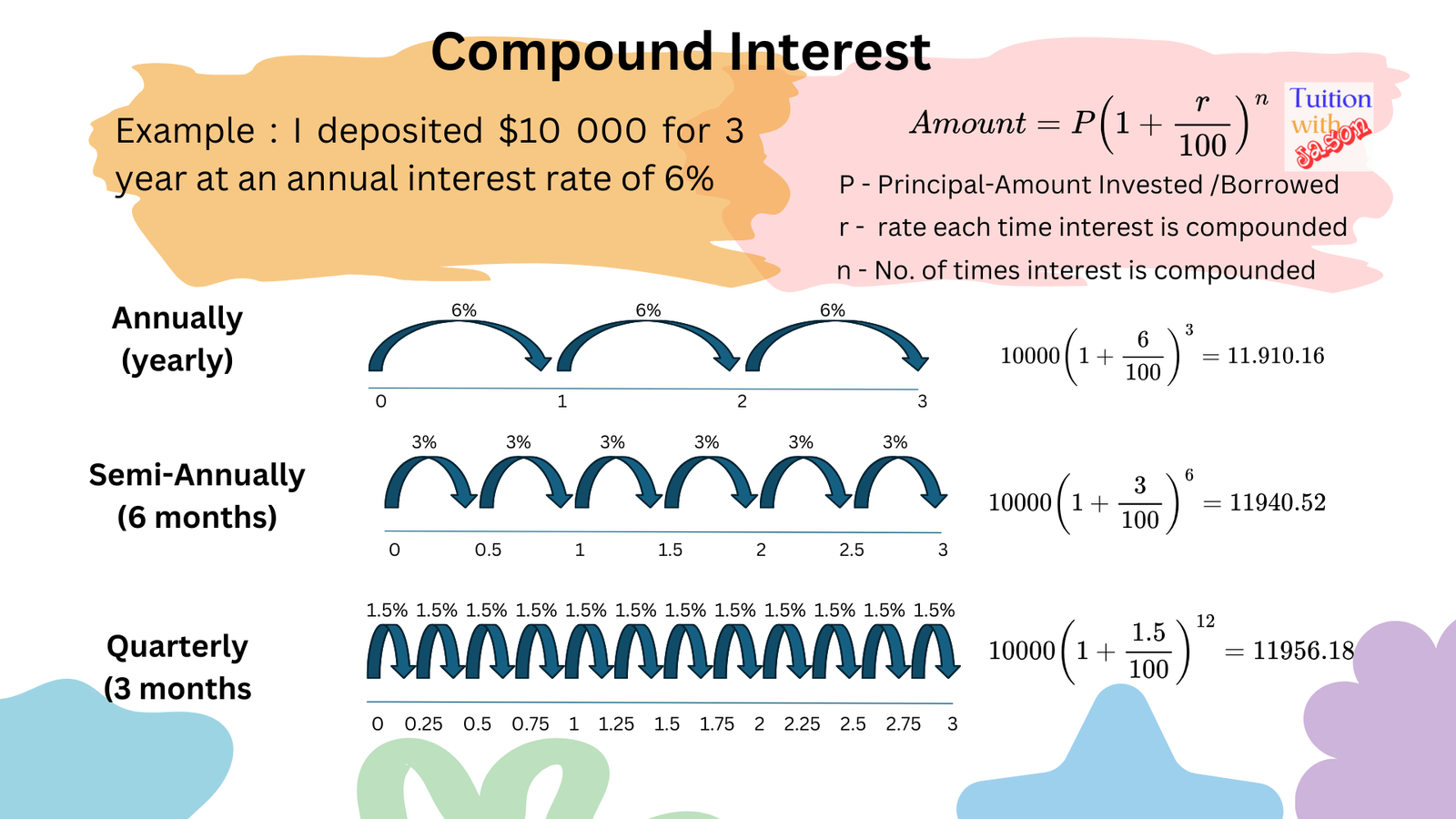
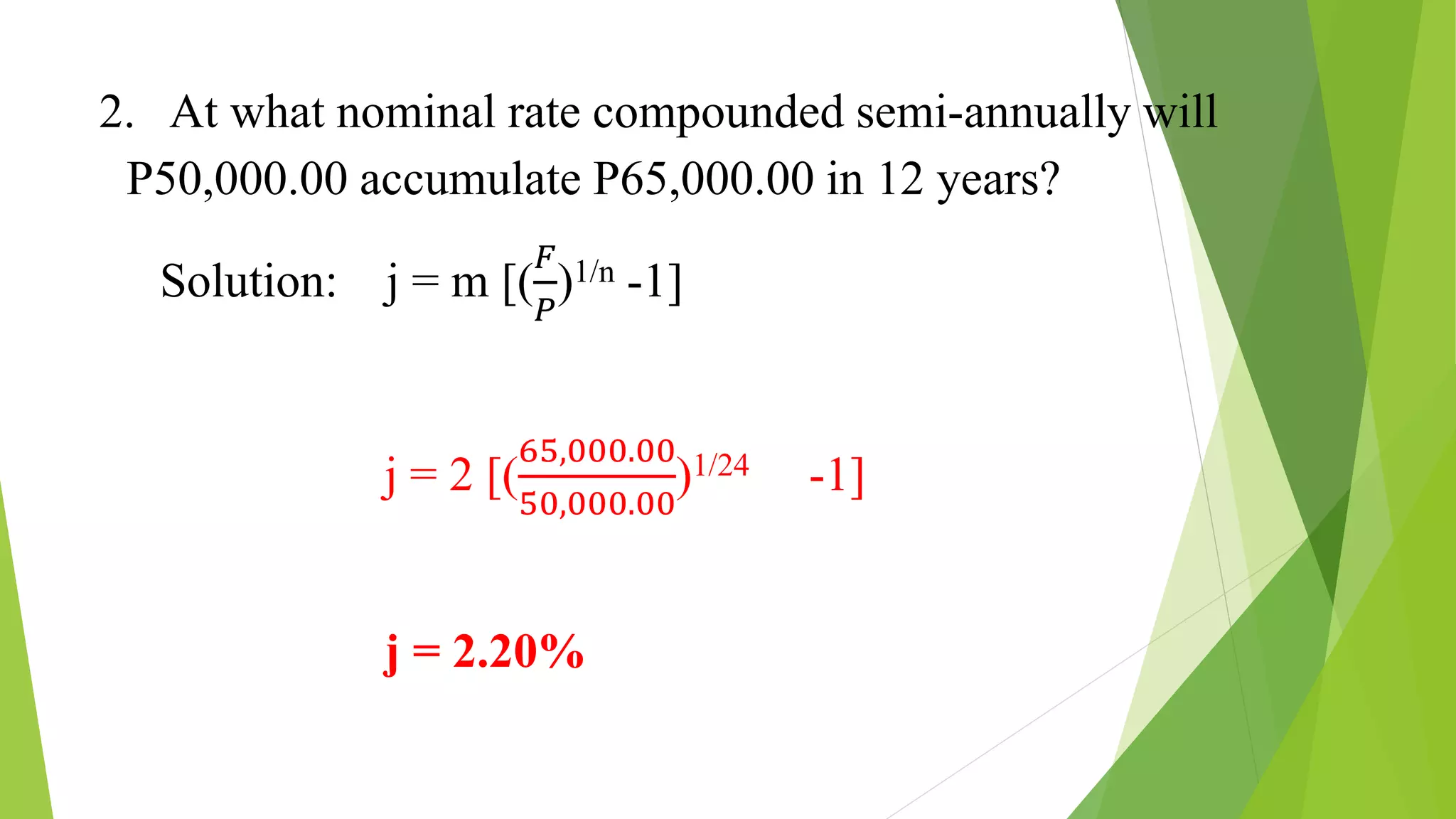
While simple division and multiplication work for straightforward payments and income, the concept of “how much” becomes more nuanced when interest compounding is involved. When an interest rate is quoted “annually compounded semi-annually,” it means the stated annual rate is divided by two, and interest is calculated and added to the principal twice a year. This leads to a slightly higher effective annual rate (EAR) than the stated annual rate because the interest earned in the first six months also starts earning interest in the second six months.
- Formula for Effective Annual Rate (EAR) with Semi-Annual Compounding: EAR = (1 + (Nominal Annual Rate / 2))^2 – 1
- Example: If a savings account offers a nominal annual rate of 4% compounded semi-annually, the effective semi-annual rate is 4% / 2 = 2%. The EAR would be (1 + 0.02)^2 – 1 = 1.0404 – 1 = 0.0404 or 4.04%. This means that while the stated rate is 4%, due to semi-annual compounding, you effectively earn 4.04% over the year. Understanding this distinction is vital for comparing investments with different compounding frequencies.
Real-World Examples: Interest, Premiums, and Dividends
Applying these calculations to real-world scenarios clarifies their importance. For instance, if you have a loan with an annual interest rate, and interest is charged semi-annually, the periodic interest rate applied would be half the annual rate. When budgeting for insurance premiums, knowing the semi-annual amount allows for proper cash flow management. For investors, understanding that a bond’s “coupon rate” (annual interest rate) often translates into two semi-annual interest payments helps in projecting income and managing liquidity. These practical applications underscore why mastering semi-annual calculations is an essential financial skill.
Semi-Annual Payments in Personal Finance
For individuals, semi-annual payments represent significant financial milestones that require proactive planning and budgeting. Unlike monthly bills, these larger, less frequent outlays can strain budgets if not anticipated.
Insurance Premiums: Budgeting for Larger Chunks
Many types of insurance, including auto, home, and some life or health policies, offer the option to pay premiums semi-annually. While this might result in a slightly lower overall annual cost compared to monthly payments (which often include an administrative fee), it means facing two larger lump-sum payments each year. For instance, a $1,200 annual car insurance premium paid monthly would be $100/month, but semi-annually it’s $600 every six months. Budgeting for these larger chunks requires discipline; setting aside a portion of the payment each month into a dedicated savings account can help smooth out cash flow and prevent financial stress when the payment is due.
Property Taxes: Managing Bi-Annual Obligations
In many jurisdictions, property taxes are collected semi-annually. These can be substantial amounts, directly impacting a homeowner’s financial stability. Homeowners with mortgages often have their property taxes escrowed, meaning a portion of their monthly mortgage payment goes into an escrow account, and the lender pays the semi-annual tax bill on their behalf. However, for those who own their homes outright or choose not to escrow, managing these bi-annual obligations means independently saving or having sufficient funds readily available. Understanding the due dates and amounts is critical to avoid penalties or, in extreme cases, tax liens.
Debt Payments: Understanding Your Payment Schedule
While most consumer loans (mortgages, car loans) are structured with monthly payments, certain specialized loans or financial agreements might incorporate semi-annual payment schedules, particularly in business or higher-value personal lending. It’s paramount to thoroughly review loan documents to understand the payment frequency, interest calculation method (especially if it involves semi-annual compounding), and the exact amounts due. Misunderstanding these terms can lead to missed payments, accrued late fees, and potential damage to your credit score.
Saving Strategies for Semi-Annual Expenses
Given the lump-sum nature of semi-annual payments, adopting effective saving strategies is key. A popular method is to divide the total annual expense by twelve and set aside that amount each month into a high-yield savings account earmarked specifically for these expenses. For example, if your semi-annual property tax bill is $2,000 (totaling $4,000 annually), you could aim to save approximately $333 each month. This systematic approach ensures that funds are available when payments are due, transforming what could be a budgeting hurdle into a manageable routine. Utilizing budgeting apps or setting up automatic transfers can further simplify this process, promoting financial discipline and peace of mind.
Semi-Annual Cycles in Investing and Business Finance
Beyond personal obligations, semi-annual cycles are deeply embedded in the mechanics of investing and the operational rhythm of businesses. Their influence ranges from income generation for investors to strategic financial planning for enterprises.
Bonds and Fixed Income: Receiving Semi-Annual Interest
The fixed-income market, predominantly comprised of bonds, is where semi-annual payments are most prevalent and almost a standard. Most corporate and government bonds issue interest payments (known as coupon payments) on a semi-annual basis. This provides bondholders with a regular, predictable income stream twice a year. For example, a bond with a 5% annual coupon rate and a face value of $1,000 would pay $25 every six months ($1,000 * 0.05 / 2). This regularity makes bonds attractive for investors seeking stable income, allowing them to better plan their finances or even reinvest these semi-annual payouts for compounding growth. Understanding this frequency is essential for calculating a bond’s yield and overall return.
Stock Dividends: The Payout Frequency
While quarterly dividends are more common for publicly traded stocks, some companies, particularly those outside the U.S. or in specific sectors, opt for semi-annual dividend payouts. These payments represent a portion of the company’s profits distributed to its shareholders. For investors focused on dividend income, knowing the frequency is crucial for cash flow planning. If a company pays a $1.00 annual dividend semi-annually, an investor would receive two $0.50 payments per year. Investors should always check a company’s dividend policy to understand its payout schedule, as this impacts how they might reinvest or utilize their dividend income.
Business Reporting and Tax Deadlines
For businesses, especially small to medium-sized enterprises (SMEs), semi-annual periods can dictate certain reporting requirements or tax deadlines. While larger corporations often adhere to quarterly and annual reporting for public transparency, many smaller businesses review their financial performance, budget actuals against forecasts, or prepare for specific tax filings on a semi-annual basis. This allows for a comprehensive mid-year check-up and year-end reconciliation without the constant administrative overhead of monthly or quarterly formal reporting. Furthermore, certain tax obligations or regulatory compliance checks might have semi-annual due dates, making it a critical period for financial departments.
Capital Planning and Budgeting
Strategic capital planning and budgeting within businesses also often incorporate semi-annual reviews. Companies might allocate budgets, assess capital expenditure projects, or revisit investment strategies twice a year to respond to market changes, operational performance, or strategic shifts. This mid-year review (often at the six-month mark) is vital for making timely adjustments, optimizing resource allocation, and ensuring that the business remains on track to meet its annual financial objectives. By breaking down the year into two manageable segments, businesses can be more agile and responsive in their financial management.
Strategic Implications and Financial Planning
The understanding of “how much is semi annually” extends beyond mere calculation; it has profound strategic implications for financial planning, wealth accumulation, and risk management for both individuals and businesses.
Budgeting and Cash Flow Management
The primary strategic implication of semi-annual payments or income is their impact on budgeting and cash flow. For expenses, these larger, less frequent payments necessitate disciplined savings to avoid liquidity crunches. Individuals must factor these into their annual budget, perhaps by creating a dedicated savings buffer. For businesses, semi-annual income streams or expenditure peaks require careful cash flow forecasting to ensure sufficient funds are available for operations or to maximize the deployment of incoming capital. Proper planning transforms potential financial stresses into manageable obligations.
Maximizing Returns: Reinvesting Semi-Annual Payouts
For investors, semi-annual income from bonds or dividends presents an opportunity to accelerate wealth accumulation through reinvestment. Receiving payments twice a year means that the “interest on interest” effect, or compounding, can begin sooner than with annual payouts. By reinvesting semi-annual bond coupons or dividends back into the same or other growth-oriented assets, investors can harness the power of compounding more frequently, potentially leading to significantly higher returns over the long term. This strategic decision to reinvest rather than spend semi-annual income is a cornerstone of effective wealth building.
Avoiding Pitfalls: The Lump Sum Effect
While semi-annual payments can offer certain advantages, they also carry potential pitfalls, particularly the “lump sum effect.” For expenses, an unexpected large bill can derail a budget if funds haven’t been meticulously set aside. For income, some individuals might be tempted to treat semi-annual windfalls as “bonus” money, leading to impulsive spending rather than strategic investment or debt reduction. The key to avoiding these pitfalls is proactive planning, disciplined saving, and a clear understanding of how semi-annual amounts fit into one’s overall financial strategy. Developing a robust financial plan that specifically accounts for these periodic flows is essential.
Tools and Resources for Semi-Annual Financial Management
To effectively manage semi-annual financial cycles, leveraging appropriate tools and resources is highly beneficial. Budgeting software and apps (e.g., Mint, YNAB) can help track income and expenses, allowing users to allocate funds monthly for upcoming semi-annual bills. Investment platforms often provide tools for automatic dividend or coupon reinvestment. For businesses, enterprise resource planning (ERP) systems and accounting software can help forecast cash flow, manage payables and receivables, and schedule financial reviews to align with semi-annual cycles. Financial advisors can also provide personalized guidance on structuring budgets, investment portfolios, and tax strategies to optimize around semi-annual financial events. Utilizing these resources empowers individuals and businesses to navigate semi-annual financial obligations and opportunities with greater confidence and efficiency.
In conclusion, “how much is semi annually” is a question that opens the door to a deeper understanding of financial mechanics. From basic conversions to the intricacies of compounding and strategic financial planning, mastering the semi-annual concept is a fundamental skill that underpins sound financial management in both personal and business contexts. By recognizing its prevalence and implications, individuals and organizations can make more informed decisions, optimize their cash flow, and ultimately enhance their financial well-being.
aViewFromTheCave is a participant in the Amazon Services LLC Associates Program, an affiliate advertising program designed to provide a means for sites to earn advertising fees by advertising and linking to Amazon.com. Amazon, the Amazon logo, AmazonSupply, and the AmazonSupply logo are trademarks of Amazon.com, Inc. or its affiliates. As an Amazon Associate we earn affiliate commissions from qualifying purchases.