
The prime rate is a term frequently heard in financial news and discussions, often referenced as a barometer for the cost of borrowing across the economy. Yet, for many, its precise definition, current value, and far-reaching implications remain a mystery. Far from being an arcane financial instrument relevant only to economists or bankers, the prime rate is a fundamental benchmark that directly impacts the financial well-being of individuals, the operational costs of businesses, and the overall trajectory of the economy. Understanding “how much is prime rate” at any given time, and critically, what drives its fluctuations, is essential for informed financial decision-making, whether you’re considering a new loan, managing existing debt, or planning for future investments.

In essence, the prime rate represents the interest rate that commercial banks charge their most creditworthy corporate customers for short-term loans. While this definition might sound narrowly focused, its influence permeates far beyond a select group of large corporations. It serves as a foundational rate upon which countless other variable-rate loans are pegged, from credit card APRs and home equity lines of credit (HELOCs) to various business loans. Its movement is almost entirely dictated by the monetary policy decisions of central banks, particularly the Federal Reserve in the United States, making it a direct reflection of broader economic strategies aimed at controlling inflation, stimulating growth, or cooling down an overheating market.
This article will demystify the prime rate, exploring its definition, its current value, and, more importantly, its profound impact on personal finance and business operations. We will delve into its relationship with other key economic indicators and central bank policies, and offer insights into how consumers and businesses can strategically navigate environments of both rising and falling prime rates. By the end, you will have a comprehensive understanding of this critical financial benchmark and be better equipped to make informed financial decisions in an ever-evolving economic landscape.
Defining the Prime Rate: The Backbone of Lending Costs
At its core, the prime rate is a foundational interest rate, representing the cost of borrowing for the most financially sound entities. While often discussed as a singular, universal figure, its determination is a nuanced process, heavily influenced by the actions of the nation’s central bank. Grasping its definition is the first step in understanding its widespread financial implications.
What is the Prime Rate? More Than Just a Number
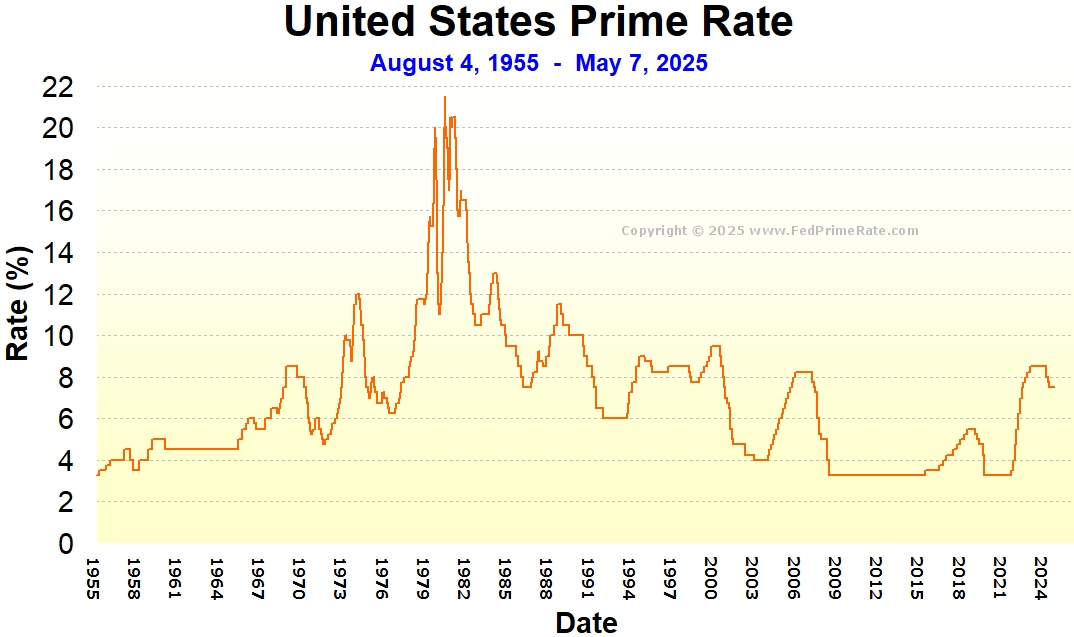
The prime rate is formally defined as the interest rate that commercial banks charge their most creditworthy customers. These are typically large corporations with excellent credit histories and minimal risk profiles. While individual banks set their own prime rates, they almost invariably move in lockstep with each other. This uniformity stems from its close relationship with the federal funds rate, the target rate set by the Federal Reserve’s Federal Open Market Committee (FOMC). In the U.S., the prime rate typically sits approximately three percentage points above the upper target of the federal funds rate. For instance, if the federal funds rate target is 5.00%-5.25%, the prime rate will generally be 8.25%. This spread accounts for banks’ operational costs and profit margins.
It’s crucial to understand that the prime rate isn’t merely an abstract figure. It’s a real-world benchmark that serves as the base for a vast array of variable-rate financial products. When you see a credit card advertising an APR of “Prime + 10%” or a HELOC marketed as “Prime + 1%”, the prime rate is the non-negotiable starting point for calculating your actual interest cost. This direct linkage makes its current value, and any anticipated changes, a matter of significant concern for anyone managing debt or considering new borrowing.
How the Prime Rate is Determined: The Fed’s Guiding Hand
The primary driver of the prime rate’s movement is the monetary policy of the central bank. In the United States, this is the Federal Reserve. The Fed does not directly set the prime rate; rather, it sets a target range for the federal funds rate. This is the rate at which banks lend their excess reserves to each other overnight. By adjusting this target rate, the Fed influences the overall cost of money in the financial system.
When the Federal Reserve raises the federal funds rate, it becomes more expensive for banks to borrow money, even from each other. This increased cost trickles down, compelling banks to raise their prime rate to maintain profitability. Conversely, when the Fed lowers the federal funds rate, banks’ borrowing costs decrease, allowing them to lower their prime rate. This mechanism highlights the powerful influence the central bank wields over the broader economy, using interest rates as a key tool to manage inflation, employment, and economic growth. Therefore, understanding the Fed’s stance on monetary policy is paramount to anticipating movements in the prime rate.
Prime Rate’s Ripple Effect: Impact on Personal Finance
For the average consumer, the prime rate might seem distant, but its fluctuations have a direct and tangible impact on personal finances, particularly for those with variable-rate debt. From credit cards to home equity lines, understanding this connection is vital for effective financial planning.
Credit Cards: The Direct Link to Your APR
Perhaps the most common way the prime rate affects individuals is through credit card interest rates. A significant majority of credit cards have variable annual percentage rates (APRs) that are explicitly tied to the prime rate. Your credit card agreement will often state your APR as “Prime Rate + a Margin.” For example, if your margin is 15% and the prime rate is 8.25%, your APR will be 23.25%.
When the prime rate increases, so does the interest rate on your credit card balance, leading to higher minimum payments and a greater overall cost of carrying debt. This can make it significantly more expensive to pay down balances, especially for those who consistently carry a revolving balance. Conversely, a decrease in the prime rate can offer some relief, reducing the cost of existing credit card debt. This direct correlation underscores why consumers should pay close attention to Federal Reserve announcements and their potential impact on the prime rate.
Personal Loans & Lines of Credit: Variable Rates in Focus
Many personal loans, especially those with variable interest rates, and virtually all home equity lines of credit (HELOCs) are also directly linked to the prime rate. HELOCs, in particular, are structured as revolving lines of credit secured by your home’s equity, with interest rates typically expressed as “Prime Rate + X%.” This means that as the prime rate moves up or down, the interest rate on your outstanding HELOC balance adjusts accordingly.
For borrowers with variable-rate personal loans or HELOCs, changes in the prime rate can significantly alter their monthly payments and the total cost of their loan over time. A rising prime rate environment can make these forms of debt considerably more expensive, potentially straining household budgets. Conversely, a falling prime rate can provide an opportunity to reduce interest expenses and accelerate debt repayment. Understanding your loan terms and whether your interest rate is fixed or variable is critical for managing this risk.
Mortgages: How Prime Rate Can Indirectly Influence Your Home Loan
While the prime rate doesn’t directly dictate fixed-rate mortgage rates (which are more influenced by bond markets and inflation expectations), it plays a crucial role in adjustable-rate mortgages (ARMs). Many ARMs are tied to various indexes, some of which are indirectly influenced by the prime rate or share common economic drivers. More directly, the prime rate is often the benchmark for the interest rates on second mortgages, such as home equity loans (though these are typically fixed-rate for their term) and HELOCs.
Moreover, the overall interest rate environment, heavily influenced by the prime rate and the Fed’s actions, affects the broader mortgage market. When the prime rate is rising, it signals a period of tighter monetary policy, which generally pushes up all borrowing costs, including those for new fixed-rate mortgages. While not a direct peg, a higher prime rate environment usually means higher mortgage rates overall, impacting affordability and refinance opportunities for homeowners.

Student Loans: A Mixed Bag of Fixed and Variable
The impact of the prime rate on student loans is varied. Federal student loans, by law, come with fixed interest rates that are set annually, meaning their rates do not change with the prime rate after disbursement. However, private student loans often feature variable interest rates that can be tied to the prime rate or another benchmark like LIBOR (or its successor, SOFR).
For borrowers with variable-rate private student loans, changes in the prime rate directly translate into changes in their monthly payments and total interest paid over the life of the loan. A significant rise in the prime rate can make these loans substantially more expensive, adding financial stress to graduates. It’s a critical consideration for students choosing between federal and private loan options, and for graduates managing existing variable-rate private debt.
Prime Rate’s Strategic Role: Impact on Business Finance
Beyond individual consumers, the prime rate is a linchpin in the world of business finance. Its movements directly affect the cost of capital for companies of all sizes, influencing their investment decisions, operational strategies, and growth trajectories.
Small Business Loans: The Lifeblood of Growth
For small and medium-sized enterprises (SMEs), access to affordable credit is often the lifeblood of their operations and expansion plans. Many small business loans, particularly lines of credit, working capital loans, and some equipment financing, are structured with variable interest rates tied to the prime rate. A loan might be quoted as “Prime Rate + 2.5%,” meaning the business’s borrowing cost fluctuates with every change in the prime rate.
When the prime rate rises, the cost of borrowing for these businesses increases, potentially squeezing profit margins and making it more expensive to fund inventory, payroll, or new projects. This can slow down expansion, reduce hiring, and even jeopardize the viability of some businesses. Conversely, a lower prime rate environment can stimulate business activity, making it cheaper to secure funding for growth initiatives, new equipment, or bridging cash flow gaps, thereby fostering job creation and economic expansion.
Corporate Borrowing: Funding Expansion and Operations
While large corporations often have access to more sophisticated financing options like bond markets, short-term corporate loans and revolving credit facilities are frequently benchmarked against the prime rate or other short-term rates closely aligned with it. These facilities are crucial for managing day-to-day cash flow, funding seasonal inventory spikes, or providing immediate capital for strategic initiatives.
Changes in the prime rate can significantly impact the financial health of large corporations, affecting their interest expenses, profitability, and ultimately, their stock performance. A sustained period of high prime rates can deter companies from undertaking new capital expenditures or mergers and acquisitions, leading to a slowdown in corporate growth and investment across the economy. Conversely, low prime rates can encourage aggressive expansion and investment, fueling economic booms.
Cash Management and Investments: Opportunity Costs and Returns
The prime rate also subtly influences a company’s cash management strategies and short-term investment decisions. When the prime rate is high, the opportunity cost of holding excess cash in low-yield accounts increases. Companies might seek to deploy cash more efficiently or invest in short-term instruments that offer better returns, driven by the higher prevailing interest rates.
Conversely, a low prime rate environment might incentivize companies to borrow more for long-term investments while the cost of capital is cheap, or to invest their cash in slightly riskier, higher-yield assets if traditional short-term parking spots offer negligible returns. The prime rate, therefore, acts as a guiding signal for corporate treasurers, influencing how they manage liquidity, debt, and short-term investments to optimize financial performance.
Navigating a Changing Prime Rate Environment: Strategies for Financial Health
The prime rate is dynamic, reflecting the ever-changing economic landscape and the central bank’s efforts to steer it. Adapting to its movements is crucial for both consumers and businesses to maintain financial health and capitalize on opportunities.
For Consumers: Strategies to Manage Variable Debt
In an environment of rising prime rates, the primary strategy for consumers with variable-rate debt (credit cards, HELOCs, variable personal loans) is to prioritize debt reduction.
-
Aggressive Debt Repayment: Focus on paying down high-interest, variable-rate debt as quickly as possible to minimize the impact of rising rates. Consider the “debt avalanche” method, targeting the highest interest rate debt first.
-
Debt Consolidation/Refinancing: Explore options to consolidate multiple variable-rate debts into a single fixed-rate loan, especially when interest rates are expected to continue rising. This locks in your interest rate and provides predictable payments.
-
Budget Adjustment: Re-evaluate your budget to free up more cash for debt payments. Cut discretionary spending to buffer against increased interest costs.
-
Fixed-Rate Alternatives: For new borrowing, prioritize fixed-rate loans over variable-rate options if rate increases are anticipated, providing certainty in future payments.
Conversely, in a falling prime rate environment, while debt repayment remains wise, consumers can also consider:
-
Refinancing: Renegotiate existing variable-rate loans for lower rates or consider fixed-rate options at new, lower benchmarks.
-
Strategic Borrowing: If planning a major purchase and confident in future income, consider new variable-rate loans for larger assets (like a HELOC for home improvements) if the rate is low and expected to remain so or fall further. Always have a contingency plan for rate increases.
For Businesses: Adapting to Rising or Falling Rates
Businesses face similar, yet often larger-scale, challenges and opportunities.
-
Manage Variable-Rate Debt: Regularly review and stress-test the impact of potential prime rate increases on cash flow and profitability. Consider converting variable-rate debt (e.g., lines of credit) to fixed-rate term loans when rates are favorable or expected to rise.
-
Optimize Cash Management: In a high-rate environment, actively seek out higher-yield short-term investment vehicles for excess cash to maximize returns. In a low-rate environment, the focus might shift to deploying cash into long-term growth opportunities or fixed assets.
-
Capital Expenditure Planning: Adjust capital expenditure plans based on the cost of borrowing. When rates are low, it might be an opportune time to invest in expansion, new equipment, or technology. When rates are high, projects might be deferred or scaled back.
-
Pricing Strategy: Businesses with significant variable debt or reliant on customer financing (e.g., auto dealerships) may need to adjust their pricing strategies or interest rates charged to customers to maintain profitability in response to prime rate movements.
-
Hedging Strategies: Larger businesses might employ financial instruments like interest rate swaps or caps to hedge against adverse movements in the prime rate, providing greater certainty regarding future borrowing costs.
Proactive Financial Planning: Staying Ahead of the Curve
Ultimately, the most effective strategy for both consumers and businesses is proactive financial planning.
-
Stay Informed: Keep abreast of Federal Reserve announcements, economic indicators (inflation, employment), and expert forecasts regarding future interest rate movements.
-
Build an Emergency Fund: A robust emergency fund provides a buffer against unexpected increases in debt payments, preventing financial strain.
-
Maintain Good Credit: A strong credit score gives you access to the best possible margins on loans, regardless of the prime rate, reducing your overall borrowing costs.
-
Consult Professionals: Financial advisors and business consultants can offer tailored advice and strategies to navigate complex interest rate environments.
The prime rate, while seemingly just a number, is a powerful indicator of the economic climate and a direct determinant of financial costs and opportunities. By understanding its mechanics and its pervasive impact, individuals and businesses can make more astute financial decisions, ensuring resilience and fostering growth in an ever-changing economic landscape. Staying informed and proactive is not just an option but a necessity in mastering the art of financial health.
aViewFromTheCave is a participant in the Amazon Services LLC Associates Program, an affiliate advertising program designed to provide a means for sites to earn advertising fees by advertising and linking to Amazon.com. Amazon, the Amazon logo, AmazonSupply, and the AmazonSupply logo are trademarks of Amazon.com, Inc. or its affiliates. As an Amazon Associate we earn affiliate commissions from qualifying purchases.