
In the modern era of household management, the “subscription economy” has transformed from a convenient luxury into a significant line item on the monthly budget. As consumers move away from traditional cable packages, they are often met with a fragmented landscape of streaming services, each vying for a share of their discretionary income. Among these, Paramount+ has emerged as a major contender, offering a vast library of content from CBS, Nickelodeon, MTV, and Comedy Central. However, for the financially conscious consumer, the primary question remains: How much is Paramount monthly, and more importantly, what is the actual value proposition relative to its cost?

Understanding the pricing structure of Paramount+ requires more than just looking at a sticker price. It involves evaluating tiers, analyzing the impact of annual commitments, and considering how these costs integrate into a broader personal finance strategy. In an age of “subscription fatigue,” where the average household spends over $200 a month on various digital services, every dollar allocated to a platform like Paramount+ must be justified through consistent use and strategic financial planning.
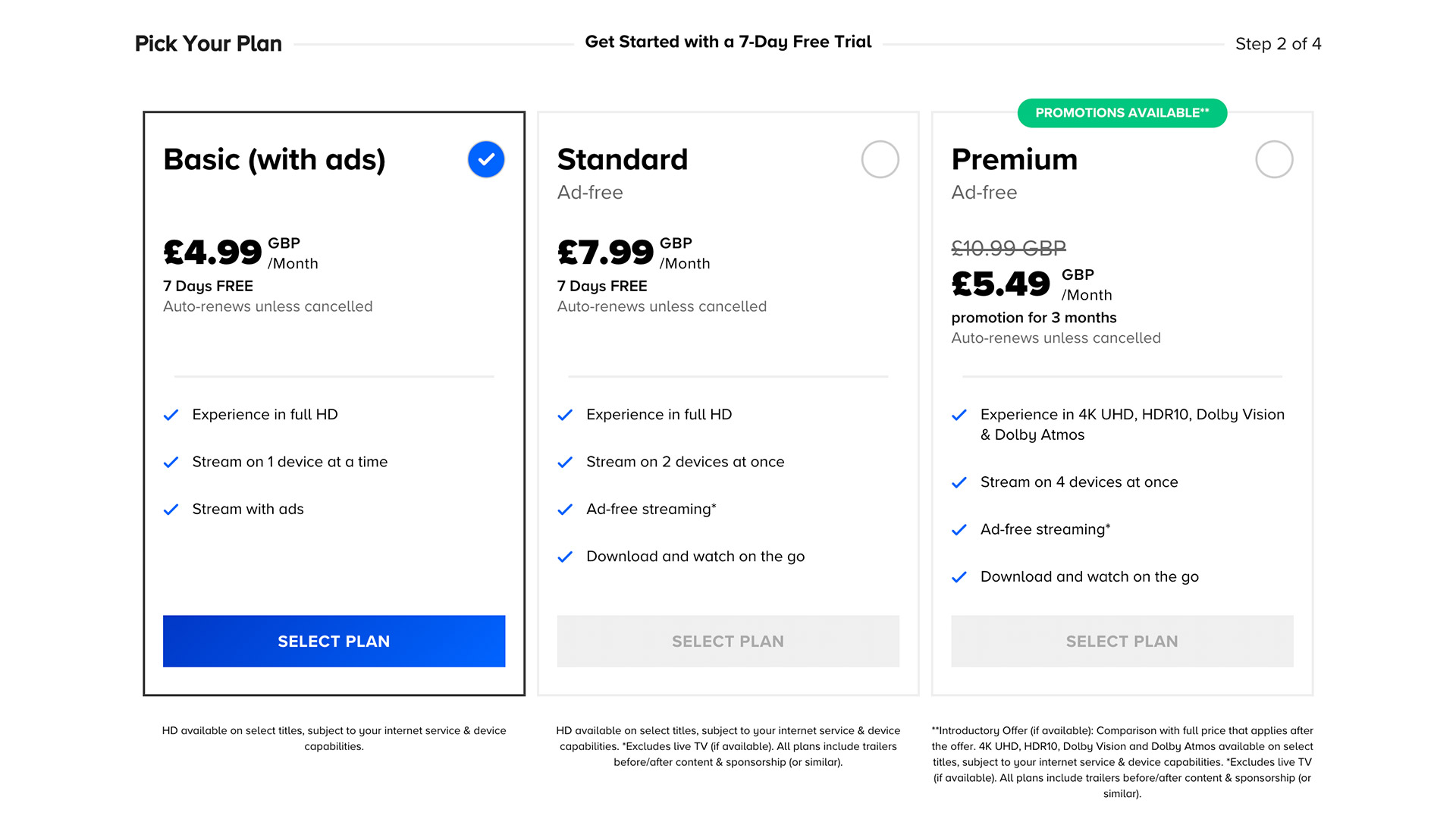
Breaking Down the Subscription Tiers: Costs and Options
Paramount+ operates on a dual-tier pricing model designed to capture different segments of the market—from the budget-conscious viewer who doesn’t mind advertisements to the premium seeker who desires an ad-free experience and additional content. Understanding these tiers is the first step in auditing your entertainment expenses.
Paramount+ Essential
The “Essential” plan is the entry-level offering, currently priced at $5.99 per month. From a financial standpoint, this is positioned as the high-volume, low-cost option. It provides access to the full library of over 45,000 episodes and movies, but it is supported by limited commercial interruptions. For many, this tier represents the best “price-to-content” ratio. If your goal is to minimize monthly overhead while still maintaining access to live sports like the NFL on CBS and top-tier series, the Essential plan is the most efficient choice. However, the trade-off is time; if you value an uninterrupted experience, the “cost” of the time spent watching ads must be factored into your personal valuation.
Paramount+ with SHOWTIME
The premium tier, known as “Paramount+ with SHOWTIME,” is priced at $11.99 per month. This plan is not merely an ad-free version of the Essential tier; it is a consolidated entertainment package. It includes everything in the Essential plan plus the entire SHOWTIME library, live access to your local CBS station, and the ability to download content for offline viewing. From a personal finance perspective, this tier is an exercise in “bundling.” If you were previously paying for a separate SHOWTIME subscription, this combined plan offers significant savings. For the household that consumes high-end prestige dramas and requires the flexibility of offline mobile viewing, the $6 jump in price often pays for itself in convenience and content breadth.
Annual vs. Monthly: The Math of Long-term Savings
One of the most effective ways to lower your effective monthly cost is to pivot from a monthly billing cycle to an annual one. Paramount+ offers annual plans for both tiers: approximately $59.99 for Essential and $119.99 for the SHOWTIME tier. When you break these down, you are essentially getting 12 months for the price of 10.
For a disciplined budgeter, the annual plan represents a 16-20% return on investment compared to paying monthly. If you have the cash flow to handle the upfront payment, it is a mathematically superior move. However, the risk of the annual plan is “sunk cost.” If you only use the service for three months out of the year to watch a specific series, the monthly plan—with the freedom to cancel immediately—becomes the more fiscally responsible choice.
The Hidden Economics of Streaming: Beyond the Base Price
When calculating “how much is Paramount monthly,” consumers often overlook the secondary costs and economic variables that influence the total impact on their bank accounts. A price tag is rarely just the price tag.
Tax and Regional Variations
Depending on your state or municipality, the advertised price of $5.99 or $11.99 might not be the final amount deducted from your account. Several U.S. states have implemented “streaming taxes” or “Netflix taxes,” which apply standard sales tax to digital goods and services. In some jurisdictions, this can add an extra 6% to 10% to your bill. While a few cents may seem negligible, when multiplied across five or six different streaming services over a year, it represents a tangible leak in your monthly budget.
Add-on Channels and Ecosystem Costs
Paramount+ is often available as an “add-on” through platforms like Amazon Prime Video or Apple TV. While the price remains consistent, the financial danger lies in the ease of procurement. When subscriptions are managed through a third-party aggregator, they often bypass the rigorous monthly “audit” many people perform on their bank statements. This “frictionless spending” can lead to “ghost subscriptions”—services you pay for but no longer use because they are buried within another app’s interface. From a money management perspective, it is often better to subscribe directly to the service to ensure it remains a visible, conscious expense.
The Opportunity Cost of Time
In personal finance, we often talk about the opportunity cost of money, but the opportunity cost of time is equally relevant to the streaming discussion. If you are paying $11.99 for a service but only watching it for two hours a month, your cost-per-hour is nearly $6. This is an expensive form of entertainment compared to a library book or a one-time movie rental. Conversely, if a family of four watches 40 hours of content a month, the cost-per-hour drops to roughly $0.07 per person. Tracking your “utilization rate” is the only way to determine if the monthly fee is a sound investment or a wasteful expenditure.
Strategic Budgeting: How Paramount+ Fits into Your Financial Plan
To master your personal finances, you must move away from viewing subscriptions as static bills and start viewing them as dynamic variables. Integrating Paramount+ into a healthy financial plan involves several strategic approaches.
The Subscription Stack Method
A common mistake in the streaming era is the “set it and forget it” mentality. A more sophisticated financial approach is the “Subscription Stack.” This involves keeping a core group of essential services and rotating “satellite” services like Paramount+ based on content availability. For example, a sports fan might subscribe to the Essential plan only during the NFL season and cancel it once the Super Bowl concludes. This “on-off” strategy can save a household upwards of $60 to $100 annually per service.
Auditing Discretionary Spending
Paramount+ represents “discretionary spending”—money that is spent after essentials like housing, utilities, and debt obligations are met. Financial experts often recommend the 50/30/20 rule: 50% for needs, 30% for wants, and 20% for savings. Your streaming services fall into the 30% “wants” category. If your total subscription costs are encroaching on your ability to save 20% of your income, it is time to reassess. Knowing exactly how much Paramount is monthly allows you to plug it into your budgeting software (like YNAB or Mint) and see its real-time impact on your net worth.
Leveraging Promotions and Discounts for Maximum ROI
The savvy consumer never pays full price if they can help it. Because the streaming market is incredibly competitive, there are numerous financial “hacks” to lower the cost of Paramount+.
Bundling with Third-Party Services
One of the most significant financial advantages currently available is the partnership between Paramount+ and Walmart. A Walmart+ membership, which costs $12.95 per month, includes a Paramount+ Essential subscription at no additional cost. If you are already a Walmart+ member for the grocery delivery and fuel discounts, paying for a separate Paramount+ subscription is a financial error. Similarly, certain T-Mobile and American Express plans have historically offered credits or free periods for Paramount+. Always check your existing corporate benefits and credit card rewards portals before adding a new monthly expense.
Seasonal Offers and Retention Credits
Paramount+ frequently runs promotions during “Black Friday” or “Cyber Monday,” often offering the service for as low as $1.99 a month for a limited time. Furthermore, the “cancelation save” is a well-known tactic in the subscription business. Often, when a user goes to cancel their monthly plan, the system will offer a free month or a discounted rate to keep them. From a tactical standpoint, attempting to cancel during a month of low usage can sometimes trigger these discounts, reducing your average monthly cost over the long term.

The Verdict: Is the Investment Justified in Today’s Market?
Ultimately, the question of “how much is Paramount monthly” is subjective. For a household that relies on CBS for news, follows UEFA Champions League soccer, and has children who watch Nickelodeon, the $5.99 to $11.99 investment represents high-yield entertainment value. It consolidates multiple genres into a single, predictable monthly fee.
However, from a strict personal finance perspective, any subscription that is not being utilized is a 100% loss. To ensure Paramount+ remains a benefit rather than a burden, consumers should:
-
Select the tier that matches their time value: Opt for Essential if you are budget-focused; opt for SHOWTIME if you value time and premium content.
-
Evaluate the billing cycle: Use the annual plan for a 16%+ discount if the service is a permanent fixture in your home.
-
Monitor utilization: Check your viewing habits monthly to ensure the “cost-per-hour” remains low.
-
Seek out bundles: Never pay full price if your cellular provider, credit card, or retail memberships offer it for free.
By treating a Paramount+ subscription with the same analytical rigor as an investment portfolio or a high-yield savings account, you can enjoy premium entertainment without compromising your long-term financial health. In the world of money management, it’s not just about what you earn, but how effectively you manage what you spend. Paramount+, when managed correctly, can be a cost-effective pillar of a modern digital lifestyle.
aViewFromTheCave is a participant in the Amazon Services LLC Associates Program, an affiliate advertising program designed to provide a means for sites to earn advertising fees by advertising and linking to Amazon.com. Amazon, the Amazon logo, AmazonSupply, and the AmazonSupply logo are trademarks of Amazon.com, Inc. or its affiliates. As an Amazon Associate we earn affiliate commissions from qualifying purchases.