
The landscape of digital entertainment has shifted from a unified cable bill to a fragmented ecosystem of individual subscriptions. For the savvy consumer, managing these recurring costs is no longer just about entertainment; it is an exercise in personal finance. As one of the major players in the “streaming wars,” Paramount+ offers a variety of entry points that cater to different budgetary needs. However, the true cost of a subscription often extends beyond the base monthly price, involving annual commitments, bundled services, and the trade-off between time (ads) and money (ad-free).
Understanding how much Paramount+ costs per month requires a deep dive into its current pricing architecture, its relative value compared to competitors, and the strategic financial moves a household can make to minimize expenditure while maximizing access to content.
Breaking Down the Current Pricing Tiers
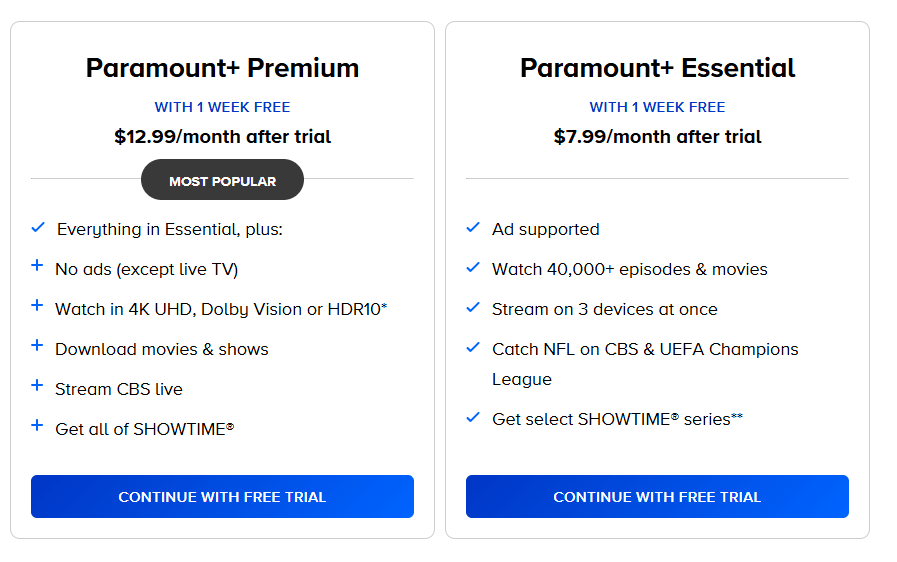
As of the most recent price adjustments, Paramount+ operates on a two-tier system designed to capture both budget-conscious viewers and those willing to pay a premium for a more expansive, uninterrupted experience.
The Paramount+ Essential Plan
The “Essential” tier is the entry-level offering, priced at $7.99 per month. From a personal finance perspective, this plan represents the “budget” option. It is supported by limited commercial interruptions, which is the industry standard for lower-priced tiers. While it provides access to the vast majority of the library—including hit series like Yellowstone spin-offs and the Star Trek universe—it lacks certain premium features. Notably, the Essential plan does not include your local live CBS station, though it does offer access to global news and certain live sports like the NFL on CBS and UEFA Champions League. For a household looking to keep monthly “leakage” in their budget to a minimum, the $7.99 price point is competitive, though the presence of ads is the “cost” paid in time rather than currency.
The Paramount+ with SHOWTIME Plan
For users prioritizing a premium experience, the “Paramount+ with SHOWTIME” tier is priced at $12.99 per month. This plan represents a significant jump in cost but also a significant increase in value for specific demographics. This tier removes the majority of advertisements (with the exception of live TV and select shows), allows for content downloads for offline viewing, and integrates the entire SHOWTIME library. Crucially for cord-cutters, this plan includes a live stream of your local CBS affiliate. When evaluating the financial ROI of this tier, one must consider the cost of a standalone SHOWTIME subscription, which historically hovered around $10.99. By bundling it, Paramount Global has created a value proposition that simplifies a user’s financial footprint while providing a broader content set.
Annual Savings and Long-Term Commitments
One of the most effective ways to optimize a personal finance budget is to move from monthly billing to annual billing. Paramount+ offers annual versions of both plans:
-
Essential Annual: $59.99 per year (averaging approximately $5.00 per month).
-
With SHOWTIME Annual: $119.99 per year (averaging approximately $10.00 per month).
By paying upfront, subscribers can save roughly 37% to 23% compared to the month-to-month cost. This is a classic example of the “prepayment discount” in personal finance. For those who know they will utilize the service year-round, the annual plan is the most fiscally responsible choice, as it hedges against potential mid-year price hikes and reduces the total annual spend by nearly $36 to $40.
Strategic Cost Comparison in the Streaming Era
To determine if Paramount+ is “worth it” at $7.99 or $12.99 a month, one must look at the broader market. In a world of rising inflation and “subscription fatigue,” every dollar added to a monthly budget must be justified against its peers.
Paramount+ vs. The Competition
When stacked against competitors like Netflix, Disney+, and Max, Paramount+ positions itself as a mid-tier cost provider. Netflix’s standard ad-free plan currently sits at $15.49, and Max’s ad-free tier is $16.99. In this context, Paramount+ with SHOWTIME at $12.99 is objectively cheaper than the premium offerings of its rivals.
For the budget-conscious consumer, the $7.99 Essential plan competes directly with Disney+ (with ads) and Peacock’s entry-level tier. The decision often comes down to content specialization. From a financial planning perspective, it is rarely advisable to subscribe to all of these services simultaneously. Instead, users should evaluate the “cost per hour” of entertainment. If a household spends 20 hours a month on Paramount+, the $7.99 tier costs roughly $0.40 per hour—a high-value proposition compared to a $15 movie theater ticket.

The Economics of Ad-Supported Streaming
The rise of ad-supported tiers is a response to the “subscription ceiling”—the point at which consumers refuse to pay more for ad-free content. For the consumer, choosing the $7.99 plan is a way to subsidize their entertainment through their attention. Financially, this is a trade-off. If the presence of five minutes of ads per hour allows you to save $60 a year (the difference between the Essential and SHOWTIME monthly rates), you are essentially “earning” that $60 through your time. For many high-income earners, the $5-per-month difference is negligible, but for those strictly managing a tight budget, these small wins across multiple services can add up to hundreds of dollars in annual savings.
Maximizing ROI: Hidden Discounts and Bundle Opportunities
Smart financial management involves looking for synergies between services you already use and the subscriptions you want. Paramount+ is unique in its aggressive pursuit of third-party partnerships, which can often bring the effective monthly cost down to zero.
The Walmart+ Synergy
Perhaps the most significant “hack” in the current streaming market is the inclusion of Paramount+ Essential within a Walmart+ membership. A Walmart+ subscription, which costs $98 annually or $12.95 monthly, includes Paramount+ at no additional charge. For individuals who already use Walmart+ for free delivery or gas discounts, the “cost” of Paramount+ becomes $0. When auditing your monthly expenses, it is vital to check if you are paying for a standalone subscription that is already included in another service you own. This is a common area of “financial leakage” where consumers double-pay for the same access.
Student Discounts and Corporate Partnerships
Paramount+ offers a 25% discount for verified students on the Essential monthly plan. This brings the cost down to approximately $5.99 per month. In the realm of personal finance for young adults, these small percentage discounts are essential for maintaining a lean budget. Furthermore, various credit card issuers (such as American Express or Chase) frequently offer “merchant offers” or “statement credits” for streaming services. Checking your banking app once a month for a “$5 back on Paramount+” offer can effectively erase the cost of a month’s subscription.
Content Value Analysis: Is the Subscription Justified?
Price is what you pay; value is what you get. A $12.99 monthly fee is only a “good deal” if the content justifies the withdrawal from your bank account.
The Live Sports Premium
One of the strongest financial arguments for a Paramount+ subscription is its inclusion of live sports. For many consumers, the primary reason for maintaining a $70+ monthly cable or YouTube TV subscription is access to live sports, specifically the NFL. Since Paramount+ carries local CBS NFL games (on both tiers, though through different delivery methods), it allows some users to “cut the cord” entirely. Transitioning from a $75 cable bill to a $12.99 Paramount+ bill represents a monthly savings of over $60, or $720 a year. In this scenario, Paramount+ isn’t just an expense; it’s a tool for significant budget reduction.
Library Longevity and Original Programming
When evaluating the ROI of a service, one must look at the depth of the library. Paramount+ draws from the massive ViacomCBS catalog, including Nickelodeon, MTV, Comedy Central, and Smithsonian Channel. For families, the inclusion of Nickelodeon content can replace the need for other child-focused subscriptions, allowing for further consolidation of the streaming budget. The “value-per-dollar” increases as more members of a household utilize the same account.
Financial Best Practices for Subscription Management
To ensure that Paramount+ remains a source of value rather than a financial burden, users should implement a structured approach to their digital overhead.
Auditing Recurring Expenses
The “set it and forget it” nature of monthly subscriptions is a trap for personal finances. It is recommended to perform a “subscription audit” every quarter. Review your bank statements and ask: “Am I using this enough to justify its monthly cost?” Paramount+ allows for easy cancellation and re-activation. If you only subscribe to watch Survivor or 1883, there is no financial reason to keep the subscription active during the months those shows are not airing.
The “Cycling” Strategy to Reduce Overhead
A sophisticated financial strategy for streaming is “cycling.” Instead of paying for Paramount+, Netflix, and Max simultaneously—which could cost upwards of $50 a month—a consumer can subscribe to one service for two months, binge the desired content, cancel, and move to the next service. This “rotation” keeps the monthly entertainment budget capped at a lower threshold (e.g., $12.99 instead of $50) while still providing access to all premium content over the course of a year.
By understanding the tiers, leveraging bundles like Walmart+, and utilizing annual discounts, Paramount+ can be integrated into a healthy financial plan. Whether it’s $7.99 or $12.99, the key is intentionality—ensuring that the cost of your digital life aligns with your broader financial goals and your actual consumption habits.
aViewFromTheCave is a participant in the Amazon Services LLC Associates Program, an affiliate advertising program designed to provide a means for sites to earn advertising fees by advertising and linking to Amazon.com. Amazon, the Amazon logo, AmazonSupply, and the AmazonSupply logo are trademarks of Amazon.com, Inc. or its affiliates. As an Amazon Associate we earn affiliate commissions from qualifying purchases.