
In the rapidly evolving landscape of the “Subscription Economy,” the cost of digital entertainment has become a significant line item in the modern household budget. As media conglomerates transition from traditional linear television to direct-to-consumer models, the question of “how much is Paramount+” is no longer just about a single price point. It is a question of financial strategy, return on investment (ROI), and personal finance management. Paramount+, the flagship streaming service from Paramount Global, has positioned itself as a high-value contender in a crowded market, offering a tiered pricing structure designed to capture various consumer segments from budget-conscious viewers to premium content seekers.
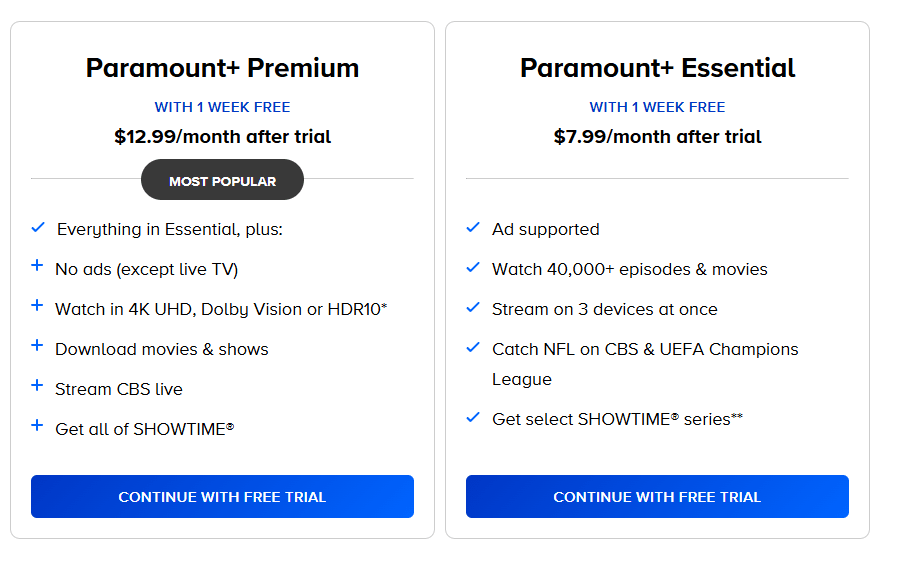
As of late 2024, the pricing for Paramount+ has undergone strategic adjustments to reflect the rising costs of content production and the integration of premium assets like SHOWTIME. To manage your monthly cash flow effectively, it is essential to understand exactly what each dollar buys you and how this service fits into a broader financial plan for digital consumption.
Decoding the Cost: The Current Paramount+ Subscription Models
Paramount+ operates on a dual-tier system that mirrors the industry standard, providing an entry-level ad-supported version and a more expensive, feature-rich premium version. Understanding these tiers is the first step in determining which option aligns with your financial goals and viewing habits.
The Essential Tier: Low-Cost Entry Point
The “Paramount+ Essential” plan is currently priced at $7.99 per month. For users looking to minimize their fixed monthly expenses, this tier offers the most affordable gateway to the platform’s library. Annually, this plan costs $59.99, which represents a significant discount over the month-to-month commitment.
From a personal finance perspective, the Essential tier is a “value play.” It includes access to over 45,000 episodes of television and movies, including the vast archives of CBS, BET, Comedy Central, Nickelodeon, MTV, and the Smithsonian Channel. However, the trade-off for this lower price point is the inclusion of limited commercial interruptions. For the budget-conscious consumer, the presence of ads is often a secondary concern compared to the $5 monthly savings over the premium tier. It is important to note that the Essential plan does not include your local live CBS station, though it does offer access to the NFL on CBS and top-tier soccer matches like the UEFA Champions League through separate live feeds.
Paramount+ with SHOWTIME: The Premium Upsell
For those who prioritize an uninterrupted experience and premium content, the “Paramount+ with SHOWTIME” plan is priced at $12.99 per month, or $119.99 per year. This tier represents the consolidation of Paramount’s prestige assets, merging the standard library with SHOWTIME’S original series, movies, and boxing events.
The financial justification for this $12.99 price point lies in the added utility. Beyond the removal of most advertisements, subscribers gain access to their local live CBS station 24/7. This can be a strategic financial move for “cord-cutters” who wish to maintain access to local news and major sporting events without paying for a traditional cable package or an expensive Live TV streaming service like YouTube TV or Hulu + Live TV. Furthermore, this tier allows for content downloads, a feature that provides value for frequent travelers or those looking to reduce mobile data costs by viewing content offline.
Maximizing ROI: Financial Tactics for Savvy Subscribers
In the world of personal finance, the goal is not just to spend less, but to maximize the value of every dollar spent. Paramount+ offers several avenues for consumers to reduce their effective monthly cost through strategic planning.
The Annual Discount: Is the Upfront Cost Worth It?
One of the simplest ways to optimize your streaming budget is to opt for annual billing rather than monthly. The Essential annual plan at $59.99 breaks down to approximately $5.00 per month, a 37% savings over the $7.99 monthly rate. Similarly, the SHOWTIME annual plan at $119.99 breaks down to roughly $10.00 per month, saving the consumer nearly $36 over the course of the year.
From a liquidity standpoint, paying upfront requires a larger initial outlay, but for those with a stable emergency fund and disciplined budgeting, the long-term ROI is undeniable. When assessing your “sinking funds” for the year, pre-paying for your primary entertainment services can free up monthly cash flow for other investments or high-interest debt repayment.
Leveraging Third-Party Bundles and Incentives

Before subscribing directly through the Paramount+ website, it is financially prudent to audit your existing services for potential bundles. One of the most prominent financial partnerships is with Walmart+. A Walmart+ membership, which costs $98 annually or $12.95 monthly, includes a Paramount+ Essential subscription at no additional cost. If you already utilize Walmart+ for grocery delivery and shipping benefits, your Paramount+ subscription is effectively “free,” representing a $60 annual saving.
Additionally, various credit card issuers and mobile carriers frequently offer “statement credits” or promotional periods for streaming services. American Express and Chase often feature “Amex Offers” or “Chase Offers” that provide a percentage of your subscription cost back as a statement credit. Checking your banking app before signing up can turn a standard expense into a discounted transaction.
The Economics of Content: Comparing Market Value and Competitive Pricing
To determine if Paramount+ is “worth it,” one must view it within the context of the broader streaming market. In an era of “price creep,” where Netflix and Max have pushed their premium tiers toward the $20 mark, Paramount+ maintains a competitive edge by keeping its top-tier service closer to the $12-$13 range.
Price-to-Content Ratio: How Paramount+ Stacks Up
When evaluating the financial value of a service, it is helpful to look at the price-to-content ratio. Paramount+ holds a massive advantage through its ownership of legacy brands. For families, the inclusion of the entire Nickelodeon library provides a high ROI, as it replaces the need for purchasing individual digital seasons of children’s programming.
Furthermore, Paramount+ has invested heavily in “franchise” content—most notably the Star Trek universe and the Taylor Sheridan suite of shows (such as 1883 and 1923). For fans of these specific intellectual properties, the monthly cost of Paramount+ is far lower than the cost of purchasing or renting these series on a per-episode basis via platforms like Amazon or Apple.
Navigating Inflation in the Streaming Economy
The streaming industry is currently moving away from the “growth at all costs” phase and into a “path to profitability” phase. This shift has led to industry-wide price hikes. Paramount+ is not immune to these macroeconomic trends. For the savvy investor in their own personal life, it is important to recognize that streaming costs are likely to continue rising.
To hedge against this “entertainment inflation,” locking in an annual rate now can protect your budget from mid-year price increases. Additionally, keeping a close eye on your “Cost Per Hour of Use” is a professional way to audit your finances. If you find that you are paying $12.99 a month but only watching two hours of content, your cost is over $6 per hour. Conversely, if you watch 20 hours, your cost drops to $0.65 per hour. Setting a personal threshold for your cost-per-hour can help you decide when a service is no longer providing sufficient financial value.
Strategic Personal Finance: Managing Your Digital Subscription Portfolio
Financial wellness is often found in the details. While $7.99 or $12.99 may seem like negligible amounts, when combined with five other streaming services, the “subscription creep” can quietly erode a household’s savings rate.
Identifying “Ghost” Subscriptions and Recurring Waste
A “ghost” subscription is a recurring charge for a service that you no longer use or have forgotten about. To manage the cost of Paramount+ effectively, it should be part of a quarterly financial audit. Use a financial tool or app to aggregate all recurring charges. If Paramount+ has not been accessed in the last 30 days, it is a candidate for cancellation. Unlike traditional cable contracts, Paramount+ offers the flexibility of month-to-month commitments with no cancellation fees, which is a major financial advantage for the consumer.
The “Rotate and Cancel” Strategy for Optimal Cash Flow
One of the most effective strategies for maintaining a low-cost lifestyle while enjoying premium content is the “Rotation Strategy.” Instead of subscribing to Paramount+, Netflix, Disney+, and Max simultaneously—which can cost upwards of $60 per month—savvy consumers subscribe to one service at a time.
For example, you might subscribe to Paramount+ with SHOWTIME for two months to binge a specific series or watch the NFL season, and then cancel the service to move your “entertainment budget” to a different platform the following month. This “churning” strategy allows you to access 100% of the content for roughly 25% of the annual cost of maintaining all subscriptions at once. This disciplined approach to spending ensures that your money is always working for you, rather than sitting dormant in a service you aren’t currently using.
In conclusion, the cost of Paramount+ is a variable equation that depends on your commitment level, your choice of tier, and your ability to leverage bundles. At $7.99 for the Essential plan and $12.99 for the SHOWTIME tier, it remains a mid-priced player in the streaming wars. However, by applying professional financial strategies—such as annual billing, bundle utilization, and the rotation method—you can transform this recurring expense into a high-value investment in your household’s quality of life. Understanding “how much is Paramount+” is the first step; understanding how to make that cost work for your broader financial health is where the true value lies.
aViewFromTheCave is a participant in the Amazon Services LLC Associates Program, an affiliate advertising program designed to provide a means for sites to earn advertising fees by advertising and linking to Amazon.com. Amazon, the Amazon logo, AmazonSupply, and the AmazonSupply logo are trademarks of Amazon.com, Inc. or its affiliates. As an Amazon Associate we earn affiliate commissions from qualifying purchases.