
The question “how much is Palantir stock?” is a frequent one for investors, reflecting not just the current trading price but also the deeper assessment of a company whose mission lies at the intersection of data analytics, artificial intelligence, and national security. Palantir Technologies (NYSE: PLTR) operates in a highly specialized, often opaque, segment of the tech industry, making its valuation and investment thesis complex. Understanding “how much” goes beyond a simple number; it requires a deep dive into its business model, financial performance, market sentiment, and the unique challenges and opportunities it faces.

At its core, Palantir provides sophisticated software platforms, primarily Gotham and Foundry, designed to integrate, manage, and secure vast datasets to help organizations make critical decisions. While initially famous for its clandestine work with government intelligence agencies, Palantir has aggressively expanded its commercial footprint, pitching its AI-powered solutions to a wide array of enterprises seeking to leverage data for competitive advantage. This dual market strategy, coupled with its distinctive corporate culture and a high-profile public listing in 2020, has ensured that PLTR remains one of the most talked-about, and often polarizing, stocks in the market.
This article will delve into the intricacies of Palantir’s stock performance, the fundamental factors influencing its valuation, and what potential investors should consider when evaluating its place in a diversified portfolio. We aim to provide a professional, insightful, and engaging analysis strictly through the lens of personal finance and investing.
Understanding Palantir Technologies: A Data Powerhouse
To grasp the value of Palantir stock, one must first understand the company it represents. Palantir is not merely a software provider; it’s a strategic partner for organizations grappling with immense data challenges, offering a unique blend of operational expertise and cutting-edge technology.
From Government Roots to Commercial Ambition
Palantir was co-founded in 2003 by Peter Thiel, Alex Karp, Joe Lonsdale, Stephen Cohen, and Nathan Gettings, with initial funding from the CIA’s venture capital arm, In-Q-Tel. Its early success was largely built on high-stakes government contracts, particularly within defense and intelligence sectors, where its Gotham platform helped agencies make sense of complex, disparate data for counter-terrorism and national security operations. This origin story imbues Palantir with a distinct reputation – one of innovation, security, and a certain mystique.
However, relying heavily on government contracts presented challenges, including long sales cycles, political sensitivities, and a perception of limited scalability in the broader market. Recognizing this, Palantir embarked on a concerted effort to expand its commercial business. The aim was to diversify its revenue streams and prove the adaptability of its technology beyond the public sector. This pivot has been a crucial element of its growth narrative and a significant driver of investor interest.
Palantir’s Core Offerings: Foundry and Gotham
Palantir’s technological prowess is primarily manifested in two flagship platforms:
- Gotham: This platform is designed for government agencies and organizations dealing with highly sensitive data. It helps users identify patterns, uncover hidden connections, and make data-driven decisions in complex operational environments, from military planning to disaster response. Its strength lies in its ability to integrate vast quantities of structured and unstructured data, presenting it in an actionable format.
- Foundry: Developed later, Foundry is Palantir’s commercial platform, tailored for enterprise clients across various industries such as manufacturing, healthcare, energy, and finance. It enables companies to build operational applications, integrate data, and derive actionable insights from their own internal and external data sources. Foundry’s appeal lies in its ability to create a “digital twin” of an organization’s operations, optimizing everything from supply chains to R&D processes, and increasingly, leveraging AI for predictive analytics and autonomous decision-making.
The commercial expansion driven by Foundry is critical for Palantir’s long-term stock performance. Investors closely monitor the growth of its commercial customer count and average revenue per customer as key indicators of its market penetration and future profitability.
Analyzing Palantir’s Stock Performance and Valuation
Understanding Palantir’s current stock price (“how much it is”) requires examining its market dynamics, historical trends, and fundamental financial health. Investors often look beyond the daily fluctuations to discern the underlying value proposition.
Current Market Snapshot: Price and Market Cap
As with any publicly traded stock, Palantir’s share price fluctuates daily based on market sentiment, company news, financial results, and broader economic conditions. To ascertain the precise current price, investors typically consult real-time financial data platforms (e.g., Google Finance, Yahoo Finance, Bloomberg, their brokerage accounts). Alongside the share price, the company’s market capitalization (share price multiplied by the number of outstanding shares) provides a measure of its overall size and market value. A high market cap often reflects investor confidence in a company’s future growth prospects, even if it’s not yet consistently profitable.
Historical Trajectory: IPO and Post-Listing Volatility
Palantir went public in September 2020 through a direct listing, bypassing the traditional IPO process. Its initial reference price was $7.75, but the stock quickly garnered significant investor interest, trading well above that mark. Like many high-growth tech stocks that debuted during the pandemic era, PLTR experienced considerable volatility. It saw rapid surges driven by speculative fervor and optimism about its AI capabilities, reaching an all-time high of over $39 per share in early 2021.
However, subsequent periods have seen pullbacks, reflecting broader market corrections for growth stocks, concerns over its profitability pathway, and the dilution effect from significant stock-based compensation. This volatility is characteristic of companies in aggressive growth phases operating in evolving technological landscapes, making it a stock for investors with a higher risk tolerance.
Key Financial Metrics for Investors
When evaluating Palantir stock, several financial metrics are paramount:
- Revenue Growth: Investors keenly watch quarter-over-quarter and year-over-year revenue growth, particularly focusing on the split between government and commercial sectors. Strong commercial growth signals successful diversification.
- Profitability: For a long time, Palantir prioritized growth over GAAP profitability. However, achieving GAAP profitability and demonstrating consistent positive free cash flow has become a significant milestone for the company and a major bullish indicator for investors, signaling a maturing business model.
- Customer Acquisition and Expansion: Growth in the number of commercial customers and expansion within existing accounts (often measured by Net Dollar Retention or Average Revenue Per Customer) indicate the stickiness and value of its platforms.
- Operating Margins and Efficiency: These metrics reveal how effectively Palantir is managing its costs as it scales. High operating expenses, particularly stock-based compensation, have historically impacted profitability.
- Valuation Multiples: Traditional valuation metrics like P/E ratio are often less applicable for growth companies not yet consistently profitable. Investors instead look at Price-to-Sales (P/S) ratios or Enterprise Value-to-Sales (EV/S). However, these should be viewed in context, comparing Palantir to its peers and considering its growth trajectory. The move towards profitability has made more traditional metrics increasingly relevant.
Factors Influencing PLTR’s Stock Price
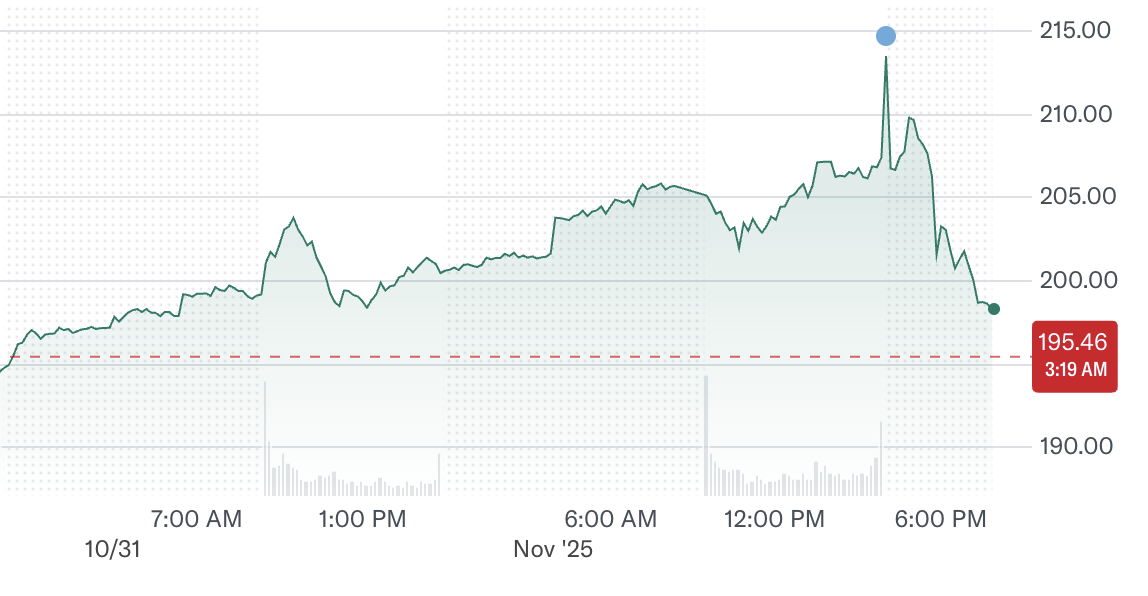
Palantir’s stock price is a complex interplay of internal business performance, external market forces, and its unique operational characteristics.
Government Contract Growth and Stability
Despite the commercial pivot, government contracts remain a bedrock of Palantir’s revenue. These contracts are often large, multi-year, and provide a stable revenue base. Announcements of new or expanded government deals, especially with major agencies or across allied nations, often provide a significant boost to the stock. Conversely, delays in contract renewals or loss of significant government clients could exert downward pressure. Investors assess the pipeline of government opportunities and the political stability in key markets.
Commercial Expansion and AI Adoption
The successful scaling of Palantir’s commercial business is arguably the most critical long-term driver for its stock. As more enterprises adopt Foundry and integrate AI into their operations, Palantir’s addressable market grows exponentially. Key indicators include:
- Commercial Customer Count: An increasing number of commercial clients signifies broader market acceptance.
- New Deals and Partnerships: Major commercial contracts, especially with Fortune 500 companies, provide validation.
- AI Integration: Palantir’s recent emphasis on its Artificial Intelligence Platform (AIP) and its rapid deployment capabilities for corporate customers positions it favorably in the booming AI sector, which attracts significant investor capital. Demonstrating tangible ROI for customers from its AI offerings is crucial.
Profitability and Future Guidance
The transition to consistent GAAP profitability has been a major milestone and a significant factor in recent stock performance. Sustained profitability, coupled with positive free cash flow, demonstrates the company’s financial discipline and ability to generate real earnings. Palantir’s guidance for future revenue and earnings, along with its projections for commercial growth, heavily influence analyst ratings and investor sentiment. Meeting or exceeding these expectations can lead to upward revisions in price targets.
Macroeconomic Headwinds and Tailwinds
Like all stocks, PLTR is not immune to broader economic conditions. During periods of high interest rates or economic uncertainty, growth stocks, which are valued heavily on future earnings, often face headwinds as investors become more risk-averse and discount future cash flows more aggressively. Conversely, a robust economy, lower interest rates, and a strong appetite for technological innovation can provide tailwinds. The competitive landscape in data analytics and AI, with behemoths like Microsoft, Amazon, and Google, also plays a role in how investors perceive Palantir’s competitive moat and long-term viability.
The Investor’s Perspective: Risks and Opportunities
Investing in Palantir stock, like any investment, comes with its own set of potential rewards and inherent risks. A balanced perspective is crucial.
Bull Case: AI Leadership and Expanding Moat
The bullish argument for Palantir centers on several powerful themes:
- Leading-Edge AI/Data Platform: Palantir’s platforms are considered highly sophisticated, capable of handling extremely complex data challenges that many competitors cannot. Its early move into “AI for operations” positions it well for the next wave of enterprise AI adoption.
- Sticky Customer Base: Once integrated, Palantir’s platforms become deeply embedded in client operations, leading to high switching costs and robust customer retention.
- Expanding Addressable Market: As more companies and governments recognize the imperative of data-driven decision-making and AI integration, Palantir’s market opportunity continues to expand globally.
- Strategic Importance: Its work with defense and intelligence agencies gives it a unique strategic importance, offering a degree of insulation from purely commercial market forces in some segments.
- Profitability Trajectory: The recent achievement of consistent GAAP profitability signals a maturing business and a potential re-rating by the market from a pure growth stock to a profitable tech enterprise.
Bear Case: Concentration Risk and Valuation Concerns
Conversely, the bearish perspective highlights several areas of concern:
- Customer Concentration: Historically, Palantir has faced criticism for relying on a relatively small number of large government contracts and commercial clients, though this is gradually improving. Loss of a major client could significantly impact revenue.
- High Valuation: Even after corrections, some analysts argue Palantir’s valuation (e.g., Price-to-Sales) remains elevated compared to more mature software companies, implying significant future growth is already priced in.
- Sales Cycle Challenges: Commercial sales cycles can be long and complex, requiring significant investment in sales and marketing.
- Competition: While specialized, Palantir faces competition from large cloud providers offering data analytics tools, as well as niche AI companies and internal client development teams.
- Stock-Based Compensation (SBC): Historically, high SBC has led to shareholder dilution, though the company is working to manage this more effectively.
Navigating Volatility and Long-Term Outlook
Given its growth profile and unique market position, Palantir stock is likely to remain volatile. Short-term price movements can be influenced by earnings reports, contract announcements, analyst upgrades/downgrades, and broader tech sector sentiment. For long-term investors, the focus should be on the company’s ability to continue expanding its commercial customer base, deepen its AI offerings, maintain profitability, and demonstrate a sustainable competitive advantage. Its role in shaping the future of enterprise AI and national security data analytics could be transformative, but that potential is balanced by execution risks and market expectations.
Is Palantir Stock a Good Investment for You?
The question “how much is Palantir stock?” ultimately leads to a personal decision: “Is it worth it for me?” There is no universal answer, as investment suitability depends entirely on an individual’s financial goals, risk tolerance, and investment horizon.
Due Diligence and Diversification
Before investing in Palantir or any stock, thorough due diligence is paramount. This includes:
- Reading Financial Reports: Delve into the company’s quarterly (10-Q) and annual (10-K) reports to understand its financial health, risks, and strategic initiatives.
- Understanding the Business: Gain a solid grasp of Palantir’s technology, its markets, and its competitive position.
- Analyzing Management: Assess the leadership team’s vision, execution, and communication.
- Considering Your Portfolio: Evaluate how Palantir fits into your overall investment strategy. Does it align with your diversification goals? Are you comfortable with the potential volatility?
Diversification is key. Even if you believe strongly in Palantir’s potential, allocating only a portion of your portfolio to a single growth stock is a prudent strategy to mitigate specific company risk.

Long-Term Vision vs. Short-Term Speculation
Palantir’s trajectory suggests it is more suited for long-term investors who believe in its foundational technology and its potential to become a dominant force in data integration and AI. Attempting to profit from short-term price swings (speculation) is inherently riskier and often less rewarding for individual investors. A long-term perspective allows for riding out market volatility and benefiting from the compounding effects of potential business growth.
In conclusion, understanding “how much is Palantir stock” involves more than just checking a ticker. It requires a comprehensive financial analysis, an appreciation for its unique business model, and a realistic assessment of its future potential within the dynamic landscapes of AI and national security. For those willing to embrace its complexity and potential volatility, Palantir offers exposure to a cutting-edge technology company with significant growth ambitions. However, as always, this content is for informational purposes only and does not constitute financial advice. Investors should conduct their own research and consider consulting with a qualified financial advisor before making any investment decisions.
aViewFromTheCave is a participant in the Amazon Services LLC Associates Program, an affiliate advertising program designed to provide a means for sites to earn advertising fees by advertising and linking to Amazon.com. Amazon, the Amazon logo, AmazonSupply, and the AmazonSupply logo are trademarks of Amazon.com, Inc. or its affiliates. As an Amazon Associate we earn affiliate commissions from qualifying purchases.