
Determining “how much” a stock is worth involves looking far beyond the ticker price displayed on a brokerage app. For Oracle Corporation (NYSE: ORCL), a titan of the enterprise software world, the current stock price is a reflection of its massive transition from a legacy database provider to a premier cloud infrastructure and artificial intelligence powerhouse. To understand the valuation of Oracle today, investors must examine the intersection of its market capitalization, price-to-earnings ratios, and the underlying fundamental drivers that propel its growth in a highly competitive tech landscape.
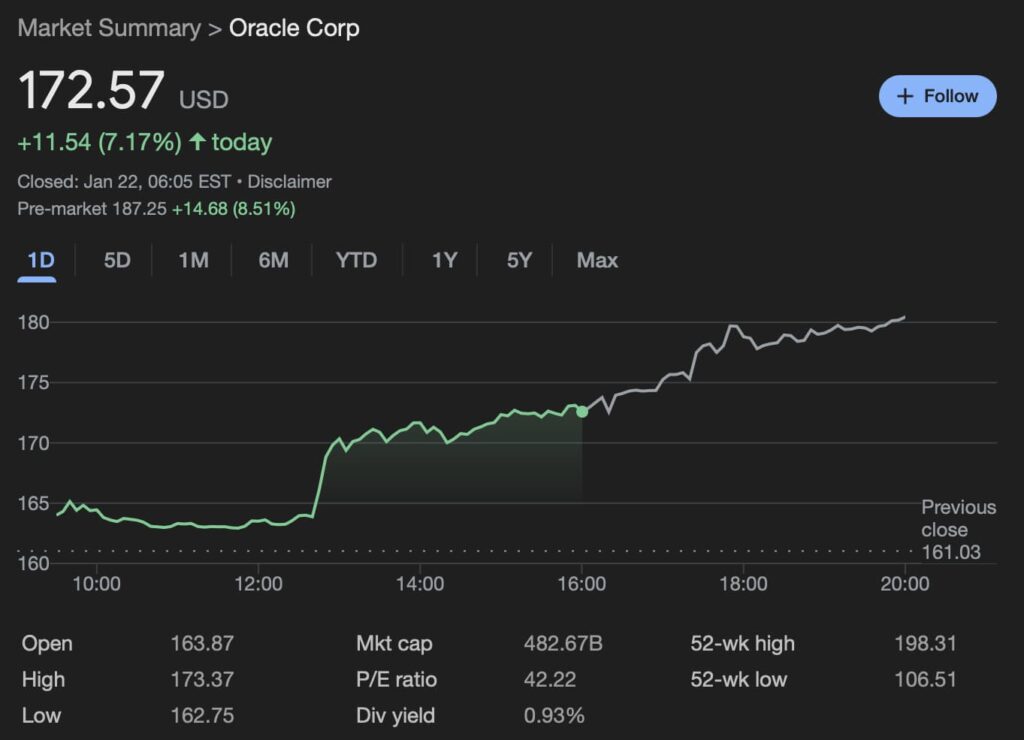
Deciphering the Market Value: Current Pricing and Financial Metrics
As of mid-2024, Oracle stock has demonstrated remarkable resilience and growth, often trading near historic highs. However, the nominal share price—whether it sits at $120, $140, or higher—only tells part of the story. To truly gauge how much Oracle stock is worth, investors look at market capitalization and valuation multiples.
Market Capitalization and Share Structure
Oracle currently maintains a market capitalization that places it among the largest technology companies in the world. This “mega-cap” status provides a level of stability often sought by institutional investors and pension funds. The company’s market cap is a product of its outstanding shares multiplied by the current market price. For the value-oriented investor, the sheer size of Oracle suggests that while it may not double overnight like a small-cap startup, it possesses the “moat” and resources necessary to defend its market share against competitors.
The Price-to-Earnings (P/E) Ratio
When asking how much Oracle stock is, the most common metric used is the P/E ratio. Historically, Oracle traded at a lower multiple than high-growth peers like Salesforce or Amazon. However, as Oracle’s Cloud Infrastructure (OCI) has gained traction, the market has begun to reward the company with a higher forward P/E ratio.
Investors typically compare Oracle’s P/E to the broader S&P 500 tech sector. If Oracle is trading at a forward P/E of 20x to 25x, and its earnings are projected to grow by 15% annually, many analysts view this as a “fair value” or even a “growth at a reasonable price” (GARP) opportunity. When the stock price dips, the P/E contracts, often triggering buy signals for value investors who recognize the intrinsic worth of Oracle’s massive installed base of enterprise clients.
Earnings Per Share (EPS) and Revenue Growth
The “price” of the stock is fundamentally a claim on future earnings. Oracle’s ability to consistently beat or meet EPS estimates is a primary driver of its stock price movement. In recent fiscal quarters, Oracle has shown a steady increase in both GAAP and non-GAAP earnings, fueled by the high-margin nature of its software-as-a-service (SaaS) and infrastructure-as-a-service (IaaS) offerings.
The Drivers of Appreciation: Why Oracle’s Stock Price is Surging
The question of “how much” Oracle is worth is increasingly tied to its evolution into a cloud-first company. After years of being perceived as a “legacy” player, Oracle has successfully pivoted, causing a significant re-rating of its stock price by Wall Street analysts.
The Rise of Oracle Cloud Infrastructure (OCI)
OCI is perhaps the single most important factor in Oracle’s recent valuation surge. By positioning itself as a high-performance, lower-cost alternative to Amazon Web Services (AWS) and Microsoft Azure, Oracle has captured significant market share in the cloud space. OCI’s architecture is specifically designed for high-scale databases and AI workloads, which has led to triple-digit growth in certain segments. As OCI revenue becomes a larger portion of the total revenue mix, the stock price has reacted positively to the improved growth profile.
The AI Revolution and Nvidia Partnership
Artificial Intelligence has become the primary catalyst for tech valuations. Oracle’s stock has benefited immensely from its strategic partnerships, most notably with Nvidia. Oracle’s Gen2 Cloud is one of the preferred environments for training large language models (LLMs) due to its “RDMA” (Remote Direct Memory Access) networking capabilities, which allow GPUs to communicate more efficiently.
When Oracle announces new AI-related contracts or expansions of its GPU clusters, the stock often experiences “multiple expansion,” where investors are willing to pay more for every dollar of earnings because of the explosive growth potential of AI.
Strategic Acquisitions: The Cerner Integration
In 2022, Oracle completed its acquisition of Cerner, a leader in electronic health records (EHR). While the acquisition initially weighed on the stock price due to the debt required for the purchase, the long-term value proposition is clear. Oracle is moving to modernize healthcare data, migrating Cerner’s legacy systems to the cloud. As this integration yields cost synergies and opens up new recurring revenue streams in the healthcare vertical, it adds a “floor” to the stock’s valuation, providing a specialized niche that few other cloud providers can match.

Dividend Analysis and Passive Income Potential
For many investors, the cost of Oracle stock is justified not just by capital appreciation but by its consistent return of capital to shareholders. Unlike many younger tech firms that reinvest every cent, Oracle has matured into a reliable dividend payer.
Dividend Yield and Growth History
Oracle typically offers a dividend yield that hovers between 1.0% and 1.5%. While this may seem modest compared to utility stocks, it is significant within the software sector. Oracle has a history of raising its dividend periodically, signaling management’s confidence in its long-term cash flow generation. For an investor holding thousands of shares, these quarterly payments represent a tangible “yield” on their investment, lowering the effective “cost” of the stock over time through compounding.
Share Buybacks and Total Shareholder Return
Beyond dividends, Oracle is known for its aggressive share repurchase programs. By buying back its own stock, Oracle reduces the total number of shares outstanding, which increases the Earnings Per Share for the remaining holders. This “financial engineering” is a disciplined way to return value and often supports the stock price during periods of market volatility. When considering “how much” Oracle stock is worth, one must factor in the “total shareholder return,” which combines price increases, dividends, and the value added by buybacks.
Navigating Risks and Volatility in the Tech Sector
No stock is without risk, and Oracle’s price is sensitive to several internal and external factors. Understanding these risks is essential for determining if the current price represents a safe entry point or a speculative peak.
Debt Levels and Interest Rate Sensitivity
The Cerner acquisition and the massive capital expenditures required to build data centers have left Oracle with a significant amount of debt. In a high-interest-rate environment, the cost of servicing this debt can eat into net income. If the Federal Reserve maintains high rates, Oracle’s stock might face downward pressure as investors favor “cleaner” balance sheets. Monitoring the company’s debt-to-equity ratio is crucial for any investor assessing the stock’s value.
Competition and Market Saturation
Oracle competes with the largest companies on the planet. AWS, Microsoft Azure, and Google Cloud have deeper pockets and broader ecosystems. While Oracle has found a niche in high-performance cloud and database management, any loss of momentum in OCI growth could lead to a rapid devaluation of the stock. The market expects high growth from Oracle’s cloud segment; any “miss” in these numbers often results in a sharp, short-term drop in the stock price.
Regulatory and Antitrust Concerns
As a global entity, Oracle is subject to various regulatory environments. Changes in data privacy laws (like GDPR in Europe) or antitrust investigations into cloud bundling practices could impact Oracle’s operational costs and market strategy. While not an immediate threat to the stock price, these are “tail risks” that can cause long-term price stagnation.
Strategic Investment Considerations for Long-Term Portfolios
Is Oracle stock “expensive” or “cheap” at its current price? The answer depends on your investment horizon and your belief in the company’s cloud strategy.
Technical Analysis: Support and Resistance
From a technical perspective, investors often look at the 50-day and 200-day moving averages to determine “how much” they should pay. If the stock is trading significantly above its 200-day moving average, it may be considered “overextended,” suggesting a pullback might be an opportune time to buy. Conversely, if the stock holds firm at a key support level during a market correction, it indicates strong institutional demand.

The Value Proposition in a Balanced Portfolio
Oracle occupies a unique space. It offers more growth than traditional value stocks like IBM, but more stability and “value” than high-flying momentum stocks like Nvidia or Palantir. For a diversified portfolio, Oracle acts as a “core” holding—a company with a sticky product (databases are notoriously difficult to migrate away from) and a clear path to future growth through AI and OCI.
In conclusion, the price of Oracle stock is a dynamic reflection of its transition from the “Old Guard” of tech to a leader in the “New Cloud” era. Whether the stock is “worth it” depends on your assessment of its ability to maintain its cloud growth trajectory and successfully integrate AI into its massive software suite. For the patient investor, Oracle represents a blend of consistent cash flow, dividend growth, and a high-upside bet on the infrastructure of the future. Understanding “how much” Oracle is means looking past the daily fluctuations and recognizing the multi-billion dollar engine that powers the world’s most critical enterprise data.
aViewFromTheCave is a participant in the Amazon Services LLC Associates Program, an affiliate advertising program designed to provide a means for sites to earn advertising fees by advertising and linking to Amazon.com. Amazon, the Amazon logo, AmazonSupply, and the AmazonSupply logo are trademarks of Amazon.com, Inc. or its affiliates. As an Amazon Associate we earn affiliate commissions from qualifying purchases.