
For many, an Recreational Vehicle (RV) represents the ultimate freedom—a home on wheels that offers the ability to explore the open road without sacrificing the comforts of modern living. However, from a financial perspective, an RV is a significant depreciating asset that requires careful management to ensure you don’t lose more capital than necessary. Whether you are looking to sell, trade in for a newer model, or simply assess your net worth, understanding the true value of your RV is a critical component of personal finance.

Valuing an RV is more complex than valuing a standard passenger vehicle. Because an RV is both a vehicle and a dwelling, its price is influenced by mechanical health, interior condition, and the volatile fluctuations of the travel industry market. This guide explores the financial mechanics of RV valuation, the tools available for appraisal, and strategies to maximize your return on investment.
Understanding RV Depreciation and Market Trends
In the realm of personal finance, understanding depreciation is the first step toward responsible asset management. Unlike real estate, which typically appreciates over time, an RV begins to lose value the moment it is driven off the dealership lot. For a new RV, it is not uncommon to see a 20% to 30% drop in value within the first year of ownership.
The Impact of Initial Depreciation
Depreciation is the largest hidden cost of RV ownership. While fuel and maintenance are visible expenses, the “silent” loss of equity can be staggering. Class A motorhomes, often costing hundreds of thousands of dollars, typically see the steepest dollar-for-dollar depreciation. Travel trailers and fifth wheels, while less expensive, also follow a downward trajectory, though their simpler mechanical nature sometimes allows them to hold a higher percentage of their value over a ten-year horizon compared to complex motorized units.
To manage this financially, many savvy investors and budget-conscious travelers opt to purchase “pre-owned” units that are two to three years old. By doing so, the original owner absorbs the steepest part of the depreciation curve, allowing the second owner to enjoy a more stable asset value during their tenure.
Current Market Demand and Economic Factors
The value of your RV is also heavily influenced by macroeconomic factors. During the 2020-2022 period, the market saw an unprecedented surge in RV values due to a shift in travel preferences and supply chain disruptions. Many owners found that their used RVs were worth nearly what they paid for them new.
However, as of 2024, the market has entered a “correction” phase. Rising interest rates have made financing more expensive, and a return to international air travel has increased the supply of used RVs on the market. When asking “how much is my RV worth,” you must consider the current interest rate environment and seasonal demand. Generally, RVs command a higher price in the spring and early summer when the “camping fever” hits, and prices often dip in the late fall and winter when storage costs become a liability for owners.
Essential Tools and Resources for RV Valuation
Determining the exact figure requires more than just a guess based on local classified ads. Financial institutions and dealerships rely on standardized data to determine loan-to-value ratios and trade-in offers. As an owner, you should utilize the same tools to ensure you are entering any transaction with a data-backed position.
Professional Appraisal vs. Online Valuation Tools
The most common starting point is the J.D. Power (formerly NADA) RV Guide. This tool provides a “Low Retail” and “Average Retail” value based on nationwide sales data. While these numbers are excellent benchmarks, they often fail to account for hyper-local market conditions or specific high-end upgrades.
For those with high-value assets—such as custom-built Class B vans or luxury Prevost conversions—a professional appraisal may be necessary. A certified appraiser will conduct a physical inspection, documenting the condition of the chassis, the integrity of the roof, and the functionality of onboard systems. While an appraisal costs money upfront, it can be a vital financial tool when negotiating a high-stakes sale or settling an insurance claim.
Leveraging Real-World “Sold” Data
One of the biggest mistakes sellers make is looking at “asking prices” on sites like RVTRADER or Facebook Marketplace. Asking prices represent what a seller hopes to get, not what the market is actually paying. To get a true sense of your RV’s worth, look for “sold” listings or use platforms that aggregate actual transaction data. This distinction is crucial for accurate financial planning, as overestimating your RV’s value can lead to extended time on the market and increased holding costs like insurance and storage fees.
Key Factors Influencing Your RV’s Financial Value
The value of an RV is not determined solely by its year, make, and model. Because these vehicles serve as mobile homes, their “livability” and maintenance history play a disproportionate role in their market value compared to standard automobiles.
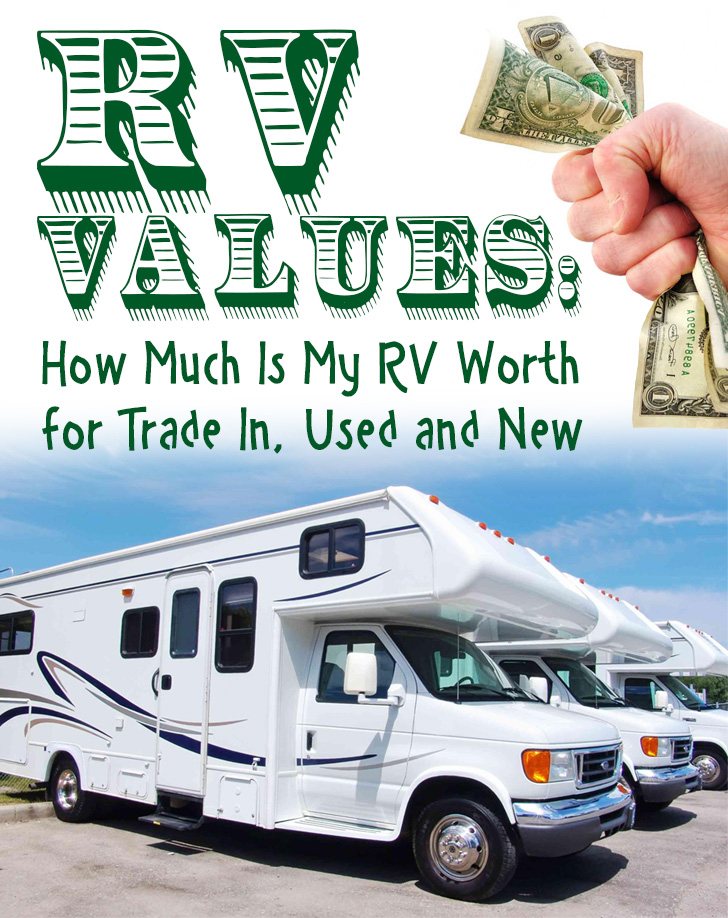
Condition, Mileage, and Maintenance History
In the world of business finance, documentation is everything. An RV with 50,000 miles and a meticulous set of service records will often sell for significantly more than one with 20,000 miles and no proof of maintenance. Buyers are inherently risk-averse; they fear the “money pit” scenario.
Water damage is the single greatest destroyer of RV value. Even a minor leak in the roof seals can lead to mold and structural rot that can effectively total the vehicle’s value. From a financial preservation standpoint, investing $500 a year in professional seal inspections and maintenance can protect tens of thousands of dollars in resale value.
Aftermarket Upgrades and ROI
Many owners invest heavily in upgrades, such as lithium battery banks, solar power systems, or high-end suspension kits. While these features make the RV more functional, they rarely offer a 1-to-1 return on investment (ROI). In most cases, you can expect to recoup only 30% to 50% of the cost of upgrades upon sale.
If you are upgrading with the intent to sell, focus on “universal” improvements. A modern off-grid power system is highly attractive in today’s market and may help your unit sell faster, even if it doesn’t dramatically raise the price ceiling. Conversely, highly personalized aesthetic changes—like custom paint or unique interior renovations—can actually decrease the pool of potential buyers and lower the value.
Maximizing Your Return: Strategies for Selling and Trading
Once you have determined the value of your RV, the next financial decision is choosing the right exit strategy. Your choice will depend on whether you value time or money more highly.
Private Sale vs. Dealership Trade-In
The “spread” between a trade-in value and a private sale price can be substantial, often ranging from $5,000 to over $20,000 depending on the unit’s total value.
- Dealership Trade-In: This is the path of least resistance. It offers convenience and potential tax advantages. In many jurisdictions, you only pay sales tax on the “price difference” between your trade-in and your new purchase. This “tax shield” can bridge the gap between the low trade-in offer and the higher private party value.
- Private Sale: This requires the most effort but yields the highest net return. You are responsible for marketing, showings, and verifying the buyer’s funds. For those focused on maximizing their online income or personal cash flow, the extra work of a private sale is usually worth the several thousand dollars in additional profit.
Timing the Market for Maximum Profit
Strategic timing is a core principle of investing. Selling an RV in October, when many owners are looking to avoid winterization and storage fees, puts you in a “buyer’s market.” If your goal is to maximize your return, aim to list your RV in late February or March. This is when families are planning their summer vacations and tax refund checks are providing potential buyers with the liquidity needed for down payments.
Protecting Your Investment: Financial Long-Term Planning
An RV should be viewed as a component of your overall financial portfolio. Even if you aren’t selling today, managing the asset’s value is essential for insurance purposes and future estate planning.
Insurance and Replacement Value
Many owners make the mistake of insuring their RV for what they paid for it, rather than what it is currently worth. In the event of a total loss, an “Actual Cash Value” (ACV) policy will only pay out the current depreciated market value. If you have a loan on the RV, this could leave you “underwater”—owing more to the bank than the insurance check covers.
Consider “Total Loss Replacement” coverage if your RV is less than five years old. For older units, ensure you have “Gap Insurance” if your equity position is thin. Regularly checking “how much is my RV worth” allows you to adjust your insurance coverage to ensure you are neither over-paying for premiums nor under-protected in the event of an accident.

Tax Implications of RV Ownership and Sales
In the United States, an RV can often be classified as a “second home” for tax purposes, provided it has basic sleeping, cooking, and toilet facilities. This may allow you to deduct the interest on your RV loan from your federal income taxes.
Furthermore, if you use your RV for business—such as for a mobile office or as a rental on platforms like Outdoorsy or RVshare—the financial math changes entirely. You may be able to leverage Section 179 depreciation to write off a significant portion of the purchase price against your business income. However, when you sell a business-use RV, you may be subject to “depreciation recapture” taxes. Consulting with a financial advisor or tax professional is essential to navigate these complexities and ensure that your RV remains a tool for wealth building rather than a drain on your finances.
By treating your RV as a serious financial asset—monitoring its depreciation, maintaining its condition, and timing the market—you can enjoy the lifestyle benefits of the open road while maintaining a disciplined approach to your personal net worth.
aViewFromTheCave is a participant in the Amazon Services LLC Associates Program, an affiliate advertising program designed to provide a means for sites to earn advertising fees by advertising and linking to Amazon.com. Amazon, the Amazon logo, AmazonSupply, and the AmazonSupply logo are trademarks of Amazon.com, Inc. or its affiliates. As an Amazon Associate we earn affiliate commissions from qualifying purchases.