
For the vast majority of households, a vehicle represents the second-largest financial investment after a primary residence. Unlike real estate, however, an automobile is a depreciating asset, losing value from the moment the keys are handed over. Understanding the question “How much is my car worth?” is not merely a matter of curiosity; it is a critical component of personal finance management, net worth calculation, and strategic wealth preservation.
Whether you are looking to liquidate the asset for cash, trade it in for a newer model, or simply assess your current financial standing, a precise valuation is paramount. This guide explores the financial mechanics of automotive valuation, the tools available for appraisal, and the strategic maneuvers you can employ to maximize your return on investment (ROI).
Understanding the Financial Mechanics of Vehicle Depreciation
Depreciation is the silent killer of automotive wealth. From a financial perspective, your car’s value is a moving target influenced by time, usage, and market volatility. To accurately determine what your car is worth, you must first understand the variables that dictate its downward price trajectory.
The Role of Year, Make, and Model in Asset Valuation
Not all vehicles are created equal in the eyes of the secondary market. The “make” (the brand) and “model” establish the baseline for value retention. Some brands are synonymous with reliability and longevity, allowing them to retain a higher percentage of their original MSRP (Manufacturer’s Suggested Retail Price) over five to ten years. Conversely, luxury vehicles often experience a more precipitous drop in value—sometimes losing 50% of their worth within the first three years—due to high maintenance costs and a smaller pool of secondary buyers.
Mileage and the Law of Diminishing Returns
In the world of finance, mileage is essentially a measure of “consumed utility.” Every mile driven represents a fraction of the engine’s total lifespan being used. Most valuation models use a baseline of 12,000 to 15,000 miles per year. If your vehicle falls significantly below this range, it carries a “scarcity premium.” If it exceeds this range, it suffers from “excessive wear” penalties. Understanding where your vehicle sits on this curve is the first step in calculating its current liquid value.
The Impact of Economic Cycles on Used Car Prices
Asset values do not exist in a vacuum. Interest rates, inflation, and supply chain disruptions play a massive role in what someone is willing to pay for your car. For instance, when new car production slows down, the value of used inventory often spikes. Monitoring the broader economic climate is essential for timing your exit from the asset to ensure you aren’t selling during a market trough.
Tools and Resources for Accurate Financial Valuation
Gone are the days of guessing a car’s price based on a local newspaper ad. Today, data-driven financial tools provide a granular look at market values based on millions of real-time transactions.
Utilizing Blue Book Values and Market Aggregators
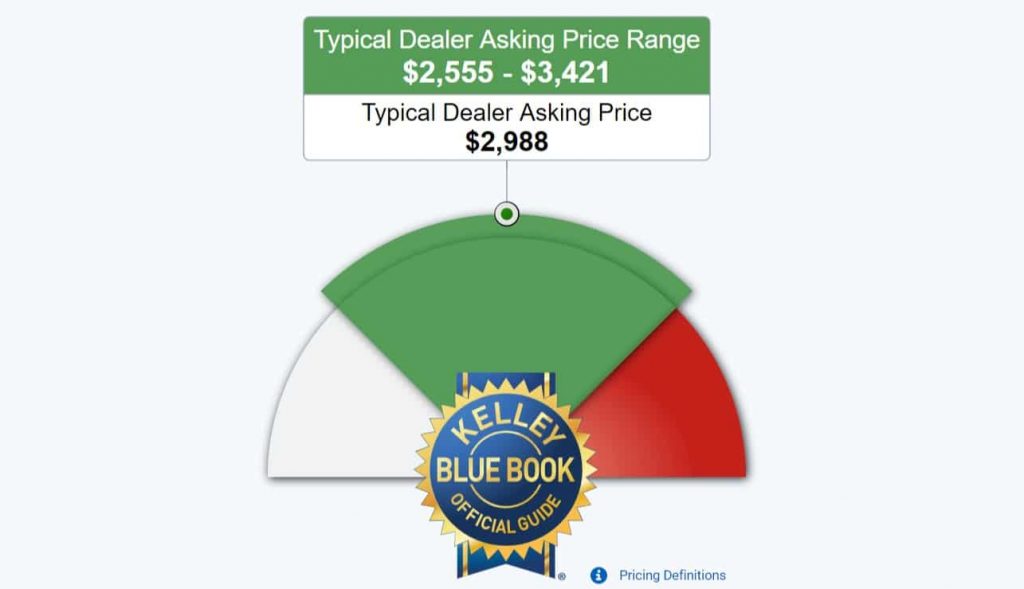
The most common starting point for any valuation is the Kelley Blue Book (KBB) or the NADA (National Automobile Dealers Association) guides. These platforms provide three distinct values: Trade-In Value, Private Party Value, and Retail Value.
- Trade-In Value: This is the “wholesale” price—the amount a dealer will pay you. It is lower because the dealer must account for reconditioning costs and a profit margin.
- Private Party Value: This is what you can expect when selling to an individual. It is generally higher than trade-in but requires more effort.
- Retail Value: This is what a dealer would sell the car for on their lot.
From a financial planning perspective, you should always use the “Trade-In Value” as a conservative estimate for your net worth statements, while aiming for “Private Party Value” during an actual sale.
The Importance of Regional Market Demand
A vehicle’s value is highly dependent on geography—a concept known in finance as “locational arbitrage.” A rear-wheel-drive convertible will command a premium in a sunbelt state like Florida but may be undervalued in a snowy climate like Maine. Similarly, fuel-efficient hybrids carry higher premiums in urban centers with high gas prices compared to rural areas. When researching your car’s worth, ensure you are looking at localized data to avoid an inaccurate appraisal.

Real-Time Quotes from Instant Buyers
In recent years, “FinTech” platforms have revolutionized car selling. Companies that provide instant cash offers based on a VIN (Vehicle Identification Number) or license plate provide perhaps the most accurate “real-world” floor for your car’s value. These offers are not estimates; they are liquid cash commitments. Checking these quotes gives you a firm baseline that you can use as leverage when negotiating elsewhere.
Enhancing Your Car’s Resale Value for Maximum ROI
If your goal is to maximize the cash you receive for your vehicle, you must view the car not as a mode of transportation, but as a product you are preparing for market. Small financial inputs in the short term can lead to significantly higher payouts during the transaction.
Maintenance Records as Financial Proof
In the secondary market, uncertainty is a value-destroyer. A buyer will always try to negotiate the price down if they suspect upcoming repairs. Comprehensive service records—receipts for oil changes, brake replacements, and tire rotations—serve as a “financial audit” for the vehicle. Providing a documented history proves that the asset has been maintained, allowing you to justify a price at the top end of the valuation spectrum.
Cosmetic Refurbishment vs. Repair Costs
When preparing a car for sale, you must perform a cost-benefit analysis. Spending $200 on a professional “detail” (deep clean) can often increase the perceived value of a car by $1,000. Conversely, spending $1,500 to fix a minor transmission shudder might not be recovered in the sale price. Focus on “high-impact” visual and mechanical fixes that eliminate “deal-breakers” for potential buyers.
The Psychology of “First Impressions” in Pricing
In finance, the “anchoring effect” describes how the first piece of information offered (the asking price) sets the tone for the entire negotiation. By presenting a vehicle that is aesthetically flawless and mechanically sound, you anchor the buyer to the higher end of the market value. This reduces their leverage to negotiate and ensures you retain as much equity as possible.
Strategic Selling: Private Sale vs. Trade-In Equity
The final step in determining your car’s worth is deciding how to realize that value. This is a purely financial decision that involves weighing “time” against “money.”
The Tax Implications of Trading In
While a private sale usually nets a higher raw dollar amount, trading your vehicle into a dealership offers a distinct tax advantage in many jurisdictions. In many U.S. states, you only pay sales tax on the difference between the new car price and your trade-in value.
- Example: If you buy a $30,000 car and trade in your old car for $10,000, you only pay sales tax on $20,000.
If your state tax rate is 8%, that is an $800 savings. You must factor this “tax credit” into your calculations when deciding if a private buyer’s offer is truly better than the dealer’s.
Maximizing Liquid Cash through Private Transactions
Selling a car yourself is essentially a “side hustle.” It requires marketing, communication, and time. However, the financial reward is often 10% to 20% higher than a dealer’s offer. If your car is worth $20,000, a private sale could net you an additional $3,000—a significant return for a few hours of work. For individuals focused on aggressive wealth building, the private market is almost always the superior financial choice.
Understanding the “Equity Position”
Before selling, you must determine if you have positive or negative equity. If you owe more on your car loan than the car is worth (known as being “underwater” or having “negative equity”), the sale becomes a liability management exercise rather than an asset liquidation. In this scenario, your goal is to minimize the “gap” you have to pay out of pocket to clear the title. Knowing your car’s exact worth prevents you from making a misinformed decision that could damage your credit or deplete your savings.
Conclusion: The Financial Importance of Constant Appraisal
Determining “how much is my car worth” is not a one-time event but a recurring necessity in sound financial planning. By understanding the nuances of depreciation, utilizing the right data-driven tools, and strategically preparing your asset for the market, you can transform a routine sale into a savvy financial maneuver.
Treat your vehicle like any other part of your investment portfolio. Monitor its value, maintain its condition to preserve its “equity,” and time your exit to align with market peaks. In doing so, you ensure that your automotive choices support, rather than hinder, your long-term financial goals.
aViewFromTheCave is a participant in the Amazon Services LLC Associates Program, an affiliate advertising program designed to provide a means for sites to earn advertising fees by advertising and linking to Amazon.com. Amazon, the Amazon logo, AmazonSupply, and the AmazonSupply logo are trademarks of Amazon.com, Inc. or its affiliates. As an Amazon Associate we earn affiliate commissions from qualifying purchases.