
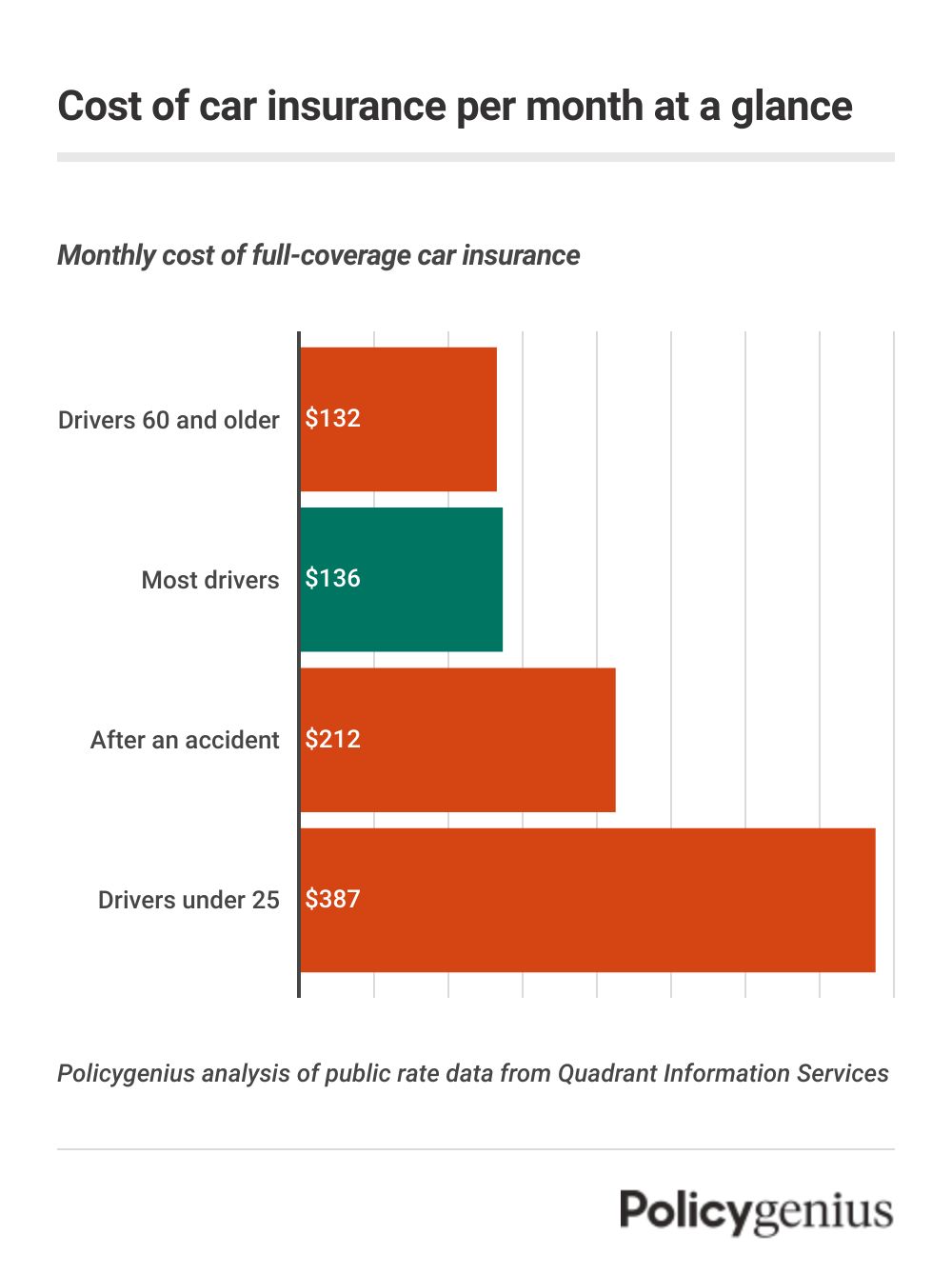
Navigating the landscape of personal finance requires a keen eye for recurring expenses, and for the average consumer, car insurance is often one of the most significant monthly line items. Understanding how much monthly car insurance costs—and more importantly, why it costs what it does—is essential for maintaining a healthy budget and ensuring long-term financial stability. While the national average in the United States often fluctuates between $150 and $200 per month for full coverage, the reality is that premiums are highly individualized.
In this guide, we will dissect the financial mechanisms behind insurance pricing, explore the variables that dictate your specific rate, and provide actionable strategies to optimize your monthly payments without sacrificing essential protection.
The Core Determinants of Your Monthly Insurance Premium
Insurance is, at its heart, a study of risk assessment. Actuaries use vast amounts of data to predict the likelihood of a driver filing a claim. Consequently, your monthly bill is a reflection of the risk profile you present to the provider.
Demographic Factors and Personal Profile
Age is perhaps the most significant demographic factor. From a financial planning perspective, young drivers (under 25) face the steepest hurdles, often paying double or triple the national average due to statistical inexperience and higher accident rates. Conversely, drivers in their 50s and early 60s often enjoy the “sweet spot” of insurance pricing. Gender and marital status also play roles; statistically, married individuals are viewed as more stable and less risk-prone, which can lead to slight reductions in monthly costs.
The Impact of Driving History
Your historical behavior on the road is a direct indicator of future financial risk for the insurer. A single at-fault accident or a series of speeding tickets can cause a monthly premium to surge by 20% to 50%. Serious infractions, such as a DUI, can move a driver into the “high-risk” pool, where monthly costs can become prohibitive. Maintaining a clean record is not just a safety measure; it is a primary strategy for personal wealth preservation.
Vehicle Specifications and Value
The car you choose to drive has a direct mathematical relationship with your insurance cost. Insurers look at the vehicle’s MSRP, repair costs, and safety ratings. A luxury sedan with specialized parts and high-tech sensors will cost more to insure than a standard mid-sized SUV because the “loss cost”—the amount the insurer must pay to fix it—is higher. Additionally, vehicles with high theft rates will see a localized increase in the comprehensive portion of the monthly premium.
Understanding Coverage Tiers and Their Financial Implications
One of the most common mistakes in personal finance is selecting an insurance policy based solely on the lowest monthly price. To truly understand “how much” car insurance is, you must understand what you are buying.
Liability vs. Full Coverage
Minimum liability insurance is the cheapest way to stay legal, but it offers the least financial protection. It only covers damages to others if you are at fault. On the other hand, “full coverage”—which typically includes liability, collision, and comprehensive—protects your own asset as well. From a financial tool perspective, full coverage is often a requirement for financed or leased vehicles to protect the lender’s investment. While full coverage can increase your monthly premium by $100 or more compared to “state minimums,” it prevents a total loss of equity in the event of an accident.
The Role of Deductibles in Cash Flow Management
The deductible is the amount you pay out of pocket before the insurance company covers the rest. There is an inverse relationship between deductibles and monthly premiums. Choosing a $1,000 deductible instead of a $500 deductible can significantly lower your monthly bill. However, this is a strategic financial decision: you must ensure you have that $1,000 readily available in an emergency fund. For those with tight monthly cash flow, a higher premium with a lower deductible may actually be a safer financial hedge.
Optional Add-ons and Gap Insurance
Monthly costs are also influenced by “riders” or endorsements. Roadside assistance, rental car reimbursement, and uninsured motorist protection are valuable tools but add a few dollars to each payment. A critical consideration for those with new car loans is “Gap Insurance.” Since cars depreciate the moment they leave the lot, you might owe more on your loan than the car is worth. Gap insurance covers this “gap,” ensuring that a total loss doesn’t leave you with a monthly loan payment for a car you no longer own.
Geographic and Economic Variables Affecting Rates
Where you park your car at night is often as important as how you drive it. Insurance rates are heavily influenced by state laws and local environmental factors.
State-Level Regulations and No-Fault Systems
Each state has its own set of insurance mandates. States like Michigan and Florida have historically had higher premiums due to “no-fault” insurance laws, which require insurers to pay for medical expenses regardless of who caused the accident. Furthermore, some states require higher minimum liability limits than others. When calculating your monthly budget, you must account for the regulatory environment of your specific jurisdiction.
Urban vs. Rural Living
Densely populated urban areas typically see higher insurance premiums. The logic is simple: more cars on the road lead to a higher frequency of accidents. Additionally, urban areas often have higher rates of vehicle theft and vandalism. If you move from a rural town to a major city like New York or Los Angeles, you can expect your monthly car insurance to increase, even if your driving habits and vehicle remain the same.
The Climate and Natural Disaster Risk
In recent years, the insurance industry has had to adjust rates based on climate-related risks. Areas prone to hailstorms, hurricanes, or wildfires often see an increase in the comprehensive portion of the insurance bill. These “act of God” risks are factored into the regional base rates, meaning your monthly payment contributes to a collective pool that accounts for these large-scale environmental threats.
Advanced Strategies for Lowering Monthly Payments
For the proactive consumer, there are several financial maneuvers available to reduce the cost of car insurance without stripping away necessary protections.
Leveraging Multi-Policy and Loyalty Discounts
One of the most effective ways to lower your monthly insurance cost is through “bundling.” Insurance companies are eager to capture a larger share of your financial life. By combining your auto insurance with homeowners, renters, or life insurance, you can often secure a discount of 10% to 25% across all policies. Furthermore, being a long-term customer or having multiple vehicles on one policy provides economies of scale that insurers pass on to the policyholder.
Telematics and Usage-Based Insurance (UBI)
The rise of financial technology has introduced “telematics”—small devices or smartphone apps that track your actual driving behavior. For those who drive infrequently (such as remote workers) or who are exceptionally safe drivers, UBI can offer substantial savings. Instead of paying a flat rate based on general demographics, your monthly cost is tailored to your actual mileage and safety metrics. This is an excellent tool for those looking to turn their safe driving habits into direct monthly savings.
Credit Score: The Silent Factor in Insurance Pricing
In many states, your credit-based insurance score is a major factor in determining your premium. Actuarial data suggests a strong correlation between credit responsibility and driving safety. A driver with a high credit score may pay significantly less per month than a driver with a poor score, even if their driving records are identical. Improving your credit score by paying down debt and ensuring on-time payments is, therefore, a dual-purpose strategy: it improves your overall financial health and lowers your monthly insurance overhead.
Navigating the Comparison Shopping Process
The “how much” of car insurance is never static. To ensure you are getting the best value for your money, a systematic approach to shopping is required.
The Importance of Annual Rate Audits
The insurance market is highly competitive. New entrants and changing algorithms mean that the company that was cheapest for you three years ago may no longer be the most cost-effective option today. Financial experts recommend performing a “rate audit” once a year or whenever a major life event occurs (such as getting married, buying a home, or moving). Utilizing online comparison tools can provide a broad overview of the market in minutes, allowing you to leverage competing quotes against your current provider.
Balancing Price with Carrier Reputation
While the monthly price is a primary concern, the cheapest option isn’t always the best financial tool. In the event of a claim, you want a company with a strong financial stability rating (such as those provided by A.M. Best) and a reputation for fair claims processing. A low monthly premium is of little value if the company denies legitimate claims or provides poor service during a crisis. Always weigh the monthly cost against the company’s “claims-paying ability” and customer satisfaction scores.

Conclusion: Car Insurance as a Dynamic Financial Commitment
Ultimately, the question of “how much is monthly car insurance” does not have a single answer, but rather a spectrum of possibilities based on your financial choices and personal profile. By viewing car insurance as a manageable component of your broader financial strategy—rather than a fixed, unavoidable tax—you can take control of your premiums. Through a combination of safe driving, strategic deductible selection, credit management, and regular market comparisons, you can ensure that your car insurance remains an affordable and effective shield for your financial future.
aViewFromTheCave is a participant in the Amazon Services LLC Associates Program, an affiliate advertising program designed to provide a means for sites to earn advertising fees by advertising and linking to Amazon.com. Amazon, the Amazon logo, AmazonSupply, and the AmazonSupply logo are trademarks of Amazon.com, Inc. or its affiliates. As an Amazon Associate we earn affiliate commissions from qualifying purchases.