
For any modern investor, the question “how much is Microsoft stock” is rarely just about the current ticker price flashing on a screen. Instead, it is a gateway into understanding the valuation of one of the world’s most successful corporate entities. As a cornerstone of the “Magnificent Seven” and a bellwether for the S&P 500, Microsoft (MSFT) represents a unique intersection of legacy stability and frontier growth. To understand the true cost and value of Microsoft stock, one must look beyond the daily fluctuations and examine the underlying financial architecture that sustains its multi-trillion-dollar market capitalization.
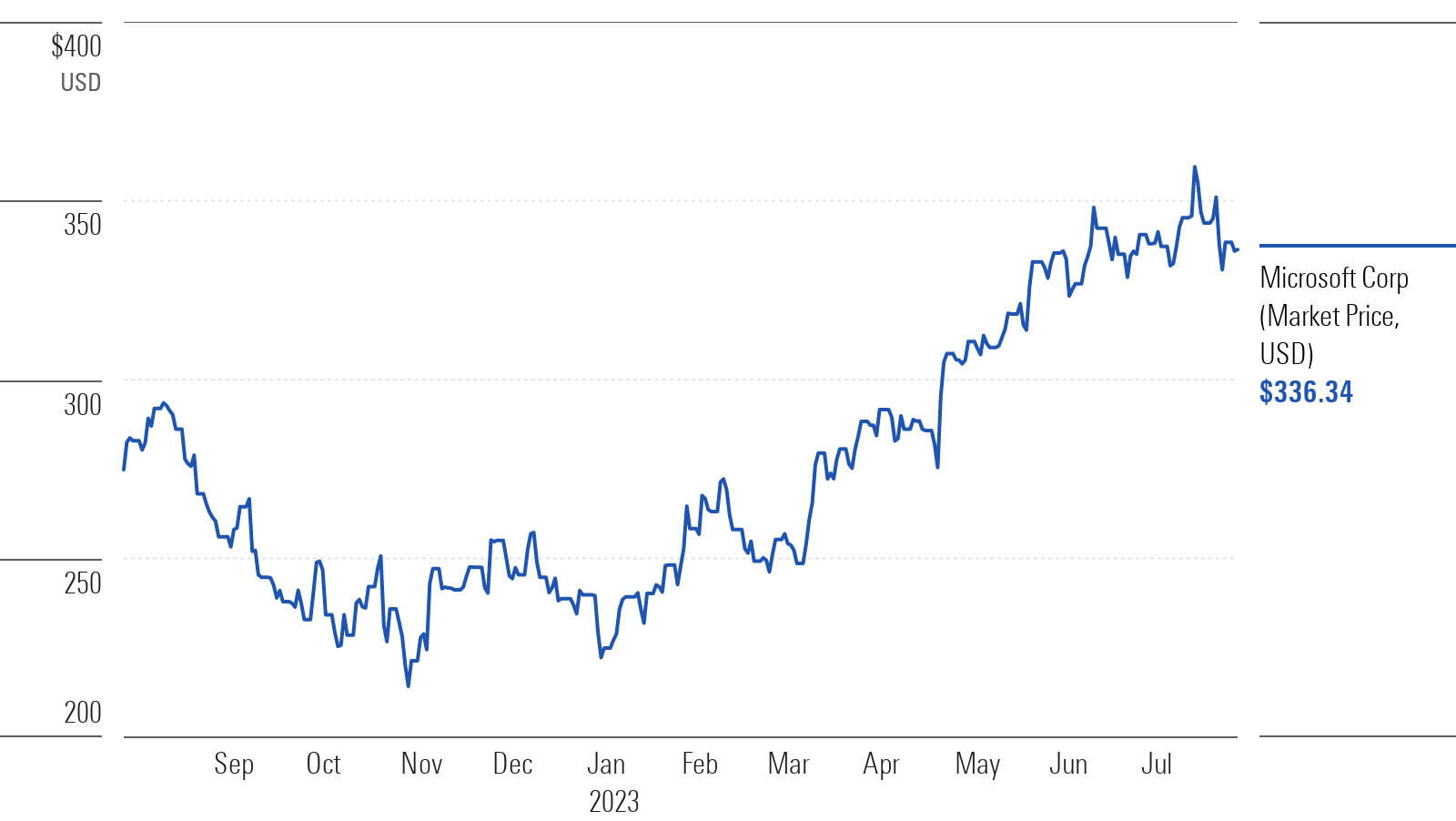
Understanding the Current Valuation of Microsoft (MSFT)
The nominal price of a single share of Microsoft is a reflection of investor sentiment, quarterly earnings performance, and macroeconomic conditions. However, in the realm of professional finance, the “price” is secondary to the “valuation.” When investors ask how much the stock is worth, they are typically weighing the share price against the company’s ability to generate future cash flows.
Real-Time Price Dynamics vs. Intrinsic Value
The market price of MSFT is influenced by high-frequency trading, institutional rebalancing, and retail interest. However, a fundamental investor looks for the intrinsic value—what the company is actually worth based on its assets and earnings potential. Microsoft has consistently maintained a premium valuation compared to the broader market. This premium is often justified by its “moat”—a competitive advantage that allows it to protect its market share and maintain high profit margins. Whether the stock is trading at $300 or $450, the core question remains: is the current price a fair reflection of its 10-year earnings trajectory?
Key Financial Metrics: P/E Ratio and Market Cap
To quantify “how much” Microsoft is worth, we look at the Price-to-Earnings (P/E) ratio. Historically, Microsoft has traded at a higher P/E than traditional value stocks, signaling that investors are willing to pay more today for the growth expected tomorrow. Furthermore, its market capitalization—often exceeding $3 trillion—places it in an elite tier of global liquidity. For the individual investor, this means that while the stock may seem “expensive” on a per-share basis, its massive market cap provides a level of stability and institutional backing that smaller companies cannot match.
Factors Driving Microsoft’s Stock Performance
The price of Microsoft stock does not move in a vacuum. It is propelled by specific business segments that have turned the company from a desktop software provider into a diversified financial powerhouse. Understanding these drivers is essential for anyone looking to allocate capital to MSFT.
The Cloud Dominance: Azure’s Impact on the Bottom Line
If you want to know what drives the MSFT share price, look no further than Azure. Microsoft’s cloud computing platform has become the company’s primary engine of growth. In financial terms, cloud services offer high-margin, recurring revenue—the “holy grail” for investors. Unlike one-time software sales, Azure subscriptions provide a predictable stream of income that allows Microsoft to reinvest in R&D and return capital to shareholders. The growth rate of Azure is often the single most important metric in quarterly earnings reports; even a slight beat or miss here can cause billions of dollars in market value to shift in minutes.
The AI Revolution: Monetizing Copilot and OpenAI Partnerships
In the current fiscal landscape, Microsoft’s aggressive integration of Artificial Intelligence (AI) has added a “growth premium” to its stock. By partnering with OpenAI and launching Microsoft 365 Copilot, the company has positioned itself to monetize AI at scale. From an investing perspective, this is not just about cool technology; it is about increasing the Average Revenue Per User (ARPU). If Microsoft can convince its massive enterprise install base to pay an additional monthly fee for AI features, the resulting expansion in profit margins will likely continue to drive the stock price upward.
Historical Performance and Long-Term Yields

When evaluating the cost of Microsoft stock, it is helpful to look at its historical context. Microsoft is one of the few tech companies that has managed to reinvent itself across multiple decades, providing consistent returns to long-term shareholders through both capital appreciation and dividends.
Dividend Growth and Share Buyback Programs
While many high-growth tech stocks avoid dividends to reinvest every cent into the business, Microsoft has matured into a hybrid: a “growth” stock that acts like a “value” stock in terms of capital return. Microsoft has a long history of increasing its dividend annually, making it a favorite for income-oriented investors. Additionally, the company engages in massive share buyback programs. By reducing the total number of shares outstanding, Microsoft increases the “earnings per share” (EPS), which naturally exerts upward pressure on the stock price over time.
Comparative Analysis: Microsoft vs. The S&P 500
Over the last decade, Microsoft has significantly outperformed the broader S&P 500 index. This outperformance is a testament to its operational efficiency and dominant market position. For an investor, “how much” the stock costs is relative to the opportunity cost of putting that money elsewhere. Historically, MSFT has provided a higher risk-adjusted return than many of its peers, acting as a defensive play during market downturns due to its massive cash reserves, while still capturing the upside of bull markets through its innovation in cloud and AI.
Risks and Challenges for Investors
No financial discussion is complete without an analysis of risk. Even a titan like Microsoft faces headwinds that can depress its stock price or lead to periods of stagnation. Potential investors must weigh the “cost” of the stock against these systemic and company-specific risks.
Regulatory Hurdles and Antitrust Concerns
As Microsoft grows, it inevitably attracts the attention of regulators in the United States, the European Union, and China. Antitrust investigations can lead to massive fines or, more detrimentally, forced changes to business models that limit profitability. Any investor holding MSFT must be aware of the “regulatory tax” that comes with being a market leader. Major acquisitions, such as the Activision Blizzard deal, undergo intense scrutiny, and any failure to execute such strategic moves can lead to short-term volatility in the stock price.
Macroeconomic Volatility and Interest Rate Sensitivity
As a high-growth technology company, Microsoft’s valuation is sensitive to interest rates. When the Federal Reserve raises rates, the “discount rate” used by analysts to value future earnings also rises, which can lead to a compression in P/E multiples. In simpler terms, when money becomes more expensive to borrow, growth stocks often see their prices fall. Furthermore, because Microsoft operates globally, currency fluctuations can impact its reported earnings. A strong dollar can make its international revenue look smaller when converted back into USD, affecting the bottom-line figures that investors watch so closely.
Strategic Outlook: Is MSFT a Buy, Hold, or Sell?
Deciding how to approach Microsoft stock requires a clear understanding of your own financial goals. The stock serves different purposes depending on an investor’s time horizon and risk tolerance.
Portfolio Diversification Strategies
In a diversified portfolio, Microsoft often functions as a “core” holding. It provides exposure to the technology sector without the extreme volatility associated with smaller, speculative companies. For those looking to build wealth over decades, Microsoft offers a combination of safety (due to its balance sheet) and growth (due to its tech leadership). Many financial advisors suggest that rather than trying to “time” the exact price of MSFT, investors should use dollar-cost averaging—buying a fixed dollar amount at regular intervals—to build a position over time.

Setting Realistic Price Targets and Exit Points
When determining “how much” to pay for Microsoft, it is vital to look at analyst price targets and consensus estimates. However, these are often short-term projections. A sophisticated investor sets an exit point or a “rebalancing trigger.” For instance, if MSFT becomes too large a percentage of your total portfolio, it may be wise to trim the position to lock in gains, regardless of the company’s strength. Conversely, if the stock price dips due to a temporary macroeconomic event while the company’s fundamentals remain strong, it may be viewed as a buying opportunity for those with a long-term perspective.
In conclusion, “how much is Microsoft stock” is a question with a shifting answer. On the surface, it is a numerical value determined by the market. Beneath that surface, it is a complex valuation of global cloud infrastructure, artificial intelligence, enterprise software, and a legacy of disciplined financial management. For the investor, the key is not just knowing the price, but understanding the value of the engine that generates it. Microsoft remains a premier asset for those seeking to participate in the ongoing digitization of the global economy, provided they remain mindful of the valuation premiums and regulatory risks inherent in such a massive enterprise.
aViewFromTheCave is a participant in the Amazon Services LLC Associates Program, an affiliate advertising program designed to provide a means for sites to earn advertising fees by advertising and linking to Amazon.com. Amazon, the Amazon logo, AmazonSupply, and the AmazonSupply logo are trademarks of Amazon.com, Inc. or its affiliates. As an Amazon Associate we earn affiliate commissions from qualifying purchases.