
Navigating the complexities of retirement planning often brings one fundamental question to the forefront: what can I expect from Social Security? For many, Social Security represents a cornerstone of their financial security in their later years. While it’s designed to provide a safety net, understanding its nuances, particularly the maximum benefit one can receive, is crucial for effective retirement strategizing. This article delves deep into the mechanics of the maximum Social Security benefit, explaining how it’s calculated, what factors influence it, and how you can position yourself to potentially receive the highest possible payout.
Understanding the Foundation of Social Security Benefits
Before we dissect the “maximum,” it’s essential to grasp the fundamental principles that govern Social Security benefits. This isn’t a one-size-fits-all system; rather, it’s a sophisticated program designed to replace a portion of pre-retirement income based on an individual’s earnings history.
The Role of Social Security in Retirement Planning
For millions of Americans, Social Security serves as a vital income stream during retirement, often supplementing pensions, 401(k)s, IRAs, and other savings. It’s designed as a social insurance program, meaning that contributions made throughout one’s working life qualify them for benefits in retirement, disability, or for survivors. While it was never intended to be the sole source of retirement income, it often constitutes a significant portion, especially for those with limited other savings. Understanding its potential contribution is therefore paramount when crafting a comprehensive retirement plan. Ignoring it or misunderstanding its potential can lead to significant financial oversights.
How Benefits are Calculated: A Brief Overview
Your Social Security benefit isn’t a random figure; it’s the result of a precise calculation based primarily on your earnings history. The Social Security Administration (SSA) calculates your Average Indexed Monthly Earnings (AIME) by taking your 35 highest-earning years, adjusting them for inflation (indexing), and then dividing by the number of months in those years. This AIME is then plugged into a formula that determines your Primary Insurance Amount (PIA), which is the benefit you would receive if you claim at your Full Retirement Age (FRA). The PIA formula is progressive, meaning it replaces a higher percentage of earnings for lower-income workers than for higher-income workers.
Key Factors Influencing Your Benefit Amount
Several critical factors directly impact the size of your Social Security benefit:
-
Earnings History: This is arguably the most significant factor. The higher your indexed earnings over your 35 highest-earning years, the higher your AIME and, consequently, your PIA. If you have fewer than 35 years of earnings, zero-earning years will be averaged into your calculation, lowering your overall benefit.
-
Work History (Credits): To qualify for retirement benefits, you generally need 40 Social Security credits, which are earned by working and paying Social Security taxes. You can earn up to 4 credits per year. For 2024, you earn one credit for every $1,730 in earnings, so earning $6,920 for the year would give you the maximum 4 credits.
-
Age at Claiming: This is a crucial strategic decision. You can start receiving benefits as early as age 62, but doing so results in a permanent reduction. Conversely, delaying beyond your Full Retirement Age (up to age 70) can significantly increase your monthly payout.
Deconstructing the Maximum Social Security Benefit
The concept of a “maximum” benefit is often misunderstood. It’s not a static number everyone can achieve; rather, it represents the highest possible monthly payment an individual can receive under specific, stringent conditions.
Defining “Maximum”: What It Truly Means
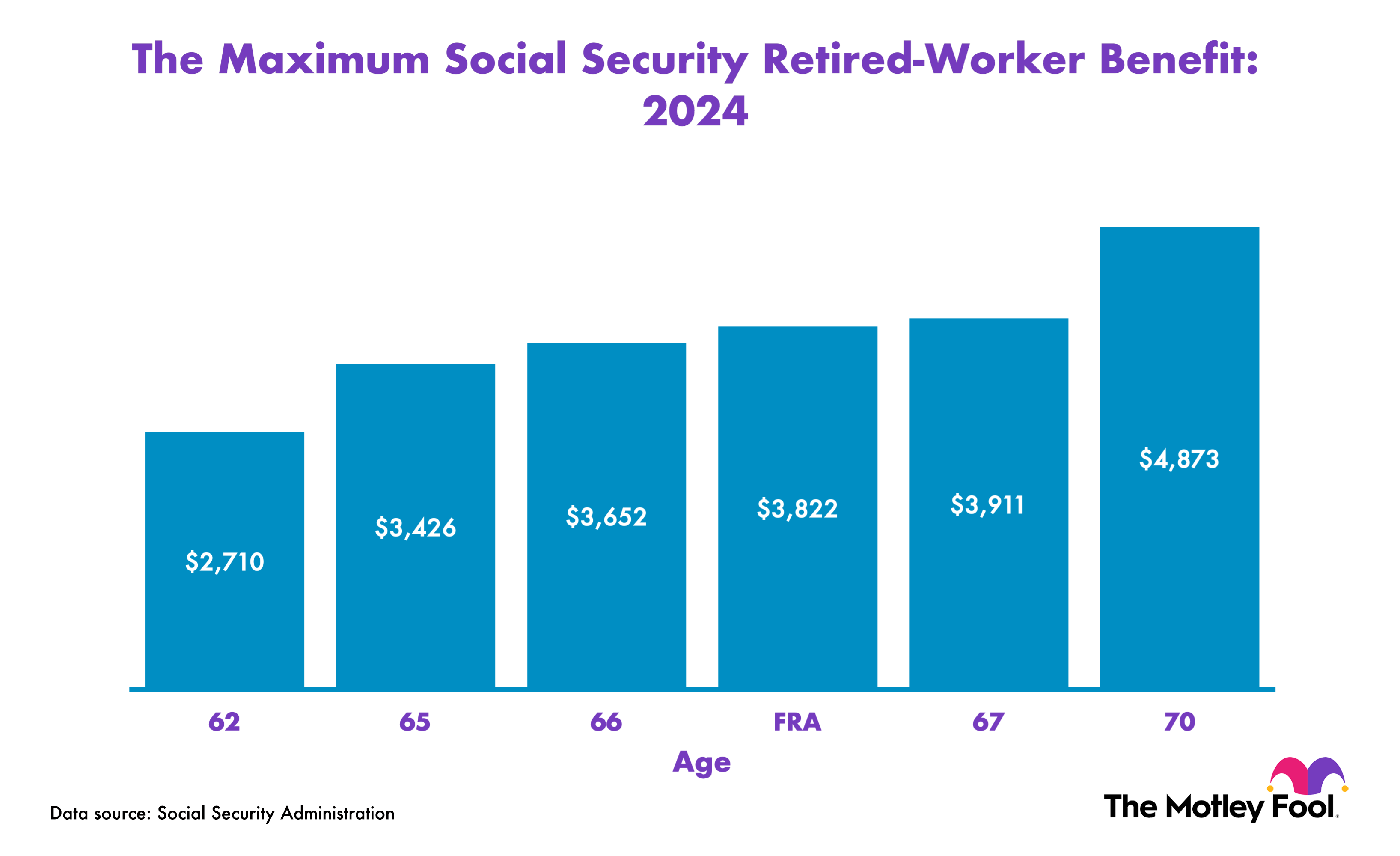
The maximum Social Security benefit is the highest amount an individual can receive if they have consistently earned at or above the Social Security taxable maximum for at least 35 years and delay claiming benefits until age 70. It’s a testament to a lifetime of high earnings and strategic claiming. This figure changes annually, primarily due to cost-of-living adjustments (COLAs) and changes in the national average wage index. For instance, in 2024, the maximum Social Security benefit for someone retiring at Full Retirement Age (FRA) is significantly lower than for someone retiring at age 70. The maximum for someone claiming at age 70 in 2024 is approximately $4,873 per month. For someone claiming at their FRA (e.g., 67 for those born in 1960 or later), the maximum is about $3,822. If they claim at 62, the maximum drops to roughly $2,710. These figures illustrate the profound impact of claiming age.
The Earnings Cap: Why High Earners Don’t Get Unlimited Benefits
A common misconception is that if you earn millions, your Social Security benefit will be proportionally massive. This isn’t the case due to the “Social Security taxable maximum.” Each year, there’s a limit to the amount of earnings subject to Social Security taxes. For 2024, this earnings cap is $168,600. This means that any income earned above this threshold is not subject to Social Security taxes, nor is it counted when calculating your Social Security benefit. Therefore, even if you earn $500,000 or $1 million in a year, only the first $168,600 of your income for that year will be considered for your Social Security benefit calculation. To qualify for the maximum benefit, an individual must have earned at least this taxable maximum (or more) for a full 35 years throughout their career.
Age at Claiming: The Crucial Variable
While high earnings for 35 years are a prerequisite, the age at which you begin collecting benefits is the single most powerful lever you have to influence your final monthly payout.
-
Full Retirement Age (FRA): This is the age at which you are entitled to 100% of your Primary Insurance Amount (PIA). For those born in 1960 or later, FRA is 67. Claiming at FRA provides a substantial benefit, but it’s not the maximum.
-
Early Claiming (Age 62-FRA): You can start benefits as early as age 62, but your monthly payment will be permanently reduced. The reduction is about 5/9 of 1% for each month before FRA, up to 36 months, and 5/12 of 1% for each month beyond that. For someone with an FRA of 67, claiming at 62 results in a 30% reduction.
-
Delayed Claiming (FRA-Age 70): This is where significant growth happens. For each year you delay claiming beyond your FRA, up to age 70, you earn “delayed retirement credits.” These credits increase your benefit by 8% per year. This means someone with an FRA of 67 who delays until 70 will receive 124% of their PIA (3 years x 8% = 24% increase). This 24% boost, combined with consistently high earnings, is what allows individuals to reach the ultimate maximum benefit.
Strategies to Maximize Your Social Security Payout
Achieving the maximum Social Security benefit requires a combination of high earnings, a long career, and strategic claiming decisions. While not everyone will qualify for the absolute maximum, many can significantly increase their benefits by implementing certain strategies.
Maximizing Your Earnings History
The simplest way to increase your Social Security benefit is to consistently earn as much as possible, ideally at or above the Social Security taxable maximum, for at least 35 years. Every year below 35 years of earnings or below the maximum will result in a lower average and thus a lower benefit. If you have years with low earnings or no earnings, consider working longer to replace those low or zero-earning years with higher-earning ones. Even a few extra years of high earnings can bump up your AIME.
Working Past Your Full Retirement Age (Delayed Retirement Credits)
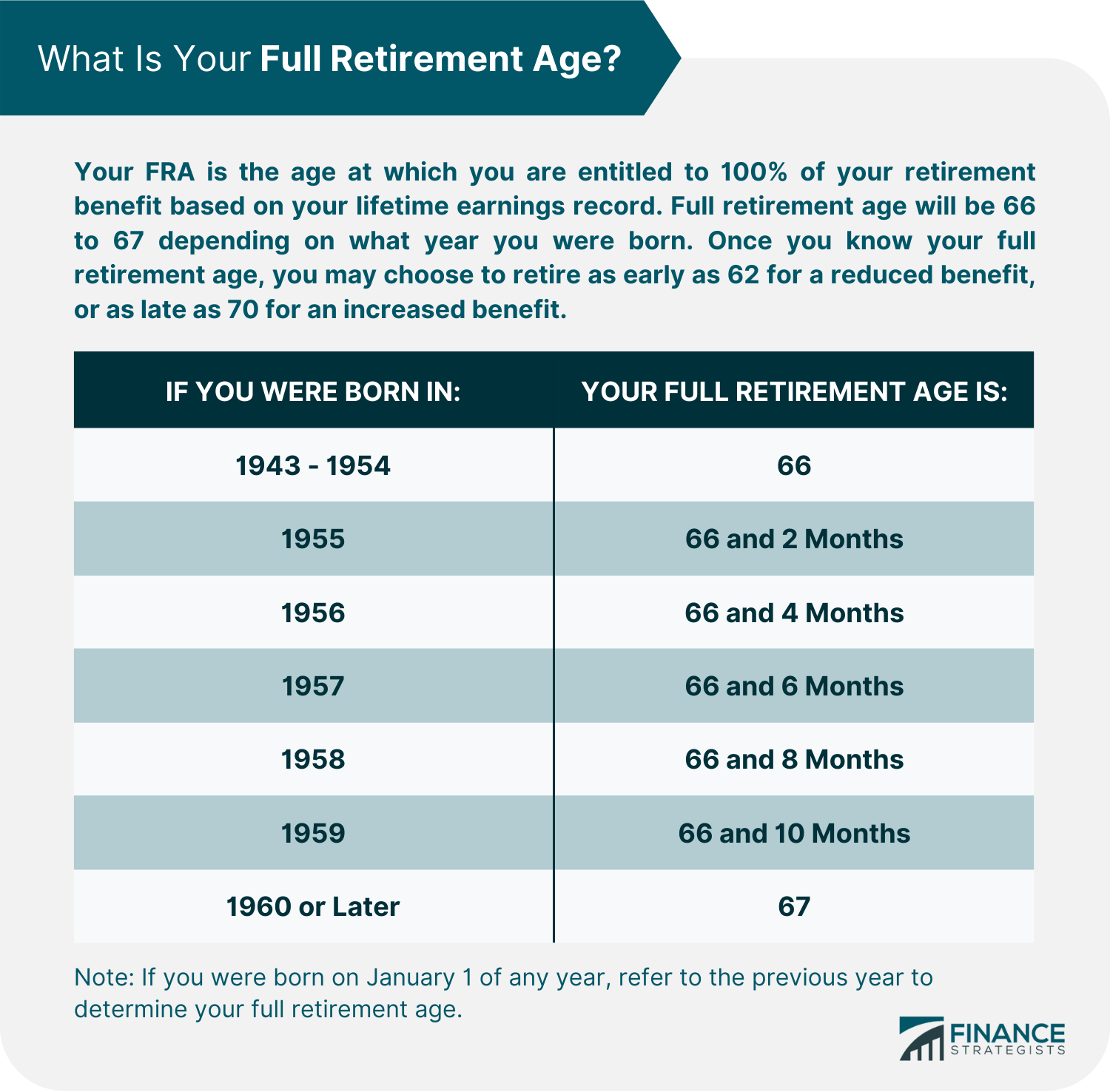
As discussed, delaying your claim beyond your FRA is the most effective way to boost your monthly check. For every year you wait between your FRA and age 70, your benefit increases by 8%. This 8% annual increase is a guaranteed, inflation-adjusted return on your decision, making it one of the best “investments” you can make for your retirement income. For many, delaying until 70, if financially feasible, is a no-brainer strategy. It requires careful financial planning to bridge the income gap between stopping work and starting benefits, but the long-term rewards can be substantial.
Understanding Spousal and Survivor Benefits
Social Security isn’t just about individual benefits. Married individuals, divorcees (under specific conditions), and surviving spouses can often claim benefits based on their spouse’s (or ex-spouse’s) earnings record, which might be higher than their own.
-
Spousal Benefits: If your spouse’s PIA is more than twice your own, you might be able to claim a spousal benefit equal to 50% of their PIA (if you claim at your FRA). This allows a lower-earning spouse to benefit from a higher-earning spouse’s record.
-
Survivor Benefits: If your spouse passes away, you might be eligible for survivor benefits, which can be up to 100% of the deceased spouse’s benefit. Strategic claiming decisions for survivor benefits can be complex, especially if you also have your own work record.
It’s crucial to understand these rules, as they can significantly impact a couple’s or individual’s overall retirement income.
Coordinating Social Security with Other Retirement Income
Social Security should not be viewed in isolation. It’s one piece of your overall retirement income puzzle. When deciding when to claim, consider your other income sources: pensions, 401(k)s, IRAs, and savings. If you have substantial other assets, you might be able to draw from them to bridge the gap and delay Social Security, thereby maximizing your future payments. Conversely, if your savings are limited, claiming earlier might be necessary, even with the reduced benefit. A holistic view is essential for optimizing your entire retirement portfolio.
The Broader Context: Social Security and Your Financial Future
While individual benefit maximization is important, it’s also critical to understand Social Security within the broader economic and financial landscape, as these external factors can influence its real value to you.
Inflation and Cost of Living Adjustments (COLAs)
One of Social Security’s most valuable features is its annual Cost of Living Adjustment (COLA). Benefits are typically adjusted each year to keep pace with inflation, protecting your purchasing power over time. While the maximum benefit figures change annually, the COLA ensures that the real value of your benefit isn’t eroded by rising prices, which is a significant advantage over many fixed pension plans or investment income streams that don’t offer such guarantees.
Taxation of Social Security Benefits
It’s important to remember that Social Security benefits can be taxable. If your “combined income” (adjusted gross income + nontaxable interest + half of your Social Security benefits) exceeds certain thresholds, a portion of your benefits (up to 85%) may be subject to federal income tax. Some states also tax Social Security benefits. This taxation needs to be factored into your overall retirement income planning, as it impacts the net amount you actually receive.
The Importance of a Diversified Retirement Portfolio
Even with a maximized Social Security benefit, it’s rarely enough to fund a comfortable retirement entirely. Social Security was designed to be a foundation, not the whole house. Therefore, maintaining a diversified retirement portfolio that includes investments like 401(k)s, IRAs, personal savings, and other assets is critical. These additional income streams provide flexibility, a buffer against unexpected expenses, and a means to achieve a higher standard of living in retirement.
Future Outlook for Social Security
The long-term solvency of Social Security is a perennial topic of discussion. While various projections suggest the system may not be able to pay 100% of promised benefits in the distant future without some adjustments, it’s crucial to understand that “insolvency” does not mean the system will disappear. It means that without changes, it might only be able to pay a percentage of scheduled benefits (e.g., 80-85%). Policymakers are continually looking at solutions, which could include raising the full retirement age, increasing the taxable maximum, modest tax increases, or changes to the benefit formula. While these discussions can cause anxiety, it’s wise to plan based on current laws and factor in the possibility of modest future adjustments, rather than assuming Social Security will vanish.
Practical Steps and Resources
Understanding the maximum Social Security benefit is the first step; taking action to understand your own situation is the next. The SSA provides several useful tools and resources.
Accessing Your Social Security Statement
The easiest way to understand your potential benefits is to access your Social Security Statement. This personalized document provides an estimate of your future retirement benefits at different claiming ages (62, FRA, and 70), your earnings history, and details about disability and survivor benefits. You can create an account and view your statement online at ssa.gov/myaccount. Reviewing your earnings history is particularly important to ensure it’s accurate; any discrepancies should be reported.
Using the SSA’s Online Calculators
The SSA website offers various online calculators that allow you to estimate your benefits under different scenarios. These tools can help you model the impact of working longer, delaying your claim, or how spousal benefits might work for your family. Experimenting with these calculators can provide valuable insights into your personal maximization strategies.
When to Seek Professional Financial Advice
While the SSA provides excellent resources, the decision of when and how to claim Social Security can be complex, especially when coordinating with other retirement assets, tax planning, and spousal benefits. A qualified financial advisor specializing in retirement planning can help you analyze your specific situation, project different outcomes, and create a comprehensive strategy that optimizes all your income sources, including Social Security, for your unique financial goals. This is particularly true for those with complex financial situations, such as self-employment income, high net worth, or intricate family structures.
In conclusion, the maximum Social Security benefit is an aspirational figure achievable through a lifetime of high earnings and strategic delayed claiming. While not everyone will reach this pinnacle, understanding its components empowers individuals to make informed decisions that can significantly boost their own retirement income, providing a more secure and comfortable future.
aViewFromTheCave is a participant in the Amazon Services LLC Associates Program, an affiliate advertising program designed to provide a means for sites to earn advertising fees by advertising and linking to Amazon.com. Amazon, the Amazon logo, AmazonSupply, and the AmazonSupply logo are trademarks of Amazon.com, Inc. or its affiliates. As an Amazon Associate we earn affiliate commissions from qualifying purchases.