
Embarking on a cruise is often marketed as the ultimate value-driven vacation, promising luxury, travel, and entertainment for a single, consolidated price. However, from a personal finance perspective, the “sticker price” of a cruise is rarely the final amount that leaves your bank account. Navigating the true cost of a cruise requires a sophisticated understanding of base fares, incidental expenses, and the strategic timing of your investment. To plan effectively, one must look beyond the glossy brochures and analyze the cruise industry’s pricing models through a lens of total cost of ownership and return on investment.
Decoding the Base Fare: Understanding Your Primary Investment
The first step in budgeting for a cruise is understanding the base fare. In the financial landscape of travel, cruise lines operate on a tiered pricing structure that mirrors real estate: you are essentially paying for the square footage, location, and amenities of your cabin.
The Tiered Pricing Model: Inside vs. Suite
The most significant variable in your base fare is the cabin category.
-
Inside Cabins: These represent the entry-level investment. For budget-conscious travelers focusing on high ROI (utility over luxury), inside cabins can cost as little as $50 to $100 per person, per day.
-
Balcony Cabins: This is the mid-market standard. Expect to pay a premium of 30% to 50% over the inside cabin price. From a value perspective, this is often where travelers find the best balance between comfort and cost.
-
Suites and Luxury Tiers: For those utilizing their discretionary income for high-end experiences, suites can cost upwards of $500 to $1,000 per day. These often include “The Haven” (NCL) or “The Retreat” (Celebrity), which function as a ship-within-a-ship, providing private amenities that justify the higher capital outlay.
What the “Inclusive” Label Actually Covers
It is a common financial misconception that cruises are “all-inclusive.” In reality, most mass-market lines (Royal Caribbean, Carnival, Norwegian) include basic lodging, standard dining in the main dining room and buffet, and Broadway-style entertainment. However, capital-intensive amenities like specialty coffee, high-speed internet, and alcoholic beverages are typically excluded from the base fare. Understanding the boundary between included services and add-ons is essential for maintaining a strict budget.
The “Hidden” Costs: Budgeting Beyond the Sticker Price
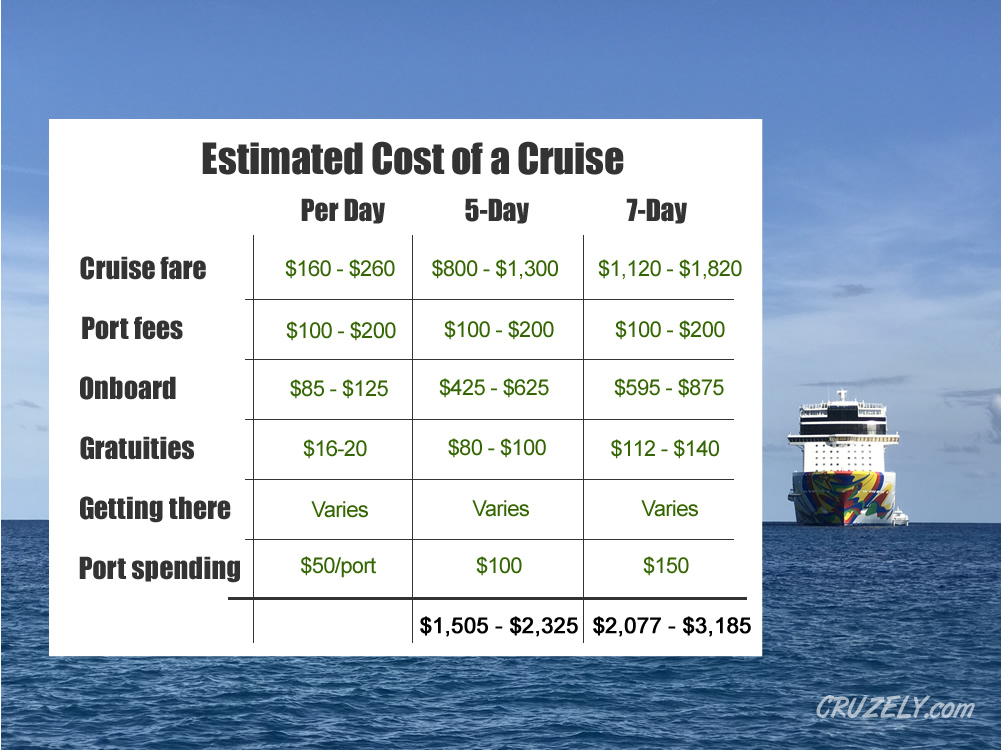
Once you have secured your cabin, several mandatory and semi-mandatory costs will emerge. If these are not factored into your initial financial plan, they can lead to a 20% to 40% “budget creep” during your voyage.
Gratuities and Service Charges
Most cruise lines automatically apply a daily gratuity or service charge to your onboard account. As of current market rates, these typically range from $16 to $20 per person, per day, depending on the cabin category. For a family of four on a seven-night cruise, this adds nearly $500 to the total cost. While these can sometimes be adjusted at the guest services desk, they are considered a standard cost of labor in the industry and should be treated as a fixed expense in your financial model.
Port Fees, Taxes, and Surcharges
The price you see on an aggregator website often excludes government taxes and port fees. These are non-negotiable costs passed directly to the consumer. Depending on the itinerary—specifically in regions like Alaska or the Mediterranean—these fees can range from $150 to over $400 per person. When comparing different itineraries, it is vital to calculate the “out-the-door” price rather than the advertised base fare.
Shore Excursions: The Real Budget Breakers
Shore excursions represent the largest variable cost in a cruise budget. While you can explore ports independently for minimal cost, organized tours range from $50 for a basic city tour to $500+ for bucket-list experiences like helicopter glacier trekking. From a financial planning standpoint, it is prudent to allocate a specific “activity fund” per port to prevent impulsive spending that can derail your vacation savings.

Strategic Financial Planning: Maximizing ROI on Your Voyage
Much like the stock market, cruise pricing is subject to volatility based on supply, demand, and seasonality. Investors in a cruise vacation can maximize their value by employing specific purchasing strategies.
Timing the Market: Wave Season and Last-Minute Deals
“Wave Season,” which typically runs from January through March, is the industry’s version of Black Friday. During this period, cruise lines offer deep discounts, reduced deposits, and value-added perks like free Wi-Fi or beverage packages. Conversely, “last-minute” booking—typically 60 to 90 days before sailing when final payments are due—can yield significant savings if the cruise line has unsold inventory. However, this strategy requires high liquidity and flexibility, as airfare costs often rise as cruise prices fall.
Loyalty Programs and Credit Card Arbitrage
Frequent cruisers can leverage loyalty programs to reduce the cost of future voyages. Perks such as free laundry, complimentary specialty dining, and cabin upgrades provide a tangible return on brand loyalty. Furthermore, utilizing co-branded cruise credit cards or high-value travel rewards cards (like the Chase Sapphire Reserve or Amex Platinum) allows travelers to offset costs through points redemption and statement credits. For the savvy traveler, “churning” travel rewards can effectively reduce the out-of-pocket cost of a cruise to nearly zero for the base fare.
The Math of Add-on Packages
Cruise lines aggressively market drink packages and specialty dining bundles. To determine if these are a sound financial investment, you must conduct a break-even analysis. For instance, if a beverage package costs $70 per day and the average cocktail is $14, you must consume at least five drinks daily to see a return. If your consumption habits are lower, paying a la carte is the more fiscally responsible choice.
Total Cost of Ownership: Pre- and Post-Cruise Expenses
A holistic financial view of a cruise must include the costs incurred before you even step foot on the gangway. These “peripheral costs” are often the most overlooked aspects of travel budgeting.
Transportation and the “Day-Zero” Expense
Unless you live within driving distance of a port, airfare is a major capital requirement. Additionally, it is a standard recommendation to arrive at the port city at least one day prior to embarkation to mitigate the risk of flight delays. This necessitates a hotel stay and meal expenses—essentially a “Day Zero” cost. For a family, this can easily add $400 to $800 to the total trip expenditure.
Travel Insurance: Protecting Your Investment
From a risk management perspective, travel insurance is a non-negotiable expense for high-cost voyages. A comprehensive policy typically costs 4% to 8% of the total trip price. While it appears to be an “extra” cost, it protects your capital against unforeseen medical emergencies, trip cancellations, or luggage loss. In the context of international travel, where health insurance may not provide coverage, the ROI of a travel insurance policy is measured in the avoidance of catastrophic financial loss.
Onboard Frictionless Spending
Modern cruise ships utilize “frictionless payment” systems, where your room key or a wearable device is linked to your credit card. Behavioral economics shows that this leads to higher spending because the psychological “pain of paying” is delayed until the end of the cruise. To maintain financial discipline, it is essential to monitor your account via the cruise line’s mobile app daily, ensuring that your incidental spending remains within the predetermined budget.
Final Economic Summary: What to Expect
In summary, while you might find an advertised rate of $499 for a week-long cruise, the realistic financial commitment for a mid-range experience is closer to $1,500 to $2,000 per person when all factors—taxes, gratuities, travel, and modest excursions—are accounted for. By treating a cruise as a multi-layered financial project rather than a simple ticket purchase, you can ensure that your voyage provides maximum personal satisfaction without compromising your long-term financial health. The key to a successful cruise investment lies in transparency, disciplined budgeting, and the strategic timing of your purchase.
aViewFromTheCave is a participant in the Amazon Services LLC Associates Program, an affiliate advertising program designed to provide a means for sites to earn advertising fees by advertising and linking to Amazon.com. Amazon, the Amazon logo, AmazonSupply, and the AmazonSupply logo are trademarks of Amazon.com, Inc. or its affiliates. As an Amazon Associate we earn affiliate commissions from qualifying purchases.