
In today’s digital economy, subscription services have become an integral part of many households’ financial outlays. Among the most ubiquitous is Amazon Prime, a membership that promises a trove of benefits from expedited shipping to exclusive entertainment. But beyond the advertised perks, a fundamental question often arises for the financially astute consumer: “How much does it truly cost, and is it a worthwhile investment?” This article delves deep into the monetary aspects of Amazon Prime, dissecting its pricing structure, evaluating its financial value, and guiding you toward making an informed budgetary decision.

Understanding the direct cost of Amazon Prime is the first step in assessing its financial impact. While the advertised price is straightforward, various tiers and regional differences mean that the actual expenditure can vary. Furthermore, the perceived cost often overshadows the true cost when considering the less obvious benefits and potential savings (or lack thereof) that come with membership. For many, Prime isn’t just a service; it’s a significant recurring line item in their personal finance ledger, demanding careful scrutiny.
The Core Costs: Understanding Amazon Prime’s Pricing Structure
Amazon Prime’s pricing structure, while seemingly simple, offers several options designed to cater to different consumer segments. Dissecting these tiers is crucial for anyone budgeting for digital subscriptions. The primary distinction lies between standard monthly and annual memberships, with significant discounts available for those who opt for the longer commitment. Beyond these, Amazon also extends a helping hand to specific demographics, recognizing that not everyone has the same financial capacity.
Standard Membership: Monthly vs. Annual
For the average consumer in the United States, the standard Amazon Prime membership presents two core payment models. The monthly option provides flexibility, allowing subscribers to cancel at any time without a long-term commitment. This can be particularly appealing for individuals who only require Prime benefits sporadically, perhaps during holiday shopping seasons or for specific events like Prime Day. Currently, the monthly fee stands at approximately $14.99. While this offers freedom, it comes at a premium.
Opting for the annual membership typically represents a significant financial saving over the course of a year. At roughly $139 per year, this plan effectively reduces the monthly cost to just under $11.58. For regular Amazon shoppers and consistent users of Prime’s digital services, the annual subscription is almost always the more financially prudent choice. The difference of over $40 per year compared to the monthly plan can accumulate substantially over time, making a compelling case for commitment if usage is consistent. It’s a classic example of bulk purchasing discounts applied to a service, where Amazon rewards long-term loyalty with a lower effective price point.
Discounted Access: For Students and Qualifying Individuals (EBT/Medicaid)
Amazon demonstrates a commitment to making Prime accessible to broader demographics through special, significantly reduced pricing tiers. These programs are a testament to the company’s understanding of different financial realities and their desire to expand their subscriber base.
Students enrolled in accredited colleges or universities can often qualify for Prime Student, a membership that typically comes with an extended free trial period (often six months) followed by a substantial discount on the standard annual fee, usually around $69 per year. This half-price offer makes Prime much more affordable for a demographic often operating on tight budgets, providing access to shipping benefits for textbooks and essentials, alongside entertainment for downtime. Eligibility usually requires a valid .edu email address or other proof of enrollment.
Similarly, individuals receiving qualifying government assistance, such as EBT or Medicaid benefits, can often subscribe to Prime at a reduced monthly rate, typically around $6.99. This program aims to bridge the digital divide and provide essential services and access to online commerce for those with lower incomes. The availability and exact requirements for these discounted memberships can vary, so prospective members should always check Amazon’s official pages for the most current information and eligibility criteria. These programs are not just about altruism; they are a strategic move to grow market share by lowering the financial barrier to entry, ensuring that a wider segment of the population can integrate Amazon into their spending habits.
Regional Variations and Add-ons
It’s also important to acknowledge that the pricing mentioned above primarily reflects the Amazon Prime costs in the United States. Prices can vary significantly in other countries where Amazon operates, reflecting local economic conditions, market strategies, and the scope of services offered. For instance, Prime in Canada, the UK, Germany, or India will have different price points and potentially different benefit bundles. When evaluating the cost, consumers must always refer to the specific Amazon domain for their region.
Furthermore, while Prime itself is a comprehensive package, Amazon offers various digital add-on subscriptions that are not included in the base Prime membership. These include premium channels on Prime Video (like Max, Paramount+, etc.), Amazon Music Unlimited (an expanded music library beyond what Prime Music offers), or Kindle Unlimited. Each of these services incurs its own additional monthly cost, ranging from a few dollars to upwards of $15 or more. While these are distinct from Prime, they can often be easily bundled or subscribed to within the Amazon ecosystem, potentially leading to an aggregate monthly digital spend that far exceeds the base Prime fee. A fiscally responsible consumer will carefully consider each of these additional subscriptions and their necessity before committing.
Beyond the Price Tag: Evaluating the Financial Value of Amazon Prime
The real financial question surrounding Amazon Prime isn’t just “how much does it cost?” but “what financial value do I derive from it?” Prime’s extensive suite of benefits can, for the right user, significantly offset its annual fee, turning an expense into a net saving. However, for others, many of these perks might go unused, rendering the subscription less cost-effective. A truly insightful financial analysis requires looking beyond the sticker price and examining the tangible and intangible economic benefits.
The “Free” Two-Day Shipping Factor
For many, the cornerstone of Amazon Prime’s value proposition is its expedited, “free” shipping. This benefit, which often includes two-day, one-day, and even same-day delivery on eligible items, can translate into substantial savings on shipping fees for frequent online shoppers. If one were to pay for standard shipping on numerous individual orders throughout the year, the cumulative cost could easily surpass the Prime membership fee. Consider a scenario where an individual places 20 orders annually that would typically incur a $7 shipping fee each; that’s $140 in potential shipping costs, already exceeding the annual Prime fee.
However, the financial benefit is only realized if the user would have paid for shipping otherwise. If you’re someone who consolidates orders to meet free shipping thresholds (e.g., $25 for non-Prime members), or if you rarely order items that don’t qualify for free standard shipping anyway, then the financial value of “free” Prime shipping diminishes. The convenience factor is undeniable, saving time and often preventing impulse buys due to waiting periods, but from a purely financial standpoint, it requires careful self-assessment of one’s shopping habits.
Entertainment Bundles: Prime Video, Music, and Gaming
Prime membership bundles an impressive array of digital entertainment services that, if subscribed to individually, would command a much higher collective price.
- Prime Video: Included with membership, Prime Video offers access to a vast library of movies, TV shows, and Amazon Originals. If you would otherwise subscribe to a comparable streaming service like Netflix or Hulu (which can range from $7 to $20+ per month), Prime Video essentially provides this value at no additional cost within your Prime subscription. For many, this single benefit can justify a significant portion of the annual fee.
- Amazon Music: Prime Music offers an ad-free catalog of over 100 million songs, albeit with some limitations compared to the full Amazon Music Unlimited service. For casual listeners who don’t need the absolute latest releases or offline downloads, this can effectively replace a basic music streaming subscription. If you would normally pay for a Spotify Free or similar ad-supported service, Prime Music offers an upgrade without extra cost.
- Prime Gaming: Formerly Twitch Prime, this benefit provides free monthly PC games, in-game content, and a free channel subscription on Twitch. For gamers, particularly those who frequent Twitch or enjoy sampling new titles, these perks can represent a considerable saving over the year, as individual games and subscriptions can add up quickly.
The financial leverage here lies in consolidation. If you already pay for one or more separate streaming, music, or gaming subscriptions that Prime’s offerings could replace, the savings are clear. If you don’t use these services, or prefer other platforms, then this aspect of Prime’s value becomes negligible for your personal finance calculation.
Exclusive Deals and Grocery Savings (Whole Foods Market)
Beyond shipping and entertainment, Amazon Prime unlocks various discount opportunities that can contribute to overall financial savings. Prime Day, Amazon’s annual sales event, offers exclusive deals and promotions solely for Prime members. For savvy shoppers, planning larger purchases around Prime Day can lead to significant price reductions on electronics, home goods, and more. While this requires strategic timing, the potential savings on big-ticket items can easily outweigh the annual membership cost.
Furthermore, Amazon’s acquisition of Whole Foods Market has extended Prime benefits into the grocery aisle. Prime members often receive exclusive discounts on select items, 5% back on purchases with the Amazon Prime Rewards Visa Card, and free two-hour grocery delivery (in eligible areas) on orders over a certain threshold. For households that frequently shop at Whole Foods, these recurring savings and convenience features can add up to a substantial amount over the year, making the Prime membership a direct contributor to reducing monthly grocery bills. The opportunity to get specific discounts on healthy, premium groceries can be a significant draw for a particular demographic, transforming Prime from an online shopping convenience into a comprehensive lifestyle cost-saver.
Digital Perks: Prime Reading and Photo Storage
Lesser-known but still valuable digital perks include Prime Reading and Amazon Photos. Prime Reading provides access to a rotating selection of thousands of eBooks, magazines, comics, and audiobooks from the Kindle store. For avid readers, this can reduce spending on individual book purchases or supplement a library card. While not as extensive as Kindle Unlimited, it offers a cost-free way to discover new content.
Amazon Photos offers unlimited full-resolution photo storage and 5 GB of video storage for Prime members. In an era where cloud storage often comes with monthly fees (e.g., Google Drive, iCloud), this can represent a tangible saving, especially for individuals with large photo libraries. The peace of mind that comes with secure, unlimited backup for precious memories, without an additional monthly charge, contributes a significant, albeit intangible, financial value. For those who already pay for cloud storage, this benefit could potentially eliminate that separate expense, streamlining their digital budget.
Maximizing Your Prime Investment: Strategies for Financial Savvy
Simply paying for Amazon Prime doesn’t automatically guarantee value. To truly maximize your investment and ensure it’s a financially astute decision, active strategies are required. This isn’t just about using the service; it’s about optimizing your usage to extract the most monetary benefit from your subscription.
Leveraging the Free Trial Period
The best way to gauge the financial utility of Amazon Prime for your specific needs is to take full advantage of its free trial period, typically 30 days. During this month, commit to consciously using as many Prime benefits as possible. Order items you need, stream movies, listen to music, and explore the deals. Track your estimated savings on shipping, entertainment subscriptions you might have otherwise paid for, and any exclusive discounts. At the end of the trial, you’ll have a much clearer picture of whether the cumulative value you derived justifies the ongoing cost. Crucially, set a calendar reminder to review your usage and decide whether to cancel or continue before you are automatically charged for the first month or year. This proactive approach prevents unintended expenses.
Sharing Benefits with Household Members
Amazon allows Prime members to share certain benefits with another adult in their household through Amazon Household. This feature, available for free, allows two adults and up to four teens and four children in the same household to share Prime shipping, Prime Video, Prime Reading, and Amazon Photos benefits. From a financial perspective, this effectively halves the individual cost for two adults, potentially turning a single membership into a shared resource that provides value for multiple individuals without doubling the expense. It’s a key strategy for families or cohabiting individuals to maximize the return on their Prime investment. Before paying for two separate memberships, always explore this sharing option.
Strategic Shopping to Offset Costs
Beyond Prime Day, Prime membership can be leveraged for strategic shopping year-round. Prime members often get early access to Lightning Deals, and while these can sometimes tempt unnecessary purchases, a disciplined shopper can use them to secure discounts on items they were already planning to buy. Furthermore, the convenience of fast, free shipping means you can avoid last-minute trips to brick-and-mortar stores where prices might be higher or selection limited. By consciously checking Amazon prices and leveraging Prime benefits for necessary purchases, members can reduce their overall spending on goods throughout the year, effectively offsetting a portion of the membership fee. It’s about integrating Prime into a thoughtful budgeting and purchasing strategy, rather than letting it drive impulse buys.
Reviewing Your Usage Annually
A common pitfall with subscriptions is the “set it and forget it” mentality. Financial savvy dictates an annual review of all recurring expenses, and Amazon Prime should be no exception. As your lifestyle, shopping habits, and entertainment preferences evolve, so too might the value you derive from Prime. Set a reminder for yourself around your annual renewal date (or quarterly if you’re on the monthly plan) to sit down and assess:
- How many times did you use Prime shipping? What would those shipping costs have been without Prime?
- How often did you watch Prime Video, listen to Prime Music, or use Prime Gaming? Could these have replaced other paid subscriptions?
- Did you utilize any Whole Foods discounts or Prime Day deals that saved you significant money?
- Are there any benefits you simply aren’t using anymore?
This annual audit allows you to make an informed decision about whether to continue your subscription, downgrade to a different tier (if applicable), or cancel entirely. It ensures that your money is continually being spent on services that genuinely add value to your financial life.
Is Amazon Prime a Worthwhile Financial Commitment for You?
The ultimate question of Amazon Prime’s worth is deeply personal and rooted in individual spending habits, lifestyle, and financial priorities. There’s no one-size-fits-all answer, but a structured approach to evaluation can help you determine if it’s a sound financial commitment for your specific circumstances. This involves calculating your personal return on investment (ROI) and understanding the opportunity cost of every subscription dollar.
Calculating Your Personal ROI (Return on Investment)
To truly assess Prime’s financial value, you need to calculate your personal ROI. This involves estimating the monetary value of the benefits you actually use over a year and comparing it to the annual membership cost.
- Shipping Savings: Tally up how many orders you placed that would have incurred shipping charges without Prime. Multiply by an average shipping cost (e.g., $7 per order).
- Entertainment Savings: If Prime Video, Music, or Gaming replaced other paid subscriptions (e.g., a $10/month streaming service), add those annual savings.
- Discount Savings: Estimate savings from Prime Day, Whole Foods discounts, or exclusive deals.
- Other Perks: Assign a conservative value to things like unlimited photo storage (e.g., $50/year if you’d otherwise pay for cloud storage).
Sum these estimated savings. If this total significantly exceeds your annual Prime membership fee ($139 for standard), then Prime offers a positive financial ROI for you. If the savings are minimal or less than the fee, it might be an expense that isn’t pulling its weight in your budget.
The Opportunity Cost of Subscription Services
Every dollar spent on Amazon Prime (or any subscription) is a dollar that cannot be spent or saved elsewhere. This is the concept of opportunity cost. Could that $139 annual fee be better utilized? For example, it could contribute to an emergency fund, be invested, or pay down debt. For individuals on a tight budget, choosing between Prime and another essential service, or simply saving that money, becomes a critical financial decision.
Consider what you are giving up by committing to Prime. If you only use Prime for occasional purchases, and rarely leverage the entertainment or other benefits, the opportunity cost might be too high. It’s crucial to weigh the convenience and perceived value against what else that money could achieve in your broader financial plan.
Alternatives to Full Membership
If a full Prime membership doesn’t align with your financial analysis, there are alternatives to consider that still offer some Amazon benefits without the full cost:
- Free Standard Shipping: Non-Prime members can often get free standard shipping by meeting a minimum order threshold (typically $25 or $35). This requires consolidation of purchases but can be a cost-effective strategy for infrequent shoppers.
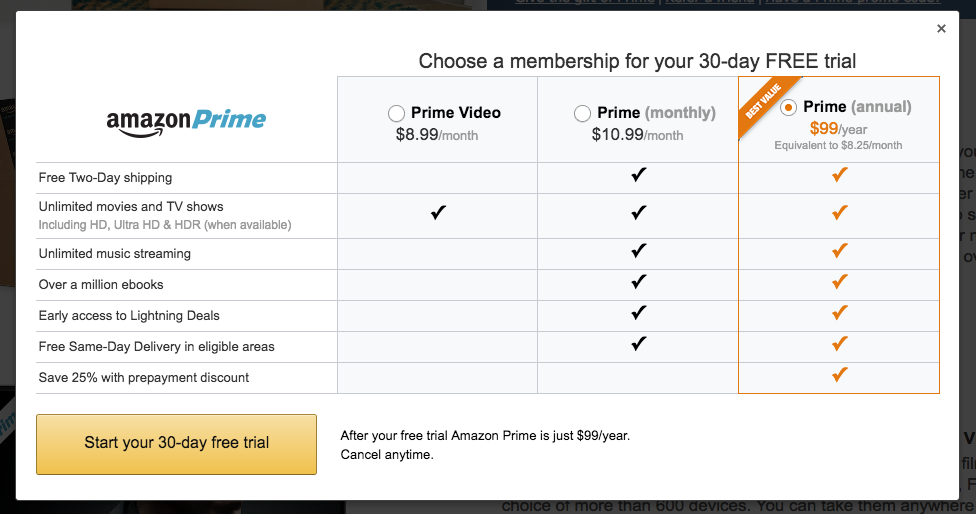
- Prime Video Standalone: In some regions, Amazon offers a standalone Prime Video subscription for a lower monthly fee (e.g., $8.99/month in the US). If streaming is your primary interest, this could be a more economical choice.
- Amazon Music Free/Unlimited: Amazon Music offers a free, ad-supported tier, and Amazon Music Unlimited is a separate, full-featured music streaming service that can be subscribed to independently.
- Borrowing/Sharing: As mentioned, sharing Prime benefits within a household can be an excellent way to reduce individual costs. Additionally, consider borrowing from friends or family members for one-off needs, if appropriate.
These alternatives ensure that you can still engage with Amazon’s ecosystem without committing to the full financial outlay of a Prime membership, tailoring your spending to your precise needs.
Budgeting for Digital Subscriptions
Finally, Amazon Prime should be viewed as part of your overall budget for digital subscriptions. As the number of streaming services, apps, and memberships proliferates, it’s easy for these seemingly small monthly fees to add up to a significant sum. Implement a dedicated line item in your personal budget for “Digital Subscriptions.” Regularly review this total to ensure it aligns with your financial goals and disposable income.
Consider creating a spreadsheet or using a budgeting app to track all your subscriptions. Ask yourself: “Do I use this service enough to justify its cost?” and “Could I get similar value for less money?” By conscientiously managing your digital subscription budget, you ensure that services like Amazon Prime remain an asset rather than an unexamined drain on your finances.
The Evolving Cost Landscape of Amazon Prime
The cost of Amazon Prime is not static; it has evolved over time and will likely continue to do so. Understanding this dynamic financial landscape is essential for making long-term budgetary decisions regarding your subscription.
Historical Price Increases and Future Projections
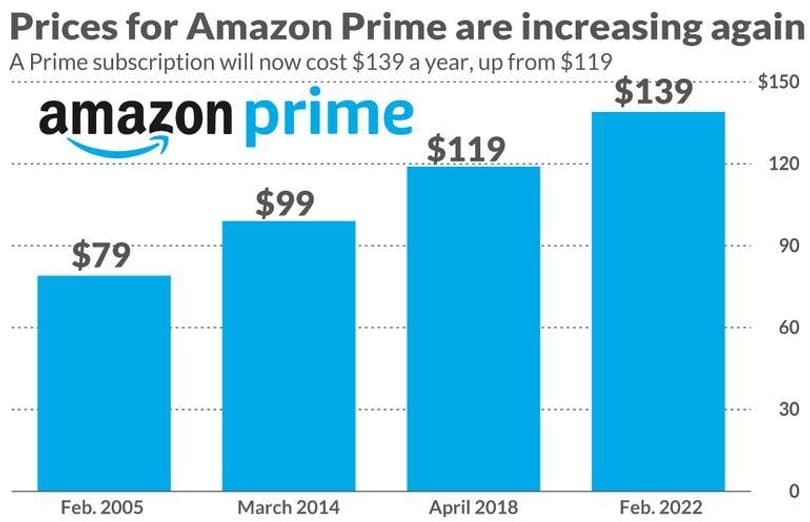
Since its inception, Amazon Prime has seen several price increases. Initially launched at $79 per year in 2005, it rose to $99 in 2014, and then to $119 in 2018, before its most recent increase to $139 in 2022. Each increase was typically justified by Amazon with the expansion of benefits and rising operational costs, particularly related to shipping and content acquisition for Prime Video.
These historical trends suggest that future price adjustments are probable. As Amazon continues to invest in its logistics infrastructure, original content production, and new services, the pressure to raise membership fees will persist. Financially savvy consumers should factor in the likelihood of future increases when assessing the long-term viability of their Prime subscription, avoiding the assumption that the current price will remain indefinitely. Budgeting with a slight buffer for such potential increases can prevent future financial surprises.
The Impact of Inflation and Service Expansion
Inflation naturally erodes the purchasing power of money, meaning that the cost of providing the vast array of Prime services increases for Amazon over time. From fuel for delivery vehicles to salaries for employees and licensing fees for entertainment content, every operational cost is subject to inflationary pressures. To maintain profitability and continue expanding its offerings, Amazon periodically adjusts its pricing to reflect these realities.
Moreover, the continuous expansion of Prime’s benefits—from new streaming content to enhanced grocery delivery options and exclusive deals—comes at a significant cost to Amazon. While these additions contribute to the value proposition for members, they also provide a justification for price hikes. For consumers, the trade-off becomes clearer: are the expanding benefits worth the increasing financial outlay? This requires a re-evaluation of personal ROI with each significant service update or price adjustment.
Making Informed Decisions Amidst Change
Given the dynamic nature of Prime’s pricing and benefits, consumers must remain proactive in their financial management. Don’t simply renew your subscription out of habit. With each renewal cycle, or whenever Amazon announces a price change or significant new feature, take the time to revisit your personal ROI calculation.
Ask yourself: “Has my usage changed?” “Are the new benefits relevant to me?” “Do the increased costs still justify the value I receive?” By consistently re-evaluating your Amazon Prime membership against your evolving financial situation and the service’s changing landscape, you ensure that your spending remains deliberate, effective, and aligned with your broader financial goals. In the world of subscriptions, financial prudence is an ongoing exercise, not a one-time decision.
aViewFromTheCave is a participant in the Amazon Services LLC Associates Program, an affiliate advertising program designed to provide a means for sites to earn advertising fees by advertising and linking to Amazon.com. Amazon, the Amazon logo, AmazonSupply, and the AmazonSupply logo are trademarks of Amazon.com, Inc. or its affiliates. As an Amazon Associate we earn affiliate commissions from qualifying purchases.