
Interest is the fundamental heartbeat of the global financial system. It is the price paid for the use of someone else’s money over a specific period. For the borrower, interest is a cost—the price of liquidity and the ability to purchase goods or services today that would otherwise require years of saving. For the lender or saver, interest is a reward—the compensation for delaying consumption and assuming the risk that the borrower might not repay the debt. Understanding “how much” interest is requires looking beyond a simple percentage; it involves analyzing economic cycles, risk profiles, and the mathematical power of compounding.
The Mechanics of Interest: Why We Pay and How We Earn
At its core, the amount of interest charged or earned is dictated by the principle of the time value of money. This concept posits that a dollar today is worth more than a dollar tomorrow because of its potential earning capacity. When you ask how much interest is, you are essentially asking what the current market value of time and risk happens to be.
The Time Value of Money
Money is a productive asset. If a business borrows funds to purchase a new piece of machinery, that machinery generates profit. Therefore, the lender who provided the funds for that machinery deserves a share of that productivity. This is why interest exists. The “cost” of interest is the mechanism that ensures capital flows to its most productive uses. If interest rates are too low, capital is wasted on inefficient projects; if they are too high, innovation and consumption may grind to a halt.
Simple vs. Compound Interest: The Mathematical Difference
When calculating how much interest will accumulate, the method of calculation is as important as the rate itself. Simple interest is calculated only on the principal amount—the original sum of money borrowed or invested.
However, the modern financial world operates largely on compound interest. Compounding occurs when interest is added to the principal, and then future interest is calculated on that new, larger total. This “interest on interest” creates an exponential growth curve. Over short periods, the difference between simple and compound interest may seem negligible. Over decades, however, compounding is the force that turns modest savings into substantial wealth—or turns a small credit card balance into an insurmountable mountain of debt.
What Determines the Price of Interest?
The “price” of interest is not arbitrary. It is influenced by a complex interplay of central bank policies, inflationary expectations, and the individual risk profile of the borrower.
The Role of Central Banks and the Federal Funds Rate
In most modern economies, the baseline for all interest rates is set by the central bank—such as the Federal Reserve in the United States. By adjusting the “federal funds rate” (the rate at which banks lend to each other overnight), the central bank influences the entire “yield curve.”
When the economy is growing too quickly and inflation rises, central banks typically raise rates to cool down spending. When the economy is in a recession, they lower rates to make borrowing cheaper, encouraging businesses to expand and consumers to spend. Therefore, how much you pay for a car loan or earn on a certificate of deposit (CD) is inextricably linked to the macroeconomic objectives of the state.
Inflation and the Real Interest Rate
To understand the true cost of interest, one must distinguish between the “nominal” rate and the “real” rate. The nominal rate is the number printed on your bank statement or loan agreement. The real rate is the nominal rate minus the rate of inflation.
If you are earning 5% interest on a savings account but inflation is running at 6%, your “real” interest rate is -1%. In this scenario, despite the numerical increase in your balance, your purchasing power is actually declining. This is why, in high-inflation environments, nominal interest rates must rise significantly just to keep the cost of capital at a functional level.
Creditworthiness and Risk Premiums
Beyond macroeconomics, the specific interest rate offered to an individual or business depends on risk. This is expressed through the “risk premium.” Lenders evaluate the likelihood of default using credit scores, debt-to-income ratios, and collateral.
A “prime” borrower with a high credit score represents low risk, so they are charged a rate close to the market baseline. A “subprime” borrower represents a higher risk of non-payment, so the lender charges a much higher interest rate to compensate for the potential loss. This explains why two people might walk into the same dealership to buy the same car but end up with vastly different monthly payments.
Interest in Action: Borrowing Costs Across Different Financial Products
The question of “how much” interest is varies wildly depending on the type of financial instrument involved. Interest is structured differently for a thirty-year mortgage than it is for a revolving credit card balance.

Mortgages: The Long-Term Commitment
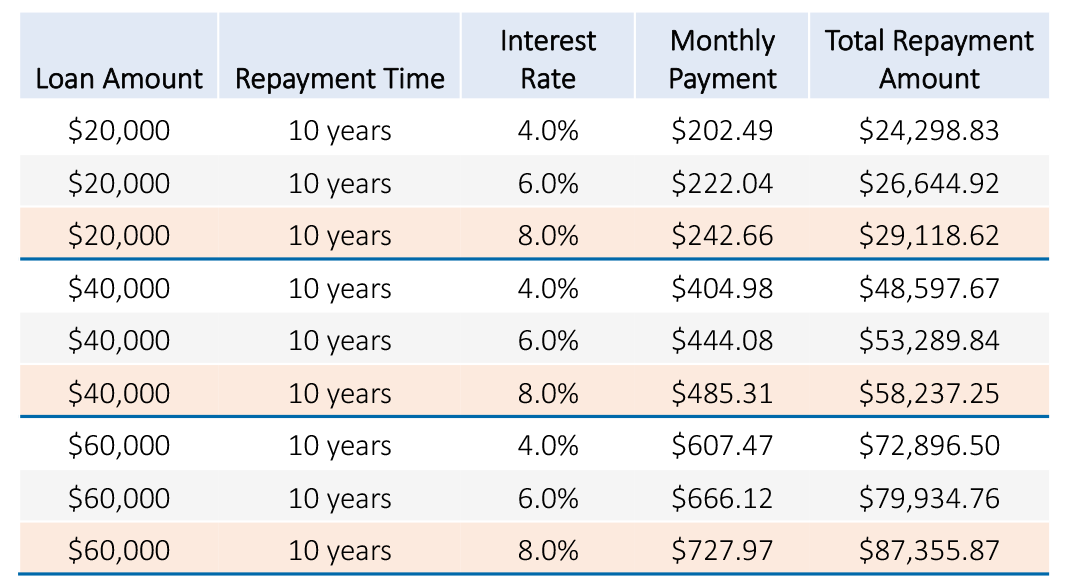
For most people, a mortgage is the most significant interest expense of their lives. Because mortgages are collateralized by real estate, they generally carry lower interest rates than unsecured debt. However, because the loan terms are so long—often 15 to 30 years—the total interest paid can eventually equal or even exceed the original principal of the loan.
For example, on a $400,000 mortgage at a 7% interest rate over 30 years, the borrower will pay approximately $558,000 in total interest. This underscores the importance of the interest rate in the housing market; even a 1% shift in rates can result in tens of thousands of dollars in added or saved costs over the life of the loan.
Credit Cards: The High Cost of Unsecured Debt
Credit cards represent one of the most expensive forms of interest. Because this debt is unsecured (meaning there is no house or car for the bank to seize if you don’t pay), and because it is “revolving,” the rates are significantly higher.
Credit card interest is often calculated using a Daily Periodic Rate (DPR). If a card has an Annual Percentage Rate (APR) of 24%, the daily interest is roughly 0.065%. While this sounds small, the daily compounding means that if a balance is carried month-to-month, the debt grows with startling speed. This is why financial advisors prioritize paying off high-interest credit card debt as the first step in any wealth-building plan.
Personal and Auto Loans
Personal loans and auto loans sit in the middle of the spectrum. Auto loans are secured by the vehicle, keeping rates relatively moderate, though they have risen in recent years alongside central bank hikes. Personal loans are often used for debt consolidation; the goal here is to secure an interest rate lower than one’s current credit cards to reduce the total interest paid and accelerate the path to becoming debt-free.
Interest as an Asset: Maximizing Returns in a High-Rate Environment
While borrowers view interest as a burden, savers and investors view it as an opportunity. When interest rates rise, the “yield” on various financial products increases, allowing for safer wealth accumulation.
High-Yield Savings Accounts and CDs
For years, “traditional” savings accounts offered interest rates near 0.01%. However, in a higher-rate environment, High-Yield Savings Accounts (HYSAs) and Certificates of Deposit (CDs) become viable tools for preserving capital.
A CD requires the saver to lock their money away for a set period (e.g., 12 months) in exchange for a guaranteed interest rate. This is an excellent tool for those who have a specific short-term goal, such as a down payment on a house, and cannot afford the volatility of the stock market.
Fixed Income and Bonds
The bond market is essentially a giant “interest machine.” When you buy a bond, you are lending money to a government or a corporation for a set period in exchange for regular interest payments (known as coupons).
When market interest rates rise, the price of existing bonds typically falls. This is because new bonds are being issued at higher rates, making the older, lower-rate bonds less attractive. However, for an investor looking for steady income, a higher-interest environment allows them to lock in yields that can provide a reliable cash flow for years or even decades.
Strategic Financial Management: Navigating Fluctuating Rates
Understanding how much interest is—and how much it will be—is essential for strategic financial planning. Whether you are managing personal debt or a corporate balance sheet, interest rate management is a core competency.
Debt Management Strategies
In a high-interest environment, the “Avalanche Method” of debt repayment is often the most mathematically sound approach. This involves directing all extra funds toward the debt with the highest interest rate while making minimum payments on others. By neutralizing the most expensive “interest leaks” first, the borrower minimizes the total amount paid to the lender over time.
Conversely, when interest rates drop, “refinancing” becomes a powerful tool. By replacing a high-interest loan with a new loan at a lower rate, individuals can significantly reduce their monthly obligations and total interest expense.

The Rule of 72
For those earning interest, the “Rule of 72” is a quick way to estimate the power of their interest rate. By dividing 72 by the annual interest rate, you can determine roughly how many years it will take for your money to double. At a 6% interest rate, your investment doubles in 12 years. At a 10% rate, it doubles in 7.2 years. This simple calculation highlights why even a seemingly small increase in interest earned can have a massive impact on long-term financial security.
Interest is more than just a percentage on a page; it is the price of time and the measurement of risk. Whether you are paying it or earning it, understanding the variables that determine “how much” interest is will allow you to make more informed, strategic decisions with your capital. By respecting the cost of borrowing and harnessing the power of compounding, you can navigate the complexities of the financial world with confidence and precision.
aViewFromTheCave is a participant in the Amazon Services LLC Associates Program, an affiliate advertising program designed to provide a means for sites to earn advertising fees by advertising and linking to Amazon.com. Amazon, the Amazon logo, AmazonSupply, and the AmazonSupply logo are trademarks of Amazon.com, Inc. or its affiliates. As an Amazon Associate we earn affiliate commissions from qualifying purchases.