
Purchasing a vehicle is often the second-largest financial commitment a consumer makes, trailing only the purchase of a home. While the “sticker price” of a car dominates the negotiation process, the actual cost of ownership is heavily dictated by the interest rate attached to the financing. Interest is essentially the price you pay for borrowing money, and in the world of automotive finance, that price can fluctuate wildly based on market conditions, personal financial health, and the specific terms of the loan agreement. Understanding how much interest you will pay—and why—is the cornerstone of making a sound financial decision that preserves your long-term wealth.

The Primary Drivers of Your Auto Loan Interest Rate
Interest rates are not arbitrary figures plucked from thin air by lenders; they are calculated assessments of risk. When a bank or a credit union offers you a loan, they are evaluating the probability that you will pay them back in full and on time. Several variables determine where you fall on the interest rate spectrum.
The Role of Credit Scores
Your credit score is the single most influential factor in determining your interest rate. Lenders typically categorize borrowers into “tiers” based on their FICO or VantageScore.
-
Super Prime (781–850): These borrowers receive the lowest possible rates, often hovering near the national average for new cars.
-
Prime (661–780): These individuals still qualify for competitive rates and have access to most manufacturer incentives.
-
Nonprime (601–660): Rates begin to climb significantly here, as lenders perceive a moderate level of risk.
-
Subprime (501–600) and Deep Subprime (300–500): Borrowers in these tiers may face interest rates in the double digits, sometimes exceeding 15% to 20%, reflecting the high risk of default.
New vs. Used Vehicles
Generally, interest rates on new cars are lower than those on used cars. This seems counterintuitive since a new car is more expensive, but from a lender’s perspective, a new vehicle is a more stable asset. It has a clear valuation, a manufacturer’s warranty, and a higher resale value if the lender needs to repossess and sell the car. Used cars carry the risk of mechanical failure and faster depreciation, leading lenders to charge a premium to offset that uncertainty.
The Loan Term
The length of your loan—the “term”—directly impacts your rate. While a 72-month or 84-month loan results in lower monthly payments, it almost always carries a higher interest rate than a 36-month or 48-month loan. Lenders charge more for longer terms because their money is at risk for a longer period, and the future value of the vehicle is harder to predict. Furthermore, longer terms increase the likelihood that the borrower will eventually owe more than the car is worth, a state known as being “upside down” or having negative equity.
Current Market Dynamics and Average Rates
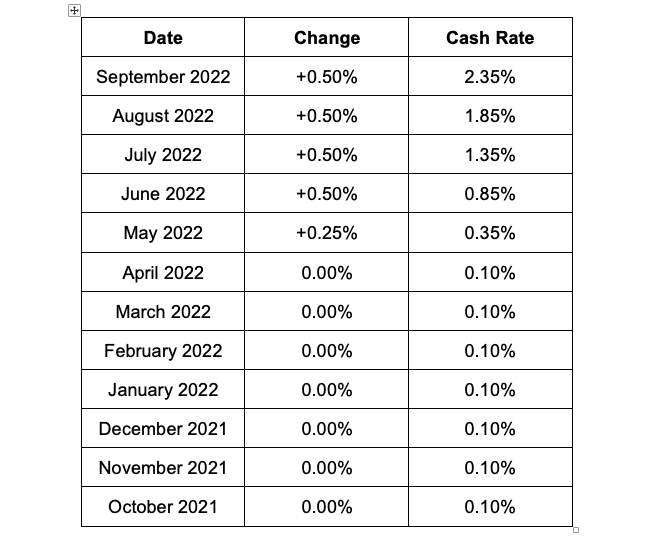
The interest you pay is also a reflection of the broader economic environment. The Federal Reserve plays a massive role in this ecosystem; when the Fed raises the federal funds rate to combat inflation, the cost of borrowing for banks increases, which is then passed down to consumers in the form of higher auto loan rates.
National Averages by Credit Tier
While market conditions fluctuate, looking at historical and current averages provides a baseline for what to expect. For a borrower with a Prime credit score, a new car loan might range between 5% and 7%, while a used car loan for the same borrower could sit between 7% and 9%. For those in the Subprime category, it is not uncommon to see new car rates at 12% and used car rates approaching 18% to 21%. These percentages represent thousands of dollars in difference over the life of a loan.
Dealer Financing vs. Direct Lending
Where you get your loan matters just as much as your credit score.
-
Captive Lenders: These are the financing arms of the manufacturers (e.g., Ford Credit, Toyota Financial Services). They often offer “incentivized” rates, such as 0% or 1.9% APR, to move inventory. However, these deals are usually reserved for Super Prime borrowers.
-
Banks and Credit Unions: Direct lending through a credit union often yields the lowest rates for used cars and for those who don’t qualify for manufacturer specials. Because credit unions are member-owned non-profits, they frequently offer rates 1% to 2% lower than commercial banks.
-
Buy Here Pay Here Dealerships: These should generally be a last resort. They cater to those with very poor credit and often charge the maximum interest rate allowed by state law, sometimes exceeding 25%.
Calculating the True Cost: Interest and Amortization
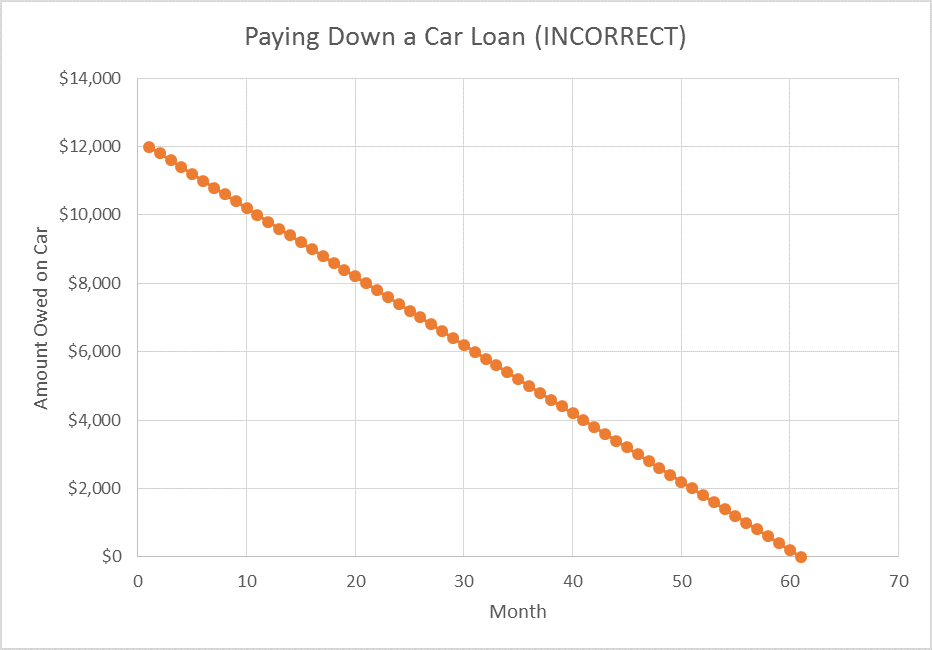
To truly understand how much interest is on a car loan, you must look past the monthly payment. Auto loans typically use “simple interest,” meaning the interest is calculated based on the principal balance remaining on the day the payment is due.
The Impact of APR
The Annual Percentage Rate (APR) is a more accurate measure of cost than the base interest rate alone. The APR includes the interest rate plus any prepaid finance charges or origination fees. If a lender offers a 5% interest rate but charges a $500 loan fee, your APR will be higher than 5%. Always compare loans based on the APR to ensure an apples-to-apples comparison.
The Math of Amortization
Most auto loans are amortized, meaning your monthly payment is fixed, but the ratio of that payment going toward interest versus principal changes over time. In the early months of the loan, a larger portion of your payment goes toward interest because the principal balance is at its peak. As you pay down the principal, the interest portion of the monthly payment decreases.
For example, on a $30,000 loan at 7% interest for 60 months:
-
Total Interest Paid: Approximately $5,645.
-
Monthly Payment: $594.
In the first month, about $175 goes toward interest. By the final year, the interest portion of each payment drops to under $50. Understanding this curve highlights the benefit of making extra principal payments early in the loan term to reduce the total interest accrued.
Strategies to Minimize Interest Expenses
Given that interest can add significant costs to a vehicle purchase, savvy consumers employ several strategies to drive that number down.
Improving Your Credit Profile Before Buying
If you are not in an emergency situation, taking six months to a year to clean up your credit can save you thousands. Paying down high-balance credit cards to lower your credit utilization ratio and ensuring all payments are reported as on-time can bump your score into a higher tier, potentially cutting your interest rate in half.
The Power of the Down Payment
A substantial down payment reduces the “Loan-to-Value” (LTV) ratio. Lenders see a lower LTV as a sign of lower risk. If you put 20% down, you are borrowing less money, which means you pay interest on a smaller principal balance. Furthermore, it protects you from negative equity, which provides more leverage if you need to sell or refinance the car later.
Shopping Around for Pre-Approval
One of the most common mistakes is “one-stop shopping” at the dealership. Dealerships often act as intermediaries, sending your application to multiple lenders and adding a “markup” to the rate the lender returns. By obtaining a pre-approval from your personal bank or a local credit union before stepping onto the lot, you establish a ceiling for your interest rate. If the dealer wants your financing business, they must beat your pre-approved rate.
The Long-Term Financial Implications of High-Interest Loans
High-interest car loans are more than just a monthly inconvenience; they are a significant drain on personal net worth. Money spent on interest is money that cannot be funneled into appreciating assets like a 401(k), an IRA, or a high-yield savings account.
The Risk of Negative Equity
When an interest rate is high and the loan term is long, the vehicle often depreciates faster than the principal is paid down. This creates a “gap” where you owe more than the car is worth. If the car is totaled in an accident or if you need to sell it unexpectedly, you will have to pay the lender the difference out of pocket. This financial trap is one of the leading causes of long-term cycles of debt in the automotive market.
Opportunity Cost
Consider the difference between a $35,000 car financed at 4% versus 12% over 72 months. The 4% loan costs roughly $4,400 in total interest. The 12% loan costs over $14,000 in interest. That $10,000 difference, if invested in a diversified index fund with an 8% annual return over those same six years, could grow to nearly $16,000. The true cost of a high-interest car loan is not just the interest itself, but the wealth-building potential that is sacrificed to service the debt.
In conclusion, “how much” interest you pay on a car loan is a dynamic figure controlled by your creditworthiness, the type of vehicle you choose, and your ability to navigate the lending market. By focusing on the APR, shortening the loan term whenever possible, and leveraging pre-approvals, you can ensure that your vehicle remains a tool for mobility rather than a burden on your financial future. Interest is inevitable for most, but its magnitude is a variable you can—and should—control.
aViewFromTheCave is a participant in the Amazon Services LLC Associates Program, an affiliate advertising program designed to provide a means for sites to earn advertising fees by advertising and linking to Amazon.com. Amazon, the Amazon logo, AmazonSupply, and the AmazonSupply logo are trademarks of Amazon.com, Inc. or its affiliates. As an Amazon Associate we earn affiliate commissions from qualifying purchases.