
Navigating tax season often feels like traversing a financial minefield. For millions of Americans, H&R Block is the go-to destination for mitigating the stress of the Internal Revenue Service (IRS). However, one of the most common questions taxpayers ask before booking an appointment or clicking “Start for Free” is: How much is this actually going to cost me?
The answer is rarely a single flat fee. H&R Block utilizes a tiered pricing structure that scales based on the complexity of your financial life. Whether you are a student with a simple W-2, a homeowner with a mortgage, or a freelancer with a dozen 1099s, your final bill will reflect the labor and expertise required to file your return. In this guide, we break down the costs of H&R Block’s digital software, in-person services, and the hidden fees that can catch taxpayers off guard.
Understanding H&R Block’s Pricing Architecture
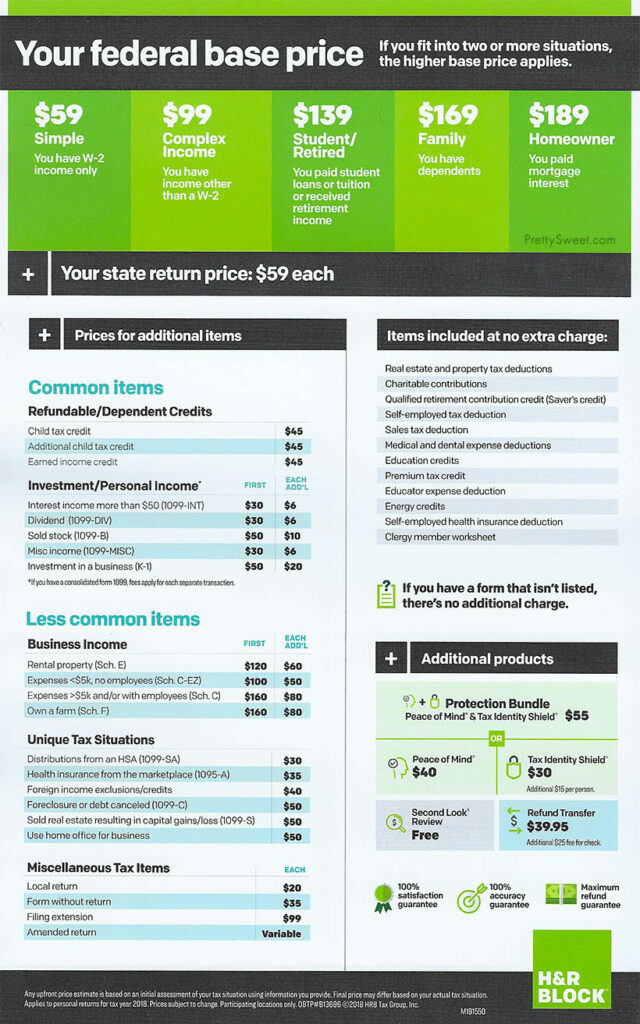
H&R Block operates on a “complexity-based” pricing model. This means that the more “schedules” or forms required to accurately report your income and deductions, the higher the price. To understand their pricing, you must first decide which of their two primary paths you intend to take: DIY Online Software or Professional Tax Preparation.
DIY Online Filing vs. In-Person Professional Services
The most significant price divide exists between doing it yourself using their cloud-based software and sitting down with a tax professional. Online filing is designed for the tech-savvy individual who is comfortable navigating a guided interface. Prices here typically range from $0 to $115, plus state filing fees.
In contrast, in-person or “Virtual Pro” services involve a human expert who takes the data entry off your plate. This path offers the highest level of security and expert oversight but comes with a much higher price tag, often starting around $85 and climbing well into the hundreds.
The “Starting At” Price Trap
It is vital to recognize that H&R Block, like its main competitor TurboTax, uses “starting at” pricing. The price you see in January may not be the price you pay in April. Furthermore, as you input data, the software may prompt you to “upgrade” to a higher tier if it detects financial elements—like student loan interest or cryptocurrency trades—that the lower tiers do not support.
Breaking Down H&R Block Online Software Costs
For the majority of modern taxpayers, H&R Block’s online platform offers a balance of convenience and affordability. The platform is divided into four main tiers, each catering to specific financial profiles.
Free Online Version: Who Qualifies?
H&R Block offers a “Free Online” version, but it is more robust than many competitors. It covers W-2 income, unemployment income, and social security income. Notably, it also includes the Earned Income Tax Credit (EITC) and child tax credits, which some other “free” versions hide behind a paywall. However, if you have itemized deductions, mortgage interest, or any form of self-employment income, you will be forced to upgrade.
Deluxe, Premium, and Self-Employed Tiers
As your financial portfolio grows, so does the software cost:
- Deluxe ($35 – $55): This tier is designed for homeowners and those with significant itemized deductions. It allows for the reporting of HSA contributions and provides organized storage for six years of tax returns.
- Premium ($55 – $85): This is the tier for investors. If you sold stocks, bonds, or own rental property, the Premium version provides the necessary forms (like Schedule D) to report these gains or losses.
- Self-Employed ($85 – $115): Targeted at freelancers, contractors, and small business owners, this version handles Schedule C. It includes tools to help identify industry-specific deductions, such as home office expenses and travel.
State Filing Fees: The Hidden Cost
When calculating “how much is H&R Block,” many users forget the state return. While the federal price is what is advertised most heavily, filing a state return usually costs an additional $37 to $45 per state. If you lived in two different states during the year, you may end up paying for two state filings, significantly increasing your total expenditure.
In-Person Tax Prep: How Much Does a Tax Pro Cost?
For those with high net worth, complicated business structures, or simply a deep-seated fear of making a mistake, H&R Block’s 10,000+ physical offices provide human intervention.
Base Fees and Form-Based Pricing
In-person filing does not have a transparent, flat-rate fee listed online. This is because the price is determined by the specific forms required. A “standard” return usually starts at a base fee of approximately $85. However, each additional form—such as an itemization schedule, a capital gains form, or a business expense sheet—adds to that base price. According to industry surveys, the average H&R Block customer paying for in-person services spends between $200 and $500.
Complexity Surcharges
Complexity isn’t just about the number of forms; it’s about the time required. If you bring in a shoebox of unorganized receipts for a small business, the tax professional may charge a premium for the labor involved in organizing that data. Conversely, if you use their “Drop-Off” service—where you leave your documents and sign digitally later—you might save on the “sitting fee” associated with a live appointment.
Virtual Assistant Options (Tax Pro Review)
H&R Block offers a middle-ground service called “Tax Pro Review.” This allows you to do the data entry yourself using the DIY software, but before you file, a certified CPA or Enrolled Agent reviews your entire return for errors and missed deductions. This service usually adds an additional $50 to $100 to your software price but provides the peace of mind of a professional signature.
Additional Services and Add-on Fees
The total cost of H&R Block often includes elective services that provide extra security or convenience. While these are optional, they are heavily marketed during the checkout process.
Peace of Mind® Extended Warranty
One of H&R Block’s most famous add-ons is the “Peace of Mind” data integrity guarantee. For a fee (usually around $40), H&R Block promises that if they make an error on your return that results in additional taxes or penalties, they will represent you before the IRS and pay up to a certain amount of those penalties. For many, this is a “tax insurance” policy worth the cost.
Refund Transfer Fees
If you don’t want to pay for your tax preparation out of pocket, H&R Block offers a “Refund Transfer.” This allows the fees to be deducted directly from your tax refund. While convenient, this service often carries a fee of $40 or more. Financially speaking, it is almost always better to pay the upfront cost with a credit or debit card than to use a Refund Transfer.
Audit Support and Identity Theft Protection
H&R Block also offers “Worry-Free Audit Support.” This ensures that if you are audited, a professional will help you manage the correspondence with the IRS. Given that the IRS has increased funding for enforcement, this service has seen a surge in popularity, though it adds another layer to the total cost.
Comparing H&R Block to the Competition
To determine if H&R Block is “worth it,” one must look at the broader financial tools market.
H&R Block vs. TurboTax
Historically, H&R Block is slightly more affordable than TurboTax. While both offer similar user interfaces and “interview-style” questions, H&R Block’s “Free” tier covers more forms than TurboTax’s “Free” tier. TurboTax often charges for things like student loan interest or unemployment income that H&R Block handles for free. However, TurboTax is often cited as having a slightly more polished user interface.
Free Alternatives
For those whose primary concern is cost, tools like FreeTaxUSA or the IRS Free File program are worth considering. FreeTaxUSA offers free federal filing for almost all complexities (including self-employment) and only charges about $15 for state returns. The trade-off is that these services lack the “brick-and-mortar” support system that H&R Block provides. If you run into a problem at H&R Block, you can walk into an office; with budget software, you are often limited to email support.

Conclusion: Is H&R Block Worth the Investment?
Determining how much H&R Block costs depends entirely on your financial “footprint.” If you have a simple W-2 and no house, it is likely $0. If you are a freelancer with a mortgage and some stock investments, you should budget approximately $120 to $160 for online filing (including state). If you want a professional to handle everything in an office, prepare to spend $300 or more.
In the realm of personal finance, the goal is not always to find the cheapest option, but the one that offers the best value-to-risk ratio. H&R Block sits in the “sweet spot” of the market: more expensive than budget software but more accessible and often cheaper than a private CPA. For the taxpayer who values the security of a national brand and the flexibility of both digital and physical support, H&R Block remains a fiscally sound choice for managing one’s annual tax liability.
aViewFromTheCave is a participant in the Amazon Services LLC Associates Program, an affiliate advertising program designed to provide a means for sites to earn advertising fees by advertising and linking to Amazon.com. Amazon, the Amazon logo, AmazonSupply, and the AmazonSupply logo are trademarks of Amazon.com, Inc. or its affiliates. As an Amazon Associate we earn affiliate commissions from qualifying purchases.