
Understanding the monthly cost of health insurance for an individual is a critical aspect of personal financial planning, yet it’s rarely a straightforward calculation. Unlike fixed expenses, health insurance premiums are highly variable, influenced by a complex web of factors ranging from personal demographics to geographical location and the very structure of the plan chosen. For a single person navigating the healthcare landscape, unraveling these costs is essential for making informed decisions that protect both their health and their wallet.
On average, a single person in the U.S. might expect to pay anywhere from $300 to over $700 per month for health insurance coverage purchased through the Affordable Care Act (ACA) marketplace, before any subsidies are applied. However, this is merely a broad stroke. The true cost can be significantly lower with government assistance or much higher depending on individual circumstances and chosen coverage levels. This article will delve into the intricacies of health insurance pricing, providing a clear, insightful, and engaging guide to help you understand, anticipate, and potentially reduce your monthly premium. We’ll explore the primary determinants of cost, examine the full spectrum of out-of-pocket expenses beyond the premium, outline pathways to coverage, and offer actionable strategies for managing these vital financial commitments.

The Shifting Landscape: Average Costs and Key Determinants
The price tag on health insurance is a moving target, constantly influenced by a dynamic interplay of individual characteristics, market forces, and policy decisions. While there’s no universal answer to “how much,” understanding the typical ranges and what drives them is the first step.
National Averages: A Starting Point
While precise, real-time averages can fluctuate, data from various sources, including the Kaiser Family Foundation and healthcare.gov, generally indicates that the average unsubsidized monthly premium for an individual purchasing a Silver plan (a popular choice on the ACA marketplace) typically falls in the range of $450 to $650. Bronze plans, offering lower premiums but higher deductibles, might start around $350-$500, while Gold and Platinum plans, providing richer benefits and lower out-of-pocket costs when care is utilized, could easily exceed $600-$800 or more per month. It’s crucial to remember that these are national averages for unsubsidized plans; your personal experience will likely vary based on the specific factors discussed below.
The Immediate Impact of Age and Location
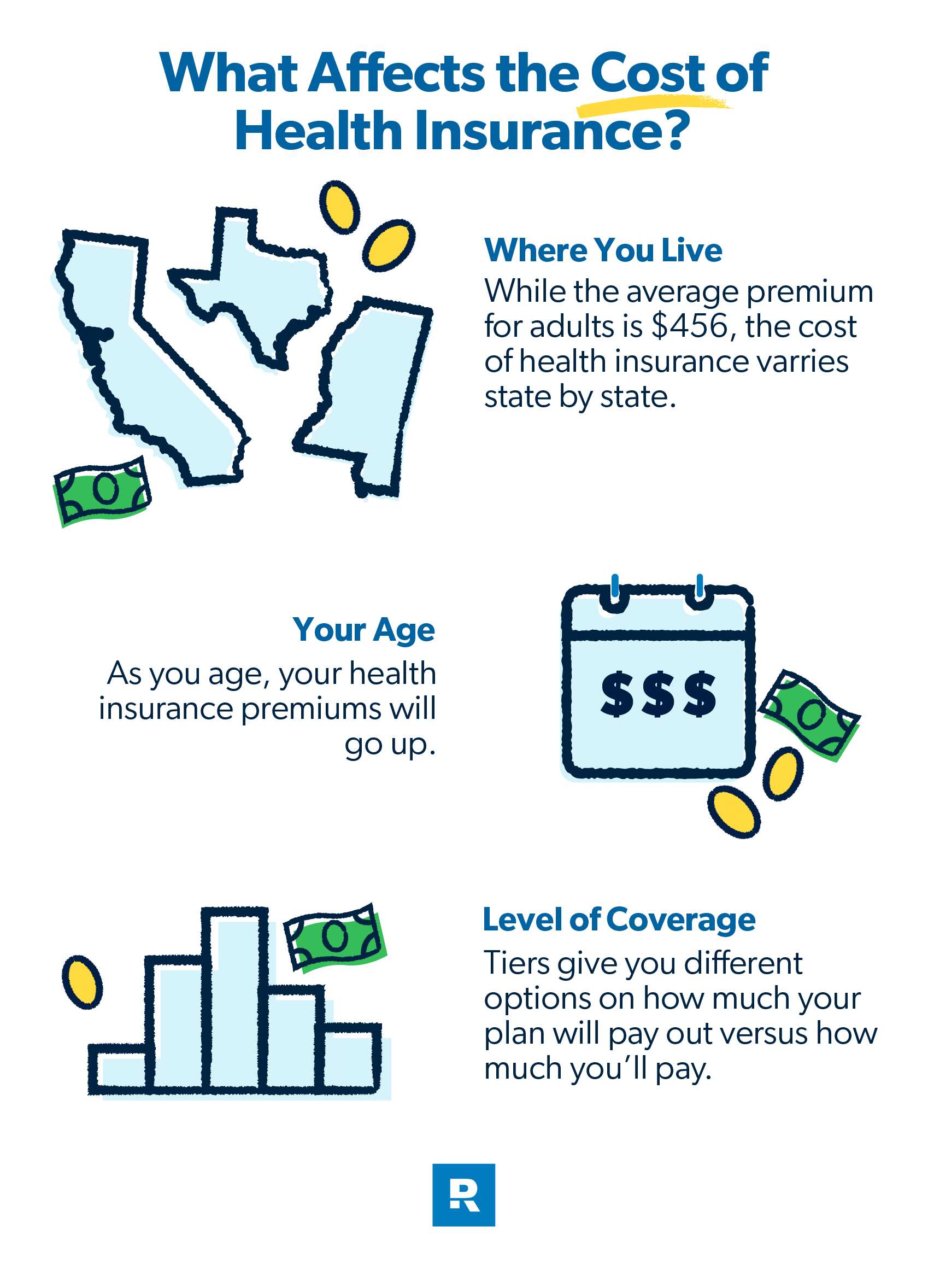
Two of the most immediate and significant factors affecting your premium are your age and geographical location. Generally, premiums increase with age, reflecting a higher likelihood of needing medical care as one gets older. A 25-year-old will almost invariably pay less than a 55-year-old for the same plan in the same area. Location also plays a crucial role: health insurance costs can vary dramatically not just from state to state, but even county to county, influenced by local healthcare costs, competition among insurers, and state-specific regulations. What you pay in a major metropolitan area in New York could be vastly different from a rural area in Nebraska, even for an identical individual.
Plan Type and Coverage Level: A Direct Correlation
The type of plan you choose directly correlates with your monthly premium. Health insurance plans are typically categorized into “metal tiers” under the ACA:
- Bronze plans have the lowest monthly premiums but the highest deductibles and out-of-pocket costs when you need care. They cover 60% of costs, on average, after your deductible is met.
- Silver plans offer moderate monthly premiums and moderate out-of-pocket costs. They cover 70% of costs, on average. This tier is also where cost-sharing reductions (CSRs) are available for eligible individuals.
- Gold plans come with higher monthly premiums but lower deductibles and out-of-pocket costs, covering 80% of costs, on average.
- Platinum plans have the highest premiums but the lowest deductibles and out-of-pocket costs, covering 90% of costs, on average.
Choosing a plan isn’t just about the premium; it’s about balancing upfront costs with potential costs later when you seek medical services.
Deconstructing Your Premium: Factors at Play
Beyond the general averages, a deeper dive into specific personal and structural factors reveals why two individuals might pay vastly different amounts for what seems like similar coverage.
Age: The Older You Are, The Higher the Cost
As mentioned, age is a primary driver of premiums. Insurers are legally permitted to charge older adults up to three times more than younger adults for the same plan, reflecting the increased likelihood of health issues and higher healthcare utilization with age. This multiplier is capped by the ACA, preventing exorbitant increases, but the gradient remains a significant factor.
Geographical Location: State Regulations and Local Competition
Your address impacts your health insurance premium due to several factors. Each state has its own regulatory environment, which can influence how plans are priced and what benefits they must cover. Furthermore, the number of insurers competing in a given area, the local cost of healthcare services, and the general health status of the population in that region all contribute to the final premium. Urban areas, despite their higher cost of living, might offer more competitive pricing due to a larger pool of insurers and greater competition.
Tobacco Use: A Costly Habit
Insurers are allowed to charge tobacco users up to 50% more than non-tobacco users for the same health plan. This surcharge is a significant penalty, designed to offset the higher health risks associated with smoking and other tobacco consumption. Disclosing tobacco use honestly is crucial, as misrepresentation could lead to policy cancellation.
Plan Category: Bronze, Silver, Gold, Platinum – What Do They Mean?
We’ve touched on these “metal tiers,” but it’s worth reiterating their impact on premiums. A Bronze plan, designed for those who expect minimal medical care and prefer lower monthly payments, will always have a lower premium than a Platinum plan, which is suitable for individuals who anticipate frequent medical needs and prefer to pay more upfront to reduce costs at the point of service. The choice between these tiers fundamentally shapes your financial outlay.
Network Type: HMO, PPO, POS, EPO – Understanding Your Options
The type of network structure also influences premiums and your flexibility in choosing providers:
- HMO (Health Maintenance Organization): Generally has lower premiums. You choose a primary care physician (PCP) who coordinates all your care and refers you to specialists within the network. No coverage for out-of-network care, except in emergencies.
- PPO (Preferred Provider Organization): Offers more flexibility. You don’t usually need a referral to see a specialist, and you can see out-of-network providers for a higher cost. Premiums are typically higher than HMOs.
- POS (Point of Service): A hybrid of HMO and PPO. You generally need a PCP and referrals within the network but can go out-of-network for a higher cost.
- EPO (Exclusive Provider Organization): Similar to an HMO in that it doesn’t cover out-of-network care (except emergencies), but you usually don’t need a referral to see specialists within the network. Premiums are often between HMOs and PPOs.
The broader the network access and the more flexibility a plan offers, the higher the premium tends to be.
Beyond the Monthly Premium: Total Out-of-Pocket Expenses
Focusing solely on the monthly premium provides an incomplete picture of your total healthcare costs. It’s crucial to understand the other expenses you’ll incur when you actually use your insurance.
Deductibles: Your Initial Cost Before Coverage Kicks In
A deductible is the amount of money you must pay out-of-pocket for covered medical services before your health insurance plan starts to pay. For individuals, deductibles can range from a few hundred dollars to several thousands per year. Plans with lower monthly premiums typically come with higher deductibles, meaning you’ll pay more upfront for care until you meet that threshold. This is a critical consideration, especially for those who anticipate needing regular medical attention.
Copayments and Coinsurance: Your Share of Medical Bills
Once your deductible is met, you’ll still likely be responsible for a portion of your medical costs through copayments and coinsurance:
- Copayment (Copay): A fixed amount you pay for a covered health service after you’ve met your deductible. For example, a $30 copay for a doctor’s visit.
- Coinsurance: A percentage of the cost of a covered health service you pay after you’ve met your deductible. For instance, if your plan has 20% coinsurance, you pay 20% of the bill, and your insurer pays 80%.
These amounts can add up, particularly for ongoing treatments or multiple visits.
Out-of-Pocket Maximum: Your Financial Safety Net
The out-of-pocket maximum is the most you’ll have to pay for covered services in a policy year. Once you reach this limit, your health plan pays 100% of the cost of covered benefits for the rest of the year. This maximum includes deductibles, copayments, and coinsurance, but typically not your monthly premiums. It acts as a crucial financial safety net, protecting you from catastrophic medical bills in the event of a serious illness or accident. Understanding this limit is vital for financial planning, as it represents the absolute worst-case scenario for your medical expenses in a given year.
The Importance of Understanding Your Summary of Benefits and Coverage (SBC)
Every health insurance plan is required to provide a Summary of Benefits and Coverage (SBC). This standardized document outlines exactly what the plan covers, what it doesn’t, and what your costs will be for various services (like doctor visits, emergency care, and prescriptions). It’s an invaluable tool for comparing plans and fully understanding the financial implications beyond the monthly premium. Always review the SBC before committing to a plan.
Pathways to Coverage and Potential Savings
While the full, unsubsidized cost of health insurance can seem daunting, several avenues exist to obtain coverage, many of which come with significant financial assistance.
The Affordable Care Act (ACA) Marketplace: Subsidies and Tax Credits
The ACA marketplace (healthcare.gov or state-run exchanges) is a primary source for individual health insurance. Crucially, it offers financial assistance in the form of premium tax credits (subsidies) and cost-sharing reductions (CSRs).
- Premium Tax Credits: These credits reduce your monthly premium based on your income. Many individuals with incomes between 100% and 400% of the Federal Poverty Level (FPL) qualify. With the enhancements made by the American Rescue Plan and extended by the Inflation Reduction Act, even some individuals earning more than 400% FPL may qualify for assistance if their benchmark plan premium exceeds 8.5% of their household income.
- Cost-Sharing Reductions (CSRs): Available only for Silver plans, CSRs lower your deductible, copayments, and coinsurance, making your out-of-pocket costs significantly more affordable. These are for individuals with incomes between 100% and 250% of the FPL.
These subsidies can dramatically reduce the actual amount you pay per month, making coverage much more accessible.
Employer-Sponsored Plans: A Common and Often Cheaper Route
If you’re employed, your company’s group health insurance plan is often the most cost-effective option. Employers typically subsidize a significant portion of employee premiums, sometimes covering a percentage of dependent premiums as well. Group plans also often benefit from a larger risk pool, leading to potentially better rates and more comprehensive benefits than individual plans on the marketplace.
Medicaid and CHIP: Government Assistance for Low Incomes
For individuals and families with very low incomes, Medicaid provides free or low-cost health coverage. Eligibility varies by state, as some states have expanded Medicaid under the ACA to cover all adults with incomes up to 138% of the FPL. The Children’s Health Insurance Program (CHIP) offers similar assistance for children in families who earn too much for Medicaid but cannot afford private insurance. These programs are vital safety nets for millions.
Short-Term Health Insurance and Other Alternatives (with caveats)
For those needing temporary coverage or who find marketplace plans too expensive without subsidies, short-term health insurance plans exist. These plans generally have much lower premiums but offer limited benefits, do not cover pre-existing conditions, and are not required to adhere to ACA mandates. They are not a substitute for comprehensive coverage and should be used with extreme caution and only as a last resort for very specific situations. Other alternatives include catastrophic plans (for those under 30 or with hardship exemptions) and health care sharing ministries, each with their own unique structures and limitations.
High-Deductible Health Plans (HDHPs) with HSAs: A Dual Benefit
Many plans, both on the marketplace and through employers, are high-deductible health plans (HDHPs). While they have higher deductibles, they often come with lower monthly premiums. If an HDHP is compatible with a Health Savings Account (HSA), it offers a significant financial advantage. An HSA is a tax-advantaged savings account that can be used for qualified medical expenses. Contributions are tax-deductible, earnings grow tax-free, and withdrawals for medical expenses are tax-free. This combination allows individuals to save on premiums and use pre-tax money for healthcare costs, making it an attractive option for those who are generally healthy and can afford the higher deductible.
Smart Strategies to Manage and Reduce Your Health Insurance Costs
Navigating the complexities of health insurance doesn’t have to be overwhelming. With a proactive approach, individuals can often find ways to manage and even reduce their monthly costs.
Compare Plans Annually: Open Enrollment is Key
The health insurance market is dynamic, with plans, prices, and benefits changing year to year. During the annual Open Enrollment Period (typically November 1st to January 15th for the ACA marketplace), it’s crucial to revisit your options. Don’t simply auto-renew your existing plan. Compare all available plans in your area, considering your current health needs, anticipated medical expenses, and budget. A plan that was ideal last year might no longer be the most cost-effective or suitable option.
Utilize Preventative Care: Stay Healthy, Save Money
The ACA mandates that most health plans cover certain preventative services (like annual check-ups, vaccinations, and screenings) at no out-of-pocket cost. Utilizing these services can help detect potential health issues early, preventing more serious and expensive conditions down the line. Staying healthy through regular check-ups, a balanced diet, and exercise is one of the most effective long-term strategies for reducing healthcare costs.
Negotiate Medical Bills: Don’t Be Afraid to Ask
Even with insurance, medical bills can be substantial. If you receive a bill that seems unusually high, or if you’re facing a large out-of-pocket expense, don’t hesitate to negotiate with your healthcare provider. Many hospitals and clinics have financial assistance programs, offer payment plans, or are willing to reduce charges, especially for uninsured or underinsured patients who pay in cash. Always ask for an itemized bill to check for errors.
Understand Your Network: Avoid Out-of-Network Surprises
Going to an out-of-network provider can lead to significantly higher costs, as your insurance might cover little to none of the bill. Always confirm that your doctors, specialists, and even facilities (like labs or hospitals) are in your plan’s network before receiving care. Even within a network hospital, some individual providers (like an anesthesiologist) might be out-of-network, so it’s wise to clarify this beforehand.

Seek Professional Advice: Insurance Brokers Can Help
For those feeling overwhelmed by the choices, a licensed health insurance broker or navigator can be an invaluable resource. These professionals are knowledgeable about local plans, eligibility for subsidies, and can help you compare options tailored to your specific needs and budget. Their services are often free to consumers, as they are compensated by insurers. They can help demystify the process and ensure you make the most informed decision.
In conclusion, the question of “how much is health insurance per month for one person” has no single answer, but rather a spectrum of possibilities determined by individual circumstances and choices. By understanding the core factors influencing premiums, looking beyond the monthly payment to total out-of-pocket costs, exploring available avenues for financial assistance, and implementing smart cost-management strategies, individuals can confidently navigate the complex world of health insurance and secure the coverage that best fits their financial and health needs.
aViewFromTheCave is a participant in the Amazon Services LLC Associates Program, an affiliate advertising program designed to provide a means for sites to earn advertising fees by advertising and linking to Amazon.com. Amazon, the Amazon logo, AmazonSupply, and the AmazonSupply logo are trademarks of Amazon.com, Inc. or its affiliates. As an Amazon Associate we earn affiliate commissions from qualifying purchases.