
In the contemporary business landscape, the adoption of cloud computing platforms like Google Cloud has become a strategic imperative for organizations aiming to enhance agility, scalability, and innovation. Google Cloud offers a vast array of services, from computing power and storage to advanced machine learning capabilities, enabling businesses of all sizes to build, deploy, and scale applications and infrastructure without the burden of managing physical data centers. However, a question that consistently arises for financial decision-makers, budget planners, and business owners is: “How much is Google Cloud?”

The answer, far from being a simple figure, is a dynamic and multifaceted equation. Google Cloud operates on a sophisticated pay-as-you-go model, meaning costs are accrued based on actual resource consumption. This model, while offering immense flexibility and eliminating large upfront capital expenditures, also introduces a layer of complexity for financial planning. Understanding Google Cloud’s pricing involves dissecting service-specific costs, leveraging optimization strategies, and recognizing the broader financial implications beyond direct invoices. This article aims to demystify Google Cloud costs, providing financial insights crucial for effective budget management and maximizing return on investment.
Understanding Google Cloud’s Pay-as-You-Go Model and Core Cost Drivers
The foundational principle of cloud computing economics, epitomized by Google Cloud, is the “utility model”—you pay only for what you use. This shifts the financial paradigm from capital expenditure (CapEx) on hardware and infrastructure to operational expenditure (OpEx), allowing businesses to scale costs directly with demand. However, this flexibility demands a diligent approach to financial oversight, as underestimating consumption or mismanaging resources can lead to unexpected expenses.
The Fundamental Principle: “You Pay Only for What You Use”
Google Cloud’s financial model is a significant departure from traditional on-premises IT infrastructure. Instead of investing heavily in servers, networking equipment, and data center space, businesses can provision resources instantly and pay based on granular usage metrics. This means charges are incurred for the precise amount of CPU, RAM, storage capacity, network bandwidth, and other services consumed, often measured by the second, gigabyte, or API call.
From a financial perspective, this model offers several advantages:
-
Reduced Upfront Investment: Eliminates the need for large capital outlays, freeing up funds for other strategic initiatives.
-
Scalability and Elasticity: Costs automatically adjust with business demand. During peak periods, resources can be scaled up with corresponding cost increases, and during troughs, resources can be scaled down, reducing expenditure.
-
Predictable OpEx for Variable Workloads: While the total cost might vary, the cost per unit of resource is often predictable, allowing for better forecasting once usage patterns are understood.
However, the “pay-as-you-go” model also presents challenges. Without careful monitoring and management, unused or over-provisioned resources can quietly accumulate costs, making accurate budgeting a continuous process rather than a one-time exercise.
Key Services and Their Financial Impact
Google Cloud’s extensive portfolio means that costs are highly dependent on the specific services a business utilizes. Each service has its own distinct pricing structure, which financial teams must understand.
-
Compute Engine (Virtual Machines): This is often a primary cost driver. Pricing depends on factors like:
-
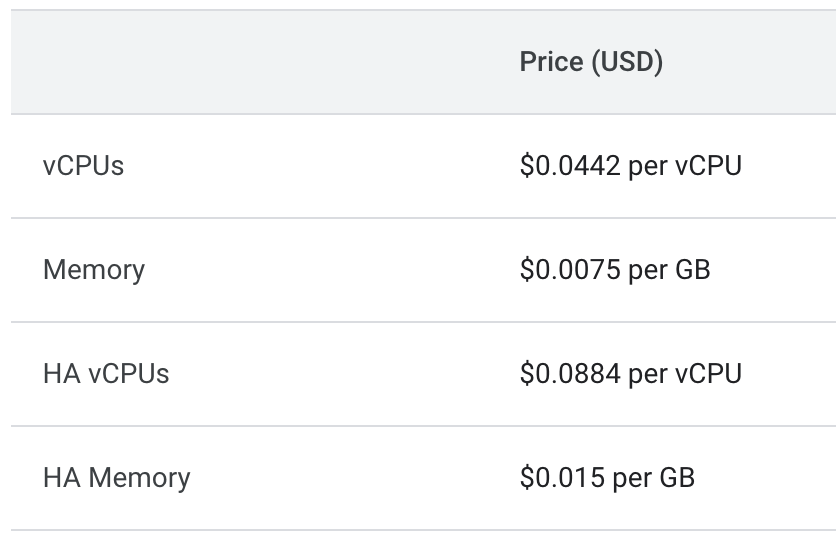
Machine Type: Predefined (e.g., n2-standard-4) or custom machine types, dictating CPU (vCPUs) and memory (GB RAM).
-
Region: Costs vary based on the geographical region where the VMs are deployed due to local infrastructure and energy expenses.
-
Operating System: Certain OS licenses (e.g., Windows Server, SQL Server) incur additional charges.
-
Attached Storage: Persistent Disks (standard, SSD) are charged per GB per month.
-
-
Cloud Storage (Object Storage): Costs are influenced by:
-
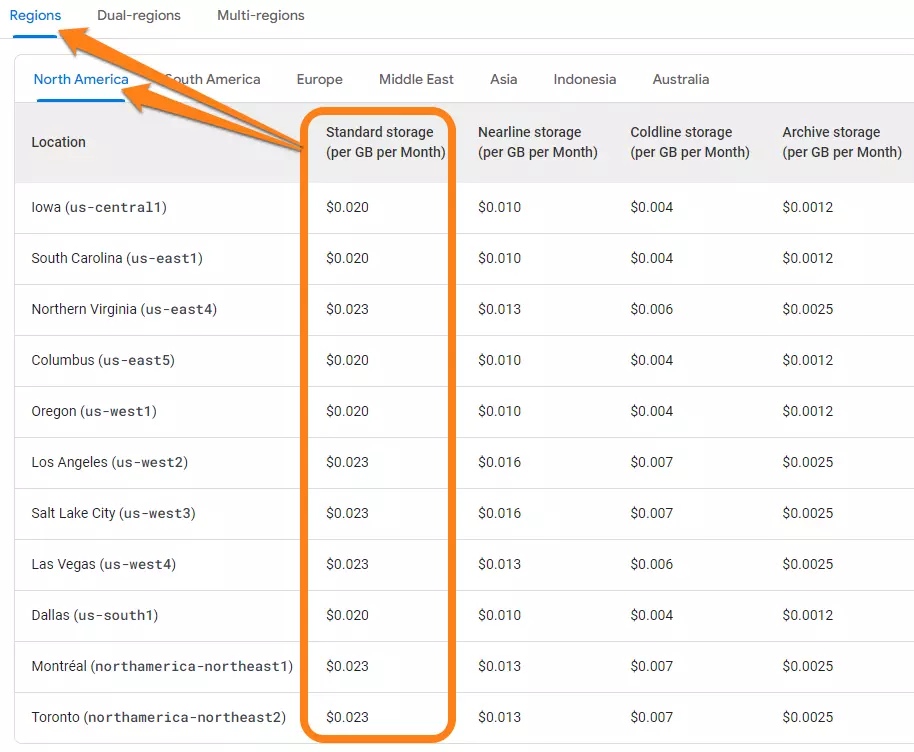
Data Stored: Price per GB per month, varying significantly by storage class (Standard, Nearline, Coldline, Archive) based on access frequency.
-
Network Egress: Data transferred out of Google Cloud to the internet. This can be a substantial and often overlooked cost.
-
Operations: Charges for data manipulation operations (e.g., GET, PUT, DELETE requests).
-
-
Networking: Beyond storage egress, networking costs include:
-
Load Balancing: Charges for rules processed and outbound data.
-
VPN and Interconnect: Costs for secure connections to on-premises networks.
-
IP Addresses: Static external IP addresses incur charges when attached to a running VM, and unattached ones may also incur a small fee.
-
-
Databases (Cloud SQL, BigQuery, Firestore): These services have varied financial models:
-
Cloud SQL: Similar to Compute Engine (instance size, storage, networking).
-
BigQuery: Priced primarily on data scanned for queries and data stored. This pay-per-query model requires careful financial planning for analytical workloads.
-
Firestore: Charges based on database operations (reads, writes, deletes) and stored data size.
-
-
AI/ML Services (e.g., Vision AI, Natural Language AI): Typically priced per API call, per hour of model training, or per data processed.
The intricate interplay of these service-specific pricing models necessitates a granular understanding for accurate financial forecasting and cost management. Without this, a seemingly minor architectural decision can have significant budgetary repercussions.
Strategies for Effective Google Cloud Cost Optimization and Control
Effective financial management of Google Cloud goes beyond merely understanding pricing; it requires proactive strategies for cost optimization and control. Businesses that thrive in the cloud integrate FinOps (Cloud Financial Operations) principles, fostering collaboration between finance and engineering teams to achieve maximum business value from their cloud investments.
Leveraging Discounts and Commitment Plans
Google Cloud offers various mechanisms to reduce costs, particularly for stable or predictable workloads. Leveraging these can lead to substantial savings.
-
Free Tier: Google Cloud provides a generous Free Tier for new users and small projects, allowing experimentation with core services up to certain limits (e.g., a specific number of vCPUs, GB of storage, network egress). While excellent for development, it’s crucial for financial teams to understand that production workloads will quickly exceed these limits, incurring charges.
-
Sustained Use Discounts (SUDs): These are automatically applied discounts for running Compute Engine virtual machines for a significant portion of the billing month. The longer a VM runs, the higher the discount, rewarding continuous usage without requiring upfront commitment. This is an easy win for financial optimization on consistent workloads.
-
Committed Use Discounts (CUDs): CUDs represent a contractual agreement to use a specific amount of resources (e.g., vCPUs, memory, specific services like BigQuery flat-rate slots) for a 1-year or 3-year term, in exchange for significantly lower prices (up to 70% off on Compute Engine). This is a powerful financial tool for organizations with predictable, long-term cloud resource needs. Financial planning must weigh the upfront commitment against the guaranteed savings, as unused committed capacity will still be billed.
Resource Sizing and Management Best Practices
One of the most common causes of cloud cost overruns is inefficient resource utilization. Implementing best practices for resource sizing and lifecycle management is crucial.
-
Right-Sizing Virtual Machines: Often, VMs are initially over-provisioned to ensure performance. Analyzing actual resource utilization metrics (CPU, memory) and resizing VMs to match demand can lead to significant savings. Google Cloud provides recommendations based on historical usage.
-
Auto-scaling: For workloads with fluctuating demand, implementing auto-scaling groups ensures that resources are automatically added during peaks and removed during troughs. This optimizes costs by only paying for the necessary compute capacity at any given time, avoiding the financial waste of idle resources.
-
Lifecycle Policies for Storage: Data often has varying access patterns over its lifetime. Implementing storage lifecycle policies automatically moves data from more expensive, frequently accessed storage classes (e.g., Standard) to cheaper, less frequently accessed ones (e.g., Nearline, Coldline, Archive) as it ages. This can dramatically reduce storage costs.
-
Deleting Unused Resources: Orphaned resources like unattached persistent disks, idle IP addresses, old snapshots, and unused load balancers can quietly accrue charges. Regular audits and automated cleanup processes are essential for financial hygiene.
Monitoring and Alerting for Financial Visibility
Proactive monitoring and robust alerting mechanisms are indispensable for maintaining financial control over Google Cloud spend.
-
Cloud Billing Reports and Dashboards: Google Cloud’s native billing interface provides detailed reports, cost breakdowns by project, service, and SKU. Leveraging these dashboards offers immediate visibility into spending patterns.
-
Budget Alerts: Setting up budget alerts with predefined thresholds ensures that stakeholders are notified when spending approaches or exceeds projected limits. These alerts are critical early warning systems for potential cost overruns.
-
Cost Attribution with Labels/Tags: Implementing a consistent labeling strategy (e.g., by department, project, environment) allows for granular cost attribution. This enables financial teams to understand who or what is driving costs, fostering accountability and facilitating chargeback models.
Beyond Direct Costs: Hidden Financial Considerations and ROI
While direct service charges form the bulk of Google Cloud expenses, a comprehensive financial assessment must also account for less obvious costs and the broader financial benefits that contribute to overall ROI.
Operational Costs and Staffing
The shift to cloud doesn’t eliminate operational costs; it redefines them.
-
Cost of Cloud Engineering and Management: While Google manages the underlying infrastructure, organizations still need skilled engineers to design, deploy, and manage their applications and services on Google Cloud. This includes salaries, benefits, and training for cloud architects, DevOps engineers, and security specialists. The choice between managed services (where Google handles more operational aspects) and self-managed services (offering greater control but higher internal operational burden) has direct financial implications.
-
Training Costs: Investing in training for existing IT staff to upskill them in Google Cloud technologies is a necessary financial outlay to ensure effective utilization and management of the platform.
Data Egress Fees and Vendor Lock-in Mitigation
Two critical financial considerations often overlooked are data egress costs and the potential for vendor lock-in.
-
Data Egress Fees: Transferring data out of Google Cloud to the internet or across regions can be a significant cost. While data ingress is generally free, egress charges can be substantial, especially for applications with high user traffic or those distributing content globally. Strategies to minimize egress include using Content Delivery Networks (CDNs) like Cloud CDN, optimizing application architecture to keep data transfer within the Google network where possible, and careful regional placement.
-
Vendor Lock-in Mitigation: While not a direct cost, the financial implications of being “locked in” to a particular cloud provider can be significant. This refers to the difficulty and expense associated with migrating workloads from one cloud provider to another. Using open-source technologies, containerization (e.g., Kubernetes on Google Kubernetes Engine), and multi-cloud strategies can help mitigate this risk, providing financial flexibility and leverage in future negotiations or migrations. However, multi-cloud also introduces its own management complexity and potential cost overheads.
The Intangible Financial Benefits: Agility and Scalability ROI
Focusing solely on direct costs can obscure the significant financial benefits and return on investment (ROI) that cloud adoption brings.
-
Reduced Time to Market: The ability to provision infrastructure rapidly accelerates development cycles and allows businesses to bring new products and services to market much faster, translating into competitive advantage and earlier revenue generation.
-
Elastic Scalability without Upfront Capital: Google Cloud allows businesses to scale resources up or down on demand, avoiding the massive upfront capital expenditures and long procurement cycles associated with traditional IT. This elasticity ensures resources are always available when needed, preventing lost revenue due to downtime or performance bottlenecks during peak demand.
-
Innovation Acceleration: By offloading infrastructure management, internal teams can focus on innovation, developing value-added features and applications. Access to advanced services like AI, machine learning, and big data analytics, often cost-prohibitive to build in-house, fosters innovation and creates new revenue streams.
-
Disaster Recovery and Business Continuity: Google Cloud’s global infrastructure enables robust disaster recovery solutions at a fraction of the cost of building redundant on-premises data centers. Avoiding costly downtime during a disaster represents a significant financial saving and protection of brand reputation.
Financial Tools and Governance for Google Cloud Spend
Effective financial management of Google Cloud is not just about understanding costs, but actively governing them. This requires leveraging native tools and establishing robust financial governance frameworks.
Utilizing Google Cloud’s Native Billing Tools
Google Cloud provides a comprehensive suite of tools designed to help organizations track, analyze, and manage their cloud spending.
-
Billing Reports and Cost Tables: These provide detailed breakdowns of costs by project, service, SKU, and time period. Customizable views allow finance teams to filter and group data to gain specific insights into spending patterns.
-
Budget & Alerts: As mentioned previously, the ability to set budgets for specific projects or billing accounts and configure alerts when spending approaches predefined thresholds is a cornerstone of proactive cost control. Alerts can be delivered via email, SMS, or integrated with other monitoring systems.
-
Cost Export to BigQuery: For organizations requiring advanced financial analysis, Google Cloud allows billing data to be exported directly into BigQuery. This enables deep-dive analysis using SQL, integration with business intelligence tools, and correlation with other operational data for more sophisticated cost attribution and forecasting models. This is particularly valuable for large enterprises with complex cloud footprints.
Third-Party Cost Management Platforms
While Google Cloud’s native tools are powerful, the ecosystem also offers third-party solutions that provide enhanced capabilities for cost optimization and governance. These platforms often specialize in:
-
Multi-Cloud Cost Management: Consolidating and analyzing costs across multiple cloud providers (e.g., Google Cloud, AWS, Azure).
-
Advanced Optimization Recommendations: Utilizing AI/ML to identify deeper savings opportunities, such as identifying idle resources, recommending rightsizing, or optimizing commitment plans.
-
Chargeback and Showback: More sophisticated mechanisms for attributing costs back to specific business units, teams, or even individual applications, fostering greater accountability.
While these platforms incur additional costs, their ROI often justifies the investment for complex or large-scale cloud deployments by significantly reducing overall cloud spend and improving financial visibility.
Establishing Cloud Financial Governance (FinOps)
The most effective approach to managing Google Cloud costs is to embed FinOps principles within the organization. FinOps is an evolving operational framework that brings financial accountability to the variable spend model of cloud.
-
Integrating Finance and Operations Teams: FinOps emphasizes collaboration between finance, business, and engineering teams. This ensures that financial considerations are integrated into engineering decisions from the outset, and technical decisions are understood through a financial lens.
-
Defining Cost Ownership and Accountability: Clearly defining who owns which cloud costs and holding teams accountable for their spend helps prevent unnecessary expenditures. This often involves detailed tagging and allocation strategies.
-
Regular Cost Reviews and Optimization Cycles: Implementing a structured process for regular cost reviews, identifying areas for optimization, and tracking the impact of implemented changes is crucial. This iterative cycle ensures continuous improvement in cloud financial efficiency.
In essence, FinOps transforms cloud cost management from a reactive, accounting function into a proactive, strategic business process that aligns cloud usage with financial objectives.
Conclusion
Understanding “how much is Google Cloud” is far from a trivial exercise; it is a critical component of modern business finance. The pay-as-you-go model offers unparalleled flexibility and scalability, but it demands diligent financial oversight, proactive optimization strategies, and robust governance. From deciphering service-specific pricing to leveraging discounts, right-sizing resources, and implementing effective monitoring, businesses must adopt a comprehensive financial approach to their cloud investments.
Beyond direct invoices, financial decision-makers must consider the broader financial landscape: the operational costs of managing cloud infrastructure, the implications of data egress, and the often-intangible yet significant ROI derived from increased agility, faster time-to-market, and enhanced innovation capabilities. By embracing FinOps principles and treating cloud spending as a continuous financial management challenge, organizations can maximize the value of their Google Cloud platform, drive innovation, and maintain fiscal responsibility in an increasingly cloud-centric world.
aViewFromTheCave is a participant in the Amazon Services LLC Associates Program, an affiliate advertising program designed to provide a means for sites to earn advertising fees by advertising and linking to Amazon.com. Amazon, the Amazon logo, AmazonSupply, and the AmazonSupply logo are trademarks of Amazon.com, Inc. or its affiliates. As an Amazon Associate we earn affiliate commissions from qualifying purchases.