
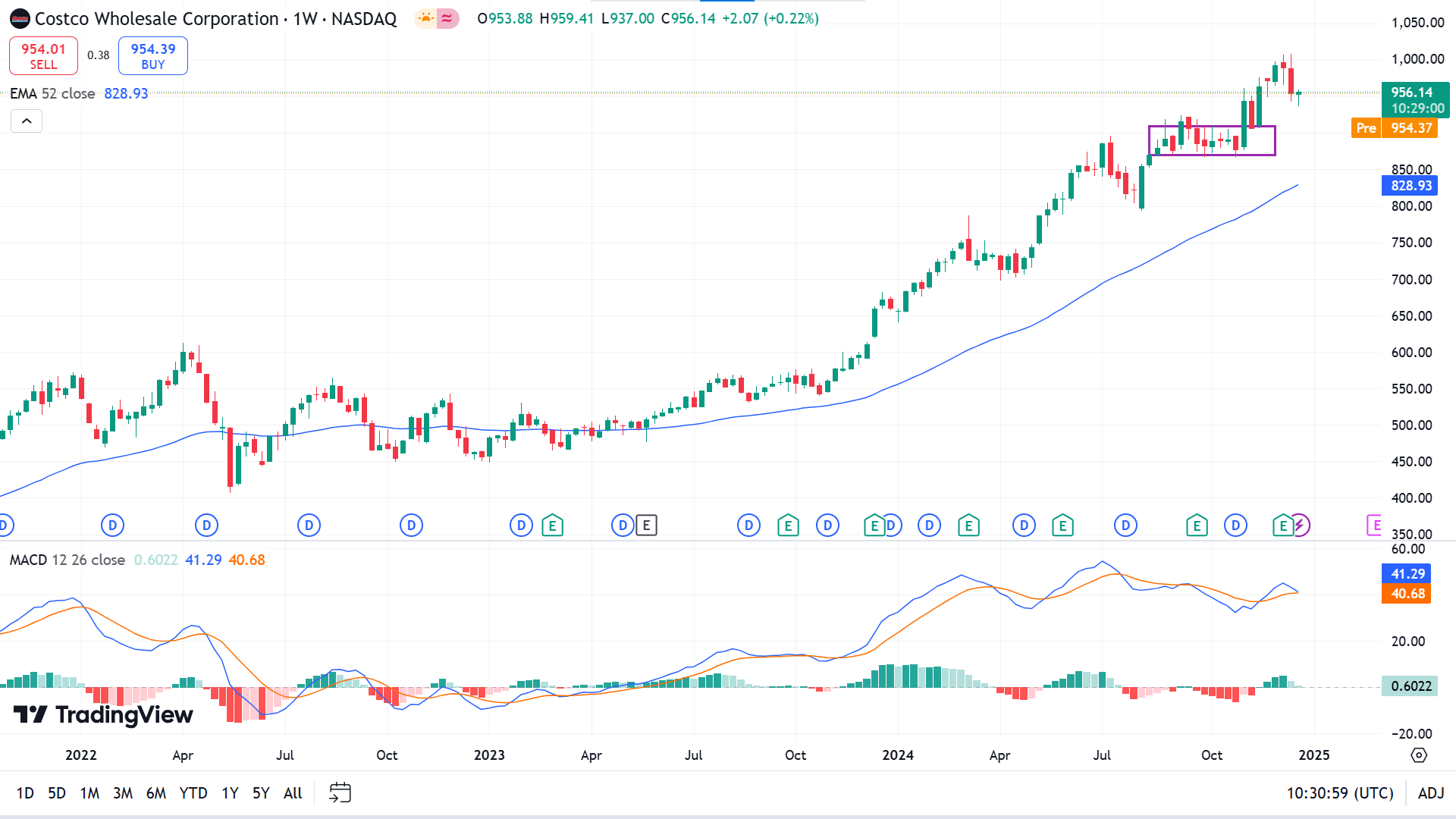
For both seasoned investors and those new to the world of equities, the daily fluctuating price of a well-known company like Costco Wholesale Corporation (COST) is often the first point of inquiry. While a simple number might seem like a straightforward answer, understanding “how much is Costco stock today” involves much more than just a snapshot of its current trading value. It necessitates a deeper dive into the company’s fundamentals, market dynamics, economic context, and strategic considerations for any potential investor. This article aims to provide a comprehensive financial perspective on Costco’s stock, moving beyond the immediate quote to offer a holistic view for informed investment decisions.

Understanding the Dynamics of Costco (COST) Stock
Before delving into the current stock price, it’s crucial to grasp the foundational elements that drive Costco’s valuation and market performance. Costco is not just a retailer; it operates a unique membership-based warehouse club model that distinguishes it from competitors and underpins its consistent financial health.
Costco’s Business Model and Market Position
Costco’s business model is centered on high-volume sales of a limited selection of branded and private-label products at competitive prices, primarily to its paying members. The vast majority of its profit doesn’t come from product markups, but from annual membership fees. This creates a powerful economic moat: a loyal customer base, predictable recurring revenue, and strong bargaining power with suppliers due to its bulk purchasing. Its commitment to value and quality has fostered exceptional customer loyalty, translating into high membership renewal rates even during economic downturns.
In the retail landscape, Costco holds a dominant position in the warehouse club sector. While it competes with general merchandise retailers like Walmart (especially Sam’s Club), Target, and even e-commerce giants like Amazon, its unique membership structure and in-store experience often insulate it from direct head-to-head pricing wars on many fronts. This robust business model, characterized by efficiency, scale, and customer retention, forms the bedrock of its investment appeal.
Key Factors Influencing Stock Performance
Costco’s stock performance, like any publicly traded company, is a confluence of various internal and external factors. Internally, membership growth and renewal rates are paramount, as these directly impact the company’s most profitable revenue stream. Sales performance, both in-store and through its growing e-commerce channel, also plays a significant role. Operational efficiency, inventory management, and supply chain resilience are critical in maintaining its low-cost structure and competitive pricing.
Externally, macroeconomic conditions exert considerable influence. Consumer spending habits, interest rates, inflation, and overall economic sentiment can affect discretionary purchases and membership retention. Geopolitical events, currency fluctuations (Costco has a significant international presence), and changes in consumer preferences towards specific product categories or shopping experiences also weigh on investor sentiment. Furthermore, the broader stock market’s performance and sector-specific trends for retail and consumer staples can impact Costco’s share price, regardless of its individual company performance.
Retrieving Real-Time Stock Information
For investors, accessing accurate and timely stock information is non-negotiable. Knowing “how much is Costco stock today” requires navigating reliable financial platforms and understanding the data presented.
Where to Find Current Stock Prices
The most common and accessible sources for real-time (or near real-time) stock prices include:
- Financial News Websites: Major outlets like Bloomberg, Reuters, The Wall Street Journal, Yahoo Finance, and Google Finance offer comprehensive stock quotes. Simply type “COST” or “Costco” into their search bar.
- Brokerage Platforms: If you have an investment account, your broker’s platform (e.g., Fidelity, Schwab, E*TRADE) will provide the most direct and often real-time data, along with advanced charting tools and research reports.
- Stock Market Apps: Many mobile applications dedicated to finance and investing provide instant access to stock prices and market news.
It’s important to verify the timestamp of the quote. Many free services provide data with a 15-20 minute delay unless specified as “real-time.” For actively trading, real-time data from a brokerage is essential.
Understanding Stock Quotes
A typical stock quote for Costco (Ticker: COST) will display several key pieces of information:
- Last Price: The price at which the last trade occurred. This is “how much Costco stock is today” at that specific moment.
- Change: The absolute dollar amount the stock has moved up or down since the previous day’s close.
- % Change: The percentage change from the previous day’s close, offering a quick gauge of daily performance.
- Open: The price at which the stock began trading at the start of the current market day.
- High/Low: The highest and lowest prices the stock has traded at during the current day.
- Volume: The number of shares traded during the current day, indicating liquidity and investor interest.
- Market Capitalization: The total value of all outstanding shares (current share price multiplied by the number of shares outstanding), reflecting the company’s overall size.
- P/E Ratio (Price-to-Earnings): A valuation metric that compares the share price to its earnings per share.
- Dividend Yield: The annual dividend payment per share divided by the share price, expressed as a percentage.
Understanding these metrics provides a much richer context than just the “last price” alone, enabling investors to quickly assess daily movements and begin deeper analysis.
The Importance of Real-Time Data vs. Delayed Data
For the casual observer or long-term investor, delayed data (typically 15-20 minutes) often suffices to get a general idea of the stock’s trend. However, for day traders, those executing time-sensitive orders, or anyone needing to react instantly to market news, real-time data is critical. Even a few minutes’ delay can mean a missed opportunity or an unfavorable execution price in a fast-moving market. Most brokerage accounts offer real-time data as a standard feature, and some financial platforms provide it through subscription services.
Beyond Today’s Price: A Deeper Dive for Investors
While “how much is Costco stock today” gives a current valuation, a responsible investment decision requires looking beyond the immediate price. A thorough analysis involves understanding the company’s financial health, competitive landscape, and future prospects.
Fundamental Analysis: What to Look For
Fundamental analysis involves evaluating a company’s intrinsic value by examining its financial statements, management, competitive advantages, and industry outlook. For Costco, key metrics include:
- Revenue Growth: Consistent increases in sales and membership fee revenue indicate a healthy, expanding business.
- Profitability: Net income, operating margins, and gross margins reveal how efficiently Costco converts sales into profits.
- Earnings Per Share (EPS): A crucial measure of profitability on a per-share basis, directly impacting the P/E ratio.
- Debt Levels: While some debt is normal, excessive leverage can signal financial risk. Costco generally maintains a strong balance sheet.
- Cash Flow: Positive and growing cash flow from operations is vital for funding expansion, dividends, and debt repayment.
- Membership Trends: Given Costco’s model, membership sign-ups, renewal rates, and average spend per member are critical performance indicators.
- Dividends: Costco is known for its regular dividends and occasional special dividends, which can significantly enhance investor returns.

By scrutinizing these fundamentals, investors can form an opinion on whether Costco’s current stock price reflects its true underlying value and future earnings potential.
Technical Analysis: Charting Trends
While fundamental analysis focuses on what a company is worth, technical analysis focuses on when to buy or sell, based on historical price movements and trading volumes. Technical analysts use charts to identify patterns, support and resistance levels, moving averages, and other indicators to predict future price action. For example, a stock consistently bouncing off a certain price point (support) might indicate a good buying opportunity, while failing to break above another price (resistance) might suggest selling pressure. While often used for short-term trading, understanding basic technical indicators can complement fundamental analysis even for long-term investors, helping to identify opportune entry or exit points.
Comparing Costco to Its Peers
No company exists in a vacuum. A vital part of investment analysis is comparing Costco to its direct and indirect competitors. This includes other warehouse clubs like Sam’s Club (Walmart), general merchandise retailers like Target and Walmart, and even e-commerce players like Amazon, especially as Costco expands its online presence.
Key comparison points include:
- Valuation Metrics: Comparing P/E ratios, price-to-sales, and enterprise value to EBITDA multiples can indicate if Costco is trading at a premium or discount relative to its peers.
- Growth Rates: How do Costco’s revenue, membership, and earnings growth rates stack up against its rivals?
- Profitability Margins: Are Costco’s operating and net margins superior due to its efficient model?
- Dividend Policies: How do its dividend yield and growth compare?
- Market Share and Moat: Does Costco maintain a stronger competitive advantage or a more defensible market position?
This comparative analysis provides context and helps investors understand Costco’s relative attractiveness within the broader retail and consumer staples sectors.
Investing in Costco: Considerations and Strategies
Deciding to invest in Costco stock, regardless of its current price, should align with a broader investment strategy and personal financial goals.
Long-Term vs. Short-Term Investment Goals
Costco is generally considered a strong candidate for long-term investors due to its stable business model, consistent profitability, and history of returning value to shareholders through dividends and stock appreciation. A long-term approach typically involves weathering short-term market fluctuations, focusing on the company’s fundamental growth trajectory.
Short-term trading in Costco stock, while possible, carries higher risk. Its relatively stable nature means it often doesn’t experience the wild price swings that attract day traders. Those pursuing short-term gains would need to rely heavily on technical analysis and react quickly to news, which can be challenging and often less rewarding than a long-term strategy for a company like Costco.
Dollar-Cost Averaging and Portfolio Diversification
For long-term investors, strategies like dollar-cost averaging can be highly effective. This involves investing a fixed amount of money at regular intervals (e.g., monthly), regardless of the stock’s price. When the price is high, you buy fewer shares; when it’s low, you buy more. Over time, this averages out the purchase price and reduces the risk associated with trying to “time the market.”
Furthermore, it’s crucial to remember the principle of portfolio diversification. While Costco may be a solid investment, it should ideally be part of a broader, diversified portfolio that includes various asset classes, industries, and geographies. This helps mitigate risk by ensuring that no single investment, no matter how strong, overly influences your overall financial health.
The Role of Dividends
Costco has a history of paying regular quarterly dividends, which can provide a consistent income stream for investors. Beyond the regular payouts, Costco is also known for occasionally issuing “special dividends.” These are typically large, one-time payments to shareholders, often funded by accumulated cash reserves or significant profits. Such special dividends can significantly boost an investor’s total return and are a testament to the company’s strong cash generation capabilities and commitment to shareholder value. For income-focused investors, these dividends are a key component of their overall return on investment.
The Broader Economic Context and Future Outlook
No investment decision is made in a vacuum. The broader economic environment and Costco’s strategic responses to evolving market conditions will ultimately shape its future stock performance.
Macroeconomic Headwinds and Tailwinds
Currently, global economies face a mix of challenges and opportunities. Inflationary pressures can impact Costco’s costs of goods sold and operating expenses, potentially squeezing margins if not fully passed on to consumers. High interest rates might affect consumer borrowing for big-ticket items and general consumer spending. Conversely, a strong job market and rising wages could act as tailwinds, bolstering consumer confidence and disposable income, which bodes well for Costco’s membership and sales volumes. Investors must constantly assess these macro trends and their potential impact on Costco’s business model.
Costco’s Growth Initiatives and Challenges
Costco continues to pursue growth through several avenues. International expansion into new markets presents significant long-term potential for membership and sales growth. The company is also investing in its e-commerce capabilities, aiming to seamlessly integrate its online and in-store experiences to cater to evolving consumer preferences. Furthermore, expanding its private-label brand, Kirkland Signature, allows for greater margin control and customer loyalty.
However, challenges persist. Intense competition in the retail sector, potential saturation in mature markets, supply chain disruptions, and the constant need to adapt to changing consumer behaviors (e.g., preference for online shopping, demand for sustainable products) are ongoing considerations. The ability of Costco’s management to navigate these complexities will be critical for sustained growth.
Expert Opinions and Analyst Ratings
While investors should always conduct their own due diligence, consulting expert opinions and analyst ratings can offer additional perspectives. Financial analysts from investment banks often publish reports on Costco, providing earnings estimates, price targets, and buy/hold/sell recommendations. These reports typically delve into the company’s financials, competitive position, and future prospects. It’s important to remember that analyst ratings are just opinions and should be considered as one piece of a larger research puzzle, not as definitive investment advice. They can, however, provide valuable insights into market sentiment and key investment thesis points.
In conclusion, understanding “how much is Costco stock today” is merely the starting point of an informed investment journey. It requires a comprehensive evaluation of Costco’s robust business model, its financial health, its position within a dynamic market, and the broader economic landscape. By integrating fundamental analysis, considering technical trends, comparing it to peers, and aligning with personal investment goals, individuals can make well-reasoned decisions about potentially adding this retail giant to their financial portfolio.
aViewFromTheCave is a participant in the Amazon Services LLC Associates Program, an affiliate advertising program designed to provide a means for sites to earn advertising fees by advertising and linking to Amazon.com. Amazon, the Amazon logo, AmazonSupply, and the AmazonSupply logo are trademarks of Amazon.com, Inc. or its affiliates. As an Amazon Associate we earn affiliate commissions from qualifying purchases.