
In an era defined by fluctuating inflation rates and the rising cost of living, the quest for value has become a cornerstone of personal finance management. For millions of households, the answer to “where can I save more?” often leads to the giant warehouse doors of Costco. However, before one can benefit from the bulk-sized savings and the legendary $1.50 hot dog combo, there is a financial hurdle to clear: the annual membership fee.
Deciding whether to pay for the privilege of shopping at a warehouse club is not merely a shopping choice; it is a calculated financial decision. To determine if the cost is justified, one must analyze the membership tiers, the potential for a return on investment (ROI), and the behavioral economics of bulk purchasing.
Understanding the Costco Membership Tiers and Their ROI
As of late 2024, Costco has adjusted its membership pricing structure to reflect the current economic landscape. This shift makes it even more critical for budget-conscious consumers to understand exactly what they are paying for and how to leverage their membership to ensure it pays for itself.
Gold Star Membership: The Entry-Level Budget Tool
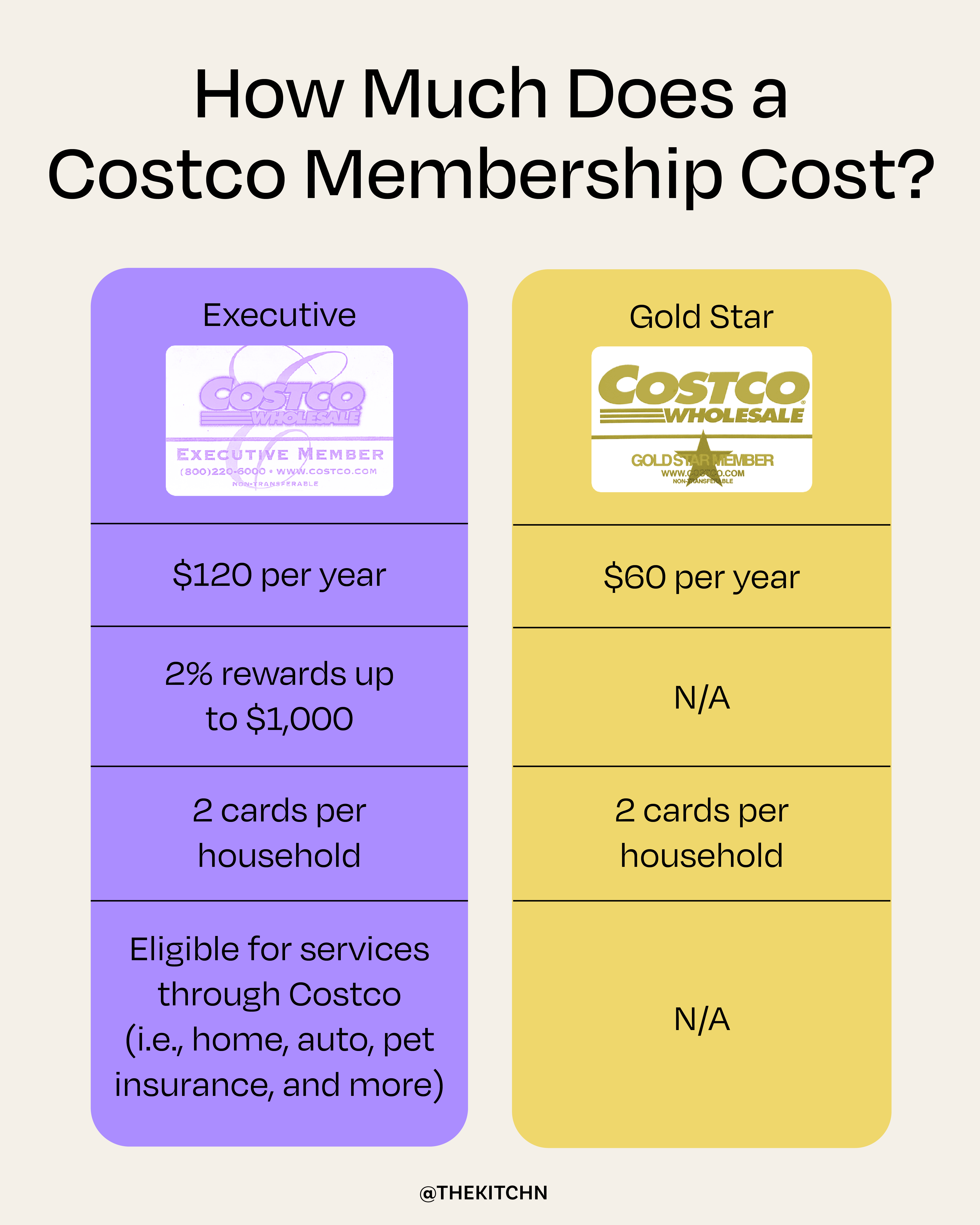
The Gold Star membership is the standard entry point, priced at $65 annually. This tier is designed for individuals and households who want access to Costco’s low warehouse prices without the complexity of a reward system. From a financial perspective, the Gold Star membership is a “break-even” game.
To justify a $65 annual fee, a member needs to save at least $5.42 per month compared to shopping at a traditional supermarket. Given that unit prices at Costco—especially on staples like milk, eggs, and rotisserie chicken—can be 20% to 40% lower than standard retail, most families find they reach this break-even point within just one or two monthly trips.
Executive Membership: Calculating the 2% Reward Break-Even Point
For those looking to turn their membership into a source of passive income, the Executive Membership is the premium option, costing $130 per year. The defining feature of this tier is the 2% annual reward on qualified Costco purchases (up to a maximum of $1,250).
The math for the Executive upgrade is straightforward but essential for financial planning. The price difference between the Gold Star and Executive tiers is $65. To recoup that additional $65 through the 2% reward, a member must spend $3,250 annually at Costco, or approximately $271 per month. For a family that buys groceries, household essentials, and gas at Costco, this threshold is easily surpassed. If you spend more than $271 a month, the Executive membership essentially pays for the upgrade itself, eventually subsidizing the entire cost of the membership.
Business Memberships: Scaling Your Venture through Wholesale
Costco also offers Business Memberships (priced similarly to the Gold Star and Executive tiers). For small business owners and freelancers, this is a tool for corporate finance management. Business members can purchase for resale, which requires a resale provider certificate. By sourcing office supplies, breakroom snacks, and even furniture from Costco, a business can significantly lower its overhead. The ability to add additional “add-on” members for a fee also allows a growing company to provide shopping benefits to key employees at a lower cost than individual memberships.
Maximizing Personal Finance through Bulk Savings
The true value of a Costco membership isn’t found in the membership card itself, but in the strategic use of the services and products inside the warehouse. When treated as a financial tool, the membership offers multiple avenues to shore up a household budget.
The “Costco Gas” Factor: Fueling Your Savings
Perhaps the most immediate way to see a return on the membership fee is at the pump. Costco’s Kirkland Signature Gasoline is typically priced several cents—sometimes up to 30 cents—lower per gallon than surrounding name-brand stations.
Consider a commuter who fills a 15-gallon tank once a week. If Costco saves them an average of $0.20 per gallon, they save $3.00 per fill-up. Over 52 weeks, that equates to $156 in annual savings. In this scenario, the gas savings alone completely pay for a Gold Star membership and contribute significantly toward the cost of an Executive membership.
Kirkland Signature: The Brand Strategy of Generic Excellence
From a personal finance perspective, “brand loyalty” is often a budget killer. However, Costco’s private label, Kirkland Signature, flips this logic. The brand is known for maintaining quality that often meets or exceeds that of national brands while being priced 20% lower.
By switching from name-brand laundry detergents, diapers, or olive oil to Kirkland Signature, a household can reduce its monthly grocery bill by a double-digit percentage. This “generic strategy” is one of the most effective ways to combat food inflation without sacrificing the quality of goods.
Ancillary Services: Insurance, Travel, and Optical Benefits
Many members overlook the “invisible” financial benefits of their membership. Costco Travel offers bundled vacation packages, car rentals, and cruises that often include “Costco Shop Cards” (store credit) as a rebate, effectively lowering the net cost of the trip.

Furthermore, Costco’s optical and pharmacy departments often provide lower out-of-pocket costs for prescriptions and eyewear than traditional retailers. For those without comprehensive dental or vision insurance, these services act as a form of “group discount” that can save hundreds of dollars on a single pair of progressive lenses or a course of medication.
The Hidden Costs of Warehouse Shopping: Avoiding the “Bulk Trap”
While the potential for savings is high, a Costco membership can also be a financial liability if not managed with discipline. The “warehouse effect” can lead to overspending, which negates any savings found on unit prices.
Impulse Spending and the Treasure Hunt Effect
Costco’s floor plan is intentionally designed as a “treasure hunt.” By placing essentials like milk and meat at the very back of the store and rotating “seasonal finds” in the center aisles, the store encourages impulse buys.
From a financial psychology standpoint, it is easy to justify a $20 “great deal” on a kitchen gadget or a giant plush toy because you believe you are saving money elsewhere. However, these unplanned purchases are the quickest way to blow a monthly budget. A successful Costco shopper must stick to a strict list to ensure that the “savings” aren’t being spent on items they never intended to buy.
Inventory Management: When Bulk Buying Leads to Waste
The math of bulk buying only works if 100% of the product is consumed. Buying a 5-pound bag of spinach at a low unit price is a financial loss if half of it wilts and is thrown away.
To optimize a Costco membership, one must practice efficient inventory management. This means assessing storage space and consumption rates before purchasing. For perishable items, bulk buying is often only a sound financial move for large families or those with significant freezer space. For solo dwellers or couples, focusing bulk purchases on non-perishables (toilet paper, soap, canned goods) is the smarter financial play.
Strategic Budgeting: Integrating Costco into a Financial Plan
To truly answer “how much is a Costco membership,” one must look at the total cost of ownership, including the time and travel required to shop there. Strategic budgeting can help maximize the membership’s utility.
Unit Pricing vs. Total Cost: The Mathematician’s Approach
The most important skill for a Costco member is the ability to calculate unit prices. A large package may seem like a bargain, but comparing the price per ounce or price per count against a local grocery store’s “loss leader” sales is essential.
Financial tools like budgeting apps can help track these costs over time. If a local grocer frequently puts cereal on a “buy one, get one free” sale, the unit price may actually be lower than Costco’s bulk price. A savvy financier knows when to buy at the warehouse and when to stick to the local market.
Leveraging Cash Back Credit Cards for Triple Rewards
For the ultimate optimization of Costco’s costs, one should layer rewards. By using a high-yield cash-back credit card (such as the Costco Anywhere Visa® Card by Citi) in conjunction with an Executive Membership, a shopper can earn 2% back from Costco and an additional percentage back from the credit card issuer.
When you combine these rewards with the inherent savings of bulk pricing and Kirkland Signature products, the “cost” of the membership becomes a net gain. In this context, the membership fee is not an expense, but an investment in a high-yield savings strategy for household expenditures.

Conclusion: The Final Verdict on the Membership Investment
So, how much is a Costco membership? Numerically, it is $65 or $130. But in the context of personal finance, its value is variable.
For the disciplined shopper who manages inventory, drives a car that requires frequent refueling, and utilizes the 2% Executive rewards, the membership is one of the most effective financial tools available. It offers a rare opportunity to lower the “burn rate” of a household’s monthly budget.
However, for the impulse buyer or the household that struggles with food waste, the membership can become a recurring annual leak in their financial bucket. To make the membership work for your money, you must approach the warehouse with a strategy: calculate your break-even point, leverage the private label, and resist the siren song of the “treasure hunt.” When used correctly, the cost of a Costco membership is not a price to be paid, but a gateway to significant, long-term wealth preservation.
aViewFromTheCave is a participant in the Amazon Services LLC Associates Program, an affiliate advertising program designed to provide a means for sites to earn advertising fees by advertising and linking to Amazon.com. Amazon, the Amazon logo, AmazonSupply, and the AmazonSupply logo are trademarks of Amazon.com, Inc. or its affiliates. As an Amazon Associate we earn affiliate commissions from qualifying purchases.