
In an era defined by volatile energy markets and the persistent creep of inflation, the question of “how much is Costco gas” transcends simple curiosity. For the modern consumer, it represents a critical calculation in the broader landscape of personal finance. Fuel is a non-negotiable line item for millions of households, and finding ways to shave even a few percentage points off that annual expenditure can lead to significant long-term savings.
Costco has positioned its fuel stations as a cornerstone of its value proposition, often offering prices that sit significantly lower than the national average. However, understanding the true cost and the financial strategy behind these pumps requires a deep dive into membership ROI, reward structures, and the opportunity costs of the “Costco run.”
The Personal Finance Perspective: Understanding the Price Gap
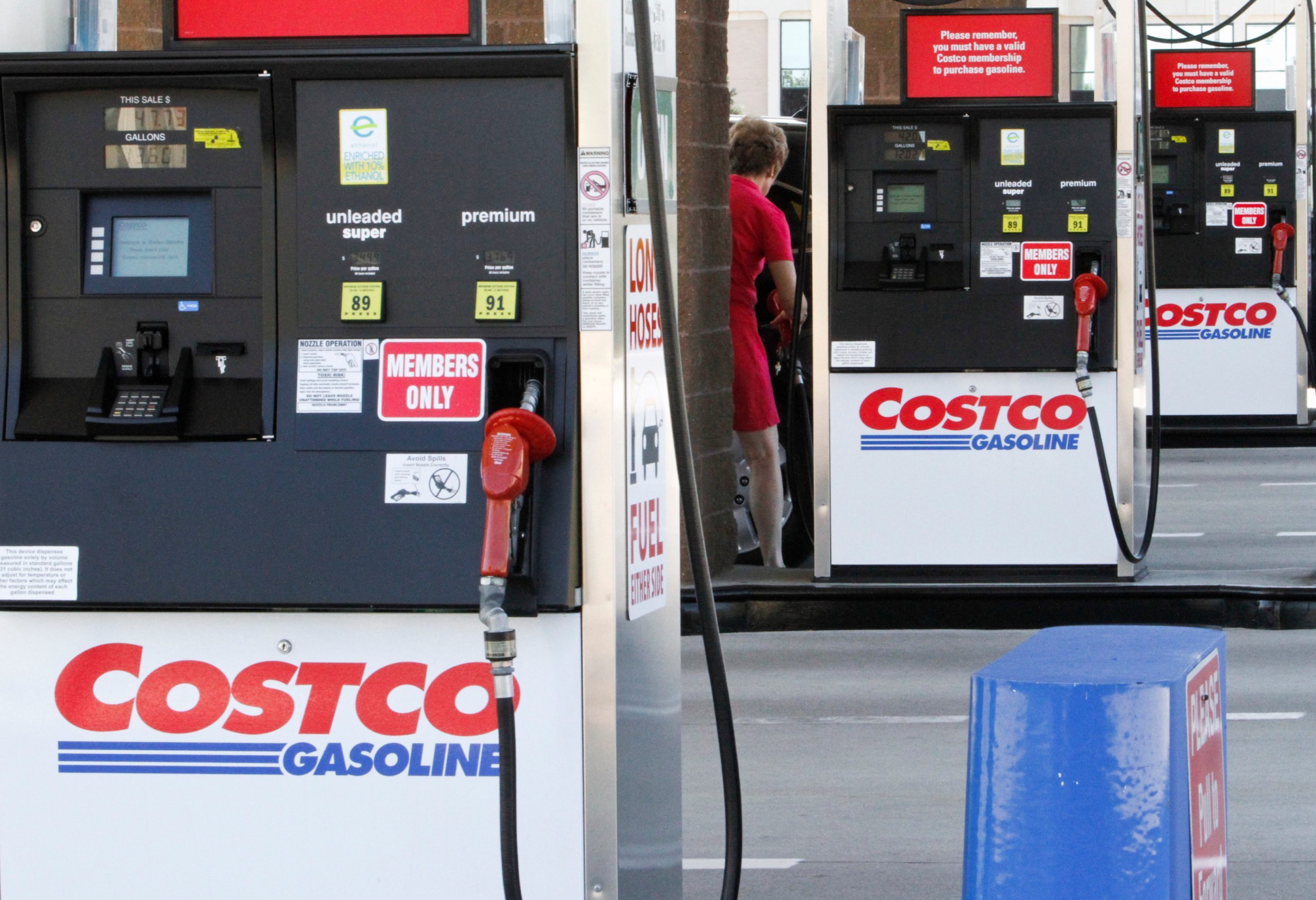
The primary draw of Costco’s gas stations is, undeniably, the price per gallon. While fuel prices fluctuate daily based on global crude oil markets, regional taxes, and local competition, Costco consistently maintains a price gap that ranges from $0.10 to $0.30 per gallon below traditional gas stations.
How Costco Undercuts Local Competitors
Costco’s ability to offer lower prices isn’t accidental; it is a calculated business finance strategy. Unlike traditional convenience stores that rely on high margins from fuel to offset low foot traffic inside, Costco operates on a high-volume, low-margin model. By selling gas at near-break-even points, they incentivize membership renewals and ensure that their parking lots remain full. For the consumer, this translates to immediate “micro-savings” at the pump that aggregate over the fiscal year.
The Role of “Loss Leaders” in Retail Finance
In the world of corporate finance, Costco gas is often categorized as a “loss leader” or a “thin-margin driver.” The goal is not necessarily to profit from the fuel itself but to drive “ancillary revenue.” When a member drives to Costco specifically for the fuel savings, the likelihood of them entering the warehouse to purchase high-margin items—like rotisserie chickens, electronics, or bulk dry goods—increases exponentially. From a personal finance standpoint, the savvy consumer must be wary of this; saving $5 on gas is negated if it leads to $50 of unplanned impulse spending inside the store.
Calculating the Real ROI of a Costco Membership
To accurately answer “how much is Costco gas,” one must factor in the cost of admission. As of current standings, a standard Gold Star membership costs $60 per year, while the Executive Membership sits at $120. These fees are the “entry price” for accessing discounted fuel.
The Membership Fee vs. Annual Gas Savings
To determine if the fuel savings justify the membership, a simple cost-benefit analysis is required. If a consumer saves an average of $0.20 per gallon at Costco and has a vehicle with a 15-gallon tank, they save $3.00 per fill-up. To recoup the $60 basic membership fee through gas alone, that consumer would need to fill up 20 times per year.
For a household with two vehicles, this break-even point is reached in less than three months. For a single commuter, the math still favors the membership, provided the Costco location is on their regular route. However, if the membership is used only for gas, the financial utility diminishes if the driver covers fewer than 10,000 miles annually.
Factoring in Convenience and the “Idling Cost”
A factor often overlooked in personal finance is the “value of time.” Costco gas stations are notorious for long queues, especially during peak weekend hours or Monday mornings. If a driver spends 20 minutes idling in line to save $3.00, they are essentially valuing their time at $9.00 per hour. Furthermore, idling consumes fuel. If a vehicle burns half a gallon of gas while waiting in a 20-minute line, the “savings” are effectively neutralized. The most financially astute members optimize their visits by refueling during off-peak hours—typically mid-week or late in the evening—to maximize the efficiency of their savings.
Strategic Spending: Maximizing Rewards and Cashback
Beyond the sticker price at the pump, the “true cost” of Costco gas can be further reduced through strategic use of financial tools. Costco’s ecosystem is designed to reward loyalty, and for those focused on wealth optimization, the payment method used at the pump is just as important as the price per gallon.
The Costco Anywhere Visa® Card by Citi
One of the most powerful tools in a member’s financial arsenal is the co-branded Costco Anywhere Visa® Card. This card offers 4% cashback on eligible gas and EV charging for the first $7,000 per year (then 1% thereafter). When you combine a $0.20 per gallon discount with a 4% cashback reward, the effective price of fuel drops significantly. For a consumer paying $3.50 per gallon, a 4% rebate adds an additional $0.14 per gallon in savings, bringing the total “discount” relative to a $3.70 market price to $0.34 per gallon.
Alternative Credit Cards for High-Volume Fuel Spending
While the Citi card is a top-tier choice for Costco loyalists, other high-yield cashback cards can be leveraged. Many premium credit cards offer rotating 5% cashback categories that include “Wholesale Clubs” or “Gas Stations.” By rotating these cards based on the fiscal quarter, a disciplined spender can ensure they are always capturing the highest possible margin of return on their fuel purchases. This level of granular financial management is what separates average consumers from those who successfully optimize their household budgets.
Market Dynamics and the Value of Kirkland Signature Fuel
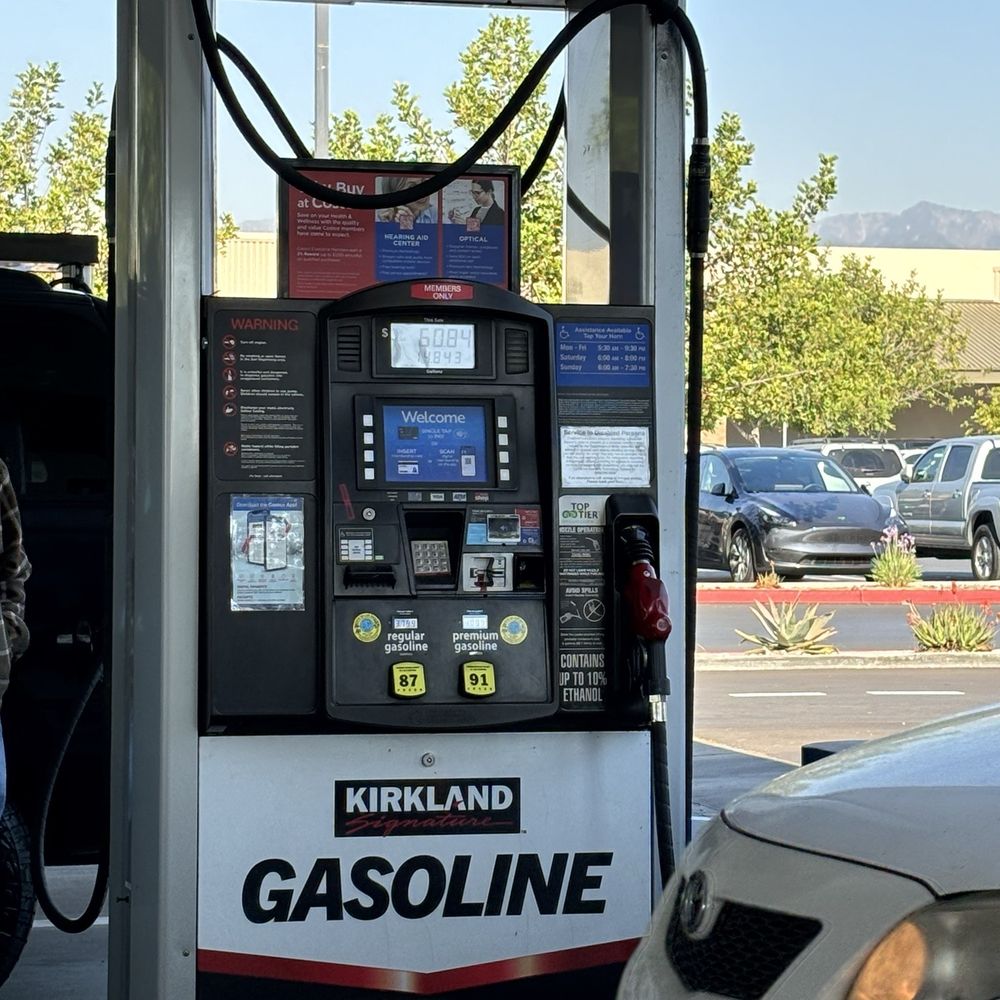
When discussing the cost of fuel, quality is a variable that impacts long-term vehicle maintenance costs—a major component of personal finance. Costco’s gas is branded as “Kirkland Signature™ Fuel,” and it meets “TOP TIER™” performance standards.
The Long-Term Impact on Vehicle Maintenance
From a financial perspective, fuel quality is an insurance policy for your vehicle’s engine. Lower-quality fuels can lead to carbon buildup on fuel injectors and intake valves, eventually resulting in decreased fuel economy and costly mechanical repairs. By providing TOP TIER™ fuel at a discount, Costco offers a dual financial benefit: immediate savings at the pump and the mitigation of long-term “hidden costs” associated with engine degradation. This contributes to a lower “Total Cost of Ownership” (TCO) for the member’s vehicle.
How Costco Responds to Market Volatility
Costco’s pricing strategy is also more “sticky” than traditional retailers. While a local gas station might raise prices the moment oil futures spike, Costco’s large-scale procurement and inventory management often allow them to delay price hikes for a few days, providing a buffer for consumers during periods of market instability. Conversely, when prices drop, Costco is often among the first to lower their rates to maintain their competitive edge. For the budget-conscious consumer, this predictability makes it easier to forecast monthly transportation expenses.

Conclusion: Is Costco Gas a Sound Financial Move?
The answer to “how much is Costco gas” is not a fixed number, but rather a variable in a larger financial equation. For the vast majority of drivers, the combination of lower per-gallon prices, high-quality fuel standards, and robust cashback rewards makes it a cornerstone of a smart personal finance strategy.
To truly benefit, consumers must move beyond the surface-level discount. They must account for the membership fee, avoid the “idling trap” that wastes time and fuel, and use the right financial instruments to stack rewards. When managed with this level of intentionality, the Costco gas pump becomes more than just a place to refuel—it becomes a high-yield tool for reducing one of life’s most persistent recurring expenses. In the broader context of wealth building and expense management, these cents per gallon represent the small, consistent wins that ultimately lead to a more resilient and optimized financial life.
aViewFromTheCave is a participant in the Amazon Services LLC Associates Program, an affiliate advertising program designed to provide a means for sites to earn advertising fees by advertising and linking to Amazon.com. Amazon, the Amazon logo, AmazonSupply, and the AmazonSupply logo are trademarks of Amazon.com, Inc. or its affiliates. As an Amazon Associate we earn affiliate commissions from qualifying purchases.