
Calculating the financial obligation of child support is one of the most significant aspects of personal finance for parents transitioning into a co-parenting arrangement. When a household splits, the economies of scale that once supported a family are disrupted, and the legal system steps in to ensure that the child’s financial well-being remains a priority. For a single child, the question of “how much” is rarely a flat rate. Instead, it is a complex calculation rooted in state law, parental income, and the specific needs of the child.

From a financial planning perspective, understanding these obligations is crucial for budgeting, debt management, and long-term wealth building. Whether you are the parent expected to pay support or the one receiving it, navigating the monetary landscape of child support requires a deep dive into the formulas used by the courts and the indirect costs that often fall outside of a standard monthly check.
Understanding the Formula: How States Calculate the Cost of Raising One Child
Every state in the U.S. has established guidelines for child support, but they generally fall into three primary economic models. These models are designed to estimate the amount of money parents would have spent on their child if they had remained in a single household.
The Income Shares Model
The most common approach, used by the majority of states, is the Income Shares Model. This model is based on the philosophy that the child should receive the same proportion of parental income that they would have received if the parents lived together. The court calculates the combined income of both parents and determines a total support obligation based on economic tables. This total is then divided between the parents in proportion to their respective incomes. For one child, this often results in a payment that scales with the earners’ combined “brackets,” ensuring the child benefits from the financial success of both parents.
Percentage of Income Model
Some states utilize the Percentage of Income Model, which is arguably the most straightforward. In this scenario, the court sets a flat percentage of the non-custodial parent’s income to be paid as support. For one child, this percentage typically ranges from 17% to 25% of the payer’s net or gross income, depending on the state’s specific statutes. This model is less concerned with the custodial parent’s income and focuses primarily on the “obligor’s” ability to pay.
The Melson Formula and State Variations
A more nuanced version of the Income Shares Model is the Melson Formula. Currently used in only a handful of states (like Delaware and Hawaii), it incorporates a “self-support reserve.” This ensures that the parent paying support can maintain a basic standard of living before the child support amount is finalized. If the payer’s income increases significantly, the formula applies a “Standard of Living Adjustment” (SOLA) to ensure the child shares in the parent’s financial prosperity.
Factors That Influence the Final Dollar Amount
The base calculation is only the starting point. Several financial variables can shift the final number significantly, making the cost for one child vary wildly even between two families with identical base salaries.
Net vs. Gross Income
Financial literacy is key when reviewing a support order. Some states calculate support based on gross income (total earnings before taxes), while others use net income (take-home pay after taxes and mandatory deductions). For self-employed individuals or those with complex investment portfolios, defining “income” can become a point of significant financial contention. Business expenses, depreciation, and tax write-offs must be carefully scrutinized to ensure the child support figure accurately reflects the parent’s actual cash flow.
Parenting Time and Physical Custody Splits
The “overnight” count is a major lever in child support math. In a “sole custody” arrangement, the non-custodial parent typically pays the full calculated amount. However, in “joint physical custody” or “shared parenting” arrangements, the amount is often offset. If both parents have the child 50% of the time, the parent with the higher income may still pay support, but the amount is reduced to account for the direct expenses (food, utilities, housing) they incur while the child is in their care.
Extraordinary Expenses and Special Needs
Standard child support tables assume a “typical” child. If a child has special medical needs, requires specialized therapy, or attends a private school, these “extraordinary expenses” are added to the basic support obligation. From a personal finance standpoint, these are often “add-on” costs that are split proportionally to income, meaning the total monthly output for one child can easily double if the child has high-cost requirements.
Beyond the Monthly Check: Hidden Costs and Indirect Financial Obligations
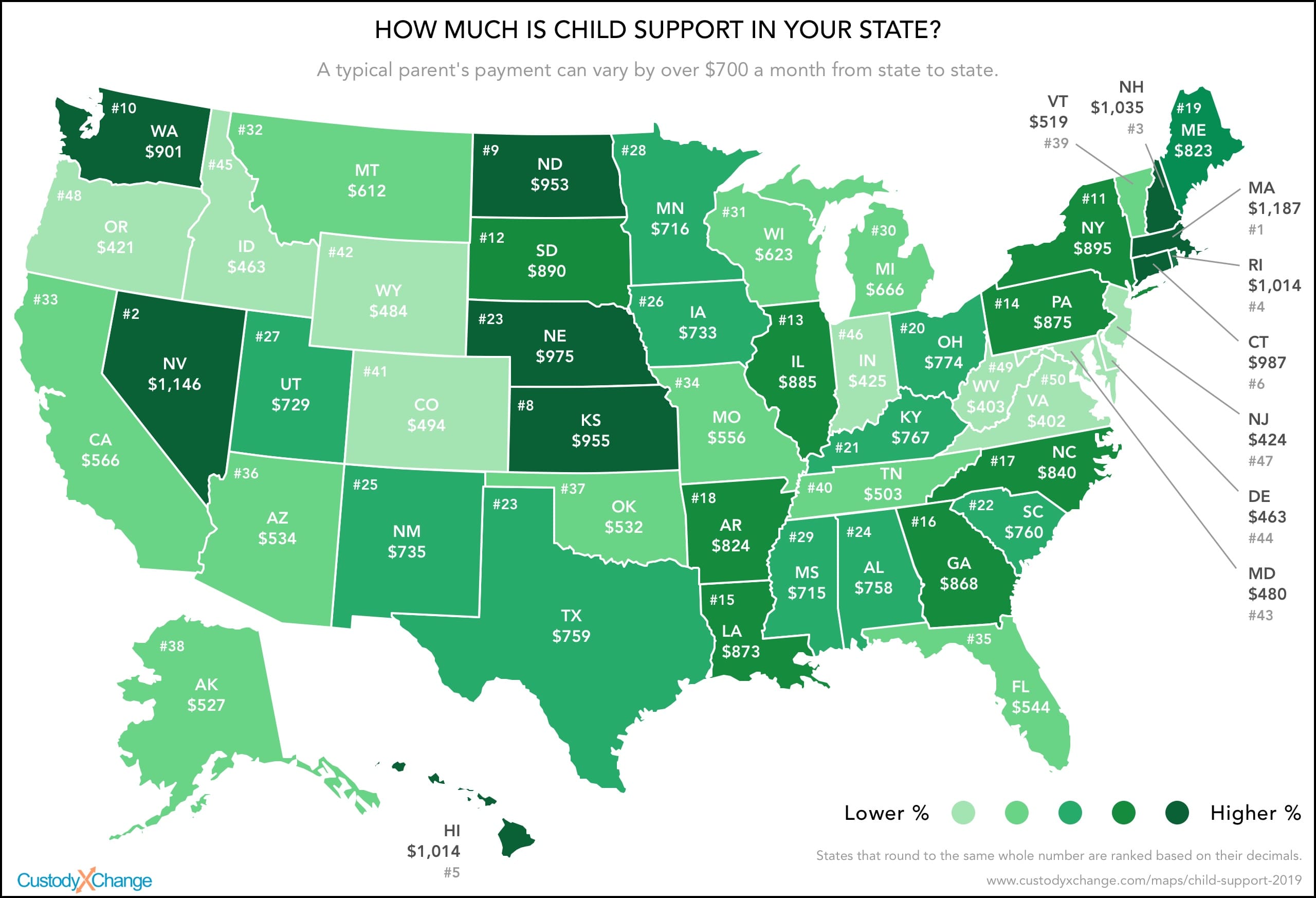
A common misconception in personal finance is that the “child support payment” covers every expense related to the child. In reality, a court order usually outlines additional financial responsibilities that are handled outside of the base monthly transfer.
Health Insurance and Unreimbursed Medical Expenses
In almost every jurisdiction, the court will mandate that one or both parents provide health insurance for the child. The cost of the premium is often factored into the support calculation, but the real financial variable lies in “unreimbursed medical expenses”—deductibles, co-pays, and prescriptions. Most orders require parents to split these costs (e.g., 50/50 or 60/40). For a parent on a tight budget, an unexpected orthodontic bill or emergency room visit can represent a significant financial shock.
Childcare and Educational Costs
Work-related childcare is one of the most significant expenses for parents of young children. Because childcare is necessary for the parents to earn the income used to pay support, it is treated as a separate, mandatory add-on. For one child, daycare or after-school care can cost upwards of $1,000 to $2,000 per month in major metropolitan areas. This cost is typically shared, but it represents a massive line item that parents must account for in their monthly cash flow projections.
Extracurricular Activities and Life Milestones
Sports, music lessons, summer camps, and school trips are generally considered “discretionary” but are often negotiated into a parenting agreement. While not always legally mandated by the state’s base formula, these costs are essential for maintaining the child’s lifestyle. Savvy financial planners recommend creating a “sinking fund” or a dedicated savings account specifically for these seasonal or annual child-related expenses.
Managing Your Personal Finances While Paying or Receiving Support
Integrating child support into a long-term financial strategy requires a shift in how you view your balance sheet. Whether you are the payer or the receiver, the stability of this income or expense is paramount.
Budgeting and Cash Flow Management
For the payer, child support is a non-negotiable fixed expense, similar to a mortgage or a car payment. However, unlike a mortgage, failure to pay can result in severe legal and financial consequences, including wage garnishment, credit score damage, and the loss of professional licenses. For the recipient, child support should be viewed as a supplementary income stream. Relying solely on child support to cover basic housing or debt can be risky, as payments may become inconsistent if the other parent faces job loss or financial hardship.
The Tax Implications of Child Support Payments
Following the Tax Cuts and Jobs Act (TCJA) of 2017, the tax treatment of child support remained clear but distinct from alimony. For all orders finalized or modified after 2018, child support is tax-neutral. This means the parent paying the support cannot deduct the payments from their taxable income, and the parent receiving the support does not have to report it as taxable income. This is a critical distinction for personal finance, as it ensures that the “net” amount received is exactly what is available for the child’s needs.
Modifying Orders Based on Financial Hardship or Growth
Child support is not static. If a parent experiences a “substantial change in circumstances”—such as a 15% increase or decrease in income, the loss of a job, or a change in the child’s needs—they can petition for a modification. Proactive financial monitoring is essential here. If you are the payer and lose your job, you must file for a modification immediately; arrears (unpaid support) accrue at the current rate and are rarely forgiven by the court, even in cases of unemployment.
Long-Term Financial Planning and the Future of the Child
As a child grows, the financial focus shifts from immediate needs (daycare and diapers) to future goals (college and independence). Effective co-parenting requires looking beyond the monthly support check toward long-term wealth building for the next generation.
Funding College and 529 Plans
In many states, the legal obligation to pay child support ends when the child turns 18 or graduates from high school. However, the cost of higher education is a looming financial reality. Forward-thinking parents often include provisions for 529 College Savings Plans in their separation agreements. Deciding who owns the account and how much each parent contributes monthly is a vital part of a comprehensive financial plan for a single child.

Balancing Support with Retirement Savings
One of the greatest challenges for parents paying child support is balancing their legal obligations with their own retirement needs. Because child support takes a significant bite out of discretionary income, many parents neglect their 401(k) or IRA contributions. However, it is essential to remember that while there are loans for college, there are no loans for retirement. Automating savings and treating retirement contributions as a “mandatory” expense alongside child support is the only way to ensure long-term financial security for both the parent and the child’s future inheritance.
In conclusion, the cost of child support for one child is rarely a simple figure found on a chart. It is a dynamic financial obligation that reflects the parents’ income, the child’s specific needs, and the evolving landscape of modern personal finance. By understanding the formulas, accounting for hidden costs, and planning for the long term, parents can ensure that their child is financially supported while maintaining their own fiscal health.
aViewFromTheCave is a participant in the Amazon Services LLC Associates Program, an affiliate advertising program designed to provide a means for sites to earn advertising fees by advertising and linking to Amazon.com. Amazon, the Amazon logo, AmazonSupply, and the AmazonSupply logo are trademarks of Amazon.com, Inc. or its affiliates. As an Amazon Associate we earn affiliate commissions from qualifying purchases.