
Navigating the complexities of child support can be one of the most significant financial challenges for parents separating or divorcing in California. Unlike some states with simpler formulas, California employs a sophisticated statewide guideline that aims to ensure children receive financial support commensurate with their parents’ ability to pay and their standard of living. For a single child, understanding this intricate system is paramount to preparing for your financial future. This article delves into the specifics of how child support is calculated in California for one child, the key factors that influence the final amount, and the financial implications for both parents.
Understanding California’s Child Support Guidelines
California’s approach to child support is rooted in a fundamental principle: children have a right to share in the financial well-being of both parents. The statewide guideline formula is designed to achieve this equity, ensuring that children do not suffer undue financial hardship due to parental separation. It’s a mandatory formula, meaning judges must apply it unless very specific, limited circumstances warrant a deviation.
The Statewide Guideline Formula
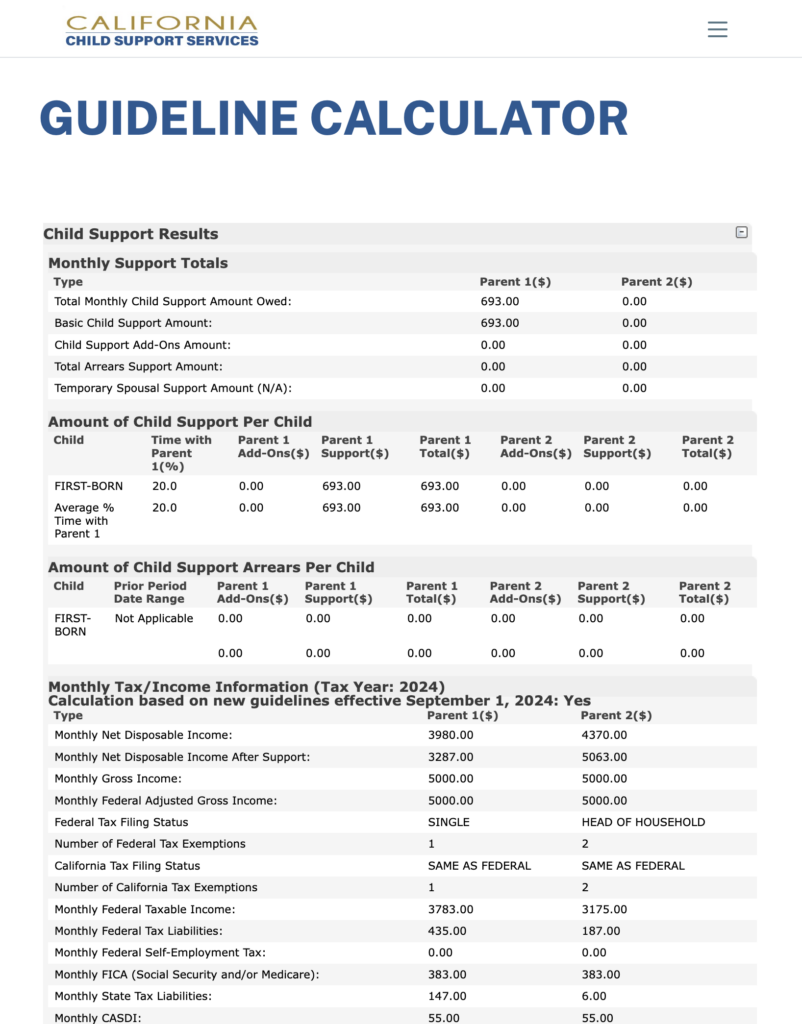
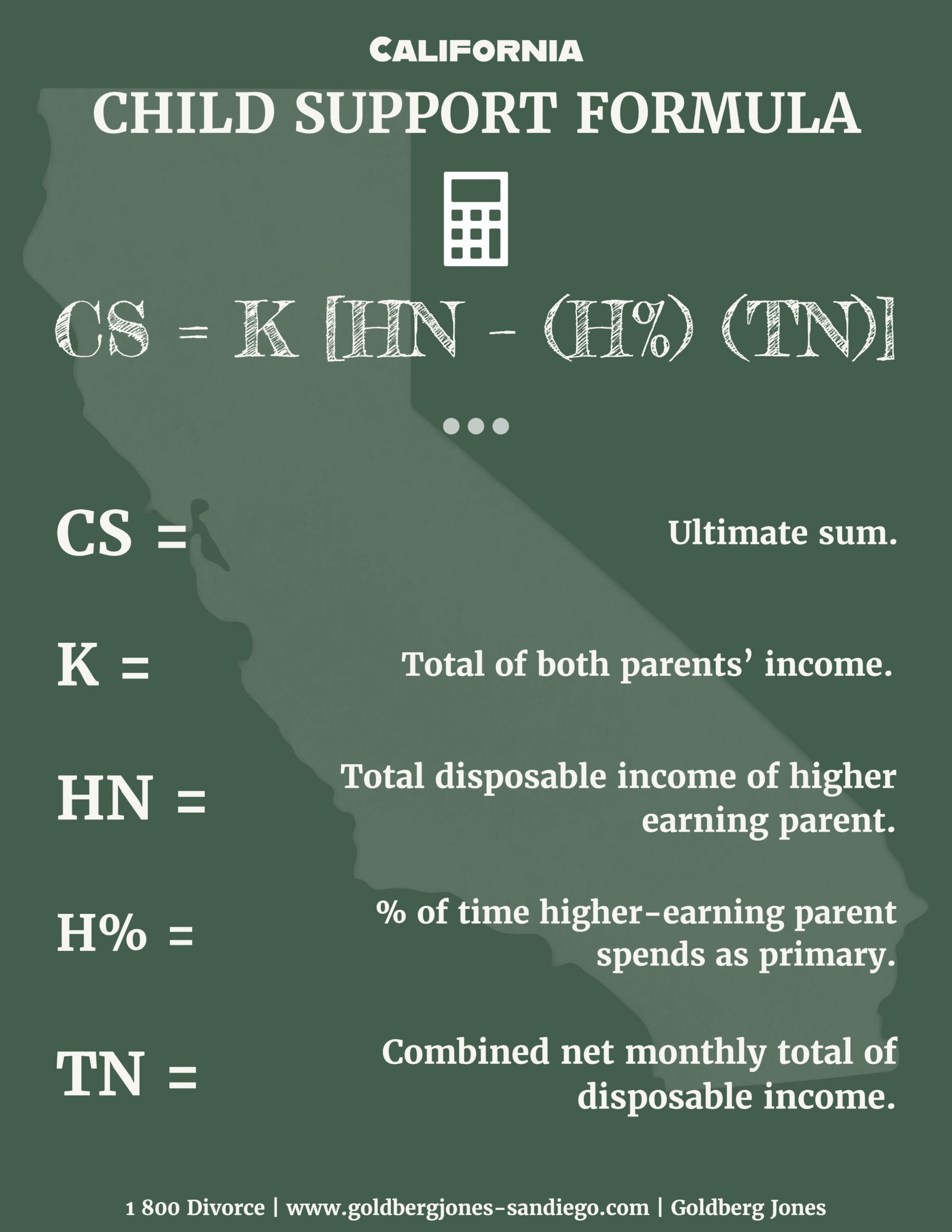
The California statewide guideline formula is a complex algebraic equation that takes into account numerous variables. While the specific mathematical calculation is typically performed by specialized software used by courts and legal professionals (like DissoMaster or XSpouse), understanding its core components is crucial. The goal isn’t just to cover basic needs; it’s to maintain, as much as possible, the standard of living the child would have enjoyed if the parents had remained together. This formula acts as the starting point for nearly all child support orders in the state, making the question of “how much” intrinsically tied to its intricate logic.
Key Factors Influencing the Calculation
The guideline formula is not a simple flat rate. It is highly individualized, adjusting based on specific financial and logistical details of each family. For a single child, the amount will vary significantly depending on a range of factors:
- Parents’ Net Disposable Income: This is arguably the most critical factor. It’s calculated by taking gross income and subtracting mandatory deductions like federal and state income taxes, Social Security, Medicare, mandatory union dues, and health insurance premiums. The higher the combined net disposable income, the higher the potential child support award.
- Time-Share (Custodial Time) with Children: The percentage of time each parent has physical custody of the child plays a substantial role. The guideline assumes that the parent with more custodial time is already spending a greater portion of their income directly on the child’s daily needs. Therefore, generally, the less time a parent has with the child, the more child support they are likely to pay.
- Number of Children: While our focus is on one child, the formula does account for multiple children. However, for a single child, the calculation simplifies slightly by not needing to allocate resources across multiple dependents from the same parents.
- Other Mandatory Expenses: Health insurance premiums for the child, child care costs necessary for employment or education, and certain uninsured healthcare costs are all considered.
- Pre-Existing Support Orders: If either parent is already paying child support or spousal support for other relationships, these amounts can be factored into their net disposable income calculation.
It’s clear that determining “how much” requires a comprehensive look at both parents’ financial pictures and their parenting schedule, underscoring the personalized nature of child support in California.
Deconstructing the Guideline Formula: Key Variables
To truly grasp the financial implications, one must break down the core variables that feed into the California child support guideline formula. Each element contributes significantly to the final monetary figure for one child.
Parents’ Net Disposable Income
The bedrock of any child support calculation is the income of both parents. “Net disposable income” is not simply take-home pay; it’s a carefully defined figure. Gross income includes nearly all sources of income, such as salaries, wages, bonuses, commissions, self-employment income, rental income, disability benefits, unemployment benefits, and even certain types of benefits like workers’ compensation. From this gross amount, specific deductions are made to arrive at the net disposable income. These deductions are typically non-discretionary and represent essential costs of living or prior financial commitments. Accurately reporting and verifying income is crucial, as any misrepresentation can significantly alter the child support order for your single child.
Time-Share with Children
The concept of “time-share” is central to the guideline formula’s equitable distribution of financial responsibility. It refers to the percentage of time each parent spends with the child. If parents have a 50/50 physical custody arrangement, the child support amount may be lower than if one parent has 80% of the time and the other has 20%. The rationale is that the parent with more time is already directly contributing to the child’s housing, food, and daily needs. The guideline formula then calculates a transfer payment from the higher-earning parent to the lower-earning parent to balance the child’s financial support, taking into account the time-share disparity. Even with one child, slight variations in overnight stays can lead to noticeable differences in the final support payment.
Other Deductions and Add-ons
Beyond income and time-share, several other financial considerations can either reduce a parent’s net disposable income for calculation purposes or result in “add-on” expenses to the base child support amount.
- Health Insurance Premiums: The cost of health insurance for the child (and sometimes the parents) is typically considered a deduction when calculating net disposable income, as it’s a mandatory expense benefiting the child.
- Childcare Costs: Reasonable childcare expenses incurred by either parent due to employment, job search, or education necessary for employment are usually shared equally by the parents and added to the base support. For a single child, this can be a significant additional cost.
- Uninsured Health Expenses: Costs for the child’s uninsured medical, dental, and vision care are typically divided equally between parents as an add-on.
- Special Needs: In some cases, a child with special educational or medical needs may require additional support beyond the guideline amount, which can be factored in as a discretionary add-on.
- Travel for Visitation: While not always an add-on, in situations where one parent incurs significant costs for travel to facilitate visitation with the child, the court may consider this in the support order, potentially as a reduction for the payor or an add-on for the recipient.
These “add-ons” mean that the base child support amount calculated by the formula isn’t always the final total paid or received, especially when accounting for a single child’s specific needs and related expenses.
The Process of Establishing and Modifying Child Support
Understanding “how much” child support is requires not just knowing the formula but also the legal and financial process involved in establishing and potentially changing an order for one child in California.
Initial Order Establishment
Child support orders can be established in several ways. Often, they are part of a divorce or legal separation proceeding. If parents were never married, either parent can petition the court to establish a paternity and child support order. The California Department of Child Support Services (DCSS) also plays a vital role, offering services to establish and enforce child support orders. Whether through the courts or DCSS, the process typically involves:
- Filing a Petition: One parent formally requests the court to establish an order.
- Financial Disclosures: Both parents are required to submit detailed income and expense declarations, providing all necessary financial information for the guideline calculation. This is critical for accurately determining support for your single child.
- Mediation/Negotiation: Parents may attempt to reach an agreement on child support outside of court, which the judge will then review.
- Court Hearing: If no agreement is reached, a judge will apply the statewide guideline formula based on the submitted financial information and make a final order.
Modification of Existing Orders
Life circumstances change, and what was appropriate for child support at one point may no longer be fair or sufficient later on. Either parent can request a modification of a child support order if there has been a “significant change in circumstances.” For a single child, common reasons for modification include:
- Significant change in either parent’s income: A job loss, promotion, or substantial increase/decrease in earnings.
- Change in time-share: A shift in the physical custody arrangement that significantly alters the percentage of time each parent spends with the child.
- Change in healthcare costs or childcare expenses: New or discontinued needs for the child.
- Remarriage of a parent (indirectly affecting ability to pay/receive, though new spouse’s income is generally not directly considered).
The process for modification mirrors the initial establishment, requiring new financial disclosures and court review. It’s crucial not to simply stop paying or unilaterally reduce payments without a court order, as this can lead to enforcement actions.
Enforcement Mechanisms
Once a child support order is established for your child, it is legally binding. California has robust enforcement mechanisms to ensure that parents meet their financial obligations. These can include:
- Wage Garnishment: The most common method, where child support is automatically deducted from the paying parent’s paycheck.
- Bank Levies: Funds can be withdrawn directly from bank accounts.
- Property Liens: Liens can be placed on real estate or other assets.
- License Suspensions: Driver’s licenses, professional licenses, and even passports can be suspended.
- Tax Refund Intercepts: State and federal tax refunds can be intercepted to cover unpaid support.
- Contempt of Court: In severe cases of willful non-payment, a parent can face fines or even jail time.
These mechanisms are in place to secure the financial well-being of the child, ensuring that the “how much” translates into actual payments.
Financial Implications and Planning for Child Support
Regardless of whether you are the payor or recipient, a child support order for one child has significant financial implications that require careful planning and budgeting. It’s not just about the monthly transfer; it’s about integrating this financial reality into your overall economic strategy.
Budgeting for Payors and Recipients
For the paying parent, child support becomes a non-negotiable fixed expense in their budget. It’s essential to factor this into monthly spending, savings, and debt repayment plans. Failing to do so can lead to arrears and severe legal consequences. It often requires a re-evaluation of discretionary spending and a focus on financial discipline.
For the receiving parent, child support is typically a critical component of their household income dedicated to raising the child. While it provides essential financial stability, it’s generally not considered “income” for all purposes and may not fully cover all expenses associated with raising a child, especially if the child lives with them most of the time. Budgeting needs to account for the base support, any add-ons, and the gap that might exist between these funds and the actual costs of housing, food, clothing, education, and extracurricular activities for the child. Effective budgeting ensures that the funds received are utilized effectively to meet the child’s needs.
Tax Implications of Child Support
A common misconception revolves around the tax treatment of child support. In the United States, child support payments are not tax-deductible for the paying parent, and they are not considered taxable income for the receiving parent. This means the paying parent cannot claim the payments as an expense to reduce their taxable income, and the receiving parent does not need to report child support as income on their tax return.
However, child support can indirectly affect other tax benefits, particularly concerning the claiming of dependents. Generally, the parent with whom the child lives for the majority of the year (the custodial parent) is entitled to claim the child as a dependent for tax purposes, including benefits like the Child Tax Credit. There are exceptions and agreements that can alter this, but it’s a crucial point of financial planning that should be discussed and agreed upon (or court-ordered) to avoid disputes and maximize tax benefits for both parents, ultimately benefiting the child.
Seeking Legal and Financial Guidance
Given the complexity of California’s child support guidelines and the significant financial impact, it is highly advisable to seek professional guidance.
- Legal Counsel: An experienced family law attorney can provide invaluable assistance in navigating the court system, accurately calculating child support, negotiating agreements, and representing your interests in court. They can ensure all factors are correctly considered and help you understand your rights and obligations regarding your single child.
- Financial Advisor: Beyond the legal order, a financial advisor can help both payor and recipient integrate child support into their long-term financial plans. This includes budgeting, investment strategies, college savings plans (e.g., 529 plans for the child), and overall wealth management, taking into account the child support payments as a regular financial flow.
These professionals can help transform the “how much” into a manageable and predictable financial reality.
Common Misconceptions and Special Considerations
The world of child support is rife with misunderstandings. Clarifying these and addressing specific scenarios is key to a complete financial picture for child support with one child in California.
Child Support vs. Alimony/Spousal Support
It’s crucial to distinguish child support from alimony, also known as spousal support in California. Child support is solely for the financial needs of the child and is based on a statewide guideline formula. Spousal support, on the other hand, is for the financial needs of a former spouse and is determined based on a different set of factors, including the length of the marriage, the standard of living during the marriage, and each spouse’s earning capacity. While both are financial transfers, they serve different purposes and have distinct legal and tax treatments. Child support is calculated first, as it can influence the available income for spousal support calculations.
High-Income Earners and Deviations
For very high-income earning parents, the standard guideline formula can sometimes result in an amount that exceeds the actual needs of the child. In such “high earner” cases, a court may, under specific circumstances, deviate from the guideline amount if it can be demonstrated that the guideline amount would be unjust or inappropriate for the single child. However, the burden of proof is high, and the court’s primary concern remains the child’s best interest and ensuring they maintain a standard of living commensurate with their parents’ wealth. Deviations are exceptions, not the rule.

Emancipation and Termination of Support
In California, child support typically continues until a child turns 18 years old. However, there are important exceptions:
- High School Students: If the child is 18 years old but still a full-time high school student and not self-supporting, child support usually continues until they graduate or turn 19, whichever comes first.
- Early Emancipation: If a child legally marries, enters the military, or is declared emancipated by a court before turning 18, child support may terminate early.
- Agreement: Parents can agree to extend support beyond these ages, for example, through college, but this must be a mutual agreement, often stipulated in the divorce or support order itself.
Automatic termination means that the paying parent should not simply stop payments on the child’s 18th birthday without verifying the specific terms of their order or the child’s status.
The question “how much is child support for 1 kid in California” doesn’t have a single, simple answer. It depends on a dynamic interplay of incomes, time-share, and other specific expenses. Understanding these elements, coupled with sound financial and legal advice, is the most effective way for parents to ensure their child’s financial well-being while navigating the complexities of separation.
aViewFromTheCave is a participant in the Amazon Services LLC Associates Program, an affiliate advertising program designed to provide a means for sites to earn advertising fees by advertising and linking to Amazon.com. Amazon, the Amazon logo, AmazonSupply, and the AmazonSupply logo are trademarks of Amazon.com, Inc. or its affiliates. As an Amazon Associate we earn affiliate commissions from qualifying purchases.