
Broadcom Inc. (AVGO) has established itself as a cornerstone of the modern technological infrastructure, yet for many investors, determining the true value of its stock requires looking far beyond the daily ticker price. As a dominant force in both the semiconductor and enterprise software sectors, Broadcom represents a complex investment vehicle that balances aggressive growth with a disciplined return of capital to shareholders. To understand how much Broadcom stock is worth, one must analyze its recent stock split, its core valuation metrics, and the underlying financial engines that drive its market capitalization.
The Impact of the 10-for-1 Stock Split on Pricing
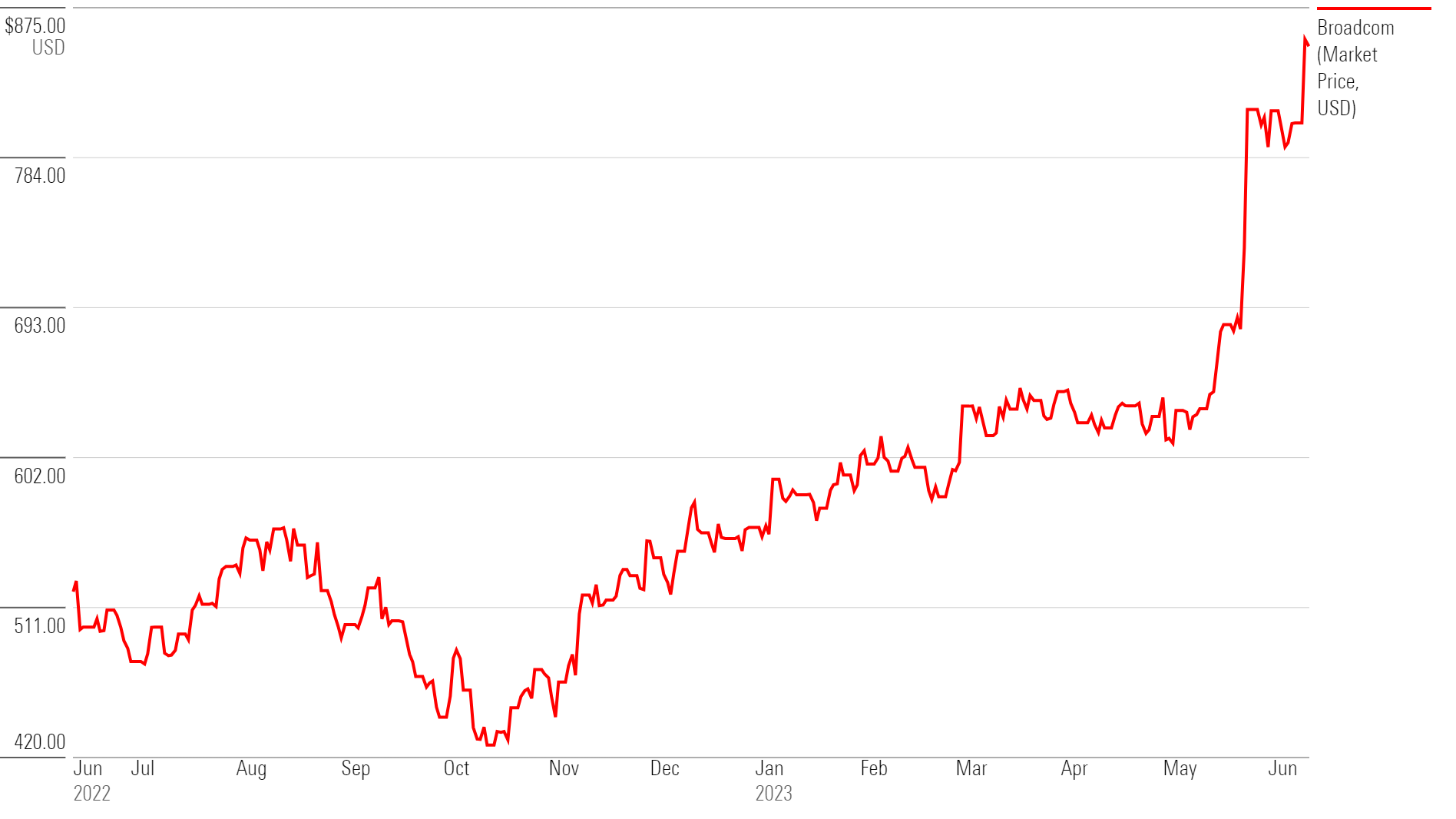
In mid-2024, Broadcom executed a 10-for-1 forward stock split. Before this move, the share price had climbed well above $1,000, creating a high barrier to entry for retail investors and complicating the options market for the company. The split did not change the fundamental value of the company—the total market capitalization remained the same—but it significantly lowered the nominal price per share.
For an investor asking “how much is Broadcom stock,” the answer now sits in a more accessible triple-digit range. This psychological and structural shift has historically led to increased liquidity. However, the price of the stock is rarely static. It is a reflection of the market’s collective expectation for Broadcom’s future cash flows, particularly in an era where artificial intelligence and cloud computing are driving unprecedented demand for the company’s networking and custom silicon solutions.
Key Valuation Metrics: P/E Ratios and Forward Earnings
When assessing the price of Broadcom, seasoned investors look at the Price-to-Earnings (P/E) ratio to determine if the stock is trading at a premium or a discount relative to its historical averages and its peers. Broadcom has historically traded at a more modest valuation compared to high-flying semiconductor peers like NVIDIA, largely because a significant portion of its revenue comes from mature, steady-state businesses like mainframe software and storage adapters.
Trailing vs. Forward P/E
The trailing P/E ratio tells us how much investors are paying for every dollar of profit earned over the past twelve months. However, in the fast-moving tech sector, the forward P/E ratio—based on estimated earnings for the next fiscal year—is often more instructive. Because Broadcom is currently in a phase of rapid expansion due to its AI-related sales and the integration of VMware, its forward P/E often looks more attractive than its trailing P/E.
If the forward P/E is significantly lower than the trailing P/E, it suggests that analysts expect earnings to grow substantially. For Broadcom, this growth is anticipated to come from the synergy of its recent acquisitions and the scaling of its AI infrastructure business. Investors must weigh this “price of growth” against the broader market volatility to decide if the current entry point represents fair value.
Enterprise Value to EBITDA
Given Broadcom’s history of large-scale acquisitions, such as Symantec, CA Technologies, and most recently VMware, Enterprise Value (EV) to EBITDA is a critical metric. This measurement accounts for the significant debt Broadcom often takes on to fund these purchases. By looking at EV/EBITDA, investors can see a clearer picture of the company’s operational efficiency and its ability to service debt while continuing to innovate. Broadcom’s management is renowned for its “operating model,” which focuses on acquiring market-leading franchises and optimizing their cash flow, a strategy that consistently supports a premium stock price.
Drivers of Broadcom’s Stock Price Performance
The price of Broadcom stock is not merely a reflection of past performance; it is a bet on the future of global connectivity. Several key catalysts currently dictate the upward or downward movement of the stock, and understanding these is essential for any financial analysis.
The AI Revolution and Custom Silicon
The most significant driver of Broadcom’s stock price in recent years has been the explosion of generative artificial intelligence. Broadcom does not just produce off-the-shelf chips; it is the industry leader in custom ASICs (Application-Specific Integrated Circuits). Large hyperscalers, such as Google and Meta, rely on Broadcom to help design and manufacture the specialized processors used in their data centers.
As demand for AI computing power scales, Broadcom’s networking revenue—driven by high-speed Ethernet switches and optical interconnects—has surged. Investors are willing to pay a higher price for the stock because Broadcom provides the “shovels” for the AI gold rush. Every time a major cloud provider announces an increase in capital expenditure for AI infrastructure, Broadcom’s stock price typically sees a positive correlation.
The VMware Acquisition and Software Integration
Broadcom’s pivot toward software is a strategic move to insulate the company from the notorious cyclicality of the semiconductor industry. The acquisition of VMware was a transformative event that added a massive stream of recurring subscription revenue to the balance sheet.
From a financial perspective, the integration of VMware allows Broadcom to offer a full-stack solution for hybrid cloud environments. This high-margin software revenue provides a “floor” for the stock price during downturns in the chip market. The market’s valuation of the stock now includes a “software premium,” recognizing that a diversified revenue stream is more valuable and less risky than one dependent solely on hardware sales.

Financial Health and the Dividend Growth Strategy
For many long-term holders, the price of Broadcom stock is secondary to the income it generates. Broadcom is a “Dividend Aristocrat” in the making, known for its aggressive dividend growth policy and commitment to returning capital to shareholders.
Revenue Streams and Profitability Margins
Broadcom maintains some of the highest gross and operating margins in the technology sector. By focusing on “franchise” products—products that are essential to their customers and have limited competition—Broadcom exerts significant pricing power. This leads to robust Free Cash Flow (FCF), which is the lifeblood of the company’s financial strategy.
In any given quarter, Broadcom typically aims to return approximately 50% of its prior-year free cash flow to shareholders in the form of dividends. This predictable return policy makes the stock highly attractive to institutional investors and pension funds, providing a level of price stability that many of its more volatile tech peers lack.
Debt Management and Capital Allocation
A common concern regarding Broadcom’s financial structure is its debt load. To acquire VMware, Broadcom took on substantial liabilities. However, the market has historically trusted CEO Hock Tan’s ability to aggressively pay down debt using the acquired company’s cash flows. When the company successfully hits its debt-reduction targets, it often triggers a “re-rating” of the stock, where the market assigns it a higher valuation because the perceived risk of insolvency or credit downgrades has diminished.
Technical Analysis and Market Sentiment
While fundamental analysis tells us what the stock should be worth, technical analysis and market sentiment tell us what the stock is trading at in the moment. The “price” of Broadcom is a product of supply and demand dynamics played out on the global exchanges.
Moving Averages and Support Levels
Investors often look at the 50-day and 200-day moving averages to determine the momentum of Broadcom stock. Because the stock has been a leader in the semiconductor index (SOX), it often trades above these averages during bull markets. If the price dips toward the 200-day moving average, it is often viewed as a “buy the dip” opportunity for long-term investors.
Support and resistance levels are also vital. Following the stock split, new psychological levels have been established. Investors watch these levels closely; a breakout above a previous all-time high often signals a new leg of growth, while a drop below key support might suggest a cooling off in the AI sector or broader macroeconomic concerns.
Analyst Ratings and Institutional Ownership
Broadcom is a “battleground stock” for Wall Street analysts, though sentiment remains overwhelmingly positive. High price targets from major investment banks can provide short-term boosts to the stock price. Furthermore, because Broadcom is a major component of the S&P 500 and the Nasdaq-100, billions of dollars in passive index funds must hold the stock. This institutional “forced buying” provides a consistent bid for the shares, helping to maintain its high valuation relative to the broader market.
Risks and the Long-Term Investment Outlook
No financial analysis is complete without considering the risks that could depress the price of Broadcom stock. Despite its strengths, the company operates in a highly sensitive geopolitical and economic environment.
Macroeconomic Headwinds and Interest Rates
As a capital-intensive business that relies on global supply chains, Broadcom is sensitive to interest rate fluctuations. High-interest rates increase the cost of the debt used for acquisitions and can lead to a “risk-off” sentiment in the market, where investors move money out of growth stocks and into safer assets. Furthermore, Broadcom’s significant exposure to the Chinese market—both as a manufacturing hub and a customer base—introduces geopolitical risk. Trade restrictions or shifts in international relations can have an immediate and sharp impact on the stock price.
Is AVGO a Buy at Current Levels?
When determining “how much is Broadcom stock,” the answer is a moving target that reflects the intersection of cutting-edge innovation and disciplined corporate finance. For the investor focused on the long term, the nominal price per share is less important than the company’s trajectory. Broadcom has successfully transitioned from a pure-play chipmaker to a diversified infrastructure powerhouse.
With a dominant position in AI networking, a burgeoning software empire via VMware, and a management team focused on shareholder returns, the stock continues to be a favorite for those seeking a mix of growth and income. While volatility is a constant in the tech sector, Broadcom’s fundamentals suggest that its valuation is backed by tangible earnings, significant competitive moats, and a strategic vision that aligns with the future of the digital economy. Whether the stock is “expensive” or “cheap” depends on one’s belief in the permanence of the AI transition and the company’s ability to maintain its peerless margins in an increasingly competitive landscape.
aViewFromTheCave is a participant in the Amazon Services LLC Associates Program, an affiliate advertising program designed to provide a means for sites to earn advertising fees by advertising and linking to Amazon.com. Amazon, the Amazon logo, AmazonSupply, and the AmazonSupply logo are trademarks of Amazon.com, Inc. or its affiliates. As an Amazon Associate we earn affiliate commissions from qualifying purchases.