
In the modern financial landscape, few assets have captured the global imagination—or stirred as much debate—as Bitcoin. When a newcomer asks, “How much is Bitcoin?” they are often looking for a simple numerical figure displayed on a ticker. However, for the seasoned investor and the financially curious, that question is the gateway to a complex ecosystem of valuation models, market psychology, and macroeconomic shifts. Bitcoin is not merely a digital token; it is a fundamental shift in how we perceive and store value in the 21st century.

To understand the price of Bitcoin, one must look beyond the daily fluctuations. We must examine the underlying financial principles that govern its price discovery, the institutional forces moving the needle, and the unique supply-side mechanics that distinguish it from fiat currencies like the US dollar or the Euro. This article explores Bitcoin strictly through the lens of personal finance and investment, providing a deep dive into what determines its “price” at any given moment.
The Mechanics of Bitcoin Pricing and Market Valuation
Unlike traditional stocks, which represent equity in a company with earnings and cash flows, or bonds, which represent debt with interest payments, Bitcoin is a pure commodity-style asset. Its price is determined entirely by the equilibrium between supply and demand across global exchanges. Because Bitcoin markets never sleep—trading 24 hours a day, 365 days a year—its “price” is a fluid, living data point.
Supply and Demand Dynamics
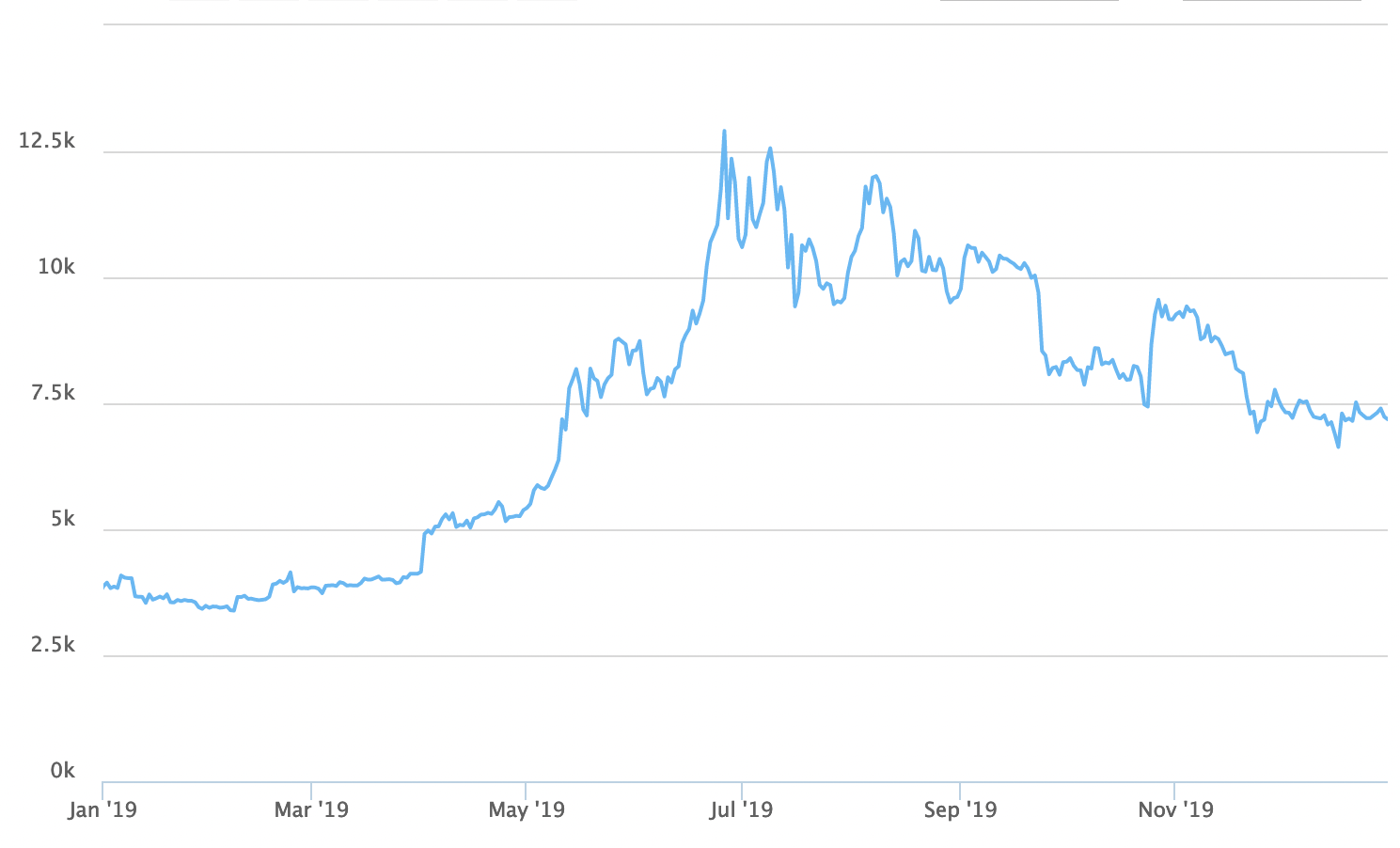
The most fundamental driver of Bitcoin’s price is its fixed supply. The Bitcoin protocol is hard-coded to ensure that only 21 million coins will ever exist. In the world of finance, this creates a state of absolute scarcity. When demand for the asset increases—whether due to its use as a hedge against inflation or as a speculative vehicle—the supply cannot be increased by a central bank or a government to meet that demand. This inelasticity is a primary reason for the dramatic price surges seen in “bull” cycles. Conversely, when demand wanes, the price must drop far enough to find new buyers, leading to the “bear” cycles that characterize the market.
The Role of Liquidity and Global Exchanges
Bitcoin does not trade on a single centralized exchange. Instead, its price is an aggregate of activity on platforms like Coinbase, Binance, and Kraken, as well as institutional over-the-counter (OTC) desks. Liquidity—the ease with which an asset can be converted into cash without affecting its price—is a critical factor. In periods of high liquidity, price movements are smoother. In periods of low liquidity, even relatively small trades can cause significant “slippage,” leading to the rapid price spikes or crashes that the public associates with Bitcoin. Understanding the “how much” of Bitcoin requires acknowledging that the price may vary slightly depending on which financial gateway you are using.
Factors Influencing Bitcoin’s Market Volatility
To the uninitiated, Bitcoin’s price movements can seem erratic or irrational. However, from a financial perspective, these movements are often reactions to specific external and internal catalysts. Volatility is not necessarily a bug of the system; for many investors, it is a feature that provides the opportunity for high returns, albeit at a higher risk profile.
Macroeconomic Trends and Inflation
In recent years, Bitcoin has become increasingly sensitive to the global macroeconomic environment. When central banks engage in quantitative easing or lower interest rates, the purchasing power of fiat currency typically faces downward pressure. Investors often turn to Bitcoin as a “hard money” alternative, similar to how they might use gold. Consequently, announcements from the Federal Reserve regarding interest rate hikes or inflation data (like the Consumer Price Index) frequently lead to immediate movements in Bitcoin’s price. As a financial tool, it acts as a barometer for the global market’s appetite for risk and its trust in sovereign monetary policy.
Institutional Adoption and Regulatory News
The “how much” of Bitcoin changed significantly when the asset moved from a retail-driven hobby to an institutional-grade investment. Today, the participation of publicly traded companies, hedge funds, and pension funds creates a “floor” for the price that didn’t exist a decade ago. However, this also means that regulatory news—such as a potential ban in a major economy or the approval of a new financial product—can trigger massive price shifts. Investors monitor the legal landscape closely, as clarity in regulation often leads to increased capital inflows, while ambiguity leads to “risk-off” selling.

Bitcoin as a Financial Asset Class
Within a diversified portfolio, Bitcoin is increasingly treated as a distinct asset class. It is often referred to as “Digital Gold,” a moniker that highlights its role as a store of value. While its price is volatile in the short term, its long-term trajectory has led many financial advisors to consider its place in wealth preservation and capital appreciation.
“Digital Gold” and Wealth Preservation
Gold has been the standard for wealth preservation for centuries because it is difficult to extract and impossible to manufacture. Bitcoin shares these traits but adds the benefits of digital portability and divisibility. You can send a fraction of a Bitcoin across the world in minutes, a feat impossible with physical bullion. For the modern investor, the value of Bitcoin is tied to its utility as a censorship-resistant, borderless vault. As more investors view it as a long-term hedge against the devaluation of paper money, the “price” becomes less about daily trading and more about the total market capitalization Bitcoin can capture from the traditional gold market.
Portfolio Diversification and Risk Management
From a professional finance perspective, Bitcoin’s value lies in its historical “low correlation” with traditional assets like stocks and bonds. While this correlation occasionally tightens during liquidity crises, Bitcoin often moves independently of the S&P 500 or the bond market. For an investor, adding an asset with high growth potential and low correlation can improve the Sharpe ratio—a measure of risk-adjusted return—of the overall portfolio. However, because of its volatility, financial experts often recommend a small percentage allocation (e.g., 1% to 5%) to ensure that a price correction does not jeopardize the investor’s entire financial standing.
Practical Methods for Investing and Valuation
For those asking “how much is Bitcoin” with the intent to buy, the financial infrastructure has matured significantly. It is no longer a complex technological hurdle; it is now as simple as buying a stock through a brokerage account.
The Rise of Bitcoin Spot ETFs
The landscape of Bitcoin investment was forever changed with the approval of Spot Bitcoin Exchange-Traded Funds (ETFs). These financial instruments allow investors to gain exposure to the price of Bitcoin without the need to manage digital keys or use specialized exchanges. For the “Money” niche, this is a revolutionary development. It allows 401(k)s, IRAs, and traditional brokerage accounts to hold Bitcoin, bringing a massive wave of “passive” capital into the market. The price of Bitcoin is now heavily influenced by the daily inflows and outflows of these ETFs, which represent the collective sentiment of Wall Street.
Custody Solutions and Financial Security
In the realm of personal finance, the value of your investment is only as good as its security. Investors must choose between “custodial” solutions (where a bank or exchange holds the Bitcoin) and “self-custody” (where the investor holds their own private keys). Each has a different cost-benefit profile. Custodial solutions offer ease of use and traditional financial protections but often come with management fees. Self-custody offers total financial sovereignty and zero ongoing fees but requires a higher degree of personal responsibility. Part of understanding the “cost” of Bitcoin is understanding these operational expenses and risks.
The Future Outlook: Supply Cycles and Valuation Models
Predicting “how much” Bitcoin will be worth in the future is a staple of financial speculation. While no one has a crystal ball, several models are widely used by analysts to estimate its long-term value based on its unique supply-side math.
The Halving Cycle Impact
Every four years, the Bitcoin network undergoes an event known as “The Halving.” This is a pre-programmed reduction in the amount of new Bitcoin created and rewarded to miners. Historically, the Halving acts as a major supply-side shock. If demand stays constant or increases while the rate of new supply is cut in half, the price tends to rise significantly in the 12 to 18 months following the event. Investors who understand this cycle treat Bitcoin not as a random gamble, but as a predictable monetary experiment.
Long-term Growth vs. Short-term Speculation
In conclusion, when we ask “how much is Bitcoin,” we are looking at a snapshot of a global, digital-first financial revolution. In the short term, the price is driven by headlines, sentiment, and leverage. In the long term, however, the price is a reflection of the world’s growing demand for a decentralized, transparent, and scarce financial asset. For the prudent investor, the focus should not be on the noise of daily price charts, but on the fundamental shift of Bitcoin becoming a core pillar of the global financial system. Whether viewed as a speculative side hustle or a cornerstone of a retirement fund, Bitcoin’s value is ultimately defined by its ability to provide a financial alternative in an increasingly inflationary world.
aViewFromTheCave is a participant in the Amazon Services LLC Associates Program, an affiliate advertising program designed to provide a means for sites to earn advertising fees by advertising and linking to Amazon.com. Amazon, the Amazon logo, AmazonSupply, and the AmazonSupply logo are trademarks of Amazon.com, Inc. or its affiliates. As an Amazon Associate we earn affiliate commissions from qualifying purchases.