
Apple Inc. (AAPL) stands as a titan in the global economy, a company whose name is synonymous with innovation, quality, and a profound impact on daily life. For investors, potential shareholders, and financial observers, the question “How much is Apple stock worth?” is far more complex than a simple glance at its latest share price. It delves into a multifaceted analysis of market capitalization, financial performance, growth potential, and the intricate web of factors that determine investor sentiment and perceived value. Understanding Apple’s “worth” requires a deep dive into its financial statements, market position, and future prospects, all through the lens of investment principles.

Apple’s stock is a cornerstone of many investment portfolios and a bellwether for the technology sector, often reflecting broader market trends. Its valuation has soared over decades, transitioning from a beloved tech company to the world’s first trillion-dollar, then multi-trillion-dollar, enterprise. This article will explore the various dimensions that contribute to Apple stock’s value, offering insights into its financial metrics, the drivers behind its colossal market capitalization, and what investors should consider when evaluating this iconic company.
Understanding Apple’s Valuation: More Than Just a Share Price
The “worth” of a company’s stock is not a static figure; it’s a dynamic assessment influenced by countless variables. While the immediate answer might seem to be its current share price, that number alone doesn’t tell the whole story. A comprehensive understanding involves looking at market capitalization, key financial ratios, and the underlying economic realities.
The Current Snapshot: Share Price and Market Capitalization
The most visible component of Apple’s stock worth is its share price. This figure represents the cost of purchasing a single share of AAPL on the stock exchange at any given moment. It fluctuates constantly based on supply and demand, news, economic indicators, and investor sentiment. While crucial, the share price in isolation can be misleading. A $100 stock from a company with 10 million shares outstanding is valued very differently from a $100 stock from a company with 10 billion shares.
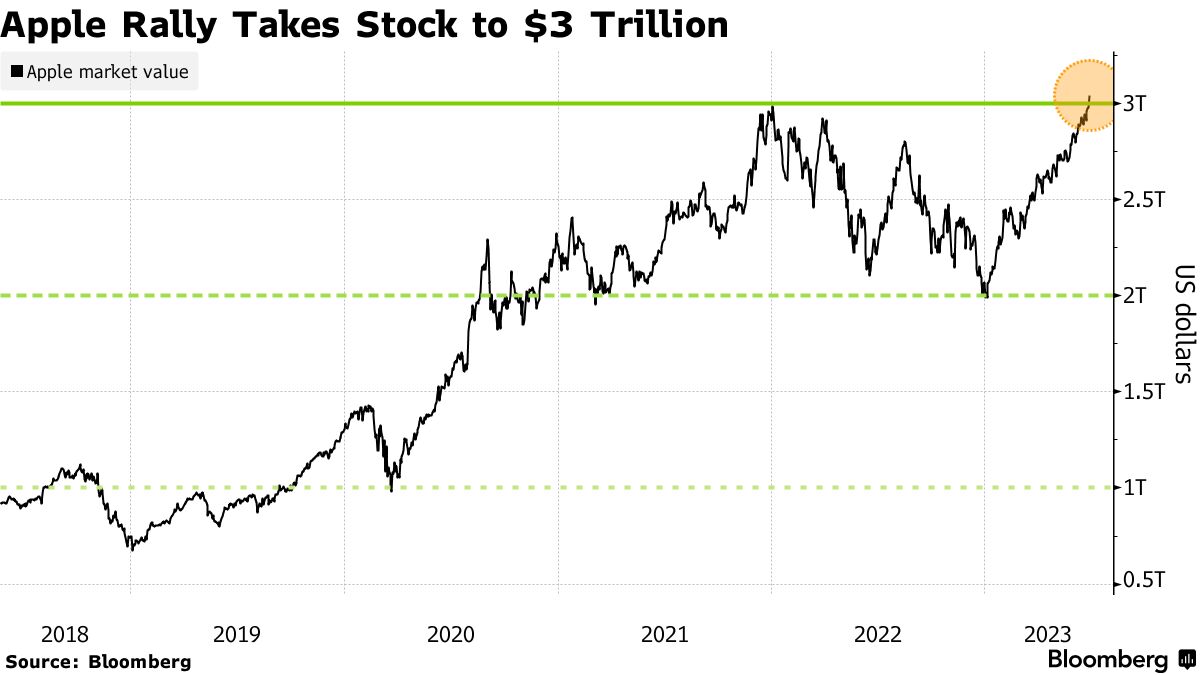
This is where market capitalization comes into play. Market cap is calculated by multiplying the current share price by the total number of outstanding shares. It provides a holistic view of the company’s total equity value as perceived by the market. Apple has consistently held one of the largest market capitalizations globally, often exceeding $2.5 to $3 trillion, a testament to its immense scale and investor confidence. This figure is a critical indicator of the company’s size and its influence within the global financial landscape. A high market cap implies significant investor belief in the company’s stability, growth prospects, and ability to generate future earnings.
Key Financial Ratios: P/E, Dividend Yield, and EPS
Beyond the headline figures, seasoned investors scrutinize a range of financial ratios to gauge a stock’s underlying value and health. These ratios provide context and allow for comparisons with competitors and industry averages.
- Price-to-Earnings (P/E) Ratio: This widely used metric compares a company’s current share price to its earnings per share (EPS). A higher P/E ratio can indicate that investors expect higher earnings growth in the future, or that the stock is considered a “growth stock.” Apple’s P/E ratio often reflects its consistent profitability and investor optimism, though it tends to be higher than that of mature, slower-growth companies. Analyzing the forward P/E (based on anticipated future earnings) offers insights into expected performance.
- Earnings Per Share (EPS): EPS is a company’s net profit divided by the number of outstanding shares. It indicates how much profit the company makes for each share of stock. Consistent growth in EPS is a strong positive signal for investors, demonstrating the company’s ability to increase its profitability on a per-share basis. Apple’s EPS figures are closely watched in its quarterly earnings reports.
- Dividend Yield: Apple is a dividend-paying stock, meaning it distributes a portion of its earnings to shareholders. The dividend yield is the annual dividend per share divided by the current share price, expressed as a percentage. While Apple’s yield may not be as high as some traditional “income stocks,” its consistent dividend payments, coupled with share buybacks, contribute to its total return for investors.
- Return on Equity (ROE): This ratio measures how much profit a company generates for each dollar of shareholders’ equity. Apple’s ROE is typically very strong, indicating efficient use of shareholder capital to generate profits.
- Debt-to-Equity Ratio: While Apple generates significant cash flow, it also uses debt for various purposes, including funding share buybacks and capital expenditures. This ratio assesses the company’s reliance on debt relative to equity, providing insight into its financial leverage and risk profile.
These ratios, when analyzed in conjunction with market capitalization and share price, paint a far more complete picture of “how much Apple stock is worth” from a fundamental analysis perspective.
Drivers of Apple’s Enduring Financial Power
Apple’s ability to command such a high valuation is not accidental; it’s a direct result of several powerful and consistently executed strategies that fuel its financial performance and solidify its market position.
Product Innovation and Diverse Revenue Streams
At its core, Apple’s financial success is rooted in its revolutionary products. The iPhone remains its flagship, a device that redefined mobile technology and continues to be a massive revenue generator. However, Apple has skillfully diversified its revenue streams beyond the iPhone, reducing its reliance on a single product.
- Services Segment: This has become a critical growth engine, encompassing the App Store, Apple Music, iCloud, Apple Pay, Apple TV+, and more. The services division boasts high-margin recurring revenue, creating a sticky ecosystem that keeps users engaged and spending within the Apple universe. This segment’s consistent growth and profitability are major drivers of investor confidence.
- Wearables, Home, and Accessories: Products like Apple Watch, AirPods, and HomePod have created new categories and captured significant market share, contributing substantial revenue and reinforcing the interconnectedness of Apple’s device ecosystem.
- Mac and iPad: While more mature product lines, these continue to innovate and capture significant market share in their respective categories, benefiting from the robust Apple ecosystem and brand loyalty.
The continued ability to innovate, coupled with a diversified product and services portfolio, ensures multiple avenues for future growth and revenue generation.
Strategic Financial Management: Buybacks and Dividends
Apple is renowned for its aggressive and consistent capital return program. This program significantly enhances shareholder value in two primary ways:
- Share Buybacks: Apple regularly repurchases its own shares from the open market. This reduces the total number of outstanding shares, which in turn increases the earnings per share (EPS) for the remaining shares. A higher EPS can often lead to a higher share price and P/E ratio, directly increasing the “worth” of individual shares. It also signals management’s confidence in the company’s intrinsic value.
- Dividends: By consistently paying and often increasing its quarterly dividends, Apple provides a direct return to shareholders. While the dividend yield might be modest compared to some value stocks, the reliability of these payments makes Apple attractive to income-focused investors and contributes to total shareholder return, especially over the long term.
These financial strategies demonstrate a commitment to returning value to shareholders, complementing the company’s operational excellence and contributing to its premium valuation.
Global Market Penetration and Ecosystem Lock-in
Apple’s financial power is amplified by its immense global reach and the strong “ecosystem” it has cultivated. Its products and services are available in virtually every major market, catering to a vast and affluent customer base. The interconnectedness of Apple devices and services—where an iPhone user might also have an Apple Watch, AirPods, a MacBook, and subscribe to Apple Music—creates a powerful “lock-in” effect. Switching away from Apple can be inconvenient and costly for users due to data migration, app purchases, and the loss of seamless integration. This robust ecosystem fosters incredible customer loyalty, provides pricing power, and ensures a steady stream of recurring revenue from app purchases, subscriptions, and new device sales. This fundamental strength translates directly into predictable revenue streams and robust financial performance, underpinning its high stock valuation.
Historical Trajectory and Milestones in Apple’s Stock Growth
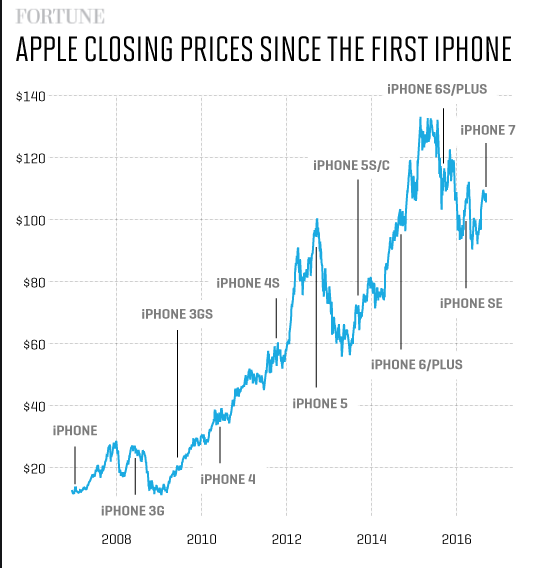
Apple’s journey from a garage startup to a global powerhouse is reflected dramatically in its stock performance. Its history is replete with pivotal moments that have profoundly impacted its valuation.
From Tech Darling to Trillion-Dollar Giant
Apple went public in 1980, but its true renaissance began with the return of Steve Jobs in the late 1990s and the subsequent launch of iconic products. The iPod, iTunes, and especially the iPhone in 2007, marked inflection points that catapulted the company into unprecedented growth. The introduction of the App Store solidified its software ecosystem, creating entirely new industries and revenue channels.
These innovations led to exponential increases in market capitalization. Apple became the first U.S. company to reach a $1 trillion market cap in 2018, then surged past $2 trillion in 2020, and briefly touched $3 trillion in 2022. This historical trajectory underscores the market’s continuous re-evaluation and upward revision of Apple’s worth based on its consistent innovation and financial performance. Each major product cycle and strategic shift has been met with investor enthusiasm, driving the stock to new highs.
Impact of Key Product Cycles and Service Expansion
Specific product cycles have had a monumental impact on Apple’s stock worth:
- The iPhone Era: The launch and subsequent iterations of the iPhone have been the single most significant driver of Apple’s growth. Its immense sales volume and profitability created the cash reserves that allowed for further innovation and expansion. Each new iPhone generation, despite market skepticism, often reignites sales momentum, impacting quarterly earnings and investor sentiment.
- The Services Transformation: Recognizing the maturity of the smartphone market, Apple strategically shifted focus to its Services segment. This diversification has proven incredibly valuable, providing a more stable, higher-margin revenue stream that is less susceptible to hardware sales cycles. The market has rewarded this shift with a higher valuation multiple, seeing Apple not just as a hardware company but also as a powerful recurring revenue platform.
- Wearables and New Categories: The success of Apple Watch and AirPods demonstrated Apple’s ability to create entirely new, highly profitable product categories, further expanding its total addressable market and adding new layers to its valuation.
These historical milestones are not just anecdotes; they are tangible evidence of the strategies that have built Apple’s present worth and continue to shape its future value proposition.
Investing in AAPL: Future Outlook and Considerations
For anyone considering an investment in Apple stock, understanding its future outlook, potential challenges, and general investment principles is paramount.
Growth Vectors and Potential Challenges
Apple’s future “worth” will be determined by its ability to maintain its innovative edge and expand into new growth areas.
- New Product Categories: Apple is widely anticipated to enter new markets such as augmented/virtual reality (e.g., Apple Vision Pro) and potentially even the automotive sector (Apple Car). The success of these ventures could unlock massive new revenue streams and significantly increase its market capitalization.
- Services Expansion: Continued expansion of its services, potentially through new subscription bundles, content offerings, and financial services, will be crucial for maintaining its high-margin revenue growth.
- Emerging Markets: While already global, further penetration into emerging markets presents opportunities for long-term growth as disposable incomes rise and technology adoption accelerates.
However, challenges persist:
- Regulatory Scrutiny: Apple faces increasing antitrust scrutiny globally regarding its App Store policies, market dominance, and data practices. Adverse regulatory outcomes could impact its services revenue or force changes to its business model.
- Intense Competition: The tech industry is fiercely competitive. While Apple holds a premium position, it constantly battles rivals like Samsung, Google, and Meta across various product and service categories.
- Supply Chain Dependencies: Global supply chain disruptions, geopolitical tensions, and manufacturing challenges (especially in China) can impact production and sales.
- Economic Downturns: As a premium consumer electronics company, Apple’s sales can be sensitive to economic slowdowns, impacting discretionary spending.
Risk Assessment and Diversification Principles
Investing in any single stock, even one as robust as Apple, carries inherent risks. While Apple’s track record is impressive, past performance does not guarantee future results. Investors should consider:
- Market Risk: Broad market downturns can pull even strong stocks like Apple lower.
- Company-Specific Risk: Despite its diversification, a major product flop, a significant security breach, or an adverse legal ruling could impact Apple’s stock.
- Concentration Risk: Over-allocating capital to a single stock, no matter how strong, can expose an investor to undue risk.
Therefore, the principle of diversification is crucial. A well-diversified portfolio spreads investments across various asset classes, industries, and geographies to mitigate specific risks. Apple might be a component of such a portfolio, but rarely its sole holding.
How to Invest in Apple Stock
For individuals looking to invest in Apple stock (ticker: AAPL), the process is straightforward:
- Open a Brokerage Account: Choose a reputable online brokerage firm (e.g., Fidelity, Charles Schwab, Robinhood, Vanguard).
- Fund Your Account: Transfer money into your brokerage account.
- Place an Order: Search for AAPL and place a buy order. You can buy whole shares or fractional shares (if offered by your broker) to fit your budget.
- Consider Your Investment Horizon: Decide if you’re a long-term investor (holding for years, aiming for capital appreciation and dividends) or a short-term trader (attempting to profit from price fluctuations). Most financial advisors recommend a long-term approach for companies like Apple.
Conclusion
The question “How much is Apple stock worth?” elicits a dynamic and complex answer rooted in its market capitalization, an array of fundamental financial metrics, and the powerful forces driving its business. From its revolutionary product innovation and expansive services ecosystem to its strategic capital allocation and unmatched brand loyalty, Apple has built a financial juggernaut. Its historical trajectory showcases a remarkable ability to adapt and grow, transforming from a technology pioneer into a multi-trillion-dollar global titan.
However, like all investments, Apple’s future worth is subject to ongoing innovation, market dynamics, regulatory pressures, and economic conditions. For investors, understanding these multifaceted drivers, alongside a robust approach to risk management and portfolio diversification, is key to evaluating Apple’s continuing appeal as a cornerstone investment. Apple’s stock is not just a ticker symbol; it’s a testament to sustained financial excellence and a fascinating case study in corporate valuation.
aViewFromTheCave is a participant in the Amazon Services LLC Associates Program, an affiliate advertising program designed to provide a means for sites to earn advertising fees by advertising and linking to Amazon.com. Amazon, the Amazon logo, AmazonSupply, and the AmazonSupply logo are trademarks of Amazon.com, Inc. or its affiliates. As an Amazon Associate we earn affiliate commissions from qualifying purchases.