
The question “how much is AMD stock?” is a frequent query for both novice and seasoned investors exploring the dynamic world of semiconductor equities. Unlike the price of a fixed commodity, the value of a company’s stock, such as Advanced Micro Devices (AMD), is a constantly fluctuating figure, influenced by a myriad of internal and external factors. It reflects not just the company’s current financial health but also market sentiment, future growth prospects, technological advancements, and the broader economic landscape. Understanding “how much” AMD stock is goes beyond a simple number; it delves into the complex interplay of forces that determine its valuation and potential as an investment. This article will explore these factors, provide guidance on tracking its value, and offer insights into what makes AMD a significant player in the investment arena.
Understanding AMD’s Market Value
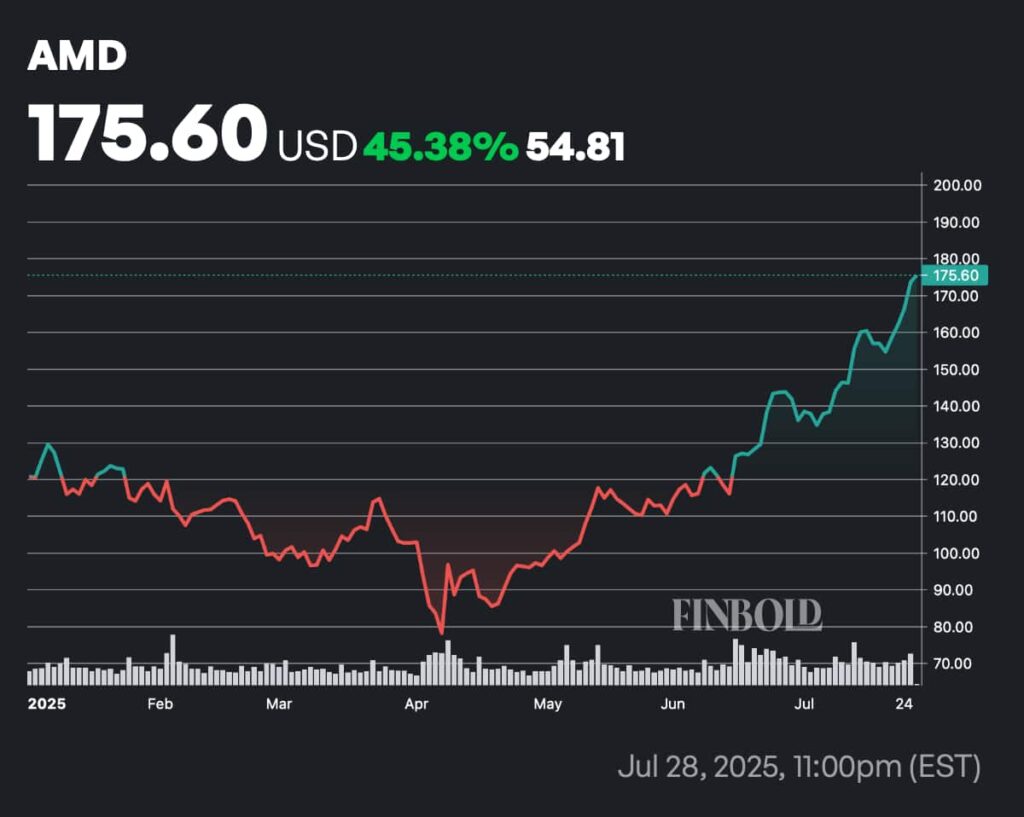
At its core, the market value of AMD stock represents the collective perception of the company’s worth by investors. This perception is translated into a price per share, which changes second by second during trading hours. Grasping this dynamic nature is the first step in comprehending what an investment in AMD entails.
What is AMD (Advanced Micro Devices)?
Advanced Micro Devices, Inc. (AMD) is a global semiconductor company that develops high-performance computing and visualization products. From a financial perspective, AMD’s business spans several critical sectors: personal computers (CPUs and GPUs), gaming consoles (custom chips for Xbox and PlayStation), data centers (EPYC server processors and Instinct accelerators for AI), and embedded systems. Its diverse portfolio and constant innovation in processor and graphics technologies make it a pivotal company in the technology sector, directly impacting its financial performance and, consequently, its stock price. Investors view AMD as a bellwether for certain segments of the tech industry, particularly given its direct competition with giants like Intel and Nvidia.
The Dynamic Nature of Stock Prices
A stock’s price is not static; it is a live reflection of supply and demand in the open market. If more investors want to buy AMD shares than sell them, the price tends to rise. Conversely, if more investors are looking to sell, the price typically falls. This ebb and flow is driven by a constant stream of information: earnings reports, product announcements, analyst upgrades/downgrades, economic news, and even geopolitical events. For AMD, specifically, news regarding new chip architectures, design wins in major data centers, or shifts in the PC market can trigger significant price movements. Therefore, stating a single, definitive price for AMD stock is only accurate for a precise moment in time.
Where to Find Real-Time AMD Stock Information
For investors seeking the most current price of AMD stock, several reliable sources are readily available. Financial news websites such as Google Finance, Yahoo Finance, Bloomberg, Reuters, and the investor relations section of AMD’s official website provide real-time or slightly delayed stock quotes. Brokerage platforms through which investors buy and sell shares also offer up-to-the-minute data, along with charts, historical performance, and various analytical tools. When checking, investors should look for the ticker symbol “AMD” on NASDAQ. These platforms typically display the current trading price, daily high and low, trading volume, and market capitalization, providing a comprehensive snapshot of the stock’s current standing.
Key Factors Influencing AMD Stock Price
The valuation of AMD, like any publicly traded company, is a complex equation derived from numerous inputs. Understanding these key factors is crucial for any investor looking to make informed decisions about AMD stock.
Market Demand and Supply Dynamics
As mentioned, the fundamental principle of supply and demand dictates price. High demand for AMD shares, often driven by positive news or strong company performance, pushes prices up. Conversely, an increase in shares available on the market (e.g., from institutional selling or secondary offerings, though less common for established firms) or decreased demand can exert downward pressure. Large institutional investors, hedge funds, and mutual funds hold significant sway due to the sheer volume of shares they trade.
Company Performance and Financial Health
AMD’s financial performance is arguably the most direct influencer of its stock price. Investors scrutinize quarterly earnings reports, looking at revenue growth, profit margins, earnings per share (EPS), and future guidance. Consistent revenue growth, especially in high-margin segments like data center CPUs and GPUs, signals a healthy and expanding business. Profitability metrics demonstrate the company’s efficiency and ability to generate returns. Strong guidance for future quarters often leads to stock appreciation, as it indicates management’s confidence in continued growth. Any deviation from expectations, positive or negative, can cause immediate price reactions.
Technological Innovation and Product Launches
In the rapidly evolving semiconductor industry, innovation is paramount. AMD’s ability to consistently develop and launch cutting-edge processors (Ryzen for PCs, EPYC for servers) and graphics cards (Radeon) that compete effectively with rivals like Intel and Nvidia is a major driver of its stock value. Breakthroughs in new areas like AI accelerators (Instinct GPUs) or custom solutions for burgeoning markets can unlock significant new revenue streams and excite investors about future growth potential. Delays in product launches, underperforming products, or a loss of technological edge can have adverse effects.
Competitive Landscape
AMD operates in an intensely competitive environment. Its primary rivals, Intel and Nvidia, are formidable players with vast resources. The relative success of AMD’s products against theirs, market share gains or losses, and pricing strategies directly impact AMD’s financial outlook. For example, if Intel releases a highly competitive new processor generation, it could put pressure on AMD’s market share and pricing power, impacting investor sentiment. Conversely, if AMD continues to gain ground in server or PC markets, it’s often rewarded with stock appreciation.
Macroeconomic Trends and Industry Outlook
Broader economic conditions play a significant role. Factors such as interest rates, inflation, consumer spending levels, and geopolitical stability can affect demand for tech products and investor appetite for risk. A strong global economy generally bodes well for AMD, as it often translates to higher demand for PCs, servers, and gaming hardware. Conversely, an economic downturn can reduce consumer and enterprise spending, impacting AMD’s sales. The overall health and growth trajectory of the semiconductor industry, driven by trends like AI adoption, cloud computing expansion, and the Internet of Things (IoT), also significantly influence AMD’s valuation.
Investor Sentiment and Market Speculation
Beyond fundamentals, investor sentiment and market speculation can heavily influence short-term stock movements. Positive sentiment can create momentum, leading to higher valuations, sometimes even beyond what current fundamentals might suggest. Negative sentiment, often fueled by fear or uncertainty, can trigger sell-offs. Social media trends, analyst ratings, and broad market “narratives” can all contribute to this emotional component of investing, creating volatility that can be both opportunity and risk.
Historical Performance and Growth Trajectory
AMD’s journey from a niche chipmaker to a dominant force in high-performance computing is a compelling narrative that has significantly shaped its stock’s historical performance. Understanding this trajectory provides valuable context for evaluating its current and future potential.

AMD’s Journey: From Niche Player to Tech Giant
For many years, AMD often played second fiddle to Intel, struggling with market share and profitability. However, under the leadership of CEO Lisa Su, the company embarked on a remarkable turnaround, largely driven by its innovative Zen CPU architecture and RDNA GPU architecture. This strategic shift enabled AMD to deliver highly competitive products, gaining significant market share in PC and server markets starting in the mid-2010s. This resurgence translated into extraordinary stock growth, transforming AMD into one of the most successful turnaround stories in the technology sector and a darling of growth investors. The stock’s appreciation over the last decade reflects this successful execution and strategic vision.
Analyzing Past Trends and Volatility
AMD’s stock has historically been characterized by periods of high volatility, typical for a growth-oriented semiconductor company. Its price movements often correlate with product cycles, competitive pressures, and broader tech market sentiment. Investors who look at its long-term chart will see substantial growth punctuated by significant pullbacks, offering insights into the cyclical nature of the industry and the stock’s sensitivity to news and market conditions. Analyzing these past trends can help investors understand the stock’s risk profile and its potential for both rapid gains and sharp corrections.
Dividends and Shareholder Returns
Unlike many mature companies, AMD has historically prioritized reinvesting its profits back into research and development, as well as strategic acquisitions, rather than paying out regular dividends. This is common for high-growth tech companies aiming to maximize future growth and innovation. Therefore, for AMD, shareholder returns primarily come from capital appreciation – the increase in the stock price over time. Investors considering AMD are typically focused on its growth potential rather than dividend income.
Investing in AMD: Considerations for Prospective Investors
For individuals contemplating an investment in AMD, a thorough due diligence process is essential. This involves looking beyond the current price and understanding the company’s intrinsic value, market position, and future prospects within the context of one’s personal investment goals and risk tolerance.
Fundamental Analysis: Digging Deeper into Financials
Fundamental analysis involves evaluating AMD’s financial statements (income statements, balance sheets, cash flow statements) to assess its intrinsic value and financial health. Key metrics include revenue growth rates, profit margins, debt levels, free cash flow, and return on equity. Investors also examine valuation multiples like the price-to-earnings (P/E) ratio, price-to-sales (P/S) ratio, and enterprise value-to-EBITDA to compare AMD against its competitors and industry averages. Strong fundamentals suggest a healthy business capable of sustained growth, which can support a higher stock price in the long term.
Technical Analysis: Charting Price Movements
Technical analysis involves studying historical price charts and trading volumes to identify patterns and predict future price movements. Technical analysts use indicators like moving averages, Relative Strength Index (RSI), and MACD to gauge momentum, support and resistance levels, and potential entry or exit points. While often used for short-term trading, understanding key technical levels can also inform long-term investors about potential volatility and market sentiment shifts. For a stock like AMD, which can be highly reactive to news, technical analysis can provide insights into market psychology.
Growth Potential and Future Outlook
AMD’s growth potential is heavily tied to its ability to capture market share in high-growth segments, particularly data centers (AI accelerators and server CPUs) and high-performance computing. The proliferation of AI, cloud computing, and advanced gaming continues to fuel demand for powerful processors and GPUs, areas where AMD excels. New product roadmaps, strategic partnerships, and advancements in manufacturing technology (e.g., smaller process nodes) are critical indicators of its future trajectory. Investors look for signs that AMD can continue to innovate and expand its addressable market.
Risks Associated with Investing in AMD
Despite its impressive growth, investing in AMD carries inherent risks. Intense competition from Intel, Nvidia, and emerging players is a constant threat. The cyclical nature of the semiconductor industry means demand can fluctuate significantly with economic cycles. Product execution risks, supply chain disruptions, intellectual property disputes, and reliance on third-party foundries (like TSMC) are other factors that could impact AMD’s financial performance. Broader market downturns and sector-specific corrections can also lead to significant stock price volatility, irrespective of company-specific news. Acknowledging these risks is crucial for a balanced investment perspective.
Diversification and Long-Term vs. Short-Term Strategy
No single stock, including AMD, should form the entirety of an investment portfolio. Diversification across different asset classes, industries, and geographies is essential to mitigate risk. Furthermore, investors should determine if they are pursuing a long-term growth strategy, holding AMD for years based on its fundamental strengths and industry trends, or a shorter-term trading strategy, aiming to profit from price fluctuations. Each approach has different implications for research, risk management, and capital allocation. For a company like AMD with significant growth potential but also volatility, a long-term perspective often yields better results.
How to Invest in AMD Stock
For those who have completed their due diligence and decided to invest in AMD, the process is straightforward, facilitated by modern financial technology.
Choosing a Brokerage Account
The first step is to open an investment account with a reputable online brokerage firm. Popular choices include Charles Schwab, Fidelity, Vanguard, E*TRADE, Robinhood, and Interactive Brokers, among many others. When selecting a broker, consider factors such as trading fees (many offer commission-free stock trading), available research tools, customer service, and the breadth of investment products offered.
Types of Orders
Once an account is funded, investors can place an order to buy AMD stock. The two most common types of orders are:
- Market Order: This instructs your broker to buy (or sell) shares immediately at the best available current market price. While simple, it doesn’t guarantee a specific price, especially in volatile markets.
- Limit Order: This allows you to specify the maximum price you’re willing to pay per share (for buying) or the minimum price you’re willing to accept (for selling). Your order will only execute if the stock reaches that price or better. This offers more control over the purchase price.

Research and Due Diligence
Before executing any trade, it’s imperative to conduct thorough research. Utilize the resources provided by your brokerage, financial news sites, and AMD’s investor relations portal. Understand the company’s recent earnings, future outlook, competitive landscape, and any recent news that might impact its price. Re-evaluate your investment thesis regularly, especially after major company announcements or significant market shifts.
In conclusion, “how much is AMD stock” is a question that opens the door to a deeper understanding of market dynamics, corporate performance, and investment strategy. Its value is a living number, shaped by technological innovation, financial strength, competitive forces, and investor sentiment. For those looking to invest in AMD, it’s not just about knowing the current price, but understanding the intricate ecosystem that determines it and weighing that against personal financial goals and risk tolerance.
aViewFromTheCave is a participant in the Amazon Services LLC Associates Program, an affiliate advertising program designed to provide a means for sites to earn advertising fees by advertising and linking to Amazon.com. Amazon, the Amazon logo, AmazonSupply, and the AmazonSupply logo are trademarks of Amazon.com, Inc. or its affiliates. As an Amazon Associate we earn affiliate commissions from qualifying purchases.