
In the landscape of global finance, few entities command as much attention as Amazon.com, Inc. To answer the question of how much Amazon is worth today, one must look beyond a single ticker symbol. The valuation of this titan is a complex tapestry woven from market capitalization, diversified revenue streams, and the intrinsic value of its sprawling infrastructure. For the modern investor, understanding Amazon’s worth requires a deep dive into the mechanics of the “Magnificent Seven” and the specific financial engines that drive its multi-trillion-dollar stature.
Decoding Amazon’s Market Capitalization and Enterprise Value
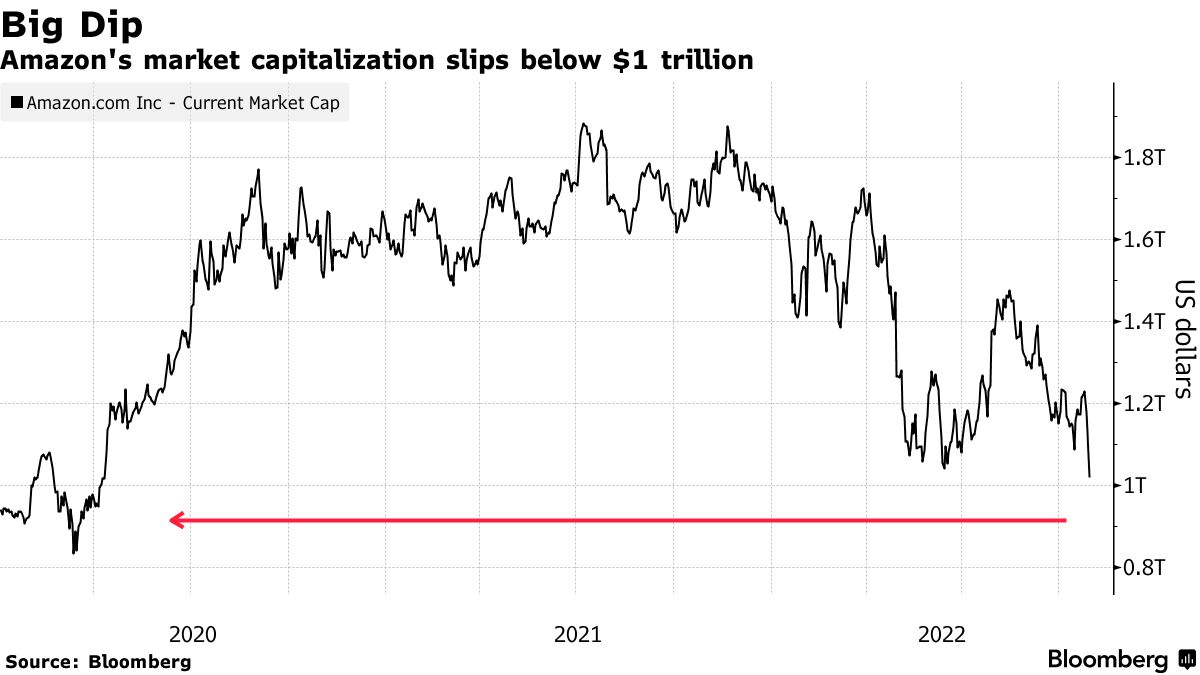
At its most fundamental level, Amazon’s worth is frequently defined by its market capitalization. This figure represents the total market value of the company’s outstanding shares of stock. To calculate this, one multiplies the current share price by the total number of shares outstanding. In the current fiscal climate, Amazon consistently fluctuates within the elite “Trillion Dollar Club,” often vying with Alphabet, Apple, and Microsoft for dominance in the public markets.

The Role of Share Price Volatility
The “worth” of Amazon can change by billions of dollars in a single trading session. This volatility is often driven by macroeconomic factors such as interest rate shifts by the Federal Reserve, inflation data, and consumer spending reports. Because Amazon is a consumer-discretionary powerhouse, its market cap is a real-time barometer of the health of the global economy. Investors track the “beta” of the stock to understand its sensitivity to market movements, acknowledging that while its valuation is massive, it is not immune to the ebbs and flows of investor sentiment.
Enterprise Value vs. Market Cap
While market cap tells us what the equity is worth, Enterprise Value (EV) provides a more comprehensive picture for serious financial analysis. EV accounts for the company’s total market cap but adds back total debt and subtracts cash and cash equivalents. For a capital-intensive business like Amazon—which maintains a massive fleet of delivery vehicles, aircraft, and data centers—the EV is a critical metric. It tells us what it would actually cost to “buy” the entire business, including its obligations. Today, Amazon maintains a robust balance sheet, ensuring that its enterprise value reflects a healthy leverage ratio that supports ongoing expansion.
The Revenue Engines: Analyzing the Sum-of-the-Parts
To truly grasp Amazon’s valuation, analysts often use a “Sum-of-the-Parts” (SOTP) valuation method. This approach treats Amazon’s various business units as separate entities to determine if the market is accurately pricing the conglomerate as a whole.
Amazon Web Services (AWS): The Profit Powerhouse
While many consumers know Amazon as a retail giant, investors value it largely for its cloud computing arm, AWS. From a financial perspective, AWS is often considered the most valuable part of the company. It operates with significantly higher margins than the retail segment. As businesses globally migrate to the cloud and integrate artificial intelligence, AWS provides the foundational infrastructure. If AWS were a standalone company, its valuation would likely rival the top ten companies in the S&P 500, given its consistent double-digit growth and dominant market share in the Infrastructure-as-a-Service (IaaS) space.
The Retail Core and Third-Party Seller Services
The e-commerce platform is the most visible aspect of Amazon’s worth. However, the internal shift from being a “first-party” retailer (buying and selling goods itself) to a “third-party” marketplace has fundamentally improved its valuation. Third-party seller services, which include commissions, shipping, and fulfillment fees, offer higher margins and less inventory risk. This transition has turned the retail segment from a low-margin necessity into a high-utility ecosystem that fuels the Prime subscription model.
The Advertising Explosion
In recent years, Amazon has emerged as a juggernaut in the digital advertising space, trailing only Google and Meta. Amazon’s ad revenue is worth billions because it captures consumers at the “point of intent”—when they are actively searching for products to buy. This high-margin revenue stream has a disproportionate impact on the company’s bottom line, leading many financial analysts to upgrade their valuation models as the advertising segment continues to outperform expectations.
Essential Financial Metrics for the Modern Investor
Determining if Amazon is “worth” its current price requires a look at specific financial ratios that differ from traditional manufacturing or banking stocks.
The Evolution of the P/E Ratio
Historically, Amazon was famous for its astronomical Price-to-Earnings (P/E) ratio. For decades, the company chose to reinvest almost all of its profits back into the business to fuel growth, resulting in very low GAAP (Generally Accepted Accounting Principles) earnings. Today, the P/E ratio has become more grounded as the company matures and generates more consistent net income. However, savvy investors still look at the Forward P/E, which measures the current share price against predicted future earnings, to gauge if the stock is priced for growth.
Free Cash Flow: The Bezos North Star
Since its inception, Amazon’s leadership—starting with Jeff Bezos and continuing under Andy Jassy—has emphasized Free Cash Flow (FCF) per share as the ultimate measure of value. FCF is the cash a company generates after accounting for cash outflows to support operations and maintain its capital assets. Because Amazon spends billions on “Capex” (Capital Expenditures) for its fulfillment network and data centers, watching the recovery and growth of FCF is vital. When FCF is high, the company has more “worth” in terms of its ability to pay down debt, pursue acquisitions, or potentially buy back shares.
Price-to-Sales (P/S) and Operating Margins
Because of its high volume of transactions, the P/S ratio is a helpful tool for comparing Amazon to other retailers and tech firms. Furthermore, tracking operating margins across different segments allows investors to see where the company is becoming more efficient. As the company optimizes its “regionalization” of its delivery network, reducing the “cost to serve,” its operating margins improve, directly increasing the intrinsic value of the retail arm.
Growth Catalysts and Valuation Risks
Amazon’s worth today is not just a reflection of its past performance, but a projection of its future potential. Several factors act as catalysts that could drive the valuation higher, while certain risks could serve as a drag.
The Generative AI Frontier
Artificial Intelligence is the current frontier of tech valuation. Amazon’s integration of AI into AWS (through chips like Trainium and Inferentia) and its consumer-facing Bedrock platform are significant value drivers. By providing the “shovels and pickaxes” for the AI gold rush, Amazon ensures it remains a central player in the next technological cycle. The market currently assigns a “growth premium” to Amazon based on its ability to monetize AI at scale.
Regulatory and Antitrust Headwinds
A significant risk to Amazon’s valuation is the ongoing scrutiny from regulatory bodies like the FTC in the United States and various commissions in the European Union. Concerns regarding market dominance and the treatment of third-party sellers can lead to litigation or, in extreme cases, calls for the company to be broken up. While a breakup might actually “unlock” value (as the sum of the parts might be worth more than the whole), the uncertainty often creates a “conglomerate discount” in the short term.
International Expansion and Logistics
Amazon continues to invest heavily in emerging markets. While these regions may currently operate at a loss, their long-term value lies in capturing the growing middle-class consumer base in countries like India and parts of Southeast Asia. Additionally, Amazon’s move to become a global logistics provider—competing directly with the likes of UPS and FedEx—adds a new dimension to its business model that is not yet fully reflected in every valuation model.

Strategic Valuation: Is Amazon “Worth” It?
When an investor asks, “How much is Amazon worth today?” they are often asking if the current market price is a fair reflection of the company’s future cash flows. Professional valuation involves creating Discounted Cash Flow (DCF) models that project earnings out 5 to 10 years and “discount” them back to the present value using a Weighted Average Cost of Capital (WACC).
Currently, Amazon occupies a unique position. It is no longer a speculative startup, but a mature infrastructure play with several high-growth engines. Its worth is anchored in its “moat”—the combination of its Prime loyalty program, its massive logistics network, and its cloud dominance—which makes it incredibly difficult for competitors to displace.
In conclusion, Amazon’s worth today is a multifaceted figure. While the market cap provides a daily snapshot, the true financial value lies in the company’s ability to generate cash through high-margin services like AWS and Advertising, while maintaining a dominant share of the global retail wallet. For the disciplined investor, Amazon represents a blend of stability and innovation, with a valuation that reflects its status as an indispensable pillar of the modern global economy. Whether viewed through the lens of P/E ratios, FCF, or SOTP analysis, Amazon remains one of the most significant and complex assets in the world of finance.
aViewFromTheCave is a participant in the Amazon Services LLC Associates Program, an affiliate advertising program designed to provide a means for sites to earn advertising fees by advertising and linking to Amazon.com. Amazon, the Amazon logo, AmazonSupply, and the AmazonSupply logo are trademarks of Amazon.com, Inc. or its affiliates. As an Amazon Associate we earn affiliate commissions from qualifying purchases.