
The question “how much is Amazon worth?” probes the core of one of the most remarkable corporate success stories of our time. It’s a query that delves into the intricate world of business finance, market valuation, and the colossal economic impact of a company that began as an online bookstore and mushroomed into a global behemoth touching nearly every facet of commerce and technology. From an investor’s perspective, understanding Amazon’s worth goes far beyond a simple number; it requires dissecting its diverse revenue streams, strategic investments, market position, and the ever-shifting landscape of global economics. This article will unpack the financial valuation of Amazon, examining the key metrics, underlying business segments, and the multifaceted factors that contribute to its staggering market capitalization.
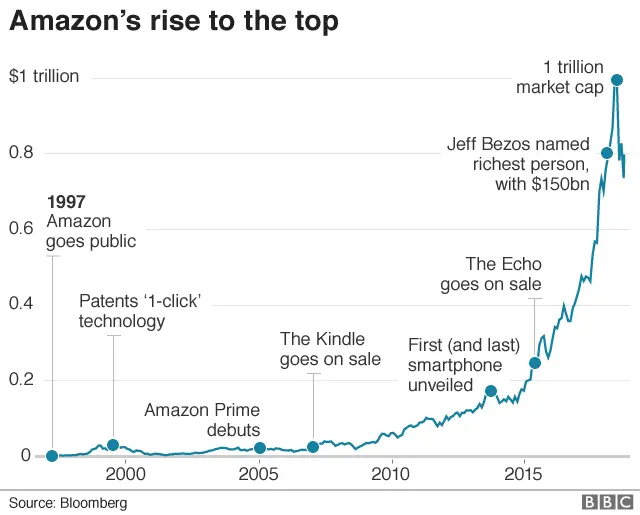
Decoding Amazon’s Financial Powerhouse: The Valuation Landscape
At any given moment, Amazon’s worth is a dynamic figure, subject to the whims of market sentiment, economic data, and company performance. When we talk about how much a publicly traded company like Amazon is worth, we primarily refer to its market capitalization, but a deeper understanding requires looking at other valuation metrics as well.
Market Capitalization: The Primary Metric
Market capitalization, often shortened to “market cap,” is the most common and straightforward measure of a company’s total value as determined by the stock market. It is calculated by multiplying the current share price by the total number of outstanding shares. For Amazon (AMZN), this figure fluctuates constantly throughout trading hours, reflecting investor confidence, news, and overall market trends. When Amazon’s market cap crosses into the trillion-dollar territory, as it frequently does, it places the company among an elite group of the world’s most valuable enterprises. This immense valuation signifies not just its current financial strength but also the market’s collective belief in its future growth potential and enduring dominance across multiple sectors. A high market cap often translates to a perception of stability and influence, attracting both institutional and individual investors seeking long-term growth.
Beyond Market Cap: Understanding Enterprise Value
While market cap provides a snapshot of equity value, enterprise value (EV) offers a more comprehensive picture of a company’s total value, reflecting both its equity and debt. EV is calculated by taking the market capitalization, adding the total debt, and subtracting cash and cash equivalents. For a company as vast and complex as Amazon, with significant assets, liabilities, and various business units, enterprise value can offer a more accurate assessment of its overall financial standing and how much it would theoretically cost to acquire the entire company, debt included. This metric is particularly useful when comparing companies with different capital structures, as it neutralizes the impact of varying levels of debt and cash. Investors and analysts often rely on EV in conjunction with market cap to get a holistic view of Amazon’s financial health and true economic scale.
The Dynamics of Share Price and Investor Sentiment
Amazon’s share price is not merely a number; it’s a barometer of investor sentiment, reflecting expectations for future earnings, revenue growth, and strategic success. A single share of AMZN represents a fractional ownership in this global empire, and its price movement is influenced by a myriad of factors. Quarterly earnings reports, which detail revenue, profit, and guidance for future periods, are critical catalysts for share price swings. Positive results often lead to rallies, while misses can trigger sell-offs. Beyond earnings, broader economic indicators such as inflation rates, consumer spending data, interest rate decisions by central banks, and geopolitical events can all sway investor sentiment. Furthermore, analyst ratings, news articles, regulatory announcements, and even social media buzz can contribute to the daily fluctuations that define Amazon’s perceived worth in the eyes of the market. The highly liquid nature of AMZN stock means billions of dollars can flow in or out based on these ever-changing dynamics.
The Diverse Engines of Amazon’s Value: A Segmented Analysis
Amazon’s extraordinary valuation stems not from a single dominant business but from a meticulously constructed portfolio of synergistic and independently powerful segments. Each contributes significantly to its revenue, profitability, and overall market worth. Understanding these pillars is crucial to grasp the full scope of Amazon’s financial might.
Amazon Web Services (AWS): The Profit Powerhouse
Perhaps the most significant driver of Amazon’s profitability and, consequently, a substantial portion of its valuation, is Amazon Web Services (AWS). This cloud computing segment provides on-demand cloud platforms and APIs to millions of customers, including enterprises, government agencies, and startups. AWS has been a pioneering force in cloud infrastructure, offering everything from computing power and storage to databases, analytics, machine learning, and artificial intelligence services. While it typically accounts for a smaller percentage of Amazon’s total revenue compared to its retail arm, AWS consistently delivers substantially higher operating margins. Its robust profitability and continuous innovation in a rapidly expanding market have made it an indispensable part of Amazon’s financial narrative, often acting as a stable, high-growth counterbalance to the more capital-intensive and lower-margin retail operations. The market values AWS highly for its recurring revenue model and its strategic position at the forefront of digital transformation.
The E-commerce Juggernaut: Retail and Marketplace
Amazon’s original business, its vast e-commerce operation, remains a cornerstone of its brand identity and revenue generation. This segment includes its online stores, physical stores (like Whole Foods Market), and third-party seller services (the marketplace). While the retail margins are typically thinner than AWS, the sheer scale of Amazon’s retail operations—spanning millions of products, global logistics, and an unmatched customer base—generates immense top-line revenue. The third-party marketplace, in particular, is a high-growth area, as Amazon earns commissions, fulfillment fees, and other services from independent sellers, leveraging its extensive infrastructure without owning all the inventory. The company’s relentless focus on customer convenience, competitive pricing, and rapid delivery has solidified its dominant position in the global e-commerce landscape, making it a critical, albeit sometimes volatile, component of its overall worth.
High-Margin Growth: Advertising and Subscriptions (Prime)
Beyond retail and cloud, Amazon has successfully cultivated other high-margin businesses that significantly bolster its valuation. Its advertising services, leveraging its immense customer data and search traffic on its e-commerce platform, have quietly grown into a multi-billion-dollar enterprise, competing effectively with digital advertising giants. Advertisers pay Amazon to promote their products and brands, making this a highly lucrative revenue stream with excellent scalability.
Similarly, Amazon Prime, its subscription service, is another critical value driver. Prime members pay an annual or monthly fee in exchange for benefits like free expedited shipping, access to streaming video and music, exclusive deals, and other perks. While the direct subscription revenue is substantial, Prime’s true value lies in its ability to foster customer loyalty, increase purchase frequency on the retail platform, and drive engagement across Amazon’s ecosystem. Prime members tend to spend significantly more than non-members, making the subscription service a powerful engine for both revenue and customer lifetime value.

Emerging Ventures: From Logistics to Healthcare
Amazon’s strategic investments in emerging sectors also contribute to its long-term valuation prospects. The company has poured resources into building its own sophisticated logistics and delivery network, reducing reliance on third-party carriers and enhancing efficiency. This “last-mile” delivery capability is a significant competitive advantage. Additionally, Amazon is making inroads into healthcare with initiatives like Amazon Pharmacy and Amazon Care (though the latter has seen some restructuring). Its Alexa-enabled devices, entertainment studios, satellite internet ambitions (Project Kuiper), and autonomous vehicle investments further diversify its portfolio. While some of these ventures are still in their nascent stages or face considerable competition, they represent potential future growth engines, signaling Amazon’s relentless pursuit of innovation and market expansion, which investors factor into its perceived future worth.
Factors Shaping Amazon’s Trillion-Dollar Trajectory
Amazon’s journey to a multi-trillion-dollar valuation is not a linear path but a dynamic interplay of macroeconomic forces, regulatory environments, competitive pressures, and its own internal strategies. These factors continually shape its financial outlook and market perception.
Macroeconomic Headwinds and Tailwinds
The broader economic climate significantly impacts Amazon’s performance. During periods of robust economic growth and high consumer confidence, its e-commerce segments thrive as discretionary spending increases. Conversely, economic downturns, rising inflation, or recessions can dampen consumer spending, affecting retail sales and potentially leading to slower growth in its advertising business. Interest rate hikes, driven by central banks to combat inflation, can increase borrowing costs for businesses and make future earnings less attractive to investors, potentially impacting stock valuations across the board. The global supply chain, labor availability, and energy costs are also critical macroeconomic factors that can influence Amazon’s operational efficiency and profitability, particularly in its extensive logistics network. For AWS, a resilient global economy often translates to increased digital transformation budgets for businesses, driving demand for cloud services.
Regulatory Environment and Competitive Pressures
As one of the world’s largest and most influential companies, Amazon operates under increasing scrutiny from regulators worldwide. Antitrust concerns related to its market dominance in e-commerce, its practices with third-party sellers, and its data handling are ongoing challenges. Potential fines, mandated changes to business practices, or even forced divestitures could impact its financial model and market valuation. Furthermore, Amazon faces fierce competition across all its segments. In e-commerce, it contends with Walmart, Target, Alibaba, and countless specialized retailers. AWS competes with Microsoft Azure, Google Cloud, and other major cloud providers. In advertising, it’s up against Google and Meta. The ability to navigate this complex regulatory and competitive landscape while maintaining its innovative edge is crucial for its sustained growth and valuation.
Innovation, Expansion, and Strategic Investments
Amazon’s history is characterized by a relentless drive for innovation and strategic expansion. Its willingness to invest heavily in new technologies, explore nascent markets, and take long-term bets has been a hallmark of its success. Whether it’s developing AI-powered voice assistants like Alexa, pushing the boundaries of drone delivery, investing in renewable energy for its data centers, or expanding into new international markets, these strategic decisions are closely watched by investors. The market rewards companies that demonstrate a clear vision for future growth and a proven ability to execute on transformative initiatives. However, these investments are not without risk; some ventures may fail to achieve critical mass, and the high capital expenditure required can sometimes weigh on short-term profitability, presenting a delicate balance for management.
Investor Confidence and Market Perception
Ultimately, Amazon’s worth is largely a reflection of investor confidence in its leadership, its business model, and its future prospects. Positive analyst reports, strong institutional ownership, and a consistent narrative of growth and innovation can fuel optimistic market perception. Conversely, negative news, a slowdown in key growth areas, or a loss of faith in its strategic direction can quickly erode confidence. Factors like environmental, social, and governance (ESG) performance are also increasingly influencing investor decisions, particularly among institutional investors who seek sustainable and ethically managed companies. Amazon’s reputation for customer obsession, its ability to attract top talent, and its resilience in adapting to changing market conditions all play a role in shaping this crucial investor sentiment, which directly translates into its fluctuating market capitalization.
Historical Growth and Future Financial Horizons
Amazon’s journey from a modest online bookstore in 1994 to a global titan has been nothing short of extraordinary. Understanding its historical trajectory and anticipating its future financial path are key to comprehending its profound economic significance.
A Legacy of Relentless Expansion
Amazon’s growth has been characterized by consistent double-digit revenue expansion for decades, fueled by its aggressive entry into new product categories, geographic markets, and entirely new industries. Key milestones include the launch of Amazon Prime in 2005, which revolutionized customer loyalty, and the public unveiling of AWS in 2006, which transformed the company into a cloud computing powerhouse. Acquisitions like Zappos, Twitch, and Whole Foods Market further diversified its portfolio and extended its reach. This history of relentless expansion, often prioritizing market share and long-term growth over immediate profits, has been a defining characteristic of Amazon under its founder Jeff Bezos, and a strategy that has largely paid off in terms of market valuation. Each phase of expansion brought new revenue streams, customer segments, and capabilities, incrementally adding to its overall worth.
Navigating Present Challenges and Opportunities
While Amazon’s growth story is impressive, it faces a complex landscape of present challenges and opportunities. Post-pandemic shifts in consumer behavior, coupled with inflationary pressures and rising interest rates, have presented headwinds for its e-commerce segment. Labor costs, unionization efforts, and supply chain disruptions continue to test its operational efficiency. However, opportunities abound. The continued global digital transformation ensures a robust demand for AWS. Developing markets offer significant untapped potential for e-commerce expansion. Innovations in artificial intelligence, machine learning, and automation promise to enhance its operations and create new product offerings. Amazon’s ability to efficiently manage these challenges while capitalizing on emerging opportunities will be critical for sustaining its growth trajectory. The company is constantly refining its logistics, investing in its workforce, and innovating its technology to stay ahead of the curve.

Analyst Projections and Long-Term Outlook
Financial analysts and investment banks regularly publish projections for Amazon’s future performance, assessing its revenue growth, profitability, and market share across its various segments. These forecasts consider factors like the growth rate of cloud computing, the maturity of e-commerce in different regions, the competitive landscape in advertising, and the potential for new ventures. While projections vary, the general consensus often points to continued, albeit potentially more measured, growth for Amazon. The long-term outlook for Amazon remains positive for many, driven by the enduring strength of AWS, the sticky nature of Prime, the scalability of its advertising business, and its proven capacity for innovation. Investors will closely watch Amazon’s capital allocation decisions, its ability to maintain high free cash flow, and its success in integrating new technologies and business models to ensure its continued prominence in the global economy. The company’s strategic vision and execution in the coming years will ultimately determine its sustained worth and whether it can maintain its position among the world’s most valuable enterprises.
aViewFromTheCave is a participant in the Amazon Services LLC Associates Program, an affiliate advertising program designed to provide a means for sites to earn advertising fees by advertising and linking to Amazon.com. Amazon, the Amazon logo, AmazonSupply, and the AmazonSupply logo are trademarks of Amazon.com, Inc. or its affiliates. As an Amazon Associate we earn affiliate commissions from qualifying purchases.