
Understanding the precise financial commitment for an ad-free experience on Amazon Prime Video requires a close examination of Amazon’s multifaceted subscription model. For many consumers, the question isn’t just about a single price point but rather an analysis of incremental costs, value perception, and how these figures integrate into a personal financial strategy. Navigating the world of streaming services, each with its own pricing tiers and add-ons, has become an exercise in diligent budgeting and value assessment.
Deconstructing the Cost of Premium Streaming
Amazon Prime is more than just a streaming service; it’s an ecosystem of benefits. However, when the focus narrows to an ad-free viewing experience, specific financial considerations come into play, distinct from the core Prime membership.

The Standard Amazon Prime Membership
At its foundation, Amazon Prime offers a comprehensive suite of services that includes expedited shipping, access to Prime Music, Prime Reading, and, crucially for this discussion, Prime Video. The standard Prime Video experience, included with your base Prime membership, does incorporate advertisements. As of recent updates, this tier now includes “limited advertisements” during playback of movies and TV shows.
The cost of a standard Amazon Prime membership typically breaks down as follows:
-
Monthly: Approximately $14.99 per month.
-
Annually: Approximately $139 per year, which translates to a savings compared to the monthly rate, averaging out to about $11.58 per month.
-
Student Discount: A reduced rate for eligible students, often around $7.49 per month or $69 per year.
-
EBT/Medicaid Discount: For qualifying individuals, a discounted rate of approximately $6.99 per month.
These figures represent the baseline investment required to access Prime Video content with ads. The financial decision then becomes whether the elimination of those ads warrants an additional outlay.
The Ad-Free Upgrade for Prime Video
To remove the limited advertisements from Prime Video content, Amazon offers a specific add-on. This is not an overhaul of your entire Prime membership but rather an ad-free upgrade exclusively for the Prime Video component.
The cost for the ad-free upgrade is generally an additional $2.99 per month.
Therefore, if you wish to experience Prime Video without interruptions, your total monthly financial commitment would be:
-
Standard Monthly Prime Membership: $14.99
-
Prime Video Ad-Free Add-on: +$2.99
-
Total Monthly Ad-Free Prime Video: $17.98
If you pay for Prime annually, your initial $139 investment covers the base membership for the year. The $2.99 per month ad-free fee would then be applied in addition to that, totaling approximately $35.88 annually for the ad-free option. This means your total annual cost for Prime with ad-free Prime Video would be roughly $139 (base Prime) + $35.88 (ad-free add-on) = $174.88 per year.
It’s critical to note that this ad-free upgrade pertains only to the Prime Video content library. Certain live events, sports programming, and content accessed through Amazon Freevee (Amazon’s free, ad-supported streaming service) or other third-party channels subscribed through Prime Video Channels may still contain advertisements, even with the ad-free add-on. This nuance is important for budgeting and managing expectations regarding the scope of your financial investment.
Budgeting for Your Entertainment Subscriptions
In an era of proliferating streaming services, judicious budgeting for entertainment has become a cornerstone of sound personal finance. Understanding the true cost of an ad-free experience on Prime Video requires more than just knowing the price; it demands a broader financial assessment.
Assessing Your Entertainment Spending
The first step in managing subscription costs is to gain clarity on your current outflow. Many households underestimate their total monthly expenditure on streaming, music, gaming, and other digital services. Each $2.99, $14.99, or $19.99 can seem negligible in isolation, but collectively, these recurring payments can siphon a significant sum from a monthly budget.
Actionable Financial Steps:
-
Audit All Subscriptions: Create a comprehensive list of every recurring digital service you pay for. Include the monthly or annual cost for each.
-
Calculate Total Monthly Outflow: Sum these figures to understand your complete entertainment budget. This often reveals a surprising total.
-
Track Recurring Payments: Utilize budgeting apps or a simple spreadsheet to monitor when these payments hit your account, helping to prevent overdrafts and gain visibility.
The “subscription trap” is real; the ease of signing up, especially with free trials that convert to paid memberships, leads to forgotten or underutilized services draining funds month after month.
Value Proposition: Is Ad-Free Worth the Investment?
From a personal finance perspective, deciding whether the ad-free upgrade is “worth it” boils down to a subjective value judgment, balanced against your financial priorities.
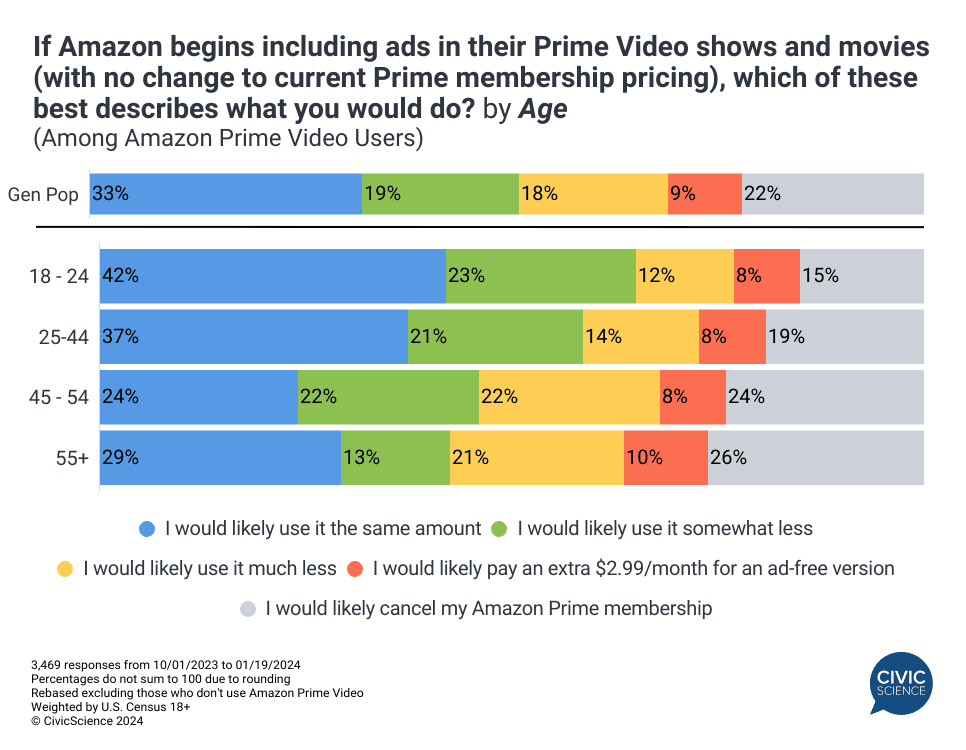
Quantifying Value:
-
Time Savings: If an hour-long show has 5-10 minutes of ads, paying $2.99 per month could be seen as an investment in reclaiming your time. If you watch many hours of Prime Video, the cumulative time saved could be substantial. Assigning a monetary value to your time can help frame this. For example, if you value your leisure time at $10 per hour and save 2 hours of ad-watching per month, the $2.99 seems a small price.
-
Friction Reduction: Ads interrupt the immersive experience. For some, the psychological benefit of uninterrupted viewing justifies the cost. This is a non-monetary benefit that directly impacts enjoyment.
-
Opportunity Cost: Every dollar spent on an ad-free upgrade is a dollar not spent elsewhere. Could that $2.99 contribute to a savings goal, pay down debt, or be used for another discretionary item you value more? This is a core principle of personal finance – evaluating what you give up by choosing one option over another.
-
Financial Discipline: For those on tight budgets, even small add-ons require careful consideration. Is this a luxury or a necessity? Differentiating between wants and needs is fundamental to financial health.
Strategies for Managing Subscription Costs
Proactive management of your entertainment budget can free up funds for other financial goals or simply reduce unnecessary expenditures.
-
Regular Audits: Schedule quarterly or bi-annual reviews of all your subscriptions. Cancel anything you no longer use or find significant value in.
-
Utilize Free Trials Wisely: Take advantage of free trials to test services, but be diligent about canceling before they automatically convert to paid subscriptions if you don’t intend to keep them. Set calendar reminders.
-
Consider Rotating Subscriptions: Instead of paying for every service simultaneously, consider subscribing to one or two at a time, watching all content you want, then canceling and subscribing to another. This maximizes your spending efficiency for specific content.
-
Explore Discount Programs: Always check if you qualify for student, military, or low-income discounts that many services offer.
Financial Implications of Streaming Choices
The seemingly minor decision to upgrade to an ad-free streaming experience has broader implications for a household’s financial health, particularly when viewed in the context of overall discretionary spending and long-term financial planning.
The Impact on Your Monthly Budget
While $2.99 per month may appear insignificant on its own, its cumulative effect over a year or combined with other streaming costs can be substantial. An extra $2.99 per month equates to nearly $36 per year. If you have several such add-ons across different services, these “micro-expenses” quickly add up to hundreds of dollars annually.
Reallocating Funds: Every dollar allocated to an ad-free Prime Video upgrade is a dollar that could have been directed towards:
-
Debt Reduction: Accelerating payments on high-interest credit card debt.
-
Emergency Savings: Building a financial safety net.
-
Investment Portfolio: Contributing to retirement funds or other long-term investments.
-
Other Discretionary Spending: Funding a hobby, a meal out, or a small personal treat.
The impact isn’t just about the raw cost but about the opportunity cost of that money. Savvy financial management involves consciously deciding where every dollar goes, ensuring alignment with personal financial goals.
Long-Term Financial Planning and Entertainment
Entertainment, including streaming services, falls squarely into the category of “discretionary spending.” While vital for quality of life and relaxation, it should be balanced against essential expenses and financial goals.
Integrating into a Financial Plan:
-
Set an Entertainment Budget: Allocate a specific monthly amount for all entertainment, including streaming. This helps control overall spending and prevents overindulgence.
-
Prioritize Financial Goals: If you’re struggling with debt or trying to save for a down payment, every additional streaming cost needs to be weighed against these more pressing objectives.
-
Regular Review: As your financial situation changes, or as streaming prices evolve, revisit your choices. What was affordable last year might not be sustainable this year, or vice versa.
Making informed financial decisions about entertainment means understanding not just the immediate cost, but how these choices contribute to or detract from your overarching financial strategy.
Comparing Ad-Free Options Across Streaming Services
Amazon Prime Video’s ad-free offering exists within a competitive landscape where other major streaming platforms also navigate the balance between subscription revenue and advertising income. Understanding these different models from a cost perspective helps consumers make financially optimal choices.
Pricing Models of Competitors
Most major streaming services now offer tiered pricing, often with a cheaper, ad-supported option and a more expensive ad-free tier.
-
Netflix: Historically ad-free, Netflix introduced an ad-supported tier at a lower price point, while their standard and premium ad-free plans remain at higher price points. This is the opposite model to Prime Video, where ads were introduced to the base and an ad-free tier added as an upgrade.
-
Hulu: Hulu has long offered both ad-supported and ad-free tiers, with a significant price difference between them. Their ad-free tier is usually considerably more expensive than the ad-supported one.
-
Max (formerly HBO Max): Similar to Hulu, Max typically offers an ad-supported plan and a more expensive ad-free plan.
-
Disney+: Also features both ad-supported and ad-free options, with a noticeable price difference.
From a financial perspective, Amazon Prime Video’s ad-free add-on of $2.99 per month positions it as a relatively modest incremental cost compared to the larger jumps seen with some other services (which can be $5-$8 or more per month to go ad-free from their cheapest tier). However, it’s crucial to remember that the Amazon Prime Video add-on is on top of the existing Prime membership cost, making the total spend higher than many standalone services.
Maximizing Value for Your Dollar
When considering multiple streaming services, a financially astute consumer will look beyond individual prices and assess the total value derived from their cumulative spending.
-
Content vs. Cost: Do you primarily use Prime Video, or do you spread your viewing across several platforms? If Prime Video is a secondary service for you, the ad-free upgrade might not offer the best financial return on investment.
-
Bundle Potential: While Amazon’s ad-free add-on isn’t typically part of a bundle, evaluate if other services you use offer savings when combined.
-
Rotation Strategy: If you’re on a budget, consider rotating your ad-free subscriptions. For example, subscribe to ad-free Hulu for a few months, then cancel and switch to ad-free Max for a period, ensuring you always have ad-free access to content you want without paying for all simultaneously.
Ultimately, the decision of “how much is Amazon Prime ad free” is a multi-layered financial calculation. It involves understanding the base cost, the specific add-on fee, its position relative to other services, and critically, how it aligns with your personal budgeting, financial goals, and the value you place on an uninterrupted viewing experience.
aViewFromTheCave is a participant in the Amazon Services LLC Associates Program, an affiliate advertising program designed to provide a means for sites to earn advertising fees by advertising and linking to Amazon.com. Amazon, the Amazon logo, AmazonSupply, and the AmazonSupply logo are trademarks of Amazon.com, Inc. or its affiliates. As an Amazon Associate we earn affiliate commissions from qualifying purchases.