
Determining the worth of a Tesla is a multifaceted financial exercise that transcends the simple sticker price found on a dealership window. Because Tesla operates at the intersection of high-growth technology and capital-intensive manufacturing, “worth” can be defined in three distinct ways: the resale value of the physical vehicle, the total cost of ownership (TCO) compared to traditional internal combustion engine (ICE) vehicles, and the market valuation of Tesla Inc. (TSLA) as an investment asset.
For the modern investor or the budget-conscious consumer, understanding these valuations is essential. Whether you are looking at a Model 3 as a daily commuter or analyzing TSLA for a diversified portfolio, the financial metrics involved are unique to the electric vehicle (EV) ecosystem.
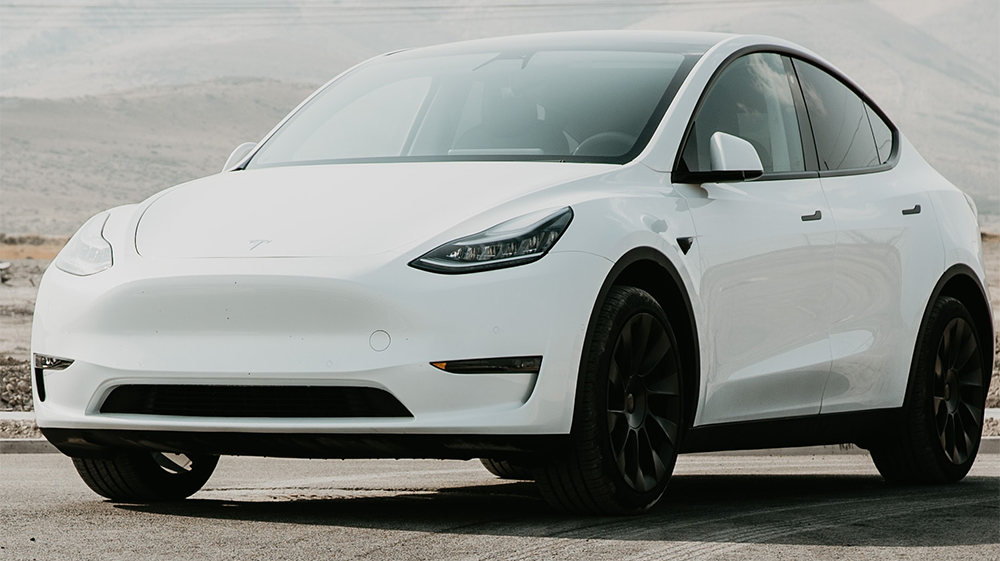
The Resale Reality: Market Value and Depreciation Trends
For decades, the automotive industry followed a predictable depreciation curve: a vehicle lost approximately 10% of its value the moment it left the lot and 15-20% each year thereafter. Tesla disrupted this trend for several years due to high demand and supply chain shortages. However, the current landscape has shifted, making the calculation of a Tesla’s resale worth a more complex endeavor.
Factors Influencing Used Tesla Prices
The worth of a used Tesla is primarily dictated by its software capabilities and battery health, rather than just mileage and cosmetic condition. A vehicle equipped with Full Self-Driving (FSD) capability—a software suite that has cost as much as $15,000 in the past—retains a different value profile than a base model. However, the secondary market often struggles to price this software accurately, sometimes valuing the hardware more than the intangible code.
Furthermore, battery degradation plays a pivotal role. A Tesla with 100,000 miles but a battery that retains 95% of its original capacity is worth significantly more than one with similar mileage but higher degradation. Financial buyers must look at the “state of health” (SOH) report of the battery to determine the true residual value of the asset.
The Impact of Price Volatility on Residual Value
In 2023 and 2024, Tesla implemented aggressive price cuts across its new vehicle lineup to maintain market share. While this made new Teslas more accessible, it had a cascading effect on the worth of used models. Owners who purchased at the peak of the market found themselves in an “underwater” equity position, where the loan balance exceeded the car’s market value. This volatility highlights a key financial risk: the worth of a Tesla is highly sensitive to the manufacturer’s pricing strategy, more so than traditional brands like Lexus or Porsche, which tend to maintain price stability to protect residual values.
Tesla as a Financial Asset: Total Cost of Ownership (TCO)
To accurately assess how much a Tesla is worth to a household budget, one must look past the purchase price and evaluate the Total Cost of Ownership. When viewed through a five-year financial lens, a Tesla often proves to be worth more in “saved capital” than a cheaper gasoline-powered alternative.
Fuel Savings vs. Electricity Costs
The most immediate financial benefit of a Tesla is the displacement of gasoline expenses. On average, charging a Tesla costs roughly one-third to one-fourth the price of fueling a comparable gasoline car, depending on local utility rates. For a driver covering 15,000 miles per year, this can translate to $1,500–$2,500 in annual savings. Over a five-year ownership period, these savings represent nearly $10,000 in retained wealth, effectively lowering the “net worth” cost of the vehicle.
Maintenance and Insurance Premiums
Teslas have fewer moving parts than ICE vehicles—no oil changes, spark plugs, or transmission flushes. This reduces long-term maintenance liabilities. However, this is partially offset by higher insurance premiums. Because Teslas utilize advanced aluminum casting and complex sensor arrays, repair costs after an accident can be exorbitant. Insurance companies price this risk into their premiums, which can be 20-30% higher than those for a mid-range sedan. Prospective owners must weigh the $0 oil changes against the $2,000 annual insurance bill to find the true financial break-even point.
Federal and State Incentives
The worth of a Tesla is also subsidized by government fiscal policy. Under the Inflation Reduction Act, many Tesla models qualify for a $7,500 federal tax credit. When applied at the point of sale, this credit provides an immediate equity boost. From a personal finance perspective, this incentive acts as a “rebate on depreciation,” allowing the owner to shield themselves from the initial hit that new cars typically take.

The Equity Perspective: Evaluating Tesla Inc. (TSLA)
Beyond the garage, the question of “how much is a Tesla worth” extends to the stock market. Tesla Inc. is one of the most polarizing and heavily analyzed companies in the world. Its valuation is rarely based on current earnings alone; rather, it is a speculative bet on the future of energy and autonomy.
P/E Ratios and Growth Multiples
Traditional automakers like Ford or General Motors often trade at price-to-earnings (P/E) ratios between 5x and 10x. Tesla, conversely, has historically traded at multiples ranging from 40x to over 100x. This suggests that investors believe the company is worth far more than its current car sales suggest. The market is pricing in Tesla’s potential as a software-as-a-service (SaaS) provider through its FSD subscriptions and its role as a massive energy storage company through its Powerwall and Megapack divisions.
To a value investor, Tesla might seem overpriced. To a growth investor, the current price might represent a discount on a future monopoly in autonomous transport. Evaluating the worth of TSLA requires a discounted cash flow (DCF) analysis that accounts for aggressive annual growth rates and high-margin software revenue.
The “Magnificent Seven” Premium
Tesla’s inclusion in the “Magnificent Seven”—a group of high-performing tech stocks including Apple and Nvidia—has cemented its status as a core holding for institutional investors. This institutional demand creates a “valuation floor” that is independent of car sales. The worth of the company is tied to its role in the S&P 500 and the trillions of dollars in passive index funds that must hold the stock. This financial architecture provides Tesla with a cost-of-capital advantage that other automakers simply do not possess.
Future Projections: Residual Value and Long-Term ROI
When projecting the future worth of a Tesla, two variables stand out: the emergence of a “Robotaxi” network and the longevity of battery technology. These factors will determine whether a Tesla remains a depreciating asset or becomes a cash-flowing investment.
The Robotaxi Variable
Elon Musk has frequently asserted that Teslas are “appreciating assets” because they will eventually be able to operate as autonomous taxis. From a strict financial standpoint, if a Tesla can generate $30,000 in annual passive income for its owner, its worth would skyrocket, potentially exceeding its original purchase price even after years of use. While this remains a speculative “moonshot,” it is a significant factor in how the market perceives the long-term value of the hardware.
Battery Replacement and Lifecycle Costs
The ultimate “cliff” for a Tesla’s worth is the end of its battery life. Most Tesla batteries are designed to last between 300,000 and 500,000 miles. However, once a battery fails out of warranty, the replacement cost (upwards of $15,000) can exceed the remaining value of the car. For long-term holders, the financial strategy should involve exiting the asset before the battery warranty expires or accounting for a significant capital expenditure in year ten of ownership.

Conclusion: Synthesizing the Value
So, how much is a Tesla worth? The answer depends entirely on your financial vantage point.
To the consumer, it is worth its sticker price minus the federal tax credit, adjusted for the thousands of dollars saved in fuel and maintenance over its lifespan. To the used car buyer, it is worth the current market rate, which is currently in a state of flux due to aggressive manufacturer price cuts and a burgeoning secondary market. To the investor, a Tesla is worth the present value of its future cash flows—a figure that fluctuates wildly based on interest rates, AI advancements, and global manufacturing efficiency.
In the final analysis, a Tesla is more than a vehicle; it is a complex financial instrument. Whether viewed as a tool for personal wealth preservation through lower operating costs or as a high-stakes play in a retirement portfolio, its value is defined by its ability to disrupt traditional economic models. Understanding these nuances allows for better capital allocation, whether you are signing a lease or placing a limit order on the Nasdaq.
aViewFromTheCave is a participant in the Amazon Services LLC Associates Program, an affiliate advertising program designed to provide a means for sites to earn advertising fees by advertising and linking to Amazon.com. Amazon, the Amazon logo, AmazonSupply, and the AmazonSupply logo are trademarks of Amazon.com, Inc. or its affiliates. As an Amazon Associate we earn affiliate commissions from qualifying purchases.