
For the modern high-net-worth individual or the tech-forward professional, the decision to purchase a vehicle has transcended simple transportation. It has become an exercise in asset management. When one asks, “how much is a Tesla Model X,” the answer is far more complex than a single figure on a window sticker. It involves a deep dive into capital outlay, tax strategies, operational expenditures, and the volatile landscape of electric vehicle (EV) depreciation.
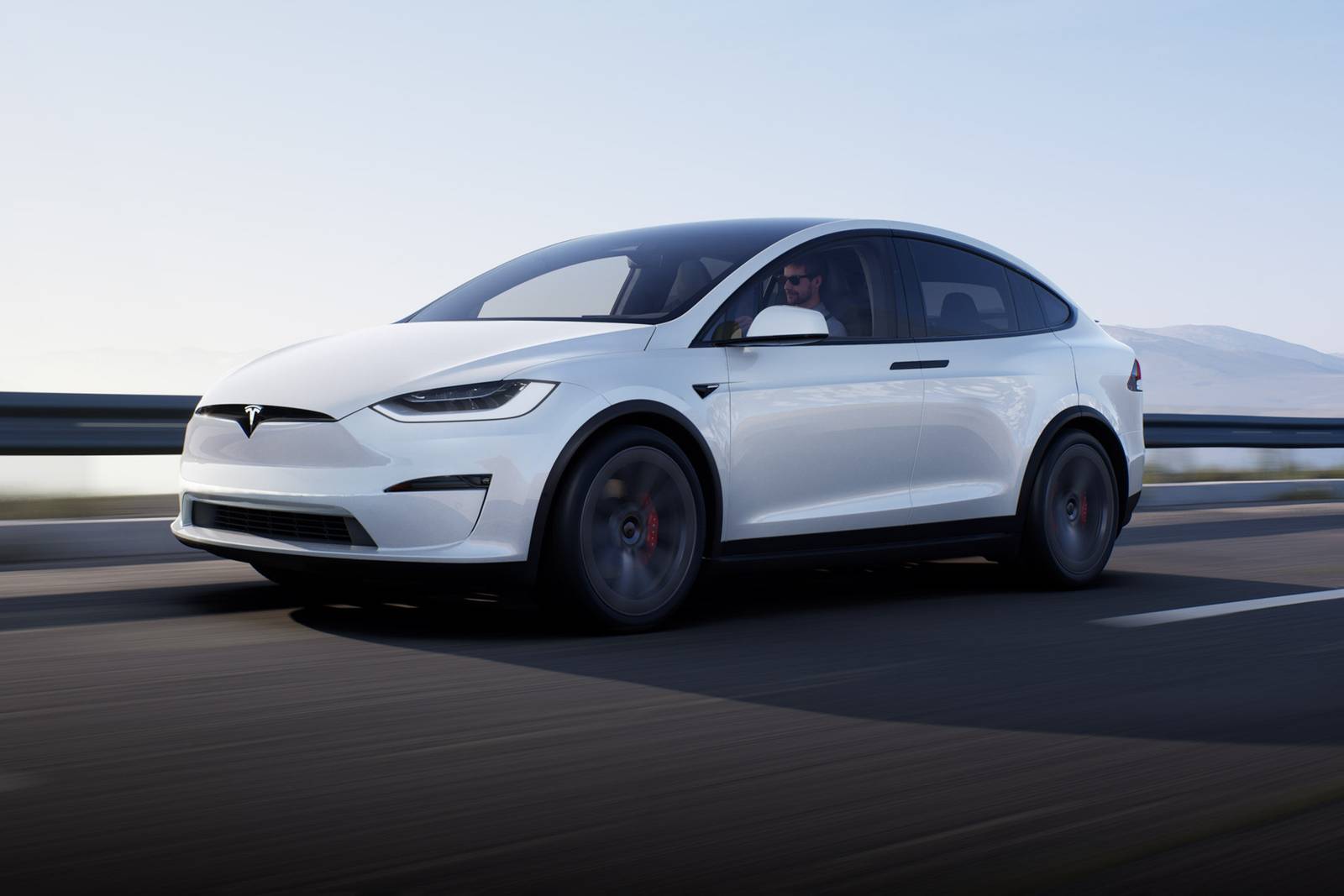
The Tesla Model X stands as the pinnacle of the brand’s SUV lineup, positioning itself as a luxury asset that promises to bridge the gap between high-performance engineering and fiscal responsibility. To understand the true cost of this vehicle, we must look beyond the MSRP and analyze it through the lens of personal finance and investment strategy.

1. Decoding the Initial Capital Outlay: MSRP, Trims, and Configuration Costs
The first step in any financial appraisal is identifying the base cost of the asset. As of late 2023 and early 2024, the Tesla Model X pricing structure has undergone significant adjustments, reflecting Tesla’s aggressive strategy to maintain market dominance amidst rising interest rates.
The Base Model vs. The Plaid: A Price Analysis
The Model X is currently offered in two primary configurations: the “Long Range” (often simply referred to as the Model X) and the “Plaid.”
- The Model X (Dual Motor): Starting at approximately $79,990, this version is the entry point for those seeking the SUV’s utility and 335 miles of range. From a financial perspective, this specific price point is strategic, as it often teeters on the edge of various government incentive thresholds.
- The Model X Plaid (Tri-Motor): Starting at approximately $94,990, the Plaid is the high-performance variant. For the additional $15,000, investors receive a 0-60 mph time of 2.5 seconds and 1,020 horsepower. From a value-retention standpoint, the Plaid often appeals to a narrower niche of the secondary market, which can influence its long-term resale potential.
Optional Upgrades and Hidden Acquisition Costs
The “sticker price” is rarely the final price. To build a comprehensive financial model, one must account for the following add-ons:
- Seating Configurations: The Model X comes standard with five seats. Upgrading to a six-seat configuration ($6,500) or a seven-seat configuration ($3,500) adds significant upfront cost but can drastically improve the vehicle’s desirability and resale value for families.
- Full Self-Driving (FSD) Capability: Priced as a $12,000 upfront capital expense or a monthly subscription, FSD is a controversial “investment.” While Tesla argues it adds value to the vehicle, current secondary market data suggests that software add-ons do not depreciate at the same rate as the hardware, often yielding a lower return on investment (ROI) at the time of sale.
- Delivery and Order Fees: One must also factor in the non-negotiable $1,390 destination fee and $250 order fee, which are standard across all Tesla transactions.
2. Tax Incentives and the Strategic Use of Government Subsidies
In the realm of personal finance, minimizing the “net cost” of an asset is paramount. The Tesla Model X occupies a unique position in the U.S. tax code, particularly following the revisions to the Inflation Reduction Act (IRA).
Federal Tax Credits and Income Thresholds
The base Model X (under $80,000 MSRP) may qualify for the $7,500 Federal EV Tax Credit. However, this is not a blanket discount. It is a non-refundable tax credit subject to strict Adjusted Gross Income (AGI) limits: $300,000 for married couples filing jointly and $150,000 for single filers. For a buyer within these brackets, the “real” cost of a $79,990 Model X effectively drops to $72,490, a significant 9.3% reduction in capital expenditure.
The Section 179 Business Deduction
For business owners and entrepreneurs, the Model X is often viewed as a “tax play.” Because the Model X has a Gross Vehicle Weight Rating (GVWR) of over 6,000 pounds, it qualifies for the Section 179 deduction. This allow businesses to deduct a substantial portion of the vehicle’s purchase price in the first year of ownership, provided it is used more than 50% for business purposes. In some financial years, this has allowed for a “bonus depreciation” that can offset thousands of dollars in taxable income, making the Model X a more viable financial tool than its lighter, non-qualifying competitors.
3. Total Cost of Ownership: Operational Savings vs. Long-Term Maintenance
A common mistake in financial planning is focusing solely on the purchase price while ignoring the “burn rate” of the asset. The Model X offers a compelling case for reduced operational expenditures (OPEX) when compared to internal combustion engine (ICE) luxury SUVs like the BMW X7 or the Mercedes-Benz GLS.
Energy Arbitrage: Fuel Savings vs. Electricity Costs
The financial benefit of the Model X is most visible at the “pump.” On average, charging a Model X costs significantly less per mile than fueling a premium SUV that requires 91-octane gasoline. If we assume an average utility rate of $0.15 per kWh and a fuel price of $4.50 per gallon, a Model X owner can save between $1,500 and $2,500 annually on energy alone, depending on mileage. Over a five-year ownership cycle, this represents a $7,500 to $12,500 reduction in the total cost of ownership.
Maintenance and the “Tesla Premium” in Insurance
While the Model X lacks oil changes, spark plugs, and complex transmission systems, it is not immune to maintenance costs. The falcon-wing doors, while iconic, involve complex sensors and actuators that can be expensive to repair out of warranty.
Furthermore, from a cash-flow perspective, insurance is a critical factor. Teslas are notoriously expensive to insure due to their high repair costs and the specialized equipment required to fix their aluminum frames. Financial planners often suggest budgeting 20-30% more for insurance premiums compared to a similarly priced Lexus or Audi. This “Tesla Premium” can eat into the savings realized from fuel, necessitating a careful calculation of the net monthly delta.
4. Depreciation and the Asset’s Residual Value
For most car buyers, depreciation is the single largest expense. However, for a Tesla Model X owner, depreciation has become a volatile variable influenced by Tesla’s own pricing fluidity.
Market Volatility and Resale Performance
Historically, Teslas held their value better than almost any other luxury vehicle. However, when Tesla aggressively cut prices in 2023, the used market saw a sharp correction. For an investor, this means the Model X should be viewed as a long-term utility asset rather than a short-term store of value. Data indicates that a Model X typically loses about 35-45% of its value over the first three years. While this is better than some high-end European luxury SUVs, it is a stark reminder that the “cost” of the car includes the $30,000 to $40,000 in equity lost during initial ownership.
The Role of Software Updates in Value Retention
One unique financial aspect of the Model X is its ability to receive Over-the-Air (OTA) updates. Unlike traditional vehicles that become technologically obsolete, a five-year-old Model X often has the same interface and many of the same features as a brand-new one. This “feature parity” helps stabilize the floor of the vehicle’s resale value, as the hardware remains relevant longer than that of its competitors.

Conclusion: Is the Model X a Sound Financial Move?
Determining “how much is a Tesla Model X” requires a holistic view of the buyer’s financial ecosystem. At an entry point of roughly $80,000, it is undeniably a luxury expense. However, when you factor in the $7,500 federal tax credit, the potential for massive Section 179 business deductions, and an estimated $10,000 in fuel savings over five years, the “net effective cost” can drop into the mid-$50,000 range for certain business owners.
From a personal finance perspective, the Model X is best suited for those who can leverage tax incentives and who plan to keep the vehicle long enough to offset its initial depreciation through operational savings. It is not merely a car; it is a complex financial instrument that, if managed correctly, provides high-end utility at a total cost of ownership that often rivals vehicles half its price. As with any significant investment, the key to success lies in understanding the nuances of the acquisition, the benefits of the tax code, and the long-term trajectory of the EV market.
aViewFromTheCave is a participant in the Amazon Services LLC Associates Program, an affiliate advertising program designed to provide a means for sites to earn advertising fees by advertising and linking to Amazon.com. Amazon, the Amazon logo, AmazonSupply, and the AmazonSupply logo are trademarks of Amazon.com, Inc. or its affiliates. As an Amazon Associate we earn affiliate commissions from qualifying purchases.