
Tesla, Inc. (ticker: TSLA) stands as one of the most polarizing and closely watched entities in the modern financial landscape. For many retail investors, asking “how much is a stock in Tesla” is the first step into a deeper world of equity valuation, market psychology, and long-term wealth building. However, the price of a single share is merely a snapshot in time—a moving target influenced by global macroeconomics, technological breakthroughs, and the idiosyncratic leadership of Elon Musk.
To truly understand the cost and value of a Tesla share, an investor must look beyond the ticker symbol. This involves analyzing the company’s market capitalization, its historical performance through stock splits, and the underlying financial metrics that justify its premium valuation compared to traditional automotive manufacturers.
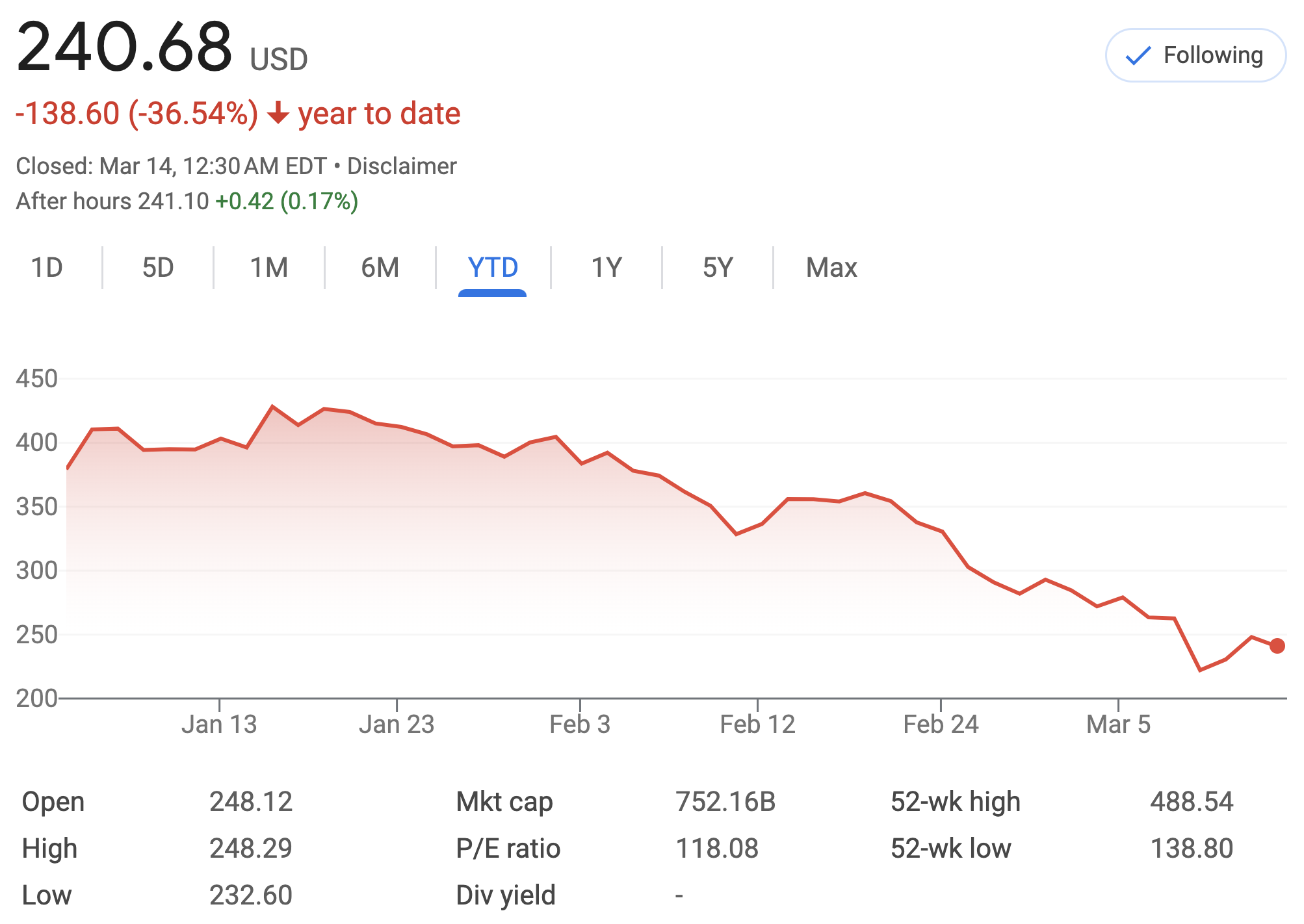
Deciphering the Tesla Stock Price: Market Dynamics and Real-Time Value
When an investor looks up the current price of Tesla, they are seeing the equilibrium point where supply meets demand on the Nasdaq exchange. Because Tesla is a high-beta stock—meaning it tends to be more volatile than the broader market—this price can swing significantly within a single trading session.
The Impact of Stock Splits on Share Price
For those who remember Tesla trading at over $2,000 per share a few years ago, the current price might seem deceptively low. It is crucial to understand that Tesla has undergone multiple stock splits (most notably in 2020 and 2022) to make ownership more accessible to retail investors. A stock split does not change the fundamental value of the company or your investment; it simply divides the existing “pie” into more slices. If you held one share worth $900 before a 3-for-1 split, you would subsequently hold three shares worth $300 each. This mechanical adjustment is why “how much” a stock costs is often less important than the total market cap of the company.
Market Capitalization vs. Share Price
In the world of finance, market capitalization (share price multiplied by the total number of outstanding shares) is the true measure of a company’s size. Tesla frequently fluctuates between a $500 billion and $1 trillion market cap. When evaluating the price, seasoned investors ask whether the company’s projected future earnings justify that total valuation. Because Tesla is priced as a high-growth technology firm rather than a legacy automaker, its share price carries a “growth premium,” reflecting the market’s expectation that Tesla will dominate not just EVs, but also autonomous driving and energy storage.
Core Drivers of Tesla’s Valuation
Understanding what moves the needle for TSLA is essential for any personal finance strategy. The stock price is highly sensitive to specific performance indicators that go beyond standard profit and loss statements.
Delivery Numbers and Production Scale
Tesla’s stock price is hyper-reactive to quarterly delivery reports. Investors look at “deliveries” as the primary proxy for demand. If Tesla misses its delivery targets—even by a small margin—the stock often retreats as the market recalibrates its growth expectations. Conversely, the successful scaling of Gigafactories in Texas, Berlin, and Shanghai provides the logistical backbone that supports a rising share price.
Profit Margins and Operational Efficiency
Unlike many of its competitors in the EV space that are still losing money on every vehicle sold, Tesla has historically maintained industry-leading operating margins. However, in recent fiscal years, Tesla has utilized aggressive price cuts to maintain market share. From an investment perspective, this creates a tug-of-war: lower prices may increase volume but can compress margins, leading to a temporary decline in the stock’s valuation. Investors must weigh whether the long-term benefit of a larger fleet (which can eventually be monetized through software) outweighs the short-term dip in profitability.
The “Elon Musk Premium” and Key Person Risk
It is impossible to discuss the price of Tesla stock without acknowledging the influence of its CEO. Musk’s public persona, his acquisition of other ventures, and his vision for the future are baked into the stock price. This creates a unique form of “key person risk.” When Musk is focused and achieving milestones, the stock tends to soar. When his attention is divided or his public statements become controversial, the stock can experience significant downward pressure regardless of the company’s operational success.
Strategic Approaches to Investing in Tesla

For the individual investor, deciding “how much” to pay for Tesla depends largely on their investment horizon and risk tolerance. Because of its volatility, Tesla requires a disciplined approach to portfolio management.
Long-Term Growth Positioning
Many Tesla shareholders operate on a five-to-ten-year horizon. For these “HODLers,” the daily fluctuations in share price are noise. The thesis here is that Tesla is an AI and robotics company disguised as a car company. If Tesla successfully solves Level 5 autonomy (Full Self-Driving) and scales its humanoid robot, Optimus, the current share price might eventually be seen as a bargain. Long-term investors often ignore the “how much” of today in favor of the “what could be” of tomorrow.
Navigating High Volatility with Dollar-Cost Averaging
Given that Tesla can drop 5% or rise 10% in a week based on a single tweet or news report, “timing the market” is notoriously difficult. A common financial strategy used for TSLA is dollar-cost averaging (DCA). By investing a fixed dollar amount at regular intervals—regardless of whether the stock is at $150 or $250—investors can lower their average cost per share over time and mitigate the psychological stress of buying at a local “peak.”
The Role of Fractional Shares
For those who find the price of a full share too high for their current budget, most modern brokerage platforms now offer fractional shares. This means you can invest as little as $1 or $10 into Tesla. This democratizes the “how much” question, allowing even those with limited capital to gain exposure to the company’s growth.
Financial Metrics Every Tesla Investor Should Know
To determine if the current stock price represents a good entry point, investors should look at specific financial ratios that provide context to the numbers.
Price-to-Earnings (P/E) Ratio Comparisons
Tesla’s P/E ratio is often significantly higher than that of Toyota, Ford, or GM. While a high P/E can indicate an overvalued stock, in Tesla’s case, it reflects the market’s belief in its future earnings potential. When analyzing the stock, look at the Forward P/E, which uses estimated future earnings. If the Forward P/E is trending downward while the company is growing, it may indicate that the stock is becoming more reasonably priced relative to its output.
Free Cash Flow and Capital Expenditures
Tesla is a capital-intensive business. It requires billions of dollars to build factories and develop new battery technologies. Monitoring Tesla’s Free Cash Flow (FCF) is vital. A healthy FCF indicates that the company can fund its own expansion without needing to dilute shareholders by issuing more stock or taking on massive debt. For the value-conscious investor, Tesla’s ability to generate cash while aggressively expanding is a hallmark of financial health.
Risks, Headwinds, and the Bull Case
No investment is without risk, and Tesla’s price reflects a complex web of global challenges.
Increasing Global Competition
The “moat” around Tesla is being challenged. In China, companies like BYD are producing high-quality EVs at lower price points. In Europe and the US, legacy manufacturers are finally pivoting their assembly lines. If Tesla loses its dominant market share faster than it can innovate in other sectors (like energy storage), the stock price could face a significant “re-rating” to more closely align with traditional automotive multiples.
Regulatory and Autonomous Driving Hurdles
A large portion of Tesla’s current valuation is predicated on the future success of Full Self-Driving (FSD). If regulatory bodies impose strict bans on autonomous tech, or if the technology hits a developmental plateau, a “valuation bubble” could burst. Investors must keep a close eye on NHTSA (National Highway Traffic Safety Administration) reports and global autonomous driving regulations, as these have a direct, often immediate impact on the stock’s price.

The Bull Case: The Energy Sector
While cars get the headlines, Tesla’s energy division—comprising Megapacks and Powerwalls—is a growing contributor to the bottom line. As the world transitions to renewable energy, Tesla’s role as a provider of grid-scale storage solutions could provide a massive secondary revenue stream. For the forward-thinking investor, the “how much” of Tesla stock is increasingly tied to the electrification of the global energy grid, not just the cars on the road.
In conclusion, knowing “how much is a stock in Tesla” is only the starting point of a professional investment journey. The nominal price on your screen is a reflection of intense market debate regarding the future of transportation, energy, and artificial intelligence. Whether you view it as a speculative play or a foundational growth asset, Tesla remains a cornerstone of modern personal finance and a testament to the power of innovation-driven equity.
aViewFromTheCave is a participant in the Amazon Services LLC Associates Program, an affiliate advertising program designed to provide a means for sites to earn advertising fees by advertising and linking to Amazon.com. Amazon, the Amazon logo, AmazonSupply, and the AmazonSupply logo are trademarks of Amazon.com, Inc. or its affiliates. As an Amazon Associate we earn affiliate commissions from qualifying purchases.